Date: 2026-06-06
Context: A primary-source work dive into Tolstoy’s The Kingdom of God Is Within You (Царство Божие внутри вас, 1890–93) — the great non-resistance / anti-state synthesis of the Prophet period, written across nearly three years and the last and largest of the four religious treatises Tolstoy named inside What I Believe. The dive documents the book as a work: how and when it was written and who stood around it, what it argues, its tangled textual history, its publication abroad and the censorship and smuggling that followed, and its reception — from the Russian censors and V. V. Stasov to its single most important afterlife, the young M. K. Gandhi.
This dive is the work companion to the project’s existing thematic dive on the doctrine — Tolstoy and “Christian anarchism”, which covers non-resistance, the anti-state argument, and Tolstoy’s handling of the anarchist label across the corpus. Where the doctrine overlaps, this dive cross-links rather than restates: The Kingdom of God Is Within You is the book the Berlin scholar Paul Eltzbacher classified Tolstoy from, and the contested labels it attracts (“Christian anarchism”, “anarchist”, and the “mysticism” its own subtitle rejects) are interrogated there, not adopted here.
The primary evidence — the work’s own text and the composition-window diaries and one letter — is byte-checked against the TEI extracts by verify_quotes.py (see Method). The genesis, publication and censorship facts are drawn from the PSS Tom 28 editorial commentary (N. K. Gudzy) and are attributed to it, not byte-claimed — the commentary is editorial apparatus, not public-domain Tolstoy text.
A note on dates: the Russian items (diaries, letters, the writing chronology) follow the PSS, which dates by Old Style (Julian). The foreign publication dates (the French, German, English and Italian editions of 1893–94) are New Style, as their imprints give them.
1. Key findings
- The book that began as a preface. The Kingdom of God did not begin as a treatise. In July 1890 Tolstoy sat down to write a short preface to a translation of two American non-resistance texts — Adin Ballou’s Catechism of Non-Resistance and W. L. Garrison’s 1838 Declaration of Sentiments — and the preface would not stop growing. Within weeks he was telling Chertkov it had become “a large and very necessary article about the deception of the church”; within three years it was a 293-page synthesis. The diary fixes the first day: 8 July 1890, “Wrote a preface to Ballou’s catechism.”
- The subtitle is the thesis. «…или Христианство не как мистическое учение, а как новое жизнепонимание» — not as a mystical teaching but as a new understanding of life. The book’s whole claim is that Christianity is not a metaphysics or a private mysticism but a жизнепонимание, a practical understanding of life that, once grasped, makes participation in state violence impossible. This picks up exactly where the project’s On Life dive left off: Tolstoy makes Christianity rational and livable, not mystical.
- The argument is a single chain. Non-resistance to evil by force (непротивление злу насилием) is “the chief departure” the churches made from Christ; the state rests on violence; its army exists “first of all to defend the government from its own oppressed and enslaved subjects”; that violence is held in place by four means — intimidation, bribery, hypnotization, and the soldiery the first three produce; and the only exit is not revolution but each person’s refusal to lie, because “the one and only thing in which you are free and all-powerful… is to know the truth and to profess it.”
- A near-documentary genesis. The 1890–93 window is diary- and letter-rich, and the writing is traceable almost week by week: the title changed four times; the overgrown eighth chapter was split (on Strakhov’s advice) into three; and the conclusion was rewritten after a real event — Tolstoy’s 9 September 1892 encounter, at Uzlovaya station during his famine-relief work, with a punitive train of soldiers sent to flog starving peasants. Chertkov pressed him to soften the tone and Tolstoy refused: “to soften, with qualifications, is impossible. It destroys the whole tone, and the tone expresses the feeling, and the feeling infects… more than any arguments.”
- The publication-abroad and censorship story. Banned at home before it could be printed, the book went out through a relay of couriers (a professor to America, a painter to Berlin and Paris, a novelist carrying the final chapter). It appeared first in French — Le salut est en vous, Paris, October 1893 — then, in January 1894, in its original Russian (Berlin, August Deubner, the первопечатный text, with censorship cuts) and German; then in two competing English translations (Constance Garnett and A. Delano). Russian foreign-censorship called it “the most harmful book it had ever had to ban,” yet it flooded into Russia in hectograph and typescript; it was first legally printed in Russia only in 1906.
- Gandhi is the headline of the afterlife. Gandhi read The Kingdom of God Is Within You in 1894 in South Africa and wrote in his Autobiography that the book “overwhelmed” him and “left an abiding impression”; he ranked it among the three decisive modern influences on his life. The line runs from Garrison and Ballou (whom the book’s first chapter resurrects) through Tolstoy to Gandhi — and on, through Gandhi, to the twentieth-century practice of nonviolent resistance.
- For the works record. The dive supplies provenanced corrections to the existing
works/record — most importantly the publication facts (firstPublishedVenueand the first-publication date), the precise composition chronology, and the copyists behind the manuscript (the daughters M. L. and T. L. Tolstaya, S. A. Tolstaya, and E. I. Popov, not Sophia Tolstaya alone). See §11 and the dossier. Ingestion is a separate, human step.
2. Why this matters
If What I Believe (1884) stated the creed and What Then Must We Do? (1886) drew the economic conclusion, The Kingdom of God Is Within You is where Tolstoy turned the creed into a total indictment of the modern state. It is the most political of the religious books and the one with the longest reach: it is the text that fixed Tolstoy, in the eyes of the world, as the founder of a Christian, anti-statist pacifism, and it is the book a young Indian lawyer in Natal read in 1894 and never got over.
The dive’s task is to treat it as a work and not only as a doctrine. The doctrine — non-resistance, the anti-state argument, the anarchist label — is already mapped in the Christian anarchism dive, and the temptation in writing about this book is to re-argue the ideas. What the corpus uniquely supplies, and what this dive foregrounds, is the making of the book: a preface that escaped its author and became a treatise; a three-year struggle recorded in the diary almost daily; a circle of disciples and family who copied, carried, advised, and (in Chertkov’s case) tried to soften it; a conclusion forced into being by a chance sight from a train window; and a publication history that is itself a parable of the thing the book is about — a state trying, and failing, to suppress a text by force.
The book also lets the corpus correct the received summary at two points. The popular and even the catalogue account says the book was “first published in Germany in 1894”; the PSS apparatus shows the French edition came first, in 1893, and names the actual Russian and German publishers (Berlin/Deubner and Stuttgart, not the venue the works record currently carries). And the book’s own subtitle — Christianity “not as a mystical teaching” — is a standing rebuke to readers who file Tolstoy’s late religion under mysticism.
3. The shape of the question — what the book argues
The argument is staged below as the book stages it: from the creed’s “chief departure,” through the diagnosis of the state, to the single free act it leaves a person. Each Russian quotation is verbatim from the TEI extract of the work (PSS Tom 28, pp. 1–293), byte-checked; the working-English translations are the editor’s.
3.1 — The epigraph and the premise
The book opens under three epigraphs; the first sets the key:
Познаете истину, и истина освободит вас (Иоан. VIII, 32).
You shall know the truth, and the truth shall make you free (John 8:32). (working English)
The premise is autobiographical. The Kingdom of God is a sequel to What I Believe (1884), and it names at once the point on which Tolstoy says the churches betrayed Christ:
В числе многих отступлений этого учения от учения Христа я указывал на главное отступление, именно — на непризнание заповеди непротивления злу насилием
Among the many departures of this [church] teaching from the teaching of Christ, I pointed to the chief departure — namely, the non-recognition of the commandment of non-resistance to evil by force. (working English)
The first chapter then does something unusual for a Russian religious treatise: it goes to America. Quaker writers had sent Tolstoy their books; the son of W. L. Garrison sent him the 1838 Declaration of Sentiments of the New England Non-Resistance Society; and Lewis Wilson sent him the works of Adin Ballou. The chapter resurrects this forgotten Anglo-American non-resistance literature — Garrison, Ballou, the Quaker Dymond, the Czech Pyotr Chelčický’s Net of Faith — to show that the doctrine the churches buried had been stated, clearly and long ago, by others.
3.2 — Christianity as a new understanding of life, not a mysticism
The book’s center of gravity, and its subtitle, is the claim that Christianity is a жизнепонимание — an understanding of life — and that humanity has outgrown the older two (the personal-animal and the social-pagan) as a grown man outgrows a child’s:
необходимо установить новое жизнепонимание, из которого и вытекла бы и деятельность, соответствующая тому новому состоянию, в которое оно вступило или вступает.
it is necessary to establish a new understanding of life, from which would also flow the activity corresponding to the new condition into which [humanity] has entered or is entering. (working English)
The divine understanding of life is defined against the other two not by feeling but by where it locates life:
Человек божеского жизнепонимания признает жизнь уже не в своей личности и не в совокупности личностей (в семье, роде, народе, отечестве или государстве), а в источнике вечной, неумирающей жизни — в боге
The man of the divine understanding of life finds life no longer in his own personality, nor in the aggregate of personalities (the family, clan, people, fatherland, or state), but in the source of eternal, undying life — in God. (working English)
This is the hinge between the metaphysics of On Life and the politics of The Kingdom of God: because life is located in God and not in the state, no claim of the state can override the law of God — and the state’s central claim, military service, becomes the point of fracture.
3.3 — The state is violence, and the army faces inward
Tolstoy’s account of the state is blunt: power is the capacity to do violence, and the army that makes it possible is aimed less at foreign enemies than at the population it governs.
Обыкновенно думают, что войска усиливаются правительствами только для обороны государства от других государств, забывая то, что войска нужны прежде всего правительствам для обороны себя от своих подавленных и приведенных в рабство подданных.
People usually think that armies are strengthened by governments only for defence of the state against other states, forgetting that armies are needed by governments first of all to defend themselves from their own oppressed and enslaved subjects. (working English)
Universal military conscription (всеобщая воинская повинность) is therefore not an accident of European politics but “the last limit” of the contradiction in the social understanding of life: the state, to defend itself, must demand of every man that he renounce conscience and prepare to kill on command. And the whole apparatus is held together, Tolstoy argues, by a closed ring of four means:
Устрашение, подкуп, гипнотизация приводят людей к тому, что они идут в солдаты; солдаты же дают власть и возможность и казнить людей, и обирать их (подкупая на эти деньги чиновников), и гипнотизировать, и вербовать их в те самые солдаты, которые дают власть делать всё это.
Intimidation, bribery, and hypnotization bring men to become soldiers; and the soldiers give the power and the means to execute men, to plunder them (using the money to bribe the officials), to hypnotize them, and to recruit them into the very soldiery that gives the power to do all this. (working English)
3.4 — Not revolution, but the refusal to lie
The exit is not the overthrow of the state, which only replaces one violence with another, but the moral progress carried by public opinion (общественное мнение) and enacted by individuals who withdraw their participation. The deepest layer of the argument is about freedom: a person is not free in his acts, which have causes, but is free in whether he recognizes a truth — and recognition is itself the cause of acts.
Истинную жизнь, по христианскому учению, имеет только тот, кто перенес свою жизнь в ту область, в которой она свободна, — в область причин, т. е. познания и признания открывающейся истины
True life, according to the Christian teaching, is had only by the one who has carried his life into the realm in which it is free — into the realm of causes, that is, of the knowing and recognition of the opening truth. (working English)
From this the book’s title-phrase follows: the Kingdom of God is not a future state to be built but a thing taken, now, by inner effort —
Царство божие усилием берется, и только делающие усилие восхищают его
The Kingdom of God is taken by effort, and only those who make the effort seize it. (working English)
— and the long direct address that closes the book (“Whoever you are who read these lines…”) reduces every social position — landowner, judge, emperor, soldier — to a single demand:
Одно, только одно дело, в котором ты свободен и всемогущ, дано тебе в жизни, все остальные вне твоей власти. Дело это в том, чтобы познавать истину и исповедовать ее.
One thing, only one thing, in which you are free and all-powerful, is given you in life; all the rest is beyond your power. That one thing is to know the truth and to profess it. (working English)
What blocks it is hypocrisy (лицемерие) — knowing the truth and pretending not to:
Ведь это так просто и ясно, если бы только мы лицемерием не затемняли себе несомненно открытую нам истину.
It is all so simple and clear, if only we did not, by hypocrisy, darken for ourselves the truth that has unquestionably been opened to us. (working English)
The book ends where its title began, on Luke 17:21:
Ибо вот: царствие божие внутрь вас есть».
For behold: the Kingdom of God is within you. (working English)
Full work extract: extracts/v28_001_293_Tsarstvo_bozhie_vnutri_vas.txt.
4. Genesis & composition (1890–1893)
The composition is documented in the PSS Tom 28 commentary (N. K. Gudzy, “История писания и печатания”) and tracked, almost day by day, in Tolstoy’s own diaries and letters of the period. The account below leans on the commentary for the chronology and on the byte-checked diary entries for Tolstoy’s voice.
4.1 — The preface that grew
By 1889–90 Tolstoy was deep in the Anglo-American non-resistance literature that correspondents kept sending him: the Quakers’ books; Garrison’s 1838 Declaration, sent by Garrison’s son after he read What I Believe in English; Adin Ballou’s Christian Non-Resistance, sent by Ballou’s helper Lewis Wilson; and Ballou’s Catechism of Non-Resistance, which N. N. Strakhov translated while staying at Yasnaya Polyana. Tolstoy meant only to introduce these to Russian readers. The diary records the first day’s work:
Написал предисловие к катехизису Балу.
Wrote a preface to Ballou’s catechism. (working English — diary, 8 July 1890)
Three weeks later the preface had a shape but was already pulling toward something larger:
Поправил перевод Гарисона и Балу и написал краткое предисловие, так, чтобы в таком виде можно было передать людям.
Corrected the translation of Garrison and Ballou and wrote a short preface, so that in this form it could be given to people. (working English — diary, 28 July 1890)
On the same day he told Chertkov that the preface “is growing into a large and very necessary article about the deception of the church” (PSS Tom 87). By mid-November 1890 the preface and a projected “Conclusion” had merged into a treatise of their own, and Tolstoy began it again from the beginning, from his own experience of publishing What I Believe.
4.2 — Three years, four titles, twelve chapters
The work was written “with small interruptions, about three years, from July 1890 to May 1893” (commentary). It cost Tolstoy enormous effort — the diary of these years is a litany of “tried to write, it wouldn’t go” — and it kept changing shape. The title changed four times in the manuscripts: from On Non-Resistance to Evil, on the Church, and on Universal Military Conscription (the long first title), through The Christian Teaching not as a Mystical Teaching but as a New Understanding of Life (where the Luke 17:21 epigraph «Царствие божие внутрь вас есть» first appears) and Christ’s Teaching and Universal Military Conscription, to the final The Kingdom of God Is Within You. The structure grew the same way: a projected nine chapters became twelve, after Strakhov advised splitting the overgrown eighth chapter into three (VIII, IX, X), with an eleventh and a final twelfth (in six sub-chapters) added.
The work was interrupted and fed by Tolstoy’s 1891–92 famine-relief work in the Ryazan province. It was there, in the conclusion, that the book met a real event:
8-ая глава кончена, но над 9-й и 10-й все вожусь. И начинаю думать, что толкусь на месте.
The eighth chapter is finished, but I’m still struggling with the ninth and tenth. And I’m beginning to think I’m marking time. (working English — diary, 6 August 1892)
4.3 — Uzlovaya: the conclusion forced into being
On 9 September 1892, travelling by rail to his famine kitchens, Tolstoy’s train met, at Uzlovaya station, a special train carrying a punitive detachment under the Tula governor N. A. Zinoviev — soldiers going to flog the peasants of Bobriki, who had refused to let a landowner cut a wood they said had been taken from them. Biryukov, who met him on arrival, recorded that Tolstoy came in “agitated, distraught, dark” and began, without sitting down, to tell what he had seen. The commentary records that “the impression of Uzlovaya was terrible,” and that the encounter made Tolstoy rewrite the conclusion: the chance sight from the train became the opening scene of the final chapter, the concrete image of the violence on which, the book argues, all the comfort of the ruling classes rests.
4.4 — The people around the work
The composition was a collaborative labour, and the dive surfaces the circle as entities for the vault:
- V. G. Chertkov — the chief correspondent and organizer; the manuscript passed through him for copying and distribution to the translators, he supplied source-books and sent emissaries (M. N. Chistyakov, E. P. Sokolov) for the chapters, and he repeatedly urged Tolstoy to soften the book’s attacks. Tolstoy mostly refused (see §6).
- N. N. Strakhov — translated Ballou’s Catechism, brought Tolstoy the printed sheets of Chelčický’s Net of Faith and told him of Gottfried Arnold’s history of the heresies (both used in the book), and advised the splitting of chapter VIII.
- P. I. Biryukov (“Posha”) — copyist and famine-relief manager at Begichevka, present for the 9 September 1892 arrival; he thought the rewritten chapter XII was really a separate work (Chertkov and Tolstoy disagreed).
- M. L. Tolstaya and T. L. Tolstaya (Maria and Tatyana Lvovna, the daughters) — the principal copyists, whose hands date the early manuscripts; T. L. described the Uzlovaya encounter in a letter to her mother.
- S. A. Tolstaya — copyist of the conclusion and, in 1911, the editor who first printed the book within a Russian collected edition.
- E. I. Popov — copyist through the last stage, who compiled the chapter conspectus (the Oglavlenie) that went to the translators.
- I. I. Gorbunov-Posadov, A. N. Dunaev, D. A. Khilkov, G. A. Rusanov and others — readers and correspondents who supplied advice and material during composition.
5. What the work says — the twelve chapters
The book’s own table of contents (PSS Tom 28, pp. 294–306) is the structural spine. In brief:
- I–II — non-resistance has always been professed by a minority (Garrison, Ballou, Chelčický, the Quakers, Dymond); the evasive replies of the religious and secular critics of What I Believe.
- III–IV — how Christianity is misunderstood, by believers (the church hides it) and by men of science (who judge it from outside, by the lower “social” understanding of life); the three understandings of life and the definition of the Christian, “divine” one.
- V–VI — the contradictions between our life and our Christian conscience (economic, governmental, international); the wavering attitude of educated people to war and the peace congresses.
- VII — universal military conscription as the last limit of the contradiction: power is violence, the army defends the government against its own subjects.
- VIII — why the Christian teaching of non-resistance must now be accepted: the two ways of meeting evil (fight it by force vs. do not resist it by force), and the four means by which state violence sustains itself.
- IX — accepting the Christian understanding of life frees a person from all human power; the gathering refusals in Russia (of the oath, taxes, passports, police and court service, and military service).
- X–XI — the uselessness of state violence; moral progress works through truth and through public opinion, which has already begun to change and will dissolve the violent order.
- XII (Conclusion: “Repent, for the Kingdom of God is at hand”) — in six sub-chapters: the Uzlovaya punitive train and the Orel flogging; how ordinary men come to do such things (the diffusion of responsibility, the hypnosis of office); hypocrisy as the thing that holds the whole order up; freedom as the recognition of truth; and the closing direct address to the reader.
The keystone passages of these chapters are the quotations in §3 above and the evidence ledger in the dossier.
6. Redactions & textual history
The PSS Tom 28 prints, besides the work (pp. 1–293) and its table of contents (pp. 294–306), a Varianty section (pp. 309–330) and the editorial history (pp. 333–381: the history of the writing, textological notes, and a description of the manuscripts). The dive summarizes the textual history from the commentary rather than collating the variants.
Two threads stand out. First, the book was softened against Tolstoy’s will only at the margins: Chertkov, reading the drafts, found the attacks on the Russian government and the church too sharp and proposed qualifications. Tolstoy refused the principle outright in a letter of 14 December 1891:
Смягчать, оговариваясь нельзя. Это нарушает весь тон, а тон выражает чувство, а чувство заражает
To soften, with qualifications, is impossible. It destroys the whole tone, and the tone expresses the feeling, and the feeling infects [the reader]. (working English — to V. G. Chertkov, 14 December 1891)
He did make some self-censoring changes for prudence after the fact — when foreign newspapers printed the Uzlovaya passage and a furore broke out in Russian government circles, A. M. Kuzminsky pointed out that peasants were not in fact hanged in the villages, and Tolstoy corrected the passage and removed the phrase “in the present reign.” Second, an “Afterword” (Послесловие) was begun in mid-1893 and abandoned almost at once; only fragments survive (PSS Varianty).
7. Publication, censorship & translation
The publication history is the part of the work’s life that most resembles the thing the book is about: a text the state tried to suppress by force, and could not.
Sent out by hand. Knowing it could never pass Russian censorship, Tolstoy dispatched the manuscript abroad through couriers as the chapters were finished: the first eleven chapters went with the painter N. A. Kasatkin to Raphael Löwenfeld in Berlin and I. D. Halpérine-Kaminsky in Paris (April 1893); the full manuscript, including the conclusion, went to America with the Moscow professor I. I. Yanzhul for Isabel Hapgood — who, disagreeing with the book, declined to translate it, so it passed to Aline Delano in Boston; and the final twelfth chapter went out, in May 1893, with the novelist L. I. Veselitskaya. Tolstoy fixed the date of completion as 14 May 1893, Yasnaya Polyana; the diary of that day records only relief:
Вчера отослал совсем. […] Я свободен.
Yesterday I sent it off for good. […] I am free. (working English — diary, 14 May 1893)
First in French, then Russian and German. The book appeared first in French — Le salut est en vous, trans. Halpérine-Kaminsky (Paris: Perrin, late October 1893) — and in Italian the same year (Il regno di Dio è in voi, Rome 1893). Its original Russian text was first printed only in January 1894, abroad: the первопечатный (first-printed) Russian edition was issued in Berlin by August Deubner — its title page reads «Единственное, авторомъ разрѣшенное изданіе» (“the only edition authorized by the author”) — with the German translation (Stuttgart, Deutsche Verlags-Anstalt) appearing at the same time. Two English translations followed in 1894, by Constance Garnett (Heinemann) and Aline Delano (Walter Scott). The Deubner Russian edition carried censorship-driven cuts (passages on Wilhelm II, and the words “drunken syphilitic” of Peter I and “harlot” of Catherine II) and many misprints; the first uncut edition was M. K. Elpidine’s (Geneva, 1896), and Chertkov’s Svobodnoe Slovo press reprinted it (1898, 1902).
This sequence corrects the received summary: the book was not “first published in Germany in 1894.” The French edition came first, in 1893; the original Russian and the German came in 1894 from Berlin and Stuttgart respectively.
The Russian state’s response. The Russian foreign-publications censorship refused to admit the French edition, declaring it — in Strakhov’s report to Tolstoy (29 October 1893) — “the most harmful book it had ever had to ban.” It did no good. The book poured into Russia in hectographed and typewritten copies; a secret circular of E. Feoktistov, head of the Main Administration for Press Affairs (18 May 1894, No. 2829), ordered surveillance of every printing-house, lithograph and owner of a typewriter, “especially in the southern provinces.” The Kingdom of God Is Within You was first legally printed in Russia only in July 1906 (the Russkoe Svobodnoe Slovo edition, uncut), after the 1905 loosening of censorship.
8. Reception & afterlife
8.1 — The Russian reception
The earliest readers reached the book in manuscript, hectograph, and the French and Russian foreign editions, and the reception split exactly along the line the book drew. The censorship called it the most harmful book it had banned. The critic V. V. Stasov, by contrast, told Tolstoy the book had thrown him “into great delight” and, having read it in Russian, called it “the greatest book of our whole nineteenth century,” its twelfth chapter “a whole new world… priceless.” The painter I. E. Repin, abroad, called it “a thing of terrifying power.” (These contemporary judgments are reported in the PSS Tom 28 commentary, citing the correspondence.)
The book’s relation to the Church belongs to the longer story the works record marks with excommunicationRelated: true: it is among the anti-church writings that fed the hostility culminating in the Holy Synod’s 1901 edict of separation. The 1901 act named no specific works, so the tie is one of climate, not of a direct ban of this book — see the dossier needsReview.
8.2 — Gandhi, and the line of nonviolence
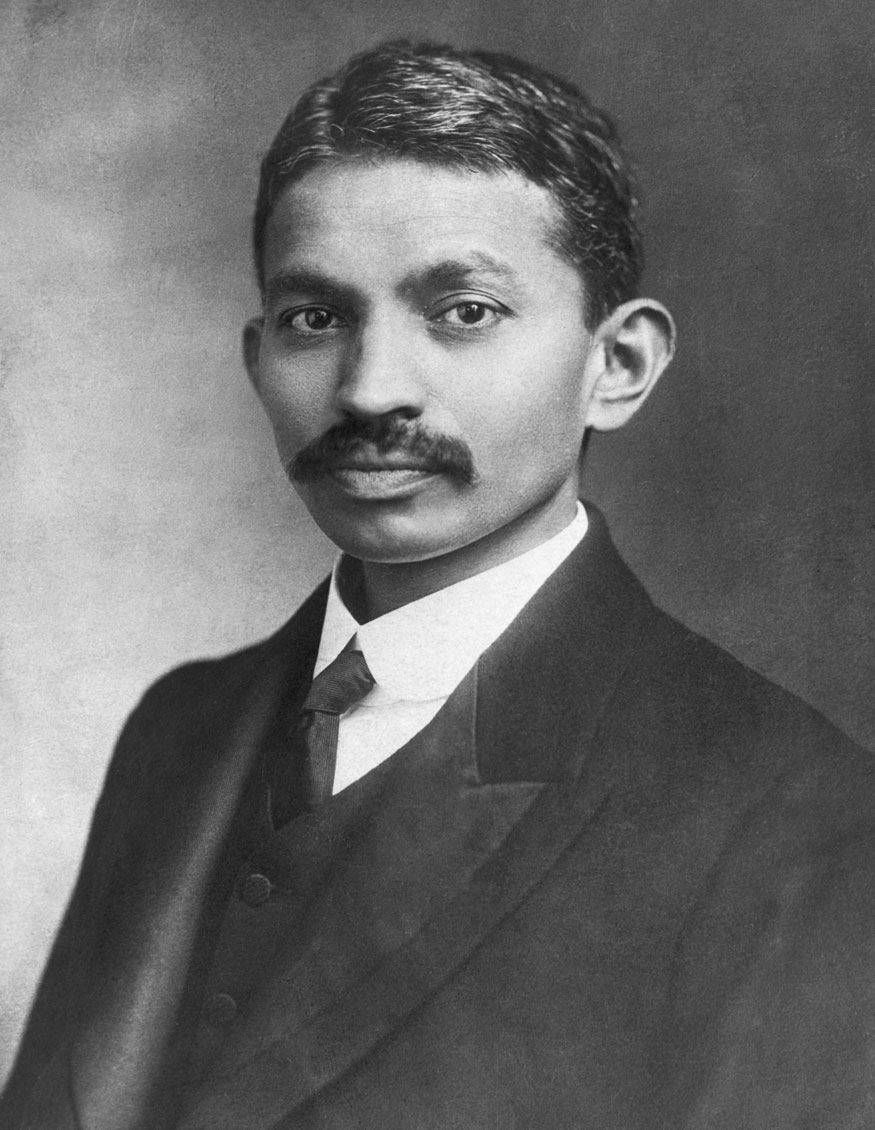
The book’s single most important afterlife is Mohandas K. Gandhi. Gandhi read The Kingdom of God Is Within You in 1894, in South Africa, and described its effect in his Autobiography (The Story of My Experiments with Truth): the book “overwhelmed” him and “left an abiding impression,” and he ranked it, with Ruskin’s Unto This Last and the writings of the poet Raychandbhai, among the three decisive modern influences on his life. From that reading grew a direct connection: Tolstoy’s 1908 A Letter to a Hindu, which Gandhi asked to translate; the 1909–1910 Tolstoy–Gandhi correspondence, carried on until Tolstoy’s death; and Gandhi’s Tolstoy Farm (1910). Through Gandhi, the doctrine the book had recovered from Garrison and Ballou passed into the twentieth-century practice of nonviolent resistance, and on to figures including Martin Luther King Jr. The first chapter’s American non-resistance forebears and the book’s Indian afterlife thus close a circle that runs Garrison → Ballou → Tolstoy → Gandhi.
(The Gandhi reception is attributed to Gandhi’s own Autobiography and the standard scholarship; the corpus does not contain it. See §12 and References.)
8.3 — Place in the cluster
The Kingdom of God Is Within You is the culminating panel of the Prophet-period treatise sequence the project has dived in order: A Confession → What I Believe → What Then Must We Do? → On Life → The Kingdom of God Is Within You. It is the explicit sequel to What I Believe (which it answers its critics about in chapters I–II), and it is the work behind the project’s thematic dive on Christian anarchism — the book Eltzbacher classified Tolstoy from. The contested labels the book attracts — “anarchism,” and the “mysticism” its own subtitle rejects — are interrogated there and in Tolstoyism; this dive keeps them attributed to the outside. (The superseded combined survey tolstoyanism-christian-anarchism is not authoritative.)
9. The author’s later verdict
Tolstoy’s verdict at completion was relief rather than satisfaction — “Yesterday I sent it off for good… I am free” (§7) — and he thought the conclusion “bad, so bad” even as he let it go because illness pressed him to stop. He planned an “Afterword” to forestall misreadings and never finished it. But the book held its place in his sense of his own work: he had told Biryukov in October 1892, mid-struggle, that even if he died “it would, in its present form, have a whole meaning,” and the diary entry of 22 May 1891 that he had “made clear the whole” marks the moment the argument came into focus. He continued to defend the book’s uncompromising tone against Chertkov’s wish to soften it (§6), which is itself the clearest statement of how he wanted it read.
10. Where the theme clusters in the corpus
The work, by chapter (PSS Tom 28, pp. 1–293)
| Part | Theme | Keystone (extract line) |
|---|---|---|
| Epigraphs | “You shall know the truth…” (John 8:32) | l. 7 |
| Vstuplenie–I | Non-resistance as the “chief departure”; Garrison, Ballou, the Quakers, Chelčický | ll. 17, 29, 45 |
| III–IV | Christianity hidden by the church; the three understandings of life; the divine one | ll. 729, 751 |
| VII | Conscription as the last limit; the army faces inward | ll. 1411, 1477 |
| VIII | The four means of state violence | ll. 1627–1641 |
| X–XI | Public opinion as the engine of change | ll. 1197, 2007 |
| XII | Freedom as recognition of truth; hypocrisy; “the Kingdom of God is within you” | ll. 2745, 2751, 2811, 2833, 2845 |
Composition-window diaries (PSS Toms 51–52)
| PSS Tom / pp | TEI id | Date (OS) | What it records |
|---|---|---|---|
| Т.51, 60 | v51_060_060_1890_07_08 |
1890-07-08 | “Wrote a preface to Ballou’s catechism” — the genesis day. |
| Т.51, 68–69 | v51_068_069_1890_07_28 |
1890-07-28 | The short preface, “so it could be given to people.” |
| Т.51, 105–106 | v51_105_106_1890_11_16 |
1890-11-16 | Begins the treatise proper, from his experience of What I Believe. |
| Т.52, 32–34 | v52_032_034_1891_05_22 |
1891-05-22 | “Made clear the whole”; wrote a conspectus of nine chapters. |
| Т.52, 69 | v52_069_069_1892_08_06 |
1892-08-06 | The grind of chapters VIII–X; “marking time.” |
| Т.52, 78 | v52_078_078_1893_05_14 |
1893-05-14 | “Sent it off for good… I am free” — completion. |
Letters
| PSS Tom, id | Addressee, date | Material |
|---|---|---|
| Т.87 | V. G. Chertkov, 1891-12-14 (v87_304…) |
Refuses to soften the tone — “the tone expresses the feeling, and the feeling infects.” Extracted. |
| Т.87 | V. G. Chertkov, 1890-07-28 | The preface “growing into a large… article about the deception of the church.” (commentary) |
| Т.65–66 | P. I. Biryukov, D. A. Khilkov, G. A. Rusanov, N. N. Ge, et al., 1890–93 | The composition reported to the circle; the translators arranged. (commentary) |
11. Scholarly context
The conventional picture and the corpus broadly agree on the substance, and the corpus sharpens the publication record and the genesis.
Modern scholarship treats The Kingdom of God Is Within You as the systematic statement of Tolstoy’s religio-political thought — the founding text of what is usually called his Christian anarcho-pacifism — and as the culmination of decades of thinking that issued in his theory of nonviolence (the framing of Alexandre Christoyannopoulos’s Christian Anarchism and Tolstoy’s Political Thought, and of the Harvard Davis Center’s account of Tolstoy’s nonviolence). On this the corpus confirms the received view: the book itself does subordinate political theory to the Gospel and opens, as the genealogies note, with Garrison’s New England Non-Resistance Society. On the book’s afterlife the scholarship and the corpus also agree, and the corpus extends it at the genesis end, where the diaries supply the week-by-week record (the preface-to-Ballou origin, the four titles, the Strakhov-prompted split of chapter VIII, the Uzlovaya rewrite) that biographies give only in outline.
Where the corpus complicates the received summary is the publication history. The widely repeated statement that the book was “first published in Germany in 1894” (so the general reference works, and in substance the works record’s firstPublishedVenue) does not survive the PSS apparatus: the French Le salut est en vous appeared first, in 1893, and the original Russian and the German editions of 1894 came from Berlin (Deubner) and Stuttgart, not the Leipzig venue currently recorded. And the book’s own subtitle — Christianity “not as a mystical teaching” — stands against any reading of Tolstoy’s late religion as mysticism, the same correction the On Life dive found in the philosophical book.
(This section is drafted from standard scholarship and a light web sweep; secondary claims are attributed, not asserted, and listed in §14. The primary quotations alone carry byte-fidelity; see dossier.yaml scholarship.)
12. Material not covered
- The variants (PSS Tom 28, pp. 309–330) — the Varianty and the abandoned “Afterword” fragments are summarized from the commentary, not collated.
- The full manuscript history — the “Описание рукописей” (pp. 373–381) records dozens of manuscripts (AЧ 19–35) with their dates and copyists; the dive uses it for the chronology and the copyists but does not reproduce it.
- The sources Tolstoy read for the church-history chapters (III) — Smirnov, Hausrath, Pressensé, de Broglie, Arnold, Ivantsov-Platonov and others, named in the commentary, are not separately pursued.
- The incoming letters — the TEI corpus holds Tolstoy’s outgoing letters; the letters to him (Chertkov, Biryukov, the translators) are quoted only as the commentary cites them.
- The Gandhi correspondence and A Letter to a Hindu — the 1909–10 Tolstoy–Gandhi letters (PSS Toms 80–82) and the 1908 Letter to a Hindu are named here as the afterlife but belong to a later window; a dedicated dive could treat them.
- The Russian PSS Tom 28 facsimile — not held locally; the local Complete Works PDFs are Leo Wiener’s 1904 English edition, not the Russian PSS. The Berlin/Deubner title page is supplied from Wikimedia Commons (§13).
13. Visual & manuscript record
The dive is text-first; the visual sweep was medium-intensity (Wikimedia Commons), and every item below is public domain. The two keystones are a portrait of Tolstoy from the composition period and the title page of the first Russian edition. Provenance, rights and source URL for every item are in the dossier; the visuals/ cache is git-ignored (repopulate a fresh clone with python3 docs/fetch_visuals.py 1890-1893-the-kingdom-of-god-is-within-you).
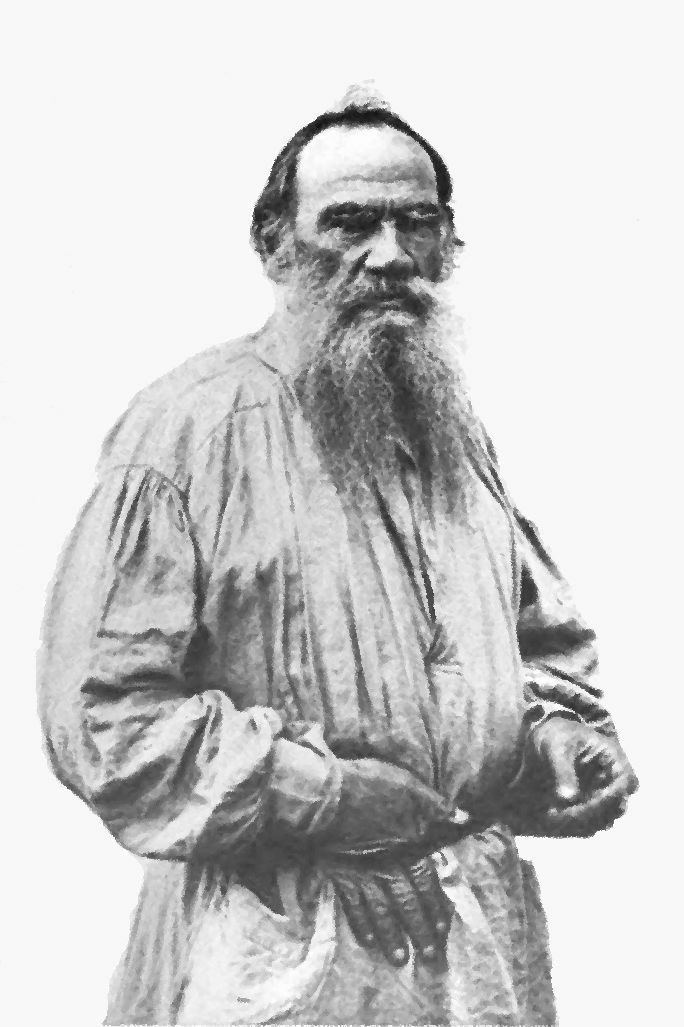
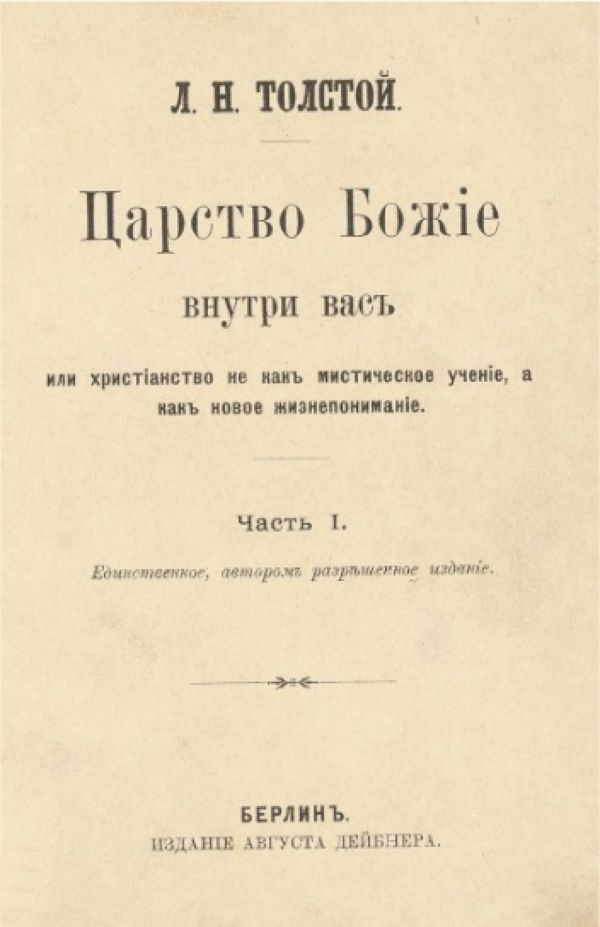
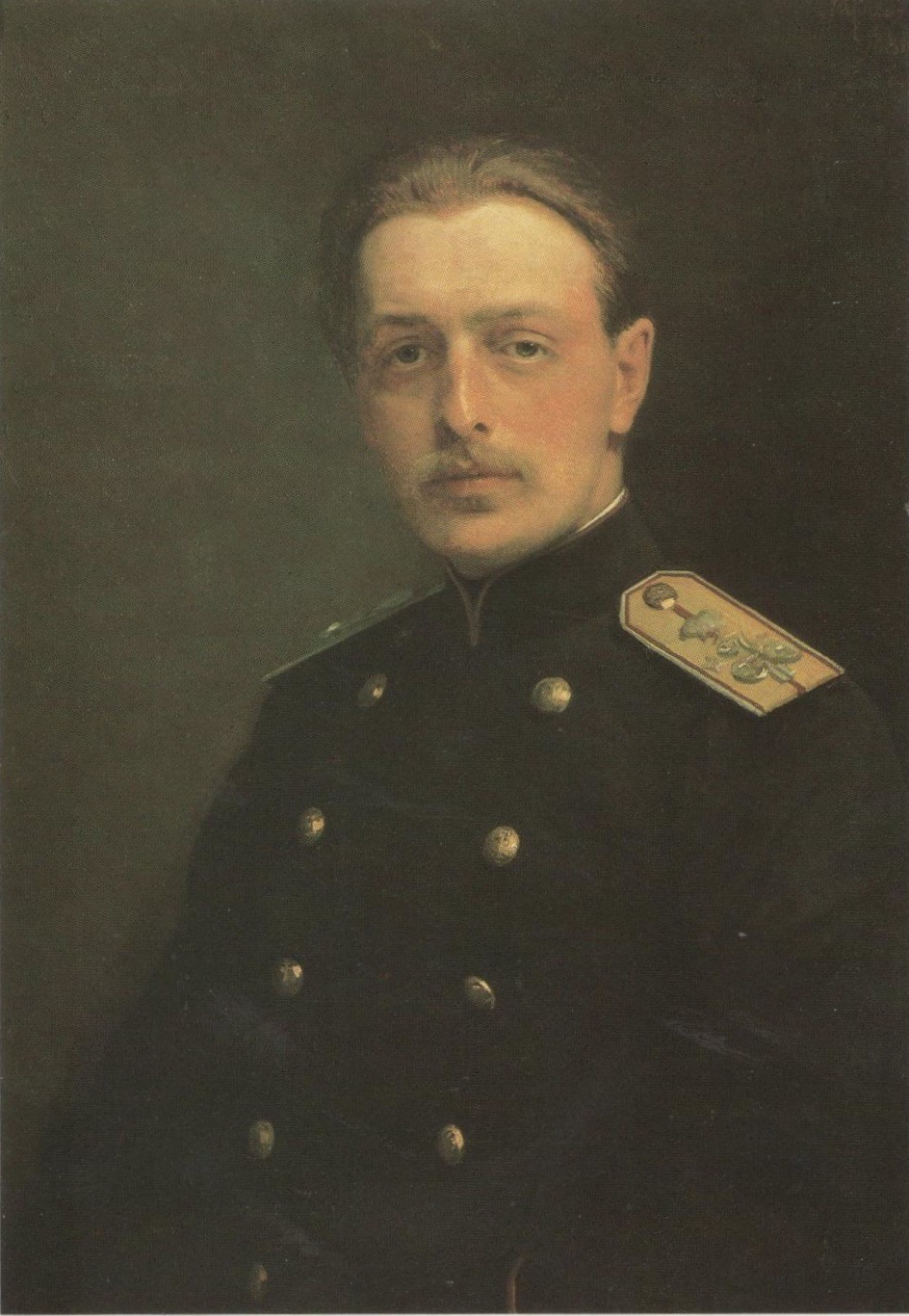
Also cached (dossier only): W. L. Garrison and Adin Ballou, the American non-resistance forebears the book’s first chapter resurrects (commons-garrison.jpg, commons-ballou.jpg); and Tolstoy at famine relief, 1891 (commons-tolstoy-famine-1891.jpg), the work that fed the book’s conclusion.
Not openly available / to request. A manuscript facsimile (the AЧ 19–35 drafts are held at the State Museum of Leo Tolstoy, Moscow) and the title pages of the 1893 French Le salut est en vous and the 1894 Stuttgart German edition were not retrieved in this sweep; the French first edition is digitized (Gallica / Internet Archive) and could be added.
14. Method
- Scope (Phase 0 contract). A work dive at
docs/research/1890-1893-the-kingdom-of-god-is-within-you/, scoped as the work companion to the existing Christian anarchism doctrine dive: genesis and composition (1890–93), what the work argues, textual history, publication/censorship/translation, and reception (Gandhi the headline), plus aworkRecordfill for the existingworks/record. Corpus surface: PSS Tom 28 (work pp. 1–293; table of contents pp. 294–306; variants pp. 309–330; commentary pp. 333–381); composition-window diaries Toms 51–52 (1890–93); letters Toms 65–66 and the Chertkov letters Tom 87. Mode: in-session unattended (the A-Confession-pilot model); noAskUserQuestiongating; judgment calls →needsReview; notedraft: true; medium visual intensity. - Sweep & read. The 1890–93 window holds 434 diary files; rather than read all, the dive used Tolstoy’s own table of contents and the commentary’s “История писания” as the structural and chronological spine (the handoff’s instruction, given the book’s 293 pp.), and read the work’s own TEI deeply for the keystone passages. The composition-window diaries and the key Chertkov letter were swept for genesis and the people around the work.
- Extract & verify (Phase 2). The work and the diary/letter finalists were extracted with
extract_tei.py --choice=reg(pre-reform orthography resolved to modern, required for this pre-1918 text) and--notes=autofor the diary/letter bodies. EveryquoteRuin the dossier is sliced from the committed extract files and gated byverify_quotes.py. The genesis/publication/censorship facts come from the PSS Tom 28 commentary (N. K. Gudzy) and are attributed, not byte-claimed — no commentary extract is committed and no commentary quote is in the evidence ledger. - Scholarship (Phase 3). A light, English-first web sweep established the received view (Christoyannopoulos; the Harvard Davis Center on Tolstoy’s nonviolence; the Gandhi reception via Gandhi’s Autobiography) and is triangulated in §11 and recorded in
dossier.yamlunderscholarship— attributed, not asserted. - Links. Sibling dives: A Confession, What I Believe, What Then Must We Do?, On Life; the doctrine companions Christian anarchism and Tolstoyism. Tom → local-PDF lookups: pss-volume-mapping.md.
15. References
Primary:
- Толстой Л. Н. Царство божие внутри вас, или Христианство не как мистическое учение, а как новое жизнепонимание // Полное собрание сочинений: в 90 тт. Т. 28. М.: Гос. изд. «Художественная литература», 1957. С. 1–293 (work), 294–306 (Оглавление), 309–330 (Варианты).
- Гудзий Н. К. «Царство божие внутри вас». История писания и печатания // ПСС Т. 28, с. 333–381 (the editorial commentary — genesis, publication, censorship; attributed, not byte-claimed).
- Толстой Л. Н. Дневники 1890–1893 // ПСС Тт. 51–52; Письма // ПСС Тт. 65–66, 87 (the Chertkov letters). tolstoydigital TEI corpus, Слово Толстого (HSE Moscow), CC BY-SA; local copy at
primary-sources/tolstoydigital-TEI/.
Background:
- Gandhi, M. K. An Autobiography, or The Story of My Experiments with Truth (1927–29) — Gandhi’s account of reading The Kingdom of God Is Within You in 1894: the book “overwhelmed” him and “left an abiding impression.”
- Christoyannopoulos, Alexandre. Christian Anarchism: A Political Commentary on the Gospel. Exeter: Imprint Academic, 2010; and Tolstoy’s Political Thought. London: Routledge.
- “Beyond War and Peace: Tolstoy’s Theory of Nonviolence.” Harvard Davis Center.
- Bartlett, Rosamund. Tolstoy: A Russian Life. London: Profile, 2010 — for the famine relief and the publication abroad.
- The Kingdom of God Is Within You — English texts: trans. Constance Garnett (Heinemann, 1894); trans. Aline Delano (Walter Scott, 1894). French: Le salut est en vous, trans. I. D. Halpérine-Kaminsky (Paris: Perrin, 1893).
Companion documents:
- dossier.yaml — the machine-readable evidence / entity / visuals / scholarship / work-record ledger behind this index.
- extract_tei.py, verify_quotes.py — the shared TEI extractor and the byte-fidelity gate.
- christian-anarchism — the doctrine companion to this work dive.
- pss-volume-mapping.md — Tom number → local PDF lookup.
Dev-blog note (draft): website/src/posts/notes/2026-06-06-the-kingdom-of-god-is-within-you.md — a short recap of this dive, kept draft: true until published.