On Life (О жизни)
A work-focused dive across the local Tolstoy corpus: the PSS (Jubilee Edition) Tom 26 text and its editorial commentary, the genesis lecture «Понятие жизни», the composition-window diaries (Tom 49, 1886–87) and letters (Tom 64), and the project’s prior dives. All Russian quotations are byte-faithful extracts (verified, 23/23); English renderings are working translations; dates are Old Style (Julian) unless noted. Genesis, censorship and reception facts drawn from the PSS commentary are attributed, not asserted; secondary scholarship is attributed, not adopted.
Key findings
- On Life is the philosophical capstone of the Prophet period — the metaphysic of life and death beneath the social ethic of What Then Must We Do?. Where the earlier books ask how a Christian must live, this one asks what life is, and answers that human life is the subordination of the animal personality to reason, realized as love.
- Its genesis is doubly grounded and the standard account is incomplete. The PSS commentary names A. K. Dieterichs’s September-1886 letter on death — written while Tolstoy lay seriously ill after a leg injury — as the work’s “immediate instigator,” and the book did begin as his point-by-point reply. But the corpus shows the whole argument already drafted in the diary of 19 June 1886, before the worst of the illness and months before that letter: reason abolishing the contradiction of egoism, immortality as the “not-I,” the seed-not-tree image, God and nature beyond time. The letter is the occasion, not the origin.
- The work grew in public. Its working title was «О жизни и смерти» (On Life and Death); on finishing, Tolstoy struck the words “and death” because, on the book’s own argument, they had lost their meaning. An early version became the lecture «Понятие жизни» read to N. Ya. Grot’s Moscow Psychological Society on 14 March 1887 — Grot then held and corrected the proofs, and Tolstoy said he had “called the work to life.”
- The argument is rational, not mystical. Tolstoy makes reason (разум) the law of human life (not a faculty but the law by which life is accomplished, as organic law governs a plant); calls the body the “instrument of life”; names Schopenhauer and Hartmann as the pessimists he is refuting, not echoing; and defines love as «единственная разумная деятельность человека» — the one rational activity left once reason has shown the impossibility of the personality’s good. To the man who lives by this law, «нет смерти» — there is no death; bodily death destroys only the spatial body and temporal consciousness, not one’s “special relation to the world.”
- Its publication history is the most violent of the Prophet books. The only complete authorized edition — «О жизни», Часть тринадцатая, printed at Mamontov’s in 1888 — was banned and destroyed by the Holy Synod on 5 April 1888, which ordered all 600 copies surrendered, for setting up as guide «не слово Божие, а единственно и исключительно человеческий разум». The work reached readers only in translation (Hapgood’s English Life, 1888; S. A. Tolstaya’s French De la vie, 1889), in a partial legal Russian printing («Неделя», 1889), and abroad (Geneva 1891; Christchurch 1903).
- As with the earlier books, it has no
works/record yet — so this dive doubles as the source-grounded basis for creating one.
Why this matters
The Prophet-period books move outward from the self to the social order: A Confession is the conversion, the Gospel works the exegesis, What I Believe the ethic, What Then Must We Do? the economics. On Life moves the other way — down, to the metaphysics the whole programme rests on. It is Tolstoy’s answer to the question his conversion left open: if the meaning of life is not the good of the person, who dies, then what is it? The book’s answer — that the personality is an instrument, that reason is the law of life, that love is life and death is not destruction — is the floor under everything the later Tolstoy says about non-resistance, property and the state. It is also the book in which he is most nearly a systematic philosopher, written for and first read to a learned society, and it is the place to watch him argue rather than preach.
The shape of the question
The book carries three epigraphs that set its terms: Pascal’s thinking reed (man is crushed by the universe but nobler than what kills him, because he knows he dies); Kant’s “starry sky above me and the moral law within me”; and Christ’s «Заповедь новую даю вам, да любите друг друга» (a new commandment I give unto you, that ye love one another). Reason, the moral law, and love — the three are the book’s whole architecture.
It opens not with doctrine but with a parable about asking the wrong question. A miller who has learned a little mechanics stops minding his milling and studies the river, until he convinces himself the river is the mill.
Жизнь есть та мельница, которую хочет исследовать человек. Мельница нужна для того, чтобы она хорошо молола, жизнь нужна только затем, чтобы она была хорошая.
Life is the mill that man wishes to investigate. The mill is needed in order that it should grind well; life is needed only in order that it should be good. (working English — PSS Tom 26, Introduction)
The science of his day, Tolstoy argues, studies what life comes from — the play of physical forces, the cell, the protoplasm — and so loses the only question that gives the word “life” its meaning: not «отчего» (whence) but «как» (how to live). He had put it to himself the same way in the diary, in the middle of writing.
Разум решает только основной вопрос как.
Reason answers only the basic question: how. (working English — diary, 3 February 1887, PSS Tom 49; the entry ends: how must one live? — «Блаженно», blessedly)
Genesis & composition
The book has a precise and unusual birth. In the summer of 1886, shortly before his fifty-eighth birthday, Tolstoy injured his leg hauling hay for a poor widow; the wound turned to erysipelas and a high fever, and for weeks he lay seriously ill and thought he was dying — “in God’s hand,” as he wrote, a state he did not wish to leave. In September, Anna Konstantinovna Dieterichs — soon V. G. Chertkov’s wife, the “Galya” of the circle — wrote him a long, anxious letter about death and the fear of it. The PSS commentary calls her the “immediate instigator” (ближайшая виновница) of the book: in early October Tolstoy began answering her «по пунктам», point by point, and the reply would not stop growing.
But the thought was already complete before the letter. The corpus holds a diary entry of 19 June 1886 — before the injury’s worst — that is On Life in miniature: the contradiction of egoistic existence, and reason as the thing that resolves it.
Но разум есть в человеке. Он-то и уничтожает это противоречие.
But reason is in man. It is precisely this that abolishes the contradiction. (working English — diary, 19 June 1886, PSS Tom 49)
The same entry ends on the equation the book would spend thirty-five chapters unfolding, and on the seed-not-tree image that becomes its account of how true life is born.
Бессмертно только то, что не я. Разум — любовь — Бог — природа.
Immortal is only that which is not-I. Reason — love — God — nature. (working English — diary, 19 June 1886, PSS Tom 49)
The death theme runs through the surrounding diary too — death as sleep in May, the embryo-analogy for the life of the dead in October — so that what Dieterichs’s letter did was give a standing meditation an occasion and a reader. (That the argument precedes the letter the apparatus names as its seed is the dive’s one correction to the received genesis.) The work then grew in public. Through the winter Tolstoy reworked the reply into a second and third version under the working title «О жизни и смерти»; he joked to Chertkov that he was printing «мою метафизическую чепуху» (my metaphysical nonsense). In February 1887 he was drawn, through the philosopher N. Ya. Grot, into the Moscow Psychological Society, and on 14 March 1887 he read an early version to the Society at the University as «Понятие жизни» (The Concept of Life). He was so anxious he nearly stayed away and asked Grot to keep the floor; he arrived near ten o’clock to a room overflowing, and began “with the second part.” The newspapers printed stenographic excerpts; the «Новое время» stenogram is the PSS «Понятие жизни» text. It already carries the book’s dynamic core — life as movement between two limits.
И потому всякий человек всегда движется от одного предела к другому, т. е. живет. Это-то движение и есть сама жизнь.
And therefore every man always moves from the one limit to the other, that is, lives. This movement is life itself. (working English — «Понятие жизни», the 14 March 1887 lecture stenogram, PSS Tom 26; the two limits are total absorption in the personality and total renunciation of it for the infinite world)
Ten days after the lecture he told N. L. Ozmidov what he was after — and the answer is the opposite of gloom.
жизнь есть совсем не та путаница и страдания, которые мы себе представляем под этим словом, а нечто очень простое, ясное, легкое и всегда радостное.
life is not at all the tangle and suffering we imagine under that word, but something very simple, clear, light, and always joyful. (working English — letter to N. L. Ozmidov, 24 March 1887, PSS Tom 64)
When he finished the manuscript on 3 August 1887 he struck the words “and death” from the title, and later explained why to V. I. Alekseev — anticipating, and rejecting, the charge his friends would make.
Я начал с заглавием о жизни и смерти, но когда кончил, то вычеркнул слова «и смерти», потому что слова эти потеряли свой смысл.
I began with the title “On Life and Death,” but when I finished I struck out the words “and death,” because those words had lost their meaning. (working English — letter to V. I. Alekseev, September–October 1887, PSS Tom 64; he adds that friends will say «страшное слово: мистицизм?» — the dreadful word: mysticism? — which he denies)
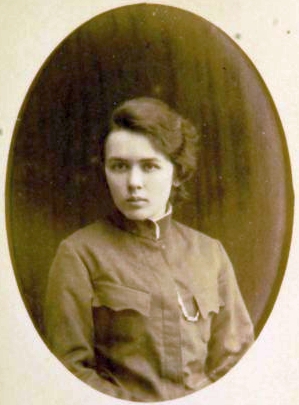
What the work says
The book has an introduction, thirty-five chapters, a conclusion and three addenda; Tolstoy supplied his own chapter-by-chapter summary, which gives its spine. The argument moves in four movements: the contradiction (I–VIII), reason and the false science of life (IX–XIV), the renunciation of the personality and the turn to love (XV–XXVI), and death and suffering (XXVII–XXXV).
It begins from the fact that every being seeks its own good — and that this good is impossible for the one who seeks it.
Живет всякий человек только для того, чтобы ему было хорошо, для своего блага.
Every man lives only in order that it may be well with him, for his own good. (working English — PSS Tom 26, ch. I)
The animal personality that seeks this good is surrounded by other beings each seeking the same, and is itself decaying toward death; so its good cannot be had. This is the “fundamental contradiction,” and Tolstoy says the world-teachers all saw it and all resolved it the same way — by relocating life’s good from the perishing person to something death cannot touch.
«Жизнь — это подчинение разуму, дающее благо человеку», сказали стоики. «Жизнь — это любовь к Богу и ближнему, дающая благо человеку», сказал Христос, включая в свое определение все предшествующие.
“Life is submission to reason, which gives man his good,” said the Stoics. “Life is love of God and of one’s neighbour, which gives man his good,” said Christ, including in his definition all that came before. (working English — PSS Tom 26, ch. II; the list runs from Confucius and the Brahmins through Buddha and Lao-Tzu)
The resolution is reason — and here the book is at its least mystical. Reason (разум) is not a human faculty among others but the law of human life itself, of the same kind as the law by which a plant grows or the planets move, with the single difference that man must himself enact it.
Разум для человека тот закон, по которому совершается его жизнь
Reason is for man the law by which his life is accomplished. (working English — PSS Tom 26, ch. X)
The “false science” chapters then attack the materialist study of life as the miller’s error written large — studying the shadow for the thing — and the book turns to its central imperative. To live truly is to renounce the good of the animal personality, not as heroism but as the only possibility.
Отречение от блага животной личности есть закон жизни человеческой.
The renunciation of the good of the animal personality is the law of human life. (working English — PSS Tom 26, ch. XV)
The personality renounced is not despised: it is the tool of the work, to be spent rather than hoarded.
Животная личность для человека — это лопата, которая дана разумному существу для того, чтобы ею копать и, копая, тупить ее и точить, тратить, а не отчищать и хранить.
The animal personality is for man a spade, given to a rational being so that he should dig with it and, in digging, blunt and whet it, wear it out — not polish and preserve it. (working English — PSS Tom 26, ch. XVI, sealed with «кто хочет жизнь свою сберечь, тот потеряет ее»)
At the centre of the book Tolstoy turns directly on the pessimists, and the turn is the answer to anyone who reads On Life as warmed-over Schopenhauer. He grants their diagnosis — the personality’s good is impossible — and rejects their conclusion.
отрицательные философы нашего времени ( Шопенгауэр, Гартман), отрицающие жизнь и все-таки остающиеся в ней
the negative philosophers of our time (Schopenhauer, Hartmann), who deny life and yet remain in it. (working English — PSS Tom 26, ch. XXII)
The exit from the contradiction is not denial but love — and love here is a conclusion of reason, not a feeling.
Любовь есть единственная разумная деятельность человека.
Love is the only rational activity of man. (working English — PSS Tom 26, ch. XXII)
Love is then defined, against mere preference, as self-sacrifice — the one activity in which the whole argument resolves.
И нет иной любви, как той, чтобы положить душу свою за други свои. Любовь — только тогда любовь, когда она есть жертва собой.
And there is no other love than to lay down one’s soul for one’s friends. Love is love only when it is the sacrifice of oneself. (working English — PSS Tom 26, ch. XXV)
Жив только тот, кто любит.
Only he who loves is alive. (working English — PSS Tom 26, ch. XXV)
The last movement faces death, and dissolves it. The fear of death, Tolstoy argues, is not fear of death — which one cannot know — but the consciousness of a life not truly lived.
«Нет смерти», говорит людям голос истины.
“There is no death,” the voice of truth says to men. (working English — PSS Tom 26, ch. XXVII)
Bodily death destroys the spatial body and the temporal consciousness but not the “special relation to the world” that is one’s real self; death is entry into a new, higher relation. The image he reaches for is the aged apostle.
Он, по преданию, говорил только: братья, любите друг друга!
He, by tradition, said only: brothers, love one another! (working English — PSS Tom 26, ch. XXX; John the Theologian, fallen into second childhood, in whom the animal existence has been wholly consumed by the new relation to the world)
The conclusion closes the book on the sentence it opened with, and on the promise that for the man who lives by his own law there is neither death nor suffering.
Жизнь человека есть стремление к благу, и то, к чему он стремится, то и дано ему.
Man’s life is a striving for the good, and that toward which he strives is given to him. (working English — PSS Tom 26, Conclusion, sealed with Matthew 11:28 — “Come unto me all ye that labour…”)
Redactions & textual history
The book was rewritten more drastically than perhaps any other Prophet-period work, and the corpus commentary distinguishes seven redactions. It began as the loose reply-letter to Dieterichs, passed through a journal-article version intended for Obolensky’s Русское богатство, and by the fifth redaction had been atomized — Tolstoy broke the text into small sheets, corrected them separately, recombined them into fresh fair copies, and broke them up again, so that the first sixty pages alone knew thirteen copies and three full recensions. The sixth (last manuscript) redaction was finished on 3 August 1887, the day the words “and death” left the title. But printing then triggered a further, decisive “proof redaction”: whole chapters (II, V, VI, VII, XXXIII, XXXIV) were rewritten in the galleys, chapter sub-titles and the three addenda were introduced in proof, and the three epigraphs were added on a separate leaf only in the last forms. The base text for the Jubilee edition — and the one closest to the author’s final will — is the printed 1888 edition itself. Only the 1.2 MB variants file (Tom 26, pp. 578–634) and the «Неделя» variant list (pp. 451–456) were left un-collated here.
Publication, censorship & translation
The book was printed at A. I. Mamontov’s typography in Moscow across the autumn of 1887, with Grot holding and stylistically correcting the proofs (Tolstoy gave him leave to cut and fix freely), and was fully printed by January 1888 as «Сочинения графа Л. Н. Толстого. Часть тринадцатая. О жизни» — 600 copies. Grot had foreseen the outcome: the book, he wrote, would not be passed, “since he attacks the Pharisees, that is, our clergy, a little sharply.” It was handed to the духовная цензура (the ecclesiastical censorship), and Tolstoy reported the suspense to Strakhov.
Книга «о жизни» всё в духовной цензуре. Едва ли пропустят.
The book “On Life” is still in the spiritual censorship. They will hardly pass it. (working English — letter to N. N. Strakhov, 24 January 1888, PSS Tom 64)
The Moscow Spiritual Censorship Committee reviewed the printed book and reported to the Holy Synod (25 January 1888) that Tolstoy had set up as the guide of life «не слово Божие, а единственно и исключительно человеческий разум» (not the word of God, but solely and exclusively human reason), that the book instils distrust of dogma and censures love of the fatherland, and that it was therefore subject to “unconditional prohibition.” On 5 April 1888 the Synod agreed and ordered the typography to surrender all 600 copies for destruction (recorded in the PSS commentary from N. Apostolov’s reading of Synod file No. 2264). The only complete authorized edition of the book was thus destroyed before it could be sold.
The work survived in three channels. It circulated in Russia by copying, lithography and hectography. It appeared in translation: Isabel Hapgood’s authorized English Life (Crowell, New York, 1888), checked by Strakhov, in 34 chapters; and S. A. Tolstaya’s French De la vie (Marpon & Flammarion, Paris, 1889), which she began in November 1887 and finished under Professor Tastevin — the work’s first foreign edition, made by the author’s own wife. And it appeared, partially and legally, in Russia: chapters XXII–XXV, XXVII–XXXV and the conclusion ran in the weekly «Неделя» in 1889 under the title «Мысли о жизни», the first legal appearance of any of it. The first complete foreign Russian editions followed — M. Elpidine’s at Geneva (1891) and, the standard reprint base, V. Chertkov’s «Свободное слово» at Christchurch (1903). Tolstoy’s own verdict on the French version, in his diary of 19 March 1889, was cool: he found it «очень плохо-искусственно, хотя и не лживо» (very bad — artificial, though not false).
Reception & afterlife — the Russian society and Church reaction
The reception split along the line the book itself drew, between the learned society that received it as philosophy and the Church that banned it as rationalism. On the philosophical side, the work was midwifed by Grot and the Moscow Psychological Society: the 14 March 1887 lecture drew some seventy members and a debate (Astafyev, Bugaev and others), and Grot felt enough ownership of the book — “I called it to life” — to spend autumn 1887 on its proofs. N. N. Strakhov compared it to Fichte. Once S. A. Tolstaya’s De la vie put the argument before a Russian philosophical public, it drew a sympathetic exposition from Prince D. N. Tsertelev (Русское обозрение, 1890) and a book-length polemic from Professor A. A. Kozlov (Вопросы философии и психологии, 1890). On the Church side, the verdict was the Synod’s destruction order, and Archbishop Nikanor of Kherson — who read it in the Synod — privately dismissed it as «сцепление… шитых нитками софизмов» (a chain of sophisms sewn with white thread). Notably, the Church condemned the book not for mysticism but for the opposite: for making «человеческий разум» rather than revelation the guide of life. Its widest afterlife was practical and popular — Chertkov’s author-approved simplified retelling «Об истинной жизни», prepared from late 1888 and read aloud to peasants for correction — and translational, the book passing into Danish, Czech, German and Italian within twenty years. The wider lay reception — the dossier of ordinary readers’, journalists’ and churchmen’s responses collected in the modern critical edition — is given here only in outline.
Place in the cluster
On Life is the keystone of the Prophet arch, the metaphysic the rest of the programme leans on. It stands to What Then Must We Do? as ground to application: that book ends in the bread-labour ethic and the failure of charity; this one supplies the account of what a human life is that makes such renunciation not sacrifice but self-realization. Behind both lies the ethic of What I Believe and the conversion of A Confession; the gospel scholarship is in the gospel-translation dive. Forward, the doctrine that reason is the law of life and love its activity is the floor under the political teaching of christian-anarchism and the renunciations of copyright-renunciation. The movement-label later fixed on Tolstoy’s followers is interrogated in the tolstoyanism dive and is attributed to its users, not adopted here.
Scholarly context
English-language scholarship treats On Life as Tolstoy’s most sustained philosophical statement — the systematic metaphysic beneath the religious turn. The modern authoritative treatment is the critical edition of Inessa Medzhibovskaya and Michael Denner (On Life: A Critical Edition, Northwestern University Press, 2019), which prints the «Понятие жизни» talk and a dossier of contemporary responses; Gustafson’s Resident and Stranger (1986) reads it as the core of Tolstoy’s metaphysics of life. Set against the corpus, the findings fall out as follows.
- Genesis in the 1886 illness and the Dieterichs letter — extends. The illness-and-reply-letter account is settled (Medzhibovskaya & Denner; the PSS commentary). The corpus adds that the argument is already drafted in the 19 June 1886 diary, before the letter — the genesis is earlier and more internal than the reply-letter framing implies.
- “On Life is a mystical meditation” — contradicts. The popular framing (love-anthologies; the meaning-of-life shelf) misses that the primary text makes reason the law of life (ch. X) and the body its “instrument,” and that the Synod banned the book precisely for exalting «человеческий разум» over revelation. Soina reads it as rational ethics in a Stoic and early-Christian lineage, not mysticism — a reading the primary text supports.
- “On Life restates Schopenhauer / Buddhist pessimism” — contradicts. Tolstoy names Schopenhauer and Hartmann in ch. XXII as the pessimists he refutes: he accepts their diagnosis of the personality and answers their conclusion with love. The book is positioned against pessimism, not as its echo.
- Tolstoy’s “love” is a religious sentiment — complicates. The text defines love as «единственная разумная деятельность человека» and explicitly not as preference or feeling (chs. XXIII–XXIV) — a rational consequence of the metaphysic, which the devotional readings flatten.
- The lecture and the ban — confirms / extends. The Moscow Psychological Society presentation is well attested (and printed in the critical edition); the corpus and commentary supply the mechanism scholarship gives only in passing — Grot’s central role in both the lecture and the proofs, and the precise Censorship-Committee report and 5 April 1888 Synod destruction order.
Material not covered
- The 1.2 MB variants file (Tom 26, pp. 578–634) and the «Неделя» variant list (pp. 451–456) — summarized from the commentary, not collated.
- Chertkov’s author-approved simplified exposition «Об истинной жизни» (Tom 26, pp. 885–926) — read structurally, not extracted; a separate popular retelling rather than the work itself.
- The full Dieterichs genesis letter and Tolstoy’s point-by-point reply drafts (PSS t. 85) — described from the commentary, not byte-extracted.
- The wider contemporary lay and clerical reception collected in Medzhibovskaya & Denner (2019), beyond the named Russian critics and the Synod.
- The Tolstoy–Grot correspondence on the proofs (extracted but not cited byte-faithful here).
- The relation of On Life to Kant and Pascal (whose epigraphs head the book) and to the Stoics — flagged by the text and by scholarship, not pursued.
Visual & manuscript record
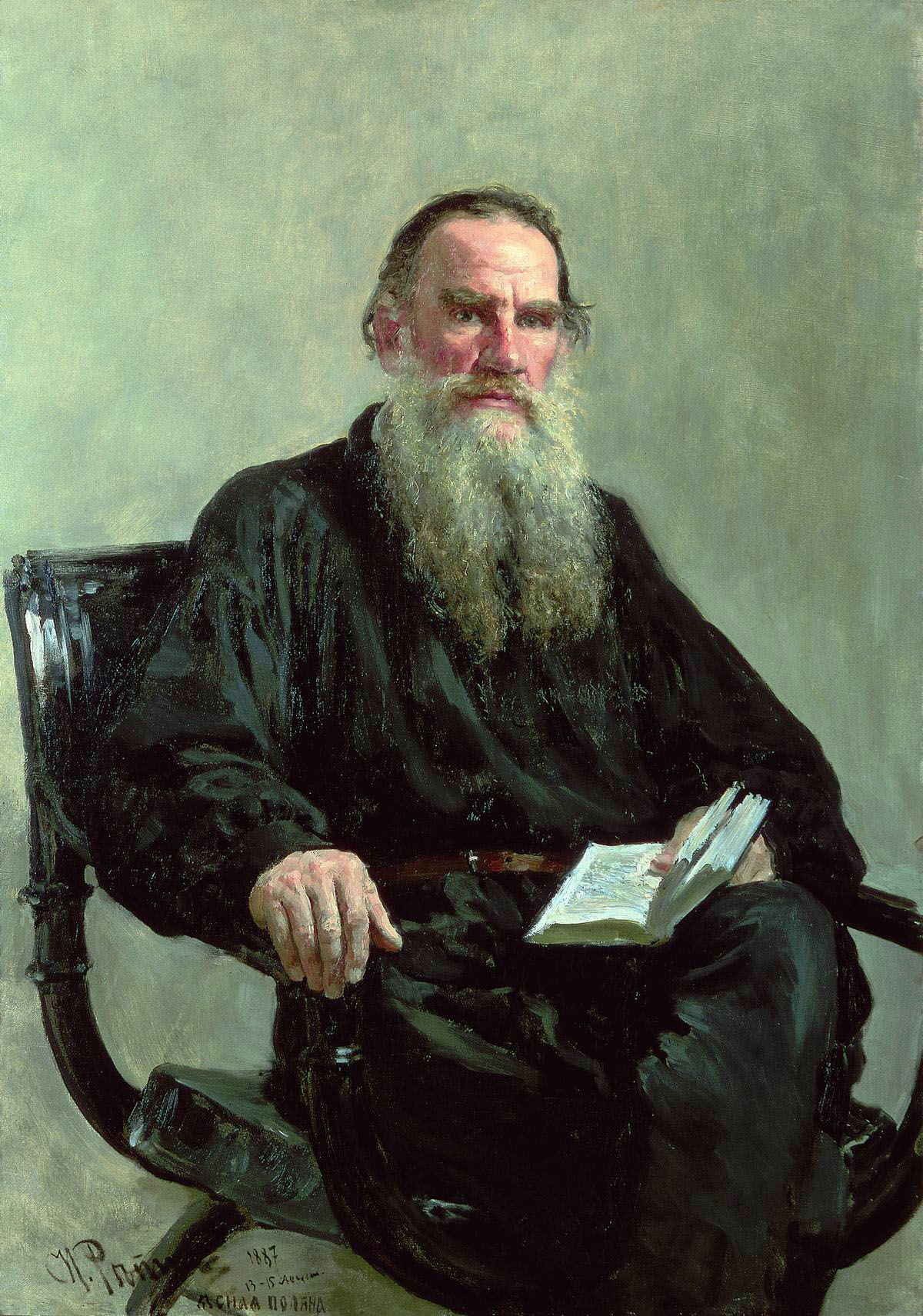
The visual record of a metaphysical book is necessarily of its people, not its events. A medium sweep retrieved seven public-domain images into the dive’s local cache (visuals/, git-ignored). The keystone is contemporaneous: Ilya Repin’s portrait of Tolstoy, painted in 1887 — exactly the year the book was written and read to the Psychological Society.
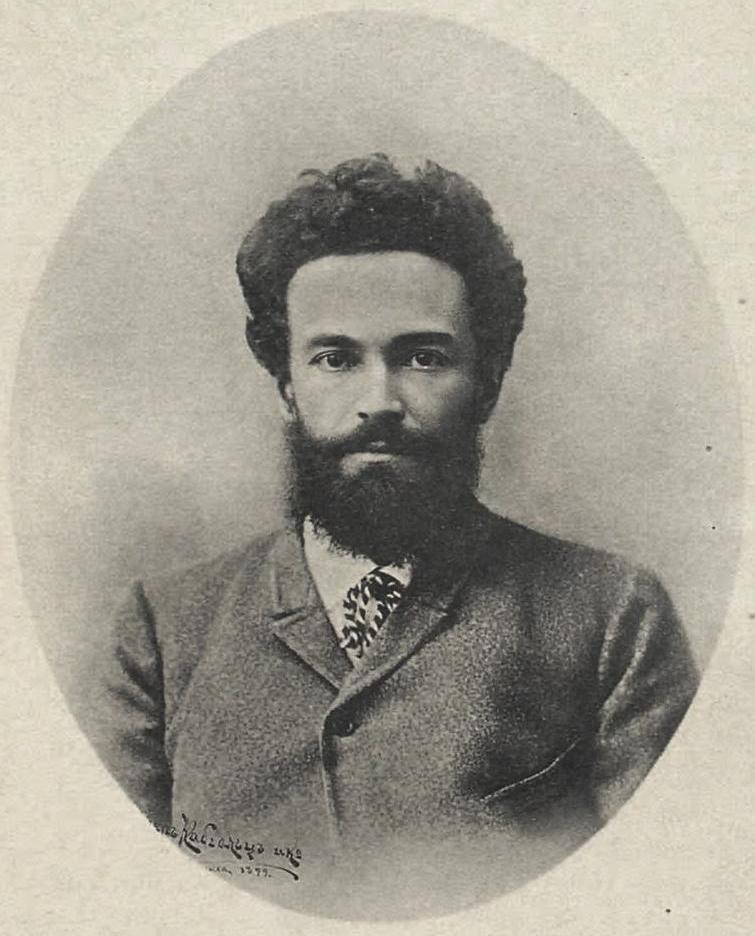
The people who made the book are all in the cache: N. Ya. Grot, who hosted the lecture and held the proofs; A. K. Dieterichs, whose letter began it (above); N. N. Strakhov, who read it against Fichte and checked the English; V. G. Chertkov, who made the popular retelling and printed the banned text abroad; and S. A. Tolstaya, copyist and French translator. Nikolai Ge’s 1884 portrait of Tolstoy rounds out the set.
What is not openly available is the publication artefact that would matter most: a title-page facsimile of the banned 1888 first edition, of which only three copies survive (the Lenin Library and the State Tolstoy Museum), and of S. A. Tolstaya’s French De la vie (1889) — both logged in the dossier to request.
Method
This was an in-session work-dive on the A-Confession-pilot model, run to medium visual intensity. Phase 0 pinned the subject to PSS Tom 26 (work «О жизни» pp. 313–442; the «Понятие жизни» lecture pp. 881–885; variants pp. 578–634 and 451–456; the simplified «Об истинной жизни» pp. 885–926; commentary pp. 748–844), with the composition window 1886–1887. Phase 1 deep-read the introduction, all 35 chapters, the conclusion and addenda inline (using Tolstoy’s own chapter summary as the spine), mined the commentary for genesis, redaction, censorship and reception, and swept the Tom 49 diaries (1886–87, found unusually rich for this work) and Tom 64 letters; the planned background sweep agents could not run (a mid-session spend limit), so the diary, letter and visual sweeps were done in the main context. Phase 2 extracted finalists with extract_tei.py --choice=reg (pre-reform orthography resolved; diary and letter bodies recovered via --notes=auto); every cited Russian quotation was checked byte-for-byte against its extract (verify_quotes.py, 23/23 pass). The visual sweep fetched seven public-domain images from Wikimedia Commons. Phase 3 added the secondary scholarship and reception layer (web). Phase 4 synthesized this page, the dossier.yaml and the draft note. Genuine uncertainties — which event dateFirstPublished should carry for a work whose only complete edition was destroyed, the controlled value for a ban-and-destroy scope, the excommunicationRelated and censoredVersionExists values, the new record’s folder, and the commentary-sourced (not byte-extracted) censorship and genesis quotations — are routed to the dossier’s needsReview, not asserted here. The Phase-5 independent verifier could not be dispatched under the spend limit; this is logged for the human verification pass.
Links: predecessor dive What Then Must We Do?; sibling dives What I Believe, A Confession, gospel-translation, christian-anarchism, copyright-renunciation, tolstoyanism.
References
Primary: L. N. Tolstoy, «О жизни», PSS (Jubilee Edition) Tom 26, pp. 313–442 (text); «Понятие жизни» (the 14 March 1887 lecture stenogram), pp. 881–885; variants pp. 578–634 and «Неделя» 1889 variants pp. 451–456; «Об истинной жизни» (Chertkov’s simplified exposition) pp. 885–926; commentary (N. N. Gusev) pp. 748–844. tolstoydigital-TEI corpus — diaries Tom 49 (1886–87); letters Tom 64 (1887–88, to N. L. Ozmidov no. 39, V. I. Alekseev no. 148, N. N. Strakhov no. 181, N. Ya. Grot, and others).
Background: Inessa Medzhibovskaya (ed.) & Michael A. Denner (trans.), On Life: A Critical Edition (Northwestern University Press, 2019); Richard F. Gustafson, Leo Tolstoy: Resident and Stranger (Princeton, 1986); O. S. Soina, “Leo Tolstoy on the Meaning of Life” (English trans., The Ted K Archive); Ernest J. Simmons, Leo Tolstoy (1946); Rosamund Bartlett, Tolstoy: A Russian Life (2011); N. Apostolov, Толстой и русское самодержавие (1930) — the Synod file on the 1888 ban (via the PSS commentary); Isabel F. Hapgood (trans.), Life (New York, 1888); S. A. Tolstaya & Prof. Tastevin (trans.), De la vie (Paris, 1889). (Phase-3 sources detailed in the dossier references.background.)
Companion dev-blog note: 2026-06-06-on-life (draft). Structured evidence, entity routing, the work-record proposal and the coverage ledger are in dossier.yaml.