A single-work corpus dive on Tolstoy’s 1908 treatise Закон насилия и закон любви — his last systematic statement of non-resistance, written in his 80th-birthday year. It reads the treatise from its own text in the tolstoydigital TEI corpus (PSS Tom 37, pp. 149–221), reconstructs its composition from the 1908 diaries, notebooks and letters (Tom 56; Toms 78 and 89) and the Jubilee-Edition editorial history, and makes the redaction history — the unstable title and the chapters moved in and out — its centrepiece. The two fire images are cross-referenced from the fire-metaphor dive and re-verified here.
The dive prepares ingestion-ready material (this index.md, a machine-readable dossier.yaml, byte-faithful extracts/, and a draft dev-blog note). It does not create vault pages or works records; it plans them. Because no works/ record exists for this treatise yet, the dossier’s workRecord is record-creating — it proposes the full field set for a new record rather than filling an existing one.
Key findings
- It is the capstone of the non-resistance doctrine. This is Tolstoy’s last full systematic statement of the law of love and непротивление злу насилием (non-resistance to evil by force), the line that runs What I Believe (1884) → The Kingdom of God Is Within You (1893) → here. Its single argumentative hinge: non-resistance is not a separate, eccentric rule but the strict no-exceptions consequence of love being the highest law. A Christianity that admits violent exceptions, he says, “is the same internal contradiction as cold fire or hot ice.”
- Its critique falls equally on government and on revolution. Written after the 1905 revolution and its repression, the treatise condemns state violence and revolutionary violence in the same breath: the revolutionaries “put out fire with fire,” and both sides are like men who “break down the walls of the house they live in and burn them.” The state itself survives only on a centuries-old deception (La Boétie’s “voluntary servitude”) by which the people staff the armies and police that oppress them.
- The unstable title is the genesis story. Begun on 20 January 1908 (OS) as «Об упадке, безверии и непротивлении» (On Decline, Unbelief and Non-resistance), first titled «Всему бывает конец» (Everything Comes to an End), the work passed through an appeal (воззвание) form and a list of trial titles before Tolstoy fixed «Закон насилия и закон любви» on 12 May 1908. Along the way the newspaper-criticism chapter was reworked nine times and then split off into the 1909 article «Номер газеты»; the 1906 article «Христианство и воинская повинность» was folded in as chapter XIII; and three chapters were demoted to appendices.
- Tolstoy nearly abandoned it. The 1908 diary and notebooks record the strain at first hand: “the article advances badly” (9 March), “it won’t go, yet I don’t want to leave it” (10 March), “I want to drop the article I’ve begun” (18 March). His secretary N. N. Gusev records him calling it «чепуха» (nonsense) and annotating a cover “even to this nonsense.” Then on 12 May the diary turns: “Read parts of my work The Law of Violence and the Law of Love, and I liked it, and I have finished it.”
- Unlike the rest of the late doctrine, it did appear in Russia — censored. Its first appearance anywhere was a partial, censored run in the Kyiv newspaper «Киевские вести» (February 1909: preface + chapters I–VII). The complete text reached the public only abroad, through Chertkov’s Free Age Press / «Свободное слово» (Christchurch, England, 1909), with many misprints; a corrected text followed in 1917.
- The Gandhi connection belongs to the year, not (directly) to this text. 1908 is the hinge of the Tolstoy–Gandhi lineage, but that lineage runs through the treatise’s siblings — A Letter to a Hindu (December 1908) and The Kingdom of God Is Within You — which Gandhi actually read. No source found documents Gandhi engaging this treatise specifically. It is the doctrine’s last statement, not a Gandhi influence-text.
Why this matters
The Law of Violence and the Law of Love is the final synthesis of the position Tolstoy spent his last thirty years working out. Where The Kingdom of God Is Within You argued the case at book length and Bethink Yourselves! carried it into a specific war, this treatise states the doctrine whole, one more time, “on the edge of the grave.” It was written in the same months as Не могу молчать (I Cannot Be Silent, July 1908, against capital punishment) and just before Письмо к индусу (A Letter to a Hindu, December 1908) — the cluster of 1908 texts through which Tolstoy’s non-resistance reached the wider world. For this project it sits at the centre of the non-resistance and anti-violence cluster, shares the fire image with several of its neighbours, and — because it has no works record yet — is the occasion to create one.
Genesis & composition
(The composition narrative is drawn from E. S. Serebrovskaya’s editorial history of writing and printing in PSS Tom 37, comments/v37_436_438, and from the 1908 diaries and notebooks (Tom 56) and letters (Toms 78 and 89). Editorial commentary is attributed; Tolstoy’s own words are cited from the diary/letter extracts. Dates are Old Style unless marked NS.)
The work began on 20 January 1908. The diary names the subject, not yet the title:
Начал писать статью. Об упадке, безверии и непротивлении. Не очень дурно, но слабо.
(working English) Began writing an article. On decline, unbelief and non-resistance. Not very bad, but weak.
Diary, 20 January 1908 (OS) · TEI v56_093_094_1908_01_20 · PSS Tom 56, pp. 93–94. — the same entry lists the people at Yasnaya Polyana that day: Chertkov, Gusev, and “Posha” (Biryukov), who would all bear on the work.
The first title was «Всему бывает конец» (Everything Comes to an End). Tolstoy reworked the opening several times, set it aside, and for a while wrote in the form of an appeal (воззвание): “All this is notes for the planned appeal” (9 February). That form was abandoned too — it survives only in the direct address of the last chapters — and he returned to the draft, expanding the part about the contemporary press. (The newspaper-review idea was an old one, going back to 1888; he reworked the newspaper chapter nine times before deciding, later, to give it its own article, «Номер газеты», in 1909.) By February the article had grown to nine chapters and the work had become hard.
The strain is recorded at first hand. From the notebook, 9 March:
Статья плохо подвигается. Думается об описании убийц революционеров, палачей и правительства.
(working English) The article advances badly. I keep thinking about a description of the killers — revolutionaries, executioners, and the government.
Notebook No. 1, 9 March 1908 · TEI v56_299_301 · PSS Tom 56, pp. 299–301.
Не идет, а не хочется оставить.
(working English) It won’t go, yet I don’t want to leave it.
Diary, 10 March 1908 (OS) · TEI v56_109_110_1908_03_10 · PSS Tom 56, pp. 109–110. — and at the low point, a week later: “I want to drop the article I’ve begun” (Notebook No. 2, 18 March). His secretary N. N. Gusev, whose 1908 diary the editorial history quotes throughout, caught Tolstoy calling the work «чепуха»:
Теперь я буду свою чепуху кончать
(working English) Now I am going to finish my nonsense.
N. N. Gusev’s diary, 23 February 1908, quoted in Serebrovskaya’s editorial history · TEI v37_436_438. — Tolstoy even annotated a cover, the commentary records, “even to this nonsense.” (The «чепуха» line is Gusev reporting Tolstoy’s speech, not a Tolstoy autograph — see the dossier needsReview.)
Then, on 21 March, it cleared:
несмотря на нездоровье, писал статью очень хорошо. Все, что было неясно, уяснилось, и гуляя думал, и кажется все ясно, и допишу.
(working English) despite ill-health, wrote the article very well. Everything that had been unclear cleared up, and walking I thought it over, and it all seems clear, and I shall finish it.
Diary, 21 March 1908 (OS) · TEI v56_110_111_1908_03_21 · PSS Tom 56, pp. 110–111. — the rough draft, now nineteen chapters, was finished “in the rough” on 30 March, and on 14 April he gave it out to be copied. On 1 May he wrote to Chertkov the line the editorial history quotes:
взялся за другое, пока жив.
(working English) [I have finished the article and] taken up something else, while I am still alive.
To V. G. Chertkov, 1 May 1908 · TEI v89_806 · PSS Tom 89. — “while I am still alive” (пока жив) is the keynote of the whole 80th-year project. But he had not finished. Receiving the fair copy, he kept revising; on 12 May the title was fixed and he declared the work done and liked (see The author’s later verdict), yet he went on working the chapters into June, drawing on the letters of real correspondents for chapters X–XII and restructuring as late as mid-June:
Вчера писал, и нынче очень хорошо — так кажется — написал о непротивлении и вообще исправил.
(working English) Yesterday I wrote, and today very well — so it seems — wrote about non-resistance and corrected it generally.
Diary, 17 June 1908 (OS) · TEI v56_134_134_1908_06_17 · PSS Tom 56, p. 134. — the final author’s date is 2 July 1908 (OS = 15 July NS), with further corrections on 8 July and 6 August.
The people around the work
- V. G. Chertkov (central) — publisher abroad and editorial confidant. The article went to him, came back corrected and improved (“it is all not as [I feared] but better than I expected,” 9 June), and was published through his Free Age Press / «Свободное слово». His page exists in the vault.
- N. N. Gusev (central) — Tolstoy’s secretary in 1908, copyist, and the first-class diary-witness to the composition; almost everything we know about Tolstoy’s day-to-day mood toward the work comes through Gusev’s diary (the «чепуха» remark, the cover datings, the demotion of chapter III). No vault page yet.
- P. I. Biryukov / “Posha” (supporting) — Tolstoy’s friend and biographer; he read the draft in spring 1908 for whether it said anything new, and Tolstoy used his remarks (“He made me many good remarks, and I made use of them,” to Chertkov, 2 April). His page exists in the vault, under the transliteration Pavel Birukoff.
- A. I. Ikonnikov (supporting) — a conscientious objector who refused military service; Tolstoy folded passages from his letters into the contemporary-refusers material and named him in the work: “In this article I speak of refusals of military service and of you, and I cite passages from your letters” (10 May 1908,
v78_138).
What the work says
A structural map of the treatise, read chapter by chapter from its own text (works/v37_149_221, PSS Tom 37, pp. 149–221). It is built as an epigraph (Matthew 10:28) and four aphorisms, a preface, nineteen chapters, and four appendices. Each numbered chapter opens with a fan of quoted epigraphs — Amiel, Pascal, Mazzini, Channing, Ruskin, Kant, Herzen, La Boétie, Henry George, Salter (Сольтер), and others — before Tolstoy’s own prose. The argument moves from diagnosis (I–VI) to the doctrinal core (VII–X), to the inner remedy and the direct appeal (XI–XIX).
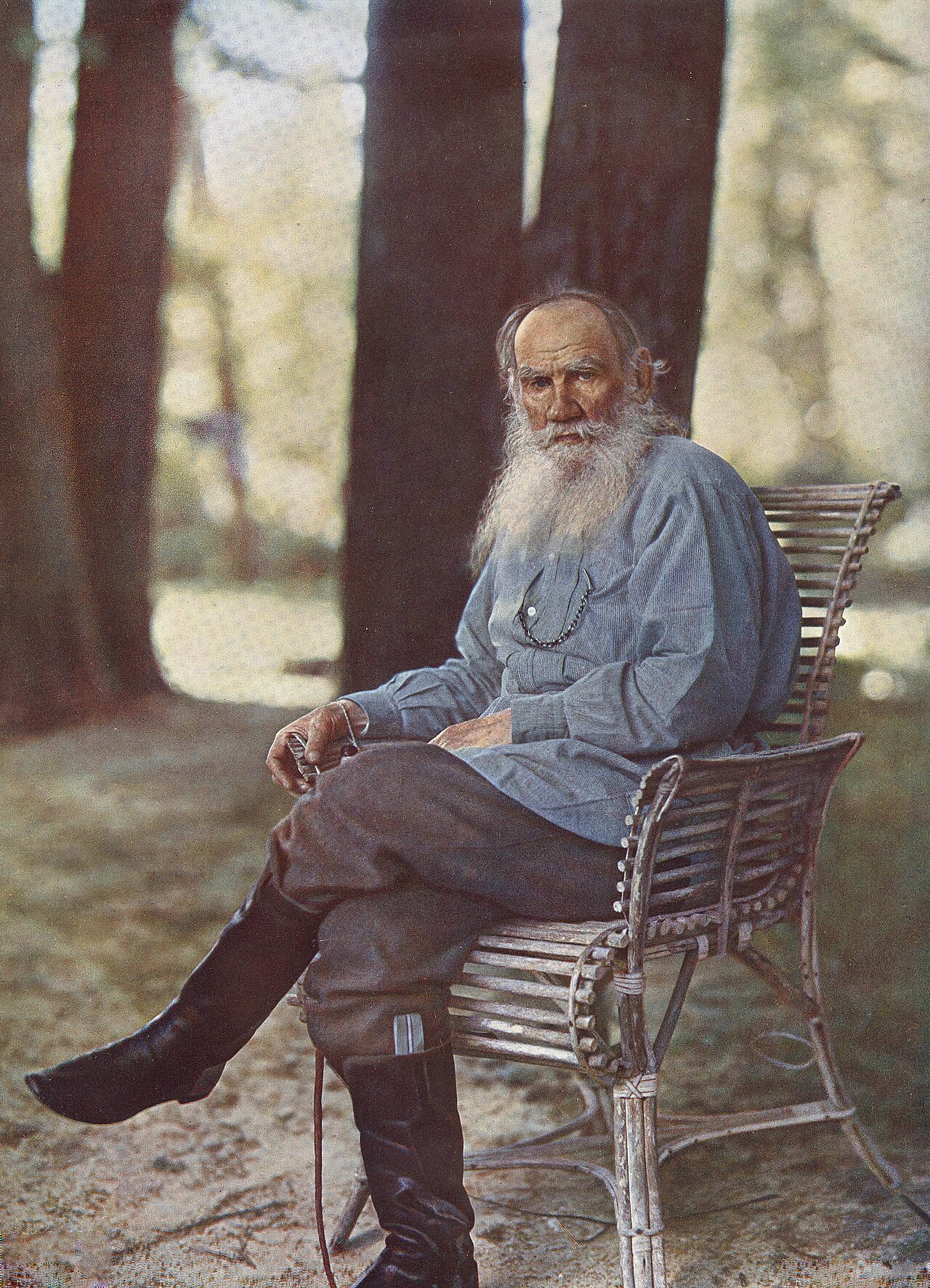
1 — The opening thesis: worse than pagan
Вследствие извращения христианства жизнь христианских народов стала хуже языческой.
(working English) Through the perversion of Christianity the life of Christian peoples has become worse than pagan.
Prefatory aphorism · PSS Tom 37 · TEI v37_149_221. — the treatise’s first proposition and its diagnostic premise. The preface and chapters I–VI develop it: Christian peoples took church doctrine in place of true Christianity, then ceased to believe even in that, and so live with no shared higher understanding of life — hence the hatreds, the armaments, and the violence everyone now reaches for.
2 — The doctrinal core: love as the highest law
Христианское учение во всем его истинном значении, как оно всё более и более выясняется в наше время, состоит в том, что сущность жизни человеческой есть сознательное всё большее и большее проявление того начала всего, признак проявления которого в нас есть любовь, и что поэтому сущность жизни человеческой и высший закон, долженствующий руководить ею, есть любовь.
(working English) Christian teaching in its full true meaning, as it is becoming ever clearer in our time, consists in this: that the essence of human life is the conscious, ever-greater manifestation of that origin of all things whose sign of manifestation in us is love, and that therefore the essence of human life and the highest law that ought to govern it is love.
Chapter VII · PSS Tom 37 · TEI v37_149_221. — and from this single premise the whole position follows. If love is the highest law, it can admit no exceptions:
Учение Христа в его истинном смысле состоит в признании любви высшим законом жизни, и потому не могущим допускать никаких исключений.
(working English) Christ’s teaching in its true meaning consists in recognizing love as the highest law of life, and therefore one that can admit no exceptions.
Chapter VIII · PSS Tom 37 · TEI v37_149_221. — so non-resistance is not a separate commandment but the form the law of love necessarily takes. A Christianity that admits violent exceptions is self-contradictory:
есть такое же внутреннее противоречие, как холодный огонь или горячий лед.
(working English) is the same internal contradiction as cold fire or hot ice.
Chapter VIII · PSS Tom 37 · TEI v37_149_221. — this “cold fire / hot ice” image is Tolstoy’s own (one of the two fire figures the fire-metaphor dive traces; the other, “fire in dry wood,” he takes as an epigraph from Salter — see Redactions).
3 — The symmetric critique of violence
Tolstoy first defines what violence is:
Всякое насилие состоит в том, что одни люди под угрозой страданий или смерти заставляют других людей делать то, чего нехотят насилуемые.
(working English) All violence consists in this: that some men, under threat of suffering or death, compel other men to do what those subjected to violence do not want.
Chapter III · PSS Tom 37 · TEI v37_149_221. — and then turns the same charge on both sides of the politics of force. The revolutionaries answer government violence with their own:
другие же, меньшинство, для того чтобы избавиться от насилия, когда могут это сделать, совершают во время революций насилия над теми людьми, от насилия которых страдают, то есть тушат огонь огнем, и этим только увеличивают над собою насилие.
(working English) while others, the minority, in order to free themselves from violence, when they can do so commit, during revolutions, violence against the very people from whose violence they suffer — that is, they put out fire with fire, and by this only increase the violence over themselves.
Chapter VIII · PSS Tom 37 · TEI v37_149_221. — and government violence survives only on a deception the people themselves uphold:
Насилие властвующих держится, как и может держаться насилие меньшинства над большинством, только на давно уж устроенном ловкими и сметливыми людьми обмане
(working English) The violence of the ruling classes holds, as the violence of a minority over a majority can only hold, solely upon a deception long ago contrived by clever and cunning men
Chapter VIII · PSS Tom 37 · TEI v37_149_221. — the La Boétie “voluntary servitude” thesis: the working people staff the very armies, police and tax-collection that oppress them.
4 — The two laws of the title
И потому спасение от порабощения, в котором находятся люди, невозможное для людей общественных, и совершалось и совершается только христианством, только заменой закона насилия законом любви.
(working English) And therefore the salvation from the enslavement men are in, impossible for men of society, has been and is accomplished only by Christianity, only by the replacement of the law of violence with the law of love.
Chapter XIII · PSS Tom 37 · TEI v37_149_221. — the title’s opposition stated as the work’s central formula. And the practical-political payoff:
Исповедание христианства в его истинном значении, включающем непротивление злу насилием, освобождает людей от всякой внешней власти.
(working English) The profession of Christianity in its true meaning, which includes non-resistance to evil by force, frees men from all external power.
Chapter XIII · PSS Tom 37 · TEI v37_149_221.
5 — The one means of abolishing war
Война уничтожится только тогда, когда люди не будут принимать никакого участия в насилии и будут готовы нести все те гонения, которым они могут подвергнуться за это. Это одно средство уничтожения войны.
(working English) War will be abolished only when men take no part whatever in violence and are ready to bear all the persecutions to which they may be subjected for it. This is the one means of abolishing war.
Chapter IX · PSS Tom 37 · TEI v37_149_221. — chapters IX–XII gather the historical and contemporary evidence: the early Church to the fifth century held that a Christian could not be a soldier; Russian refusers of military service recur across the nineteenth century; and contemporary objectors writing from prison are calm and joyful while those who submit to violence live in fear.
6 — The appeal to the young, and the close
Поймите это, особенно вы, молодежь, поколение будущего, перестаньте, как это делают теперь большинство из вас, искать этого воображаемого счастья в составлении блага народа посредством участия в управлении, в суде, в обучении других людей
(working English) Understand this, especially you, the young, the generation of the future: cease, as most of you now do, to seek this imagined happiness in making the people’s good through participation in government, in the courts, in the teaching of others
Chapter XVIII · PSS Tom 37 · TEI v37_149_221. — the residue of the appeal form, redirecting the young from political activity to the one thing in their power. The appendices restate the case: the demoted Russian-revolution chapter (Appendix I) gives the figure that equates the two violences —
Положение и деятельность обеих враждующих сторон — правительства и революционеров — как в России, так и во всем христианском мире, с их средствами улучшения быта народа насилием, подобны людям, которые для того, чтобы согреться, ломают стены того дома, в котором живут, и топят ими.
(working English) The position and activity of both warring sides — government and revolutionaries — in Russia and in the whole Christian world, with their means of improving the people’s lot by violence, are like men who, in order to keep warm, break down the walls of the house they live in and burn them.
Appendix I (to ch. III) · PSS Tom 37 · TEI v37_149_221. — and the very last sentences ground non-resistance not in calculation but in experience:
И потому всякое противление злу злом есть лишение блага, всякое любовное отвечание на зло есть приобретение блага
(working English) And therefore every resistance of evil by evil is a loss of the good, every loving response to evil is a gain of the good
Appendix IV (to ch. XVII), the treatise’s closing lines · PSS Tom 37 · TEI v37_149_221.
A short companion piece of the same title, «Закон насилия и закон любви», signed «Бука», appears as a weekly reading in the Circle of Reading (Круг чтения, Tom 41) — a compressed statement of the same doctrine (“for a Christian, in the extreme case, it is better to be killed than to be a killer”), cross-referenced here but not part of the treatise.
Redactions & textual history
This is the work’s most distinctive feature, and the corpus documents it from the inside — not through a variants apparatus (there is no separate _Varianty file for this treatise, unlike Bethink Yourselves) but through Serebrovskaya’s history of writing and printing (comments/v37_436_438), which quotes Tolstoy’s and Gusev’s diaries.
The scale alone is large:
Общее количество рукописного материала, относящегося к статье «Закон насилия и закон любви» исчисляется в 1536 листов разного размера
(working English) The total quantity of manuscript material relating to the article The Law of Violence and the Law of Love is reckoned at 1,536 leaves of various sizes.
Editorial history · TEI v37_436_438. — across 58 numbered manuscripts. Manuscripts 1–27 carry the «Всему бывает конец» stage (January–March 1908); 28–58 the «Закон насилия» stage (April–June); the edition prints from рук. № 58, the last full corrected redaction.
The title saga is the spine of the genesis. The work began as «Об упадке, безверии и непротивлении», became «Всему бывает конец», passed through an appeal form, and was last marked under the old title on 5 April. Looking for a new one, Tolstoy tried «Не может не быть», «Христианское учение в его истинном значении», and «Закон любви — закон высший», before fixing «Закон насилия и закон любви» on 12 May 1908 (first marked 23 April).
Three structural moves reshaped the book as it grew:
- The newspaper-criticism chapter, reworked nine times, was split off into a separate article, «Номер газеты» (1909, Tom 38).
- The 1906 article «Христианство и воинская повинность» (Christianity and Military Service) was folded in, in slightly altered form, as chapter XIII (10 May 1908).
- Three chapters were demoted to appendices. The most documented is the Russian-revolution chapter (former chapter III), which Tolstoy moved to Appendix I in June. Gusev’s diary catches his reasoning:
Третью, — если помните, о русской революции. Она нарушает стройность изложения.
(working English) The third — if you remember, on the Russian revolution. It disturbs the harmony of the exposition.
N. N. Gusev’s diary, 16 June 1908, in the editorial history · TEI v37_436_438. — two further chapters (former IX and X) had already been moved to Appendices II and III on 8 May.
One redaction point bears on the fire-metaphor dive: the image «но истина христианства, как огонь в сухом дереве, прожгла свою оболочку и выбилась наружу» — “the truth of Christianity, like fire in dry wood, has burned through its shell and broken out” — is not Tolstoy’s own sentence but an epigraph attributed to «Сольтер» (Salter), which he placed at the head of both chapters VI and X. He endorses the image by quoting and repeating it; but it is a borrowing, where the “cold fire / hot ice” figure is his own composition. (The fire-metaphor dossier carries the dry-wood line as the work’s without this distinction — flagged in this dossier’s needsReview.)
Publication, censorship & translation
For most of the late doctrine the work was simply banned in Russia and reached the public abroad. This treatise is the partial exception: it did appear in Russia in Tolstoy’s lifetime — but only in fragments and under the censor’s knife.
Впервые статья «Закон насилия и закон любви» была опубликована неполностью и с цензурными пропусками в газете «Киевские вести» 1909, № 47 от 17 февраля
(working English) For the first time, the article The Law of Violence and the Law of Love was published incompletely and with censorship omissions in the newspaper Kievskie Vesti, 1909, no. 47 of 17 February.
Editorial history · TEI v37_436_438. — the Kyiv paper printed the preface and chapters I–VII across three issues (nos. 47, 49, 52, 17–22 February 1909 OS). The complete text appeared only abroad:
Полностью впервые, но с большим количеством опечаток и ошибок, опубликована в изд. «Свободное слово» (Christchurch, England, 1909)
(working English) In full for the first time, but with a great many misprints and errors, it was published by the Svobodnoe Slovo [Free Word / Free Age Press] press (Christchurch, England, 1909).
Editorial history · TEI v37_436_438. — through V. G. Chertkov’s émigré Free Age Press, the same channel that carried the rest of the banned late work. A more correct text followed in 1917, in «Солдат-гражданин» (The Soldier-Citizen), under Chertkov’s editorship. So, as with Bethink Yourselves, the publication history is a story of censorship and the foreign press — but here a censored Russian fragment did reach Russian readers in 1909.
Scholarly context
(The received view is attributed, not asserted; the dive’s spine is the primary text and the corpus. Where the mainstream uses a contested label — “Christian anarchist,” “Tolstoyan” — this dive points at the project’s Christian Anarchism and Tolstoyanism dives rather than adopting the badge.)
English-language scholarship treats this treatise less as a discrete object of study than as a coda. The canonical study-text of Tolstoy’s non-resistance remains The Kingdom of God Is Within You (1893); popular and editorial framing (the Dover edition; the Ted K Archive reprint of the Mary Koutouzow Tolstoy translation) calls this one Tolstoy’s “last book” and “testamental work” and credits it with the lineage to Gandhi and King — real, but thin. The most useful recent academic treatment that names it directly, Anya Tseitlin’s 2025 Davis Center essay, reads Tolstoy’s distinction as between individual and systemic violence and stresses that his pacifism was “remarkably consistent from the 1860s onward.” Alexandre Christoyannopoulos (on Tolstoy as Christian anarchist) and Martin Green (on Tolstoy and Gandhi) engage the position, not this text.
Set against the dive’s findings:
- The no-exceptions logic (
extends). Scholarship agrees on the treatise’s lateness and continuity but generally stops at “his last book restating non-resistance.” The actual hinge — that non-resistance is the strict consequence of love being the highest law, so that violent exceptions are a contradiction “like cold fire or hot ice” — is a logical structure the biographical literature does not unpack. The dive reaches below the “restatement” gloss. - The symmetric critique (
confirms+extends). Tseitlin confirms that Tolstoy condemned coercion “whether emanating from authorities or their opponents” as revolutionary violence rose after 1905; the treatise’s specific figures (“put out fire with fire,” “break down the walls of the house”) are not discussed in the secondary sources found. - The genesis & title saga (
extends). No secondary source found narrates the compositional struggle or the unstable title of this treatise at any granularity; it is corpus-only material. - The Gandhi lineage (
complicates). Scholarship is precise that the direct Tolstoy→Gandhi transmission ran through A Letter to a Hindu (14 December 1908) and The Kingdom of God Is Within You, which Gandhi read and translated. No source documents Gandhi engaging this treatise. The year-cluster framing is sound, but the influence-claim belongs to the siblings.
Reception & afterlife
In Russia and the Church first
Reception of this specific text in Tolstoy’s lifetime was structurally muted: it could not be printed whole in Russia, appearing only in the censored Kievskie Vesti fragments before Tolstoy’s death in November 1910. There is therefore little contemporary Russian commentary on the treatise as such — the censorship itself is the reception event. The richer context is the charged atmosphere around Tolstoy in his 80th-birthday-jubilee year. The Holy Synod issued a formal warning against the planned celebrations on 22 August 1908, and the government had already discouraged them in March; the 1901 excommunication was still in force, and the conservative press (the paper Svet called the jubilee a “political masquerade”; Veche mourned “Tolstoi the heretic”) was openly hostile. The treatise’s central provocation — that the Church’s perversion of Christianity made Christian life “worse than pagan” — landed into exactly this hostility, though no Synod pronouncement against this text specifically was found; the standing 1901 condemnation was the operative one. (Reception sources: Reading Russia, vol. 2, OpenEdition; attributed.)
On the left, Leon Trotsky’s 1908 tribute “Tolstoy, Poet and Rebel” shows the secular-radical reception that prized Tolstoy’s critique of the autocracy while rejecting his non-resistance — the symmetrical mirror of the treatise itself, which rejects the revolutionary violence the left defended.
The international afterlife
The treatise’s durable significance is usually attached to the non-resistance lineage from Tolstoy to Gandhi to King. The documentary record ties that lineage to this treatise’s 1908 siblings rather than to the treatise itself: the Tolstoy–Gandhi correspondence (Gandhi’s first letter of 1 October 1909 to Tolstoy’s last of 7 September 1910) was opened by A Letter to a Hindu, which Gandhi reprinted in Indian Opinion and translated into Gujarati, and Gandhi credited The Kingdom of God Is Within You with making his “lack of faith in nonviolence vanish.” This treatise is best read as the last systematic statement of the doctrine that, as a whole, reached Gandhi — not as a text Gandhi is known to have read. (Gandhi-lineage sources: Wikisource; Wikipedia; Green 1986; attributed.)
The author’s later verdict
Tolstoy’s judgement on the work swung hard during composition — from «чепуха» and “it won’t go” and “I want to drop it” to, on 12 May, the opposite:
Прочел местами свою работу Закон Насилия и Закон Любви, и мне понравилось, и я кончил ее.
(working English) Read parts of my work The Law of Violence and the Law of Love, and I liked it, and I have finished it.
Diary, 12 May 1908 (OS) · TEI v56_117_117_1908_05_12 · PSS Tom 56, p. 117. — the verb is «понравилось» (neuter), correcting a reading of «понравилась» in the project’s own working notes; the completion clause «и я кончил ее» is verbatim. The same entry shadows the relief with news of “20 hanged peasants” — the executions that drove the year’s other great statement, I Cannot Be Silent. That the treatise was “finished” three times over (1 May to Chertkov, 12 May in the diary, 2 July as the author’s date, with corrections into August) is itself the verdict: he could not leave it, and he could not stop.
Place in the cluster
The Law of Violence and the Law of Love is the final term of the project’s non-resistance line: What I Believe (1884) → The Kingdom of God Is Within You (1893) → here (1908). It shares the fire image with the fire-metaphor dive (which traces the keystone across the corpus; the two fire quotes here are cross-referenced from it) and is a near-sibling of Bethink Yourselves! (1904) in argument, publication pattern (banned/censored at home, complete abroad through Chertkov), and method. Its critique of property and the state connects it to the christian-communism-socialism cluster, and its doctrine sits inside the territory the project examines under the contested mainstream labels Christian anarchism and Tolstoyanism — labels this dive points at rather than asserts. (The superseded combined survey tolstoyanism-christian-anarchism is not cited as authoritative.)
Material not covered
- The full epigraph apparatus — each chapter opens with quoted epigraphs (Amiel, Pascal, Lichtenberg, Mazzini, Channing, Ruskin, Kant, Herzen, La Boétie, Salter, Henry George, and others). The dive maps their function, not each source.
- A page-by-page collation of the censored Kievskie Vesti text (preface + chapters I–VII) against the complete Svobodnoe Slovo edition — i.e. exactly which passages the censor cut.
- The spun-off «Номер газеты» (1909, Tom 38) and the absorbed «Христианство и воинская повинность» (the 1906 article that became chapter XIII) read as full texts in their own right.
- The Circle of Reading cognate «Закон насилия и закон любви» («Бука», Tom 41) read as a separate weekly reading — cross-referenced only.
- The non-Russian translation lineage of the treatise.
Visual & manuscript record
Ten public-domain images are cached locally for this dive (in the git-ignored visuals/; re-fetchable with python3 docs/fetch_visuals.py 1908-the-law-of-violence-and-the-law-of-love), and one public-domain page facsimile is rendered from the local PSS PDF and committed in extracts/. All carry a licence and source URL in the dossier visuals block.
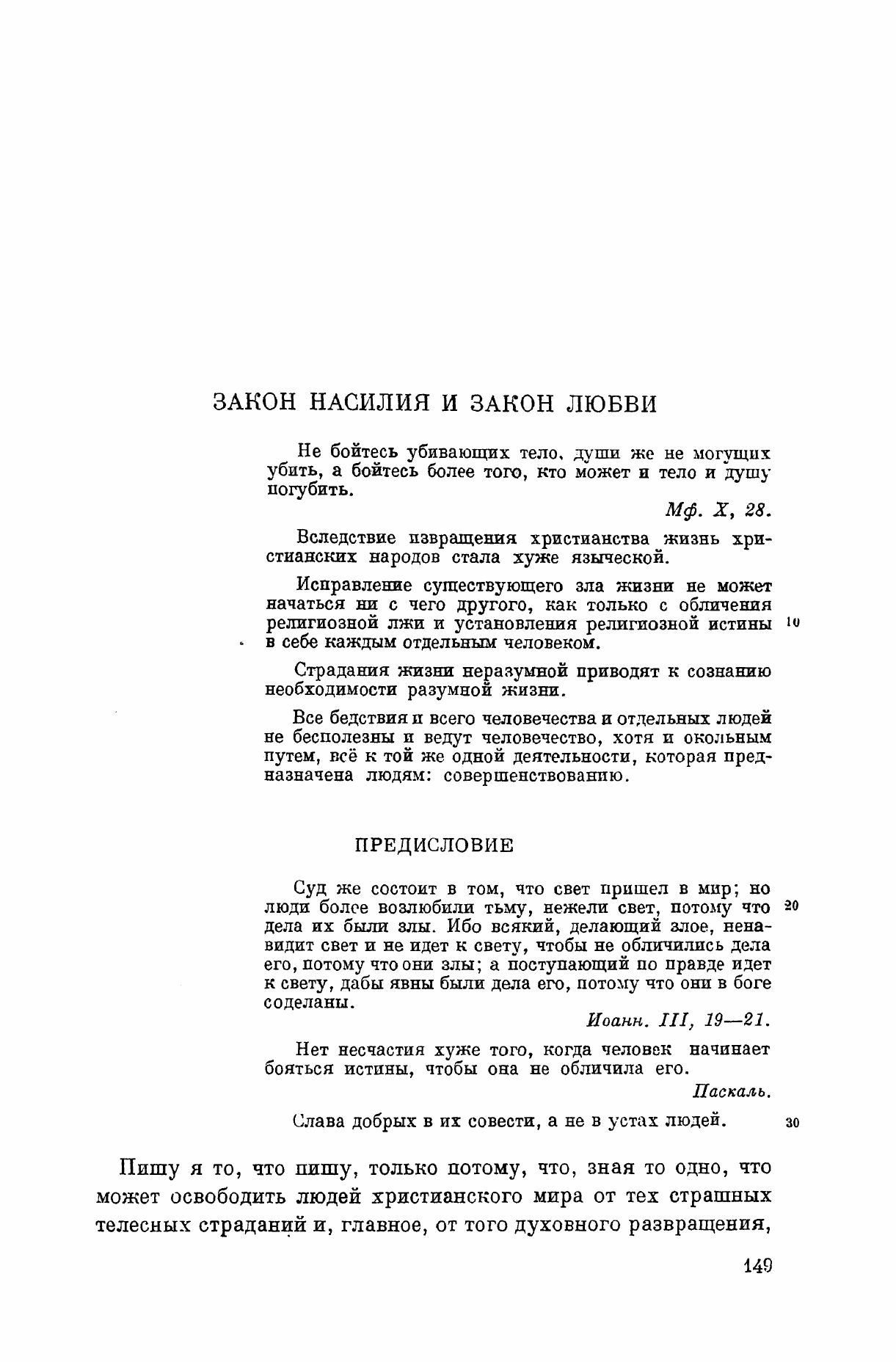
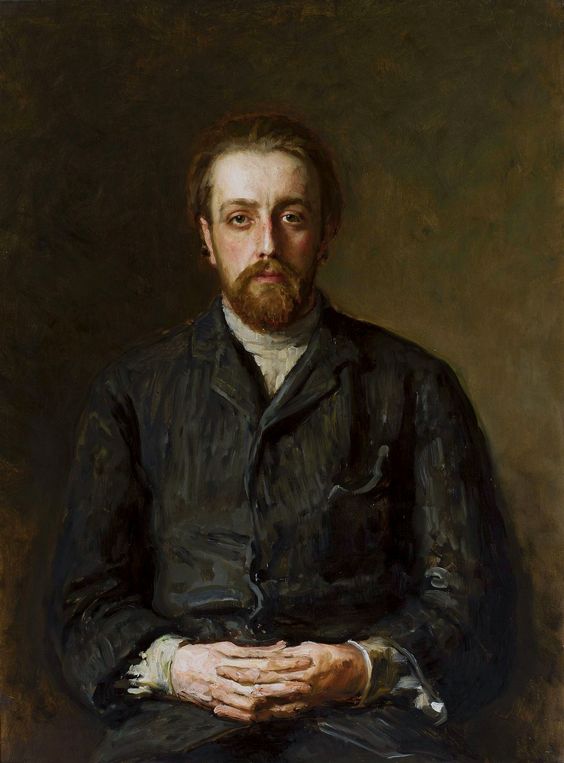
1908 is the most heavily photographed period of Tolstoy’s life — his 80th-birthday year — so portrait material is abundant and public-domain: the keystone Prokudin-Gorsky colour photograph of 23 May 1908 (above), Chertkov’s own 1908 photographs of Tolstoy, Karl Bulla’s jubilee-year portraits, and Repin’s painted likeness of Chertkov.
What is not openly available, and where to request it:
- A manuscript facsimile of the treatise (рук. № 58, or a cover with Tolstoy’s title notes). The 1,536 leaves are held at the State Museum of L. N. Tolstoy, Moscow (рукописный отдел); the “All of Tolstoy in One Click” digitisation may hold pages behind an institutional gate. No openly licensed facsimile page was found.
- A portrait of N. N. Gusev (1907–1909). The secretary and diary-witness has no freely licensed period photograph on Commons; request from the State Museum of L. N. Tolstoy or the Yasnaya Polyana archive.
- Title pages of the first editions — the «Свободное слово» (Christchurch, 1909) complete edition and the «Киевские вести» (1909) censored printing. No digitised copies were located; an Internet Archive item for the Free Age Press edition exists but was inaccessible (SSL) on 2026-06-08, and the Kievskie Vesti run would be held at the Vernadsky National Library (Kyiv) or the RGB (Moscow).
Method
This was a corpus-dive work-dive run on 2026-06-08, in-session (accept-edits), from a written scope handoff. Scope (Phase 0): a single-work dive on Закон насилия и закон любви (PSS Tom 37) read structurally; the composition reconstructed from the 1908 diaries, notebooks and letters (Toms 56, 78, 89) and the editorial history; the redaction history (the title saga and the moved chapters) as the centrepiece; the two fire images cross-referenced from the fire-metaphor dive. Russian extraction used extract_tei.py --choice=reg --notes=auto (pre-1918 orthography resolved to modern; the 12 May diary line and Notebook No. 3’s chapter-note were recovered from note-tails by --notes=auto). Three sub-sweeps ran in parallel (the 1908 diary/letter witness sweep, a scholarship + reception web sweep, and a visual-materials sweep), each writing its deliverable to a file. Every quoteRu was checked byte-for-byte against its extract with verify_quotes.py (33/33 PASS, 1 facsimile OK) before the verifier pass. Working-English translations are labelled and are the dive’s own; mainstream scholarship is attributed, not asserted. Because no works/ record exists yet, the dossier’s workRecord is record-creating (it proposes a full new record); it writes nothing to works/.
Links: sibling dives — fire-metaphor, Bethink Yourselves!, What Is Art?, The Kingdom of God Is Within You, What I Believe, christian-anarchism, tolstoyanism, christian-communism-socialism.
References
Primary (byte-faithful, from the local TEI corpus):
- Толстой Л. Н. Закон насилия и закон любви // ПСС в 90 тт. Т. 37. М., 1956. С. 149–221. (TEI
works/v37_149_221_Zakon_nasilija_i_zakon_ljubvi) - Серебровская Е. С. «Закон насилия и закон любви». История писания и печатания и описание рукописей // ПСС Т. 37. С. 436–438. (TEI
comments/v37_436_438) - Толстой Л. Н. Круг чтения. «Закон насилия и закон любви» («Бука») // ПСС Т. 41. С. 334–336. (TEI
krug_chtenija/v41_334_336) - Толстой Л. Н. Дневник и Записные книжки 1908 г. // ПСС Т. 56. (TEI
diaries/v56_*,notes/v56_299_301,v56_302_346,v56_347_361) - Толстой Л. Н. Письма 1908 г. // ПСС Т. 78 (общие), Т. 89 (Чертков). (TEI
letters/v78_*,v89_*)
Background (secondary; attributed, not asserted):
- Tseitlin, Anya. “Beyond War and Peace: Tolstoy’s Theory of Nonviolence.” Harvard Davis Center, 2025.
- Reading Russia, vol. 2 — Reading the News on Tolstoi in 1908. Ledizioni / OpenEdition Books.
- Tolstoy, Leo. The Law of Love and the Law of Violence. Trans. Mary Koutouzow Tolstoy (1970/1974). The Ted K Archive (with publication-history note). Also: Marxists.org Tolstoy archive (1908).
- “A Letter to a Hindu” (Wikipedia); “Correspondence between Tolstoy and Gandhi” (Wikisource).
- Green, Martin. The Origins of Non-violence: Tolstoy and Gandhi in Their Historical Settings. Penn State UP, 1986.
- Christoyannopoulos, Alexandre. Christian Anarchism: A Political Commentary on the Gospel (2010/2011); Tolstoy’s Political Thought (Routledge, 2020).
- Trotsky, Leon. “Tolstoy, Poet and Rebel.” 1908 (Marxists.org).
- Bartlett, Rosamund. Tolstoy: A Russian Life (2010); Wilson, A. N. Tolstoy: A Biography (1988); Maude, Aylmer. The Life of Tolstoy (1908/1910). [cited for context; not accessed at page level]
This dive feeds the LLM wiki-ingestion step (a separate, human-in-the-loop pass): the dossier.yaml entities and workRecord blocks plan the wiki pages and the record this research should become — including a new works record for the treatise, which has none yet. See the draft dev-blog note.