A single-work corpus dive on Tolstoy’s 1904 anti-war essay Одумайтесь! — “a letter to the men of war and the tsar,” written during the Russo-Japanese War. It reads the essay from its own text in the tolstoydigital TEI corpus (PSS Tom 36, pp. 100–148), reconstructs its composition from the 1904 diaries and letters and the Jubilee-Edition editorial history, and makes the essay’s abroad-first publication and its translation lineage — including the Swedish Betänken Eder! that is the subject of a parallel digital-edition project — the centrepiece. The three fire-coda citations are reused from the fire-metaphor dive and re-verified here.
The dive prepares ingestion-ready material (this index.md, a machine-readable dossier.yaml, byte-faithful extracts/, and a draft dev-blog note). It does not create vault pages; it plans them.
Key findings
- The essay is two essays welded into one. Tolstoy was writing a tract on the absence of religion as the root of all human ills when the war broke out “as an illustration of my thought,” and fused them. He says so himself to Chertkov (28 Apr 1904): “Because of this I joined two themes together, and perhaps neither is worked out sufficiently.” The war is the surface; the loss of religion is the diagnosis underneath.
- Its method is to replace the collective question with the personal one. Soldier, officer, diplomat, journalist, and tsar are each asked why they prepare to kill, and each answers with an abstraction — faith, fatherland, oath, civilization. The cure is for each to stop and ask “who am I? what is my purpose?” — the “bethinking” (Greek μετανοεῖτε) of the title, which the translators render bethink yourselves rather than the narrower repent.
- The remedy is individual conscience, not institutions. Tolstoy sets the essay against every external cure — peace conferences, international courts, disarmament, revolution — and stakes everything on the conscience of one person at a time refusing to take part.
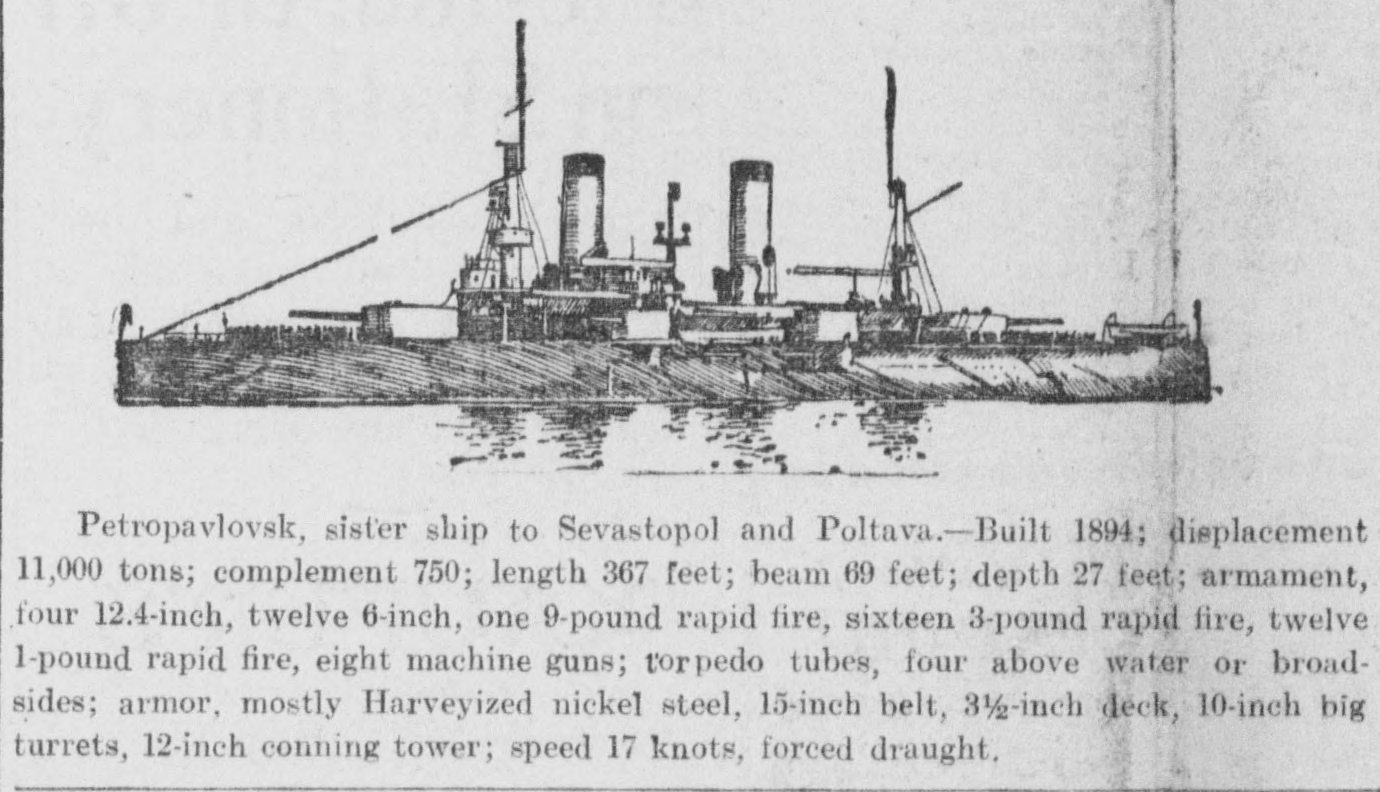
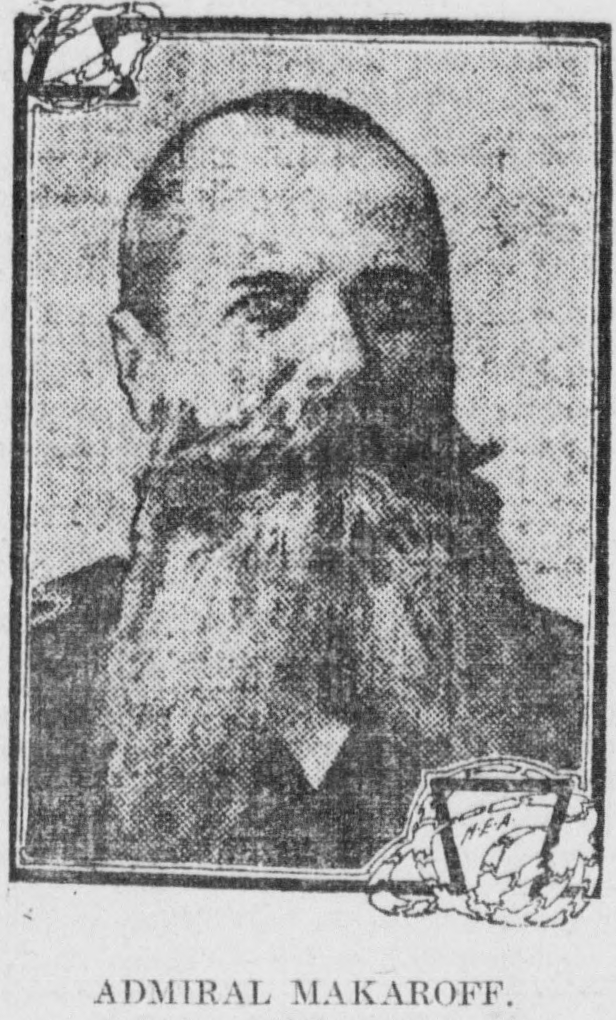
- Two real events break into the finished text. The sinking of the battleship Petropavlovsk off Port Arthur (13 Apr 1904 NS; ~679 dead, including Admiral Makarov and the painter Vereshchagin) drives the angry chapter XI; a seaman’s letter from Port Arthur — “is it pleasing to God or not that our commanders make us kill?” — closes chapter XII as the “spark” of the fire.
- It was banned at home and published abroad — so the translation lineage is the publication history. First in The Times (London, 27 June 1904) and in V. G. Chertkov’s Free Age Press (Christchurch); in Russia the 1906 («Обновление») and 1911 (collected works, vol. 19) printings were both confiscated, and it was never legally published in Russia in Tolstoy’s lifetime. The authorised English was by Chertkov with “I. F. M.” (Isabella Fyvie Mayo); Swedish, German, and two French versions followed within a year.
- The Swedish Betänken Eder! coda tracks the English, not the Russian. The Swedish ends “låtom oss då icke släcka den, utan sprida och underhålla den” — “let us not extinguish it, but spread and sustain it.” The Russian has only “serve it”; but Chertkov’s authorised English already reads “spread and serve it” — and the Swedish matches the English at the three points where the English departs from the Russian (the added “spread”; “Jesus” for “Christ”; “kindled” for “blazes up”). So although Projekt Runeberg lists the Swedish as a translation from the Russian, its coda was carried over from Chertkov’s English: the divergence is inherited, not a Swedish innovation. (Johan’s edition project reached the same English-source reading independently.)
- Tolstoy’s own verdict was split but firm. He conceded the essay’s angry tone — to Chertkov, and to a hostile reader — but defended its substance without reservation: “its meaning is, for me, undoubtedly true, and I will repeat the same on my deathbed” (1 July 1904).
Why this matters
Bethink Yourselves! is the most sustained anti-war statement Tolstoy produced, and it carries the moral argument of The Kingdom of God Is Within You into a specific, ongoing war. It is where his post-1880 religion becomes a concrete refusal: the “religion” whose absence he diagnoses here is the one worked out in What Is Religion? and in the non-resistance cluster; the essay turns it into a demand on the individual conscript. For this project the essay also sits at the junction of two living things: the fire-metaphor whose keystone (Luke 12:49) it carries, and Johan’s own digital edition of the Swedish translation, Betänken Eder! — so the dive can read the Russian original, Chertkov’s authorised English, and the Swedish surrogate side by side.
Genesis & composition
(The composition narrative is drawn from N. V. Gorbachev’s editorial history of writing and printing in PSS Tom 36, comments/v36_604_621, and from the 1904 diaries (Tom 55) and letters (Tom 75). Editorial commentary is attributed; Tolstoy’s own words are cited from the diary/letter extracts.)
The essay was conceived in the first days of the war. Russia and Japan went to war on 27 January 1904 OS (9 February NS), and that same day Tolstoy’s diary already holds the essay’s pivot:
Война, и сотни рассуждений о том, почему она, что она означает, что из неё будет и тому под. — Все — рассуждающие люди, от царя до последнего фурштата.
(working English) War, and hundreds of disquisitions about why it is, what it means, what will come of it, and so on. Everyone reasons — from the tsar down to the lowliest baggage-train soldier.
Diary, 27 January 1904 (OS) · TEI v55_010_011_1904_01_27 · PSS Tom 55, pp. 10–11. — and the entry goes on to ask the question the whole essay is built on: not what war means for the world, but “how must I, I, I relate to the war?” (как мне, мне, мне отнестись к войне).
The next day the kernel is fully formed, and already tied to religion:
помнить, что прежде, чем я — Царь, кучер, городовой, я — человек. Это, только это одно я желал бы проповедовать всем людям.
(working English) to remember that before I am Tsar, coachman, policeman, I am a human being. This, only this, is what I would wish to preach to all people.
Diary, 28 January 1904 (OS) · TEI v55_011_012_1904_01_28 · PSS Tom 55, pp. 11–12.
Tolstoy had been at work on a separate article about religion (the one his diary calls «Камень», later absorbed into Единое на потребу). When the war came he merged the two — and judged the join imperfect. He wrote to Chertkov on 28 April 1904, as quoted in the editorial history:
От этого я соединил две темы, и, пожалуй, ни одна не обработана достаточно
(working English) Because of this I joined two themes together, and perhaps neither is worked out sufficiently.
To V. G. Chertkov, 28 April 1904, in the editorial commentary · TEI comments/v36_604_621.
The editorial history reconstructs the rest. Through February and March he wrote and rewrote what his diary calls simply «О войне» (On War), at Yasnaya Polyana and at his brother’s estate at Pirogovo, against recurring heart trouble and several false endings (“it seems I have finished. Tolerable. Not good, but tolerable” — 7 March). Chapters I–X were gathered and sent to Chertkov in England around 9 April. Chapter XI — the Port Arthur section — was begun on 7 April and dispatched on 17 April. Chapter XII followed: its main body and the fire coda are dated 30 April 1904 (OS), and a postscript built around the seaman’s letter is dated 8 May (OS), with a final small addition on 20 May. The essay grew by accretion to the very end.
The war pressed on him physically. A public cable he sent on 9 February — nine days into the war — already states the essay’s thesis in two lines:
Я ни за Россию, ни за Японию, а за рабочий народ обеих стран, обманутый правительствами и вынужденный воевать против своего благополучия, совести и религии.
(working English) I am neither for Russia nor Japan, but for the labouring people of both, deceived by their governments and forced to fight against their own welfare, conscience, and religion.
To the newspaper The North American (Philadelphia), 9 February 1904 (OS) · TEI v75_041 · PSS Tom 75, p. 37. — the cable survives in both English and Russian.
The people around the work
- V. G. Chertkov (central) — translator, editor, and abroad-publisher; the entire publication ran through him. The 1904 letters in Tom 75 do not include the Tolstoy–Chertkov correspondence (it is held in separate volumes), but Chertkov’s presence is everywhere in the window: Tolstoy routes foreign press enquiries to “Christchurch, Hants” before the essay even exists in draft, sends each instalment there, and gives Chertkov carte blanche to cut (see Redactions). The published venue is Chertkov’s Free Age Press / «Свободное слово».
- Yu. I. Igumnova (supporting) — Tolstoy’s secretary; dispatched the corrections and the final chapters to Chertkov, with the cover letters that survive in the archive.
- Alexandra (Sasha) Tolstaya (supporting) — Tolstoy’s youngest daughter and a copyist of the drafts; the cover sheet “Черновики. 30 января 1904 г.” is in her hand. Her page already exists in the vault.
- D. V. Nikitin, E. I. Popov, M. A. Schmidt, Kh. N. Abrikosov (supporting) — the copyists named in the editorial history who typed and re-typed the chapters and the epigraphs.
- M. P. Novikov (supporting) — a Tula peasant and friend whose two letters (27–28 April 1904) on being called up are quoted at length in chapter XII; he is the unnamed “peasant I know” of the text.
- Efim Savelievich Ivus (peripheral) — a seaman of the cruiser Pallada at Port Arthur, whose 8 May 1904 letter — reproduced in the essay verbatim, with its original spelling — supplies the closing “spark.” The diary records its arrival:
Нынче получил письмо от матроса из Порть Артура. Угодно ли Богу или нет, что нас начальство заставляет убивать?
(working English) Today I received a letter from a sailor at Port Arthur. Is it pleasing to God or not that our commanders make us kill?
Diary, 8 May 1904 (OS) · TEI v55_033_033_1904_05_08 · PSS Tom 55, p. 33.
- P. V. Verigin (peripheral) — leader of the Doukhobors Tolstoy had helped emigrate to Canada in 1899; on 3 March 1904 Tolstoy told him the essay’s remedy directly: “deliverance from it lies only in professing the teaching of Christ — not in words, but in deed” (
v75_069). - Ernest Crosby (peripheral) — American Tolstoyan whose anti-war verse furnished one of the essay’s epigraphs (
v75_112, 30 April 1904). - The correspondents of his second thoughts (peripheral) — Grand Duke Nikolai Mikhailovich (1 June; Tolstoy warns him the essay “will probably be very much disapproved of in the higher spheres”), Countess S. D. Tol’ (1 July; the fullest self-verdict — see below), P. A. Bulanzhe, T. L. Sukhotina, and V. V. Stasov all receive notes about the finished essay.
What the work says
A structural map of the essay’s keystone passages, read chapter by chapter from its own text (works/v36_100_148, PSS Tom 36, pp. 100–148). Each chapter opens with a fan of epigraphs — about fifty in all, most drawn from Jean Grave’s anti-war anthology Guerre–Militarisme (Paris, 1902): Voltaire, Pascal, Kant, Maupassant, Anatole France, Lao-Tzu, Marcus Aurelius, Origen — before Tolstoy’s own prose. The argument moves from indictment (I–V) to remedy (VI–X) to the two war-news codas (XI–XII).
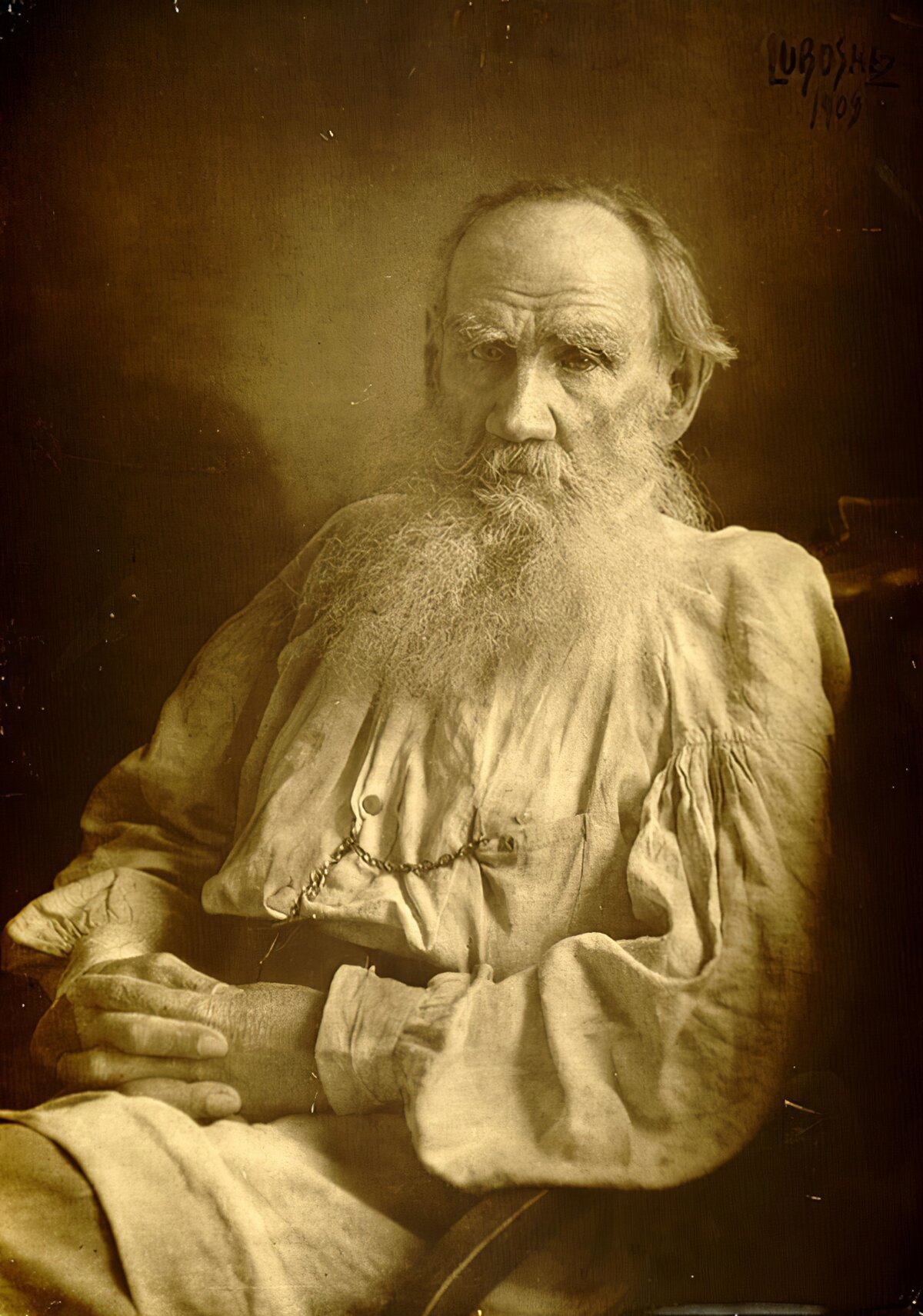
1 — The indictment: again war (Ch I)
Опять война. Опять никому не нужные, ничем не вызванные страдания, опять ложь, опять всеобщее одурение, озверение людей.
(working English) Again war. Again sufferings that no one needs, utterly uncalled for; again fraud, again the universal stupefaction and brutalization of men.
Chapter I · PSS Tom 36 · TEI v36_100_148.
The deceived peasant-conscript Tolstoy excuses; his charge falls on the educated classes who know better:
Но как могут так называемые просвещенные люди проповедовать войну, содействовать ей, участвовать в ней, и, что ужаснее всего, не подвергаясь опасностям войны, возбуждать к ней, посылать на нее своих несчастных, обманутых братьев?
(working English) But how can so-called enlightened people preach war, abet it, take part in it, and — most terrible of all — without themselves facing war’s dangers, incite others to it, sending their unfortunate, deceived brothers to it?
Chapter I · PSS Tom 36 · TEI v36_100_148.
2 — The deeper horror: the impotence of reason (Ch III)
испытываешь ужас уже не перед ужасами войны, а перед тем, что ужаснее всех ужасов, — перед сознанием бессилия человеческого разума.
(working English) one feels horror no longer at the horrors of war, but at what is more horrible than all horrors — at the consciousness of the impotence of human reason.
Chapter III · PSS Tom 36 · TEI v36_100_148.
3 — The structural engine: the personal question evaded (Ch IV)
Спросите у бросившего старых родителей, жену, детей солдата-рядового, ефрейтора, унтер-офицера, зачем он готовится убивать неизвестных ему людей, — он сначала удивится вашему вопросу.
(working English) Ask a private soldier, a corporal, a sergeant who has left his old parents, wife, and children, why he is preparing to kill people he does not know — at first he will be surprised by your question.
Chapter IV · PSS Tom 36 · TEI v36_100_148. — and the soldier, the officer, the diplomat, the journalist, and finally the tsar all answer the personal question with the general one: in the name “of fatherland, or faith, or oath, or honour, or civilization … in general, of something abstract and indefinite.”
4 — The title: bethink yourselves / μετανοεῖτε (Ch VI)
Две тысячи лет тому назад Иоанн Креститель и за ним Христос говорили людям: «исполнилось время и приблизилось царство Божие, одумайтесь (μετανοειτε) и веруйте в Евангелие» (Марка I, 15).
(working English) Two thousand years ago John the Baptist, and after him Christ, said to men: “the time is fulfilled and the Kingdom of God is at hand; bethink yourselves (μετανοειτε) and believe in the Gospel” (Mark I, 15).
Chapter VI · PSS Tom 36 · TEI v36_100_148.
Христос говорил: одумайтесь, т. е. каждый человек остановись в своей начатой деятельности и спроси себя: кто ты? откуда ты взялся и в чем твое назначение?
(working English) Christ said: bethink yourselves — that is, let each person stop in the activity he has begun and ask himself: who are you? where did you come from, and what is your purpose?
Chapter VI · PSS Tom 36 · TEI v36_100_148.
5 — The remedy: individual conscience, not institutions (Ch VI)
самое верное и несомненное избавление людей от всех бедствий, которые они сами наносят себе, и от самого ужасного из них — от войны достигается не какими-либо внешними общими мерами, а только тем простым, обращением к сознанию каждого отдельного человека
(working English) the surest and most certain deliverance of people from all the calamities they inflict on themselves, and from the most terrible of them — war — is achieved not by any external, general measures, but only by that simple appeal to the conscience of each separate person.
Chapter VI · PSS Tom 36 · TEI v36_100_148.
6 — The diagnosis under the war: the loss of religion (Ch VII)
Зло, от которого страдают люди нашего времени, происходит оттого, что большинство их живет без того, чтò одно дает разумное руководство человеческой деятельности — без религии
(working English) The evil from which the people of our time suffer arises from the fact that most of them live without the one thing that gives reasonable guidance to human activity — without religion.
Chapter VII · PSS Tom 36 · TEI v36_100_148. — and the consequence, in a strikingly modern image:
Лишенные религии люди, обладая огромной властью над силами природы, подобны детям, которым дали бы для игры порох или гремучий газ.
(working English) People without religion, possessing enormous power over the forces of nature, are like children who have been given gunpowder or detonating gas to play with.
Chapter VII · PSS Tom 36 · TEI v36_100_148.
7 — The answer to “but what of the enemy?” (Ch X)
«Любите врагов ваших, и не будет у вас врага»; сказано в «Учении Двенадцати Апостолов».
(working English) “Love your enemies, and you will have no enemy”; it is said in the Teaching of the Twelve Apostles [the Didache].
Chapter X · PSS Tom 36 · TEI v36_100_148. — and Tolstoy insists this is not figurative: to love the Japanese means literally not to kill them, not to seize their land, not to drown them.
8 — The war breaks in: Port Arthur and the “50,000 lives” (Ch XI)
Я кончал эту статью, когда пришло известие о погибели шестисот невинных жизней против Порт-Артура.
(working English) I was finishing this article when news came of the destruction of six hundred innocent lives off Port Arthur.
Chapter XI · PSS Tom 36 · TEI v36_100_148. — the sinking of the Petropavlovsk. Tolstoy throws the press’s own phrase back at it:
главный шанс успеха России в том, что у нее неистощимый человеческий материал
(working English) Russia’s chief chance of success lies in the fact that it possesses an inexhaustible supply of human material.
Chapter XI · PSS Tom 36 · TEI v36_100_148.
9 — The documentary heart and the fire coda (Ch XII)
The last chapter turns to ordinary men: the reservist Tolstoy met on the road, and the two letters of the peasant Novikov.
«Куда же денешься?» Вот точное выражение того душевного состояния, которое в официальном и газетном мире переводится словами: «За веру, царя и отечество».
(working English) “Where can one escape to?” That is the exact expression of the state of mind that the official and newspaper world translates into the words: “For Faith, Tsar, and Fatherland.”
Chapter XII · PSS Tom 36 · TEI v36_100_148.
It closes on Luke 12:49 — the fire (the keystone the fire-metaphor dive traces across the whole corpus):
Христос, тогда еще, в свое время томился ожиданием и говорил: «Огонь пришел низвесть я на землю, и как желал бы, чтобы он возгорелся». (Лука XII, 49.)
(working English) Christ, even then, in his own time, was in anguish of expectation and said: “Fire I came to cast upon the earth, and how I would wish that it were kindled.” (Luke XII, 49.)
Чего желал Христос, совершается. Огонь возгорается. Не будем же противиться, а будем служить ему.
(working English) What Christ wished for is coming to pass. The fire is blazing up. Let us then not resist it, but serve it.
Chapter XII · PSS Tom 36 · TEI v36_100_148. — and the seaman’s doubt is named as the fire’s spark:
это искра того огня, который Христос низвел на землю и который начинает возгораться.
(working English) this is a spark of that fire which Christ brought down to the earth and which is beginning to blaze up.
Chapter XII (8 May 1904) · PSS Tom 36 · TEI v36_100_148.
Redactions & textual history
The editorial history (Gorbachev, PSS Tom 36, comments/v36_604_621) and the variants apparatus (works/v36_426_435, thirteen numbered variants) show an essay that Tolstoy steadily softened as he finished it, and that Chertkov softened further in proof.
In the drafts Tolstoy named names and struck them out: a passage addressing “Nikolai, Bezobrazov, Witte, Suvorin, Menshikov” had its proper names deleted; “cursed tsars” (проклятые цари) became “pitiless tsars” (безжалостные); “the bestial military point of view” (зверской) became “the patriotic” one (патриотической); “half-beasts” (полузверей) became “people.” An early draft of chapter XI ended with a four-fold direct apostrophe — the title used as a live imperative — which he cut entirely:
Одумайтесь, главное, вы, несчастные толпы молодых людей военных, необдуманно повинующихся людям, ведущих вас на заклание или на убийство братьев.
(working English) Bethink yourselves, above all, you unhappy crowds of young military men, blindly obeying those who lead you to slaughter or to the murder of your brothers.
Variant No. 13 · PSS Tom 36, pp. 426–435 · TEI v36_426_435. (Pre-1918 orthography in the PSS variants apparatus — see the dossier needsReview.)
He then handed Chertkov the scissors. On 4 May 1904 he asked him to cut the harshest words about the army:
пожалуйста, выкиньте всё такое
(working English) please throw out everything of that kind.
To V. G. Chertkov, 4 May 1904, in the editorial commentary · TEI comments/v36_604_621. — Chertkov was given a “carte blanche,” and in the final proofs (June 1904, NS) he made six documented changes: omitting the phrase “mostly drunk” about the generals, dropping two Origen epigraphs from chapter VIII and the opening of another in chapter X, reordering one paragraph, cutting a passage of chapter XI he judged to contradict chapter XII, trimming the peasant Novikov’s second letter, and replacing “several thousand” drowned Japanese with “a multitude” (because the information abroad was that several hundred, not several thousand, had been lost). Tolstoy approved every change in a letter of 1 July 1904.
Publication, censorship & translation
For Одумайтесь! the translation lineage is the publication history: the essay was banned in Russia, so it first reached the public abroad, in translation, through Chertkov.
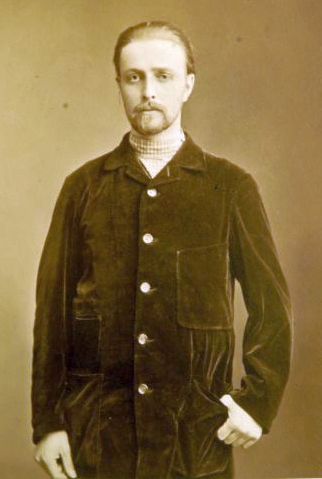
The first edition was Chertkov’s:
Статья вышла в издании «Свободного слова», в Крайстчерче, в Англии, в 1904 г.
(working English) The article appeared in the Free Word [Free Age Press] edition, at Christchurch, in England, in 1904.
Editorial commentary · TEI comments/v36_604_621. — the editors added the subtitle «Статья по поводу русско-японской войны» (An article on the Russo-Japanese War). A second popular edition without epigraphs, “for the people and soldiers,” and a corrected third edition followed the same year. In parallel the essay was serialised in The Times (London) on 27 June 1904 (NS); the Boston edition (Ginn & Co., for the International Union) bears the line “Reprinted from the London Times.”
In Russia it could not be printed:
В России «Одумайтесь!» вышло впервые в 1906 г. в издании «Обновление» отдельной брошюрой (конфискована).
(working English) In Russia, Bethink Yourselves! appeared for the first time in 1906, published by Obnovlenie [Renewal] as a separate pamphlet (confiscated).
Editorial commentary · TEI comments/v36_604_621. — the 1911 reprint, in volume 19 of the 12th collected edition, was likewise confiscated. The state’s reaction to a celebrity author it could not easily prosecute was to seize the text. It was never legally published in Russia in Tolstoy’s lifetime; the authoritative Russian text is the Soviet Jubilee Edition (1936).
The translation tree
- English (authorised): translated by V. G. Chertkov with “I. F. M.” — identified as Isabella Fyvie Mayo (1843–1914; pen name Edward Garrett), a Scottish writer, suffragist, and Free Age Press collaborator. The Boston edition was edited with an introduction by Edwin D. Mead. (Source: Project Gutenberg #27189; Scotland-Russia project, Univ. of Edinburgh.)
- Swedish: «Betänken Eder! Ett bref till krigets män och tsaren af Leo Tolstoy» (Stockholm: Björck & Börjesson, 1904; 25 öre), with the chapter epigraphs omitted. Projekt Runeberg’s catalogue describes it as translated from the Russian, but the essay’s own coda (below) follows Chertkov’s English at the three points where the English departs from the Russian — so the source was more likely the English, or both. The translator is not named in the catalogue or any source found and remains open; Johan’s edition project reached the same English-source reading independently. (Source: Projekt Runeberg; textual comparison against PG #27189.)
- German: «Besinnet Euch! (Tut Buße)» (Jena: Eugen Diederichs, 1904), translated by Raphael Löwenfeld.
- French: «Ressaisissez-vous!» translated by Georges Bourdon (Paris: Charpentier & Fasquelle, 1904), and «La Guerre russo-japonaise» translated by J.-W. Bienstock (Paris: Mercure de France, 1905).
The Swedish coda divergence
The Swedish edition diverges from the Russian at the essay’s final sentence. Where Tolstoy wrote «Не будем же противиться, а будем служить ему» — let us not resist it, but serve it (the fire) — the Betänken Eder! transcription reads:
Det, som Jesus längtade efter, fullbordas nu: elden håller på att tändas. Låtom oss då icke släcka den, utan sprida och underhålla den!
(working English) What Jesus longed for is now being fulfilled: the fire is being kindled. Let us then not extinguish it, but spread and sustain it!
«Betänken Eder!», Stockholm 1904 (Johan Edlund’s transcription). — The divergence is not a Swedish invention; it was carried over from the English. Chertkov’s authorised English (Project Gutenberg #27189) reads: “That which Jesus longed for is being accomplished, the fire is being kindled. Then do not let us check it, but let us spread and serve it.” The Swedish matches the English exactly where the English departs from the Russian — “Jesus” (the Russian has «Христос» / Christ), “kindled”/”tändas” (the Russian has «возгорается» / blazes up), and the added “spread”/”sprida” (the Russian has only «служить» / serve). So although Projekt Runeberg lists the Swedish as translated from the Russian, its coda came through Chertkov’s English: the shift from non-resistance (“serve”) toward active propagation (“spread and sustain”) is inherited from the English, not introduced in Stockholm. The translator remains unidentified, and Johan’s edition project independently raised — and this comparison confirms — that the Swedish followed the English (see the dossier needsReview).
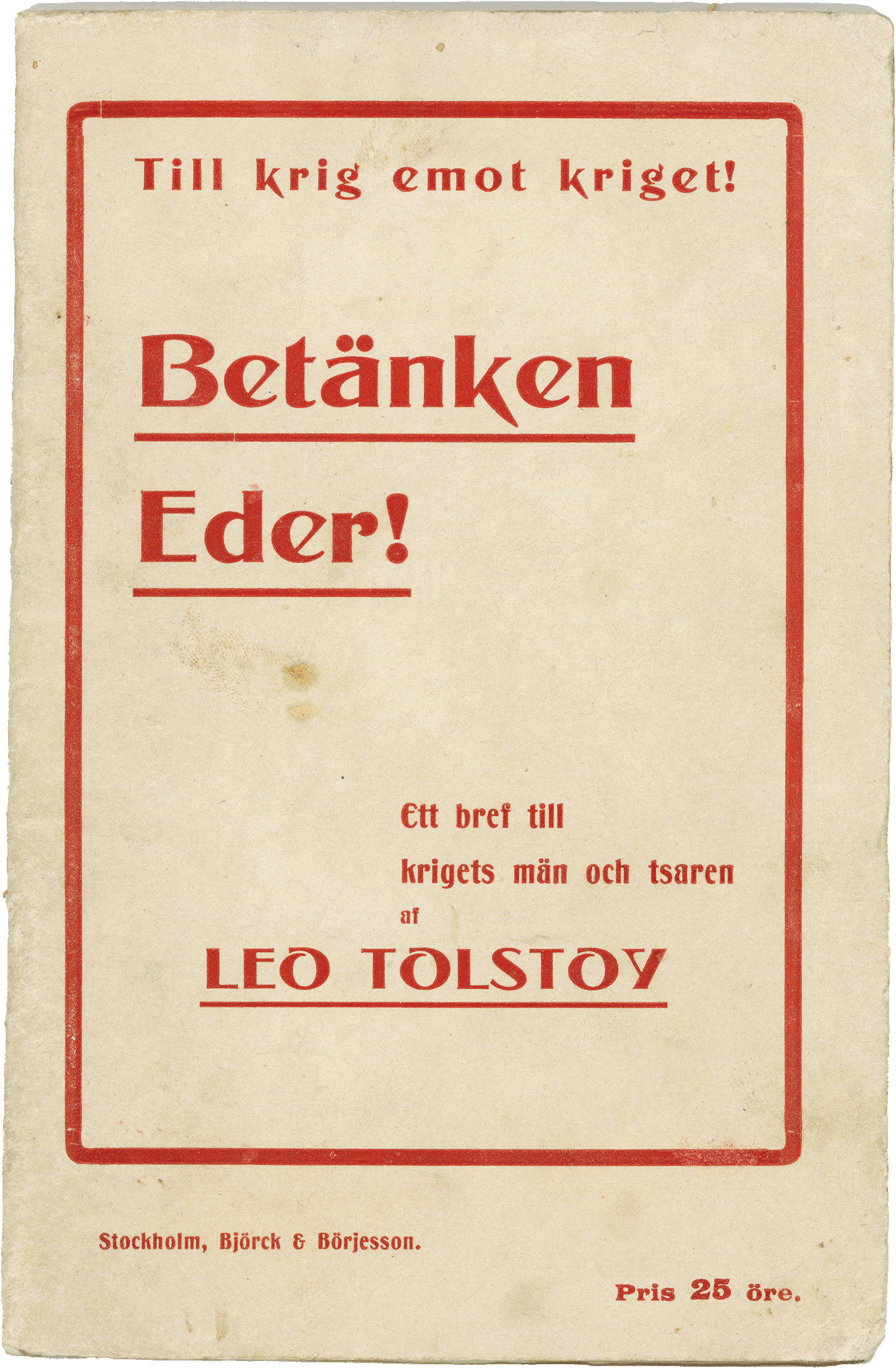
leo-tolstoy_betanken-eder_jed. Public domain.Johan’s edition project (projects/bethink-yourselves/, read-only to this dive) is a scan → transcription → epub → Internet Archive edition of this Swedish pamphlet — a living surrogate that lets the Russian original, Chertkov’s authorised English (Project Gutenberg #27189), and the Swedish be read together.
Reception & afterlife
In Russia and the Church first
By 1904 Tolstoy already stood outside the Church: the Holy Synod’s circular of February 1901 — widely received as an excommunication — was still in force, and his Reply to the Synod was his published rejoinder. No pronouncement of the Synod directed specifically at Bethink Yourselves! was found in this dive; the standing 1901 condemnation was the operative frame, and the concrete state reaction was censorship — the confiscations of 1906 and 1911. Because most named attacks had been struck from the text (by Tolstoy) and harsh phrases cut (by Chertkov), the essay reached its intended Russian readers chiefly through smuggled foreign copies and, in the 1905–1906 ferment, through pamphlets like the confiscated «Обновление» edition.
International reception
Simultaneous publication in The Times gave the essay immediate reach; it was reprinted within the year by the Free Age Press, by Ginn & Co. / the International Union for Peace (Boston), and translated into Swedish, German, and French. The sharpest contemporary engagement found in this dive is not Western but Japanese: Shūsui Kōtoku, in the socialist Heimin Shimbun (no. 40, 1904), praised Tolstoy’s moral courage but rejected his remedy — individual repentance — as inadequate to what Kōtoku held were the structural, capitalist causes of war. It is an early instance of the socialist critique of Tolstoyan non-resistance, and it engages the essay’s thesis precisely where it is most contestable. The essay went on to become a reference text in early twentieth-century pacifist circles, and its resonance has proved durable — the University of Kansas’s Slavic studies department notes that Alexei Navalny quoted its opening sentence at his 2022 trial.
(All reception claims here are attributed; see References. Specific page-level treatment in the major English biographies — Maude 1908/10, Simmons 1946, Bartlett 2010 — could not be confirmed in this pass and is left open in the dossier needsReview.)
The author’s later verdict
Tolstoy’s own assessment was divided in feeling but firm in substance. The 6 June 1904 diary catches the oscillation:
иногда думаю, что напрасно, только вызывая вражду, написал я свою статью, а посмотришь на народ, на солдаток, и жалеешь, что мало, слабо написал.
(working English) sometimes I think I wrote my article in vain, only stirring up enmity; but you look at the people, at the soldiers’ wives, and you regret that I wrote too little, too weakly.
Diary, 6 June 1904 (OS) · TEI v55_045_047_1904_06_06 · PSS Tom 55, pp. 45–47.
And to a reader who reproached him for the essay’s anger, on 1 July 1904, he gave the verdict he stood by:
Я виноват, что тон, дух моей статьи недобрый, но смысл ее для меня несомненно истинен, и я буду повторять то же на смертном одре.
(working English) I am at fault that the tone, the spirit of my article is unkind, but its meaning is, for me, undoubtedly true, and I will repeat the same on my deathbed.
To Countess S. D. Tol’, 1 July 1904 · TEI v75_179 · PSS Tom 75, pp. 136–137.
Place in the cluster
Bethink Yourselves! sits inside the project’s anti-militarism and non-resistance cluster. It shares its closing image — the fire of Luke 12:49 — with the fire-metaphor dive, which traces that keystone across the whole corpus (the three coda quotes here are reused from it). Its argument that the individual conscience, not the state, can end war places it in the territory the project examines under the contested mainstream labels “Christian anarchism” and “Tolstoyanism” — labels the dive points at rather than asserts. It is bound by its central figures, the Doukhobors and their leader Verigin, to the anti-conscription strand of that cluster, and it is a sibling of the other Prophet-period work dive, What Is Art?, in method and period.
Material not covered
- The full epigraph apparatus — about fifty epigraphs (Voltaire, Pascal, Kant, Maupassant, Lao-Tzu, Marcus Aurelius, Origen, and others), most from Jean Grave’s Guerre–Militarisme (1902). The dive maps their function, not each source.
- A page-by-page collation of the PSS text against a held Free Age Press first edition (Chertkov’s six proof cuts are described in the commentary but not independently re-collated against a physical copy).
- Japanese-side reception beyond Kōtoku (Anesaki Masaharu; the wider Heimin Shimbun circle).
- Vereshchagin’s anti-war paintings as a visual counterpart — his death on the Petropavlovsk is the essay’s central event.
Visual & manuscript record
Five public-domain images are cached locally for this dive (in the git-ignored visuals/; re-fetchable with python3 docs/fetch_visuals.py 1904-bethink-yourselves). All carry a licence and source URL in the dossier visuals block.
What is not openly available, and where to request it:
- A dated 1904 photograph of Tolstoy at Yasnaya Polyana. The Commons category for 1904 was empty; the keystone above is from 1905. Period Chertkov-album photographs are held at the State Museum of L. N. Tolstoy (Moscow) and RGALI — reproduction by request.
- A period (1903–1905) photograph of Chertkov. The portrait used is from 1883. RGALI fond 552 and the British Library Chertkov collection (Add MS 63711–63793) hold later images.
- The Free Age Press pamphlet title page and the 1904 Times printing. No openly licensed scan was found; the British Library and the National Library of Scotland hold Free Age Press publications, and the Times Digital Archive is paywalled.
Method
This was a corpus-dive work-dive run on 2026-06-08. Scope (Phase 0, from the session handoff): a single-work dive on Одумайтесь!, with the essay’s text (PSS Tom 36) read structurally, the composition reconstructed from the 1904 diaries (Tom 55) and letters (Tom 75) and the editorial history, and publication, censorship & translation — including the Swedish Betänken Eder! — as the centrepiece. Russian extraction used extract_tei.py --choice=reg --notes=auto (pre-1918 orthography resolved to modern; the variants apparatus is printed diplomatically in old orthography and is flagged as such). Three composition sweeps ran in parallel (the 1904 diary/letter witness sweep, a scholarship + reception web sweep, and a visual-materials sweep). Every quoteRu was checked byte-for-byte against its extract with verify_quotes.py (29/29 PASS) before the verifier pass. Working-English translations are labelled and are the dive’s own; mainstream scholarship is attributed, not asserted.
Links: sibling dives — fire-metaphor, What Is Art?, The Kingdom of God Is Within You, christian-anarchism, tolstoyanism, doukhobors.
References
Primary (byte-faithful, from the local TEI corpus):
- Толстой Л. Н. Одумайтесь! // ПСС в 90 тт. Т. 36. М., 1936. С. 100–148. (TEI
works/v36_100_148_Odumajtes) - Толстой Л. Н. Варианты к статье «Одумайтесь!» // ПСС Т. 36. С. 426–435. (TEI
works/v36_426_435) - Горбачев Н. В. «Одумайтесь!». Комментарий // ПСС Т. 36. С. 604–621. (TEI
comments/v36_604_621) - Толстой Л. Н. Дневник 1904 г. // ПСС Т. 55. (TEI
diaries/v55_*, Jan–Jun 1904) - Толстой Л. Н. Письма 1904 г. // ПСС Т. 75. (TEI
letters/v75_*)
Background (secondary; attributed, not asserted):
- Tolstoy, Leo. Bethink Yourselves! Trans. V. Tchertkoff and I. F. M., ed. Edwin D. Mead. Boston: Ginn & Co., 1904. Project Gutenberg #27189.
- Betänken Eder! Ett bref till krigets män och tsaren. Stockholm: Björck & Börjesson, 1904. Projekt Runeberg.
- Besinnet Euch! (Tut Buße). Trans. Raphael Löwenfeld. Jena: Eugen Diederichs, 1904.
- Ressaisissez-vous! Trans. Georges Bourdon, in En écoutant Tolstoï. Paris: Charpentier & Fasquelle, 1904. La Guerre russo-japonaise. Trans. J.-W. Bienstock, in Dernières paroles. Paris: Mercure de France, 1905.
- Kōtoku, Shūsui. “Commenting on Tolstoy’s Anti-War Stance.” Heimin Shimbun no. 40, 1904 (The Anarchist Library).
- “Leo Tolstoy: Russian Pacifist Thinker.” University of Kansas, Dept. of Slavic, German & Eurasian Studies (notes the Navalny 2022 citation).
- “Isabella Fyvie Mayo.” Scotland-Russia project, University of Edinburgh.
- “Russian battleship Petropavlovsk (1894).” Wikipedia (13 Apr 1904 NS; ~679 dead).
- Kolstø, Pål. Heretical Orthodoxy: Lev Tolstoi and the Russian Orthodox Church. Cambridge University Press.
- Maude, Aylmer. The Life of Tolstoy. 2 vols. London: Constable, 1908/1910. Bartlett, Rosamund. Tolstoy: A Russian Life. London: Profile, 2010. [cited for context; not accessed in this pass]
This dive feeds the LLM wiki-ingestion step (a separate, human-in-the-loop pass): the dossier.yaml entities and workRecord blocks plan the wiki pages and the works-record fills this research should become. See the draft dev-blog note.