A single-work corpus dive on Tolstoy’s novella The Death of Ivan Ilyich (Смерть Ивана Ильича), written 1884–1886. It reads the novella from its own text in the tolstoydigital TEI corpus (PSS Tom 26), reconstructs its genesis and composition from the Jubilee-Edition editorial history and the 1884–1886 diaries and letters, traces the three redactions the manuscripts preserve, and sets the work in the Prophet-period cluster as Tolstoy’s first major fiction after his religious conversion. The keystone is the manuscript’s own marginal statement of theme — “Нельзя, нельзя и нельзя так жить, как я жил” — and the novella’s closing reversal, “Вместо смерти был свет.”
The dive prepares ingestion-ready material (this index.md, a machine-readable dossier.yaml, byte-faithful extracts/, and a draft dev-blog note). It does not create vault pages; it plans them.
Key findings
- The composition window is 1884–1886, not 1885–1886. The PSS Tom 26 editorial history rejects V. I. Sreznevsky’s seven-month hypothesis (Aug 1885 – Mar 1886) and dates the start of literary work to April–May 1884, on the strength of the diary entries of 27 April, 30 April and 1 May 1884 and of N. N. Strakhov’s own title-page instruction on the galleys: «Смерть Ивана Ильича. Повесть (1884—1886)» — the dating reproduced in every lifetime edition. The conception is older still (1881).
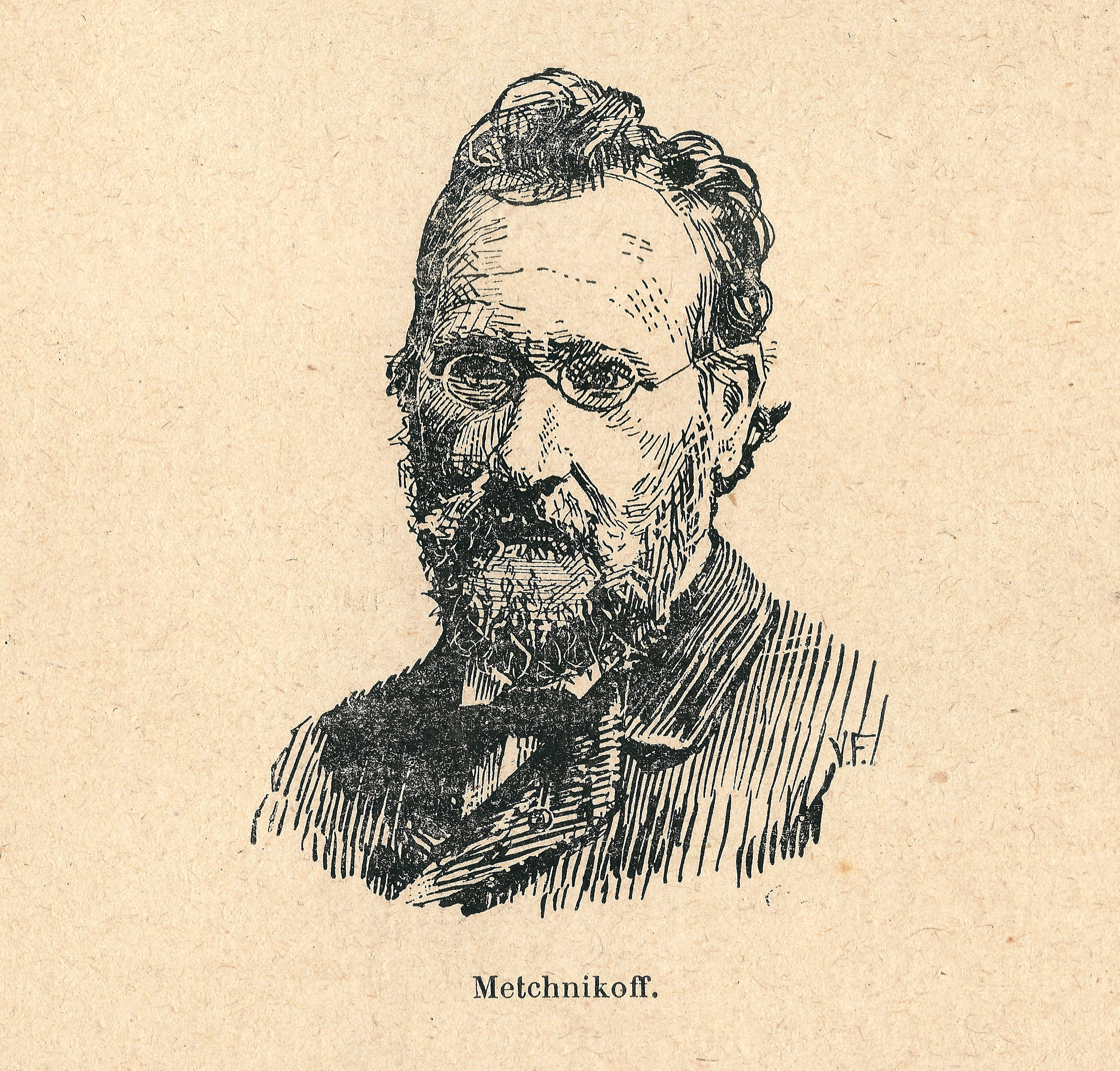
- The prototype was a real Tula prosecutor. Ivan Ilyich Mechnikov, prosecutor of the Tula court, died of cancer on 2 July 1881, aged 45; his dying reflections “о бесплодности проведенной им жизни” (on the fruitlessness of the life he had led) reached Tolstoy through his sister-in-law T. A. Kuzminskaya, who had them from the widow. He was the brother of the scientist Ilya (Élie) Mechnikov. The hero’s name, age (1837–1882), and the clinical course of the cancer track Mechnikov closely.
- It is post-conversion fiction, but Tolstoy filed it as artistic relief, not doctrine. The diary of 1 May 1884 frames the novella against his treatise labour: “мне нужен отдых от той работы, и эта, художественная, такая” (I need a rest from that work, and this — the artistic kind — is such a rest). To Chertkov (June 1885) he said the work “по форме… относится к нашему кружку — по содержанию ко всем” (in form relates to our circle — in content, to everyone).
- The immediate motive for finishing was a deadline: his wife’s edition. S. A. Tolstaya asked him to complete it for her new collected edition; he resumed in August 1885 to make her “a surprise” (
v63_408). The whole Oct–Dec 1885 progress record survives in his letters to her. - The manuscripts preserve three redactions. It began as a double first-person frame — the dying man’s diary, introduced by a colleague named Творогов who receives it from the widow — then shifted (autumn 1885) to objective authorial narration, then was rebuilt on the galleys (Feb–Mar 1886). The late revisions deliberately de-localised the story, stripping Moscow place-names and firm names to universalise it.
- The fiction passed uncensored — unlike the treatises of the same years. Where What I Believe, What Then Must We Do? and (later) The Kingdom of God Is Within You were suppressed, the novella appeared without censor intervention in S. A. Tolstaya’s edition, vol. 12, Произведения последних годов, Moscow 1886, dated 25 March 1886. The text most fully escaping the censor is the one least reducible to a tract.
- The novella’s afterlife is philosophical as much as literary. It is the only prose fiction cited in Heidegger’s Being and Time (§51), as the breakdown of the das Man evasion of death; it became a founding text of medical / end-of-life humanities; and it is read retrospectively as the kind of “universal art” Tolstoy would theorise in What Is Art? twelve years later — a pairing the Chertkov letter grounds in his own words.
Why this matters
The Death of Ivan Ilyich is the hinge between Tolstoy the novelist and Tolstoy the prophet. It is the first sustained fiction he wrote after the crisis recorded in A Confession, and it puts into a story the convictions he was arguing discursively at exactly the same time in What I Believe and What Then Must We Do?: that the respectable life of the educated classes is a lived death, and that only the recognition of mortality and a turn toward others can redeem it. A year later he would treat the same death-and-life question discursively again in On Life. Because it carries that argument as art rather than doctrine, it is also the work that escaped the censorship that silenced the treatises — and the work the West knows best. For this project it is the keystone of the Prophet-period fiction: the place where the conversion becomes a narrative.
Genesis & composition
(The composition narrative below is drawn from the editorial history of writing and printing in PSS Tom 26, comments/v26_679_691, and from the 1884–1886 diaries and letters. Editorial commentary is attributed; Tolstoy’s own words are cited from the diary/letter extracts in extracts/.)
Conception: a real death, 1881
The novella’s starting point is a death Tolstoy heard about rather than witnessed. The editorial history fixes it:
Иван Ильич Мечников умер 2 июля 1881 года. С этой датой связывается замысел рассказа «Смерть судьи» («описание простой смерти простого человека»), первые наброски к которому могли быть сделаны тогда же, но повидимому оставлены в зачаточном виде.
(working English) Ivan Ilyich Mechnikov died on 2 July 1881. With this date is connected the conception of the story “The Death of a Judge” (“a description of the simple death of a simple man”), the first sketches for which may have been made then, but were apparently left in embryonic form.
PSS Tom 26 editorial history, comments/v26_679_691 (editorial).
Mechnikov was a prosecutor of the Tula court; his dying reflections reached Tolstoy through his sister-in-law T. A. Kuzminskaya, who had them from Mechnikov’s widow. The bereavements of the early 1880s — Turgenev (1883), and Tolstoy’s friend Prince L. D. Urusov (gravely ill, 1885) — kept the death theme before him. The working title was Смерть судьи (The Death of a Judge).
The writing proper: April–May 1884
The PSS editor dates the start of literary work to spring 1884, against the narrower datings of Sreznevsky (August 1885) and the Справочник of Balukhatyi and Pisemskaya (October 1885), both of which he finds unsupported. The three diary entries are the anchor:
Хочу начать и кончить новое. Либо смерть судьи, либо записки несумашедшего.
(working English) I want to begin and finish something new. Either The Death of a Judge, or The Notes of a Not-Madman.
Diary, 27 April 1884 · TEI v49_087_087_1883_04_27.
Three days later the title has already shifted, and the phrasing shows earlier drafts existed to “dig out”:
Пробовал писать — нейдет. Смерть Ивана Ильича достал — хорошо и скорее могу.
(working English) Tried to write — it won’t come. Got out The Death of Ivan Ilyich — good, and I can do it more quickly.
Diary, 30 April 1884 · TEI v49_088_089_1883_04_30.
Стал поправлять Ивана Ильича и хорошо работал. Вероятно, мне нужен отдых от той работы, и эта, художественная, такая.
(working English) Began correcting Ivan Ilyich and worked well. Probably I need a rest from that work, and this, the artistic kind, is such a rest.
Diary, 1 May 1884 · TEI v49_089_089_1883_05_01.
That last line is the key to how Tolstoy held the novella in relation to his religious writing: not as its vehicle but as relief from it — “the artistic kind” of work as a rest from the treatises.
(A dating note: the three diary files are catalogued in the TEI with “1883” in their filenames, but each carries the header “Дневник 1884 г.” and the Tom 26 commentary dates them firmly to 1884. Tolstoy’s diary was in a long lapse through early 1884; April 1883 would fall inside that gap. The dive adopts 1884; the filename year is treated as a cataloguing artifact and flagged in needsReview.)
The long middle, and a wife’s deadline: 1884–1885
After family readings of excerpts in late 1884, the work stalled and resumed in the summer of 1885. The trigger was domestic: S. A. Tolstaya wanted it finished for her new collected edition. The clearest statement of both the artistic programme and the immediate motive is the August 1885 letter to L. D. Urusov:
Началъ нынче кончать и продолжать смерть И[вана] И[льича]. Я, кажется, разсказывалъ вамъ планъ: описаніе простой смерти простого человѣка, описывая изъ него. Жены рожденье 22-го и всѣ наши ей готовятъ подарки, а она просила кончить эту вещь къ ея новому изданію, и вотъ я хочу сдѣлать ей «сюрприз» и от себя.
(working English) Today I began to finish and continue The Death of I[van] I[lyich]. I think I told you the plan: a description of the simple death of a simple man, describing it from within him. My wife’s birthday is the 22nd and all of us are preparing presents for her, and she asked me to finish this thing for her new edition, and so I want to make her a “surprise” from myself too.
To Prince L. D. Urusov, ~20 August 1885 · TEI v63_408_Kn_L_D_Urusovu.
Two months earlier, to Chertkov, he had already placed the work beyond his own circle of followers:
Эту я обещал кончить жене для нового изданья, но эта статья только по форме (как она начата) относится к нашему кружку — по содержанию ко всем.
(working English) This one I promised my wife I would finish for her new edition, but this piece relates to our circle only in form (as it was begun) — in content, to everyone.
To V. G. Chertkov, 1–2 June 1885 · TEI v85_067_iyunya1_2.
Through October 1885 the letters to his wife track an intense but interrupted push, the novella repeatedly losing to the treatise work, and finally the canonical statement of absorption:
ужасно желаю написать Ивана Ильича, и сейчас ездил и думал о нем, но не могу тебе выразить, до какой степени я весь поглощен теперь этой работой, уже тянущейся несколько лет и теперь приближающейся к концу.
(working English) I terribly wish to write Ivan Ilyich, and just now rode out and thought about it, but I cannot express to you to what degree I am now wholly absorbed in this work, already dragging on for several years and now nearing its end.
To S. A. Tolstaya, 23 October 1885 · TEI v83_336_oktyabrya23.
The galleys: Feb–March 1886
Early 1886 brought the decisive rebuilding on proof. To Chertkov, mid-January:
Нынче немножко пописал «Ивана Ильича» и скоро сталь путаться.
(working English) Today I wrote a little of Ivan Ilyich and soon got tangled.
To V. G. Chertkov, 16–17 January 1886 · TEI v85_095_yanvarya16_17.
The fair copy went to the typesetter in late January; galleys were stamped 15 February 1886; on them Tolstoy made “чрезвычайно значительных и многочисленных изменений” (exceedingly substantial and numerous changes), reworking everything after chapter I so heavily that S. A. Tolstaya had to recopy long stretches. The verstka (page proofs) carried stamps of 17, 18 and 21 March; the final reading closed on 25 March 1886, the date printed after the text. By the editor’s count the whole arc — conception to finish — ran about five years; the literary work proper, about two.
The people around the work
- Ivan Ilyich Mechnikov — the prototype; prosecutor of the Tula court (b. 13 June 1836, d. 2 July 1881, of cancer). Tolstoy later confirmed the connection in conversation: “даже моя повесть «Смерть Ивана Ильича» имеет некоторое отношение к покойному, очень милому человеку, бывшему прокурору тульского суда.”
- T. A. Kuzminskaya — Tolstoy’s sister-in-law; the human conduit of the material, who relayed the dying Mechnikov’s reflections (from the widow) and recorded them in her memoirs Моя жизнь дома и в Ясной поляне.
- Ilya (Élie) Mechnikov — the prototype’s brother, the future Nobel laureate (1908); his later visit to Yasnaya Polyana is the occasion on which Tolstoy spoke of the connection.
- S. A. Tolstaya — the practical driver of completion: she commissioned the work for her edition, copied much of the final fair copy, and wrote the typesetter’s note on the manuscript. The entire Oct–Dec 1885 progress record is in letters to her.
- L. D. Urusov — Prince Leonid Dmitrievich Urusov, Tula vice-governor and confidant; recipient of the clearest statement of the artistic plan. (Not to be confused with S. S. Urusov, a different correspondent.)
- V. G. Chertkov — correspondent on the work’s meaning and audience; one of the copyists of the final fair copy.
- N. N. Ge (the elder) — the painter, resident at Yasnaya during the writing and one of the copyists; “Милый Ге все у нас, старший, все работает” (Jan 1886).
- A. P. Ivanov — the principal professional copyist of the manuscripts.
- N. N. Strakhov — supplied the title-page dating instruction “(1884—1886)” on the galleys.
- G. A. Zakharyin — the physician who treated the dying Mechnikov; named (via N. F. Golubov’s 1909 lecture) as the source for the clinical fidelity of the death.
What the work says
(Read from the work’s own text, extracts/v26_061_113_Smert_Ivana_Ilicha.txt (PSS Tom 26, pp. 61–113); full structural map and the complete keystone set in extracts/_deepread.md. The novella has twelve chapters.)
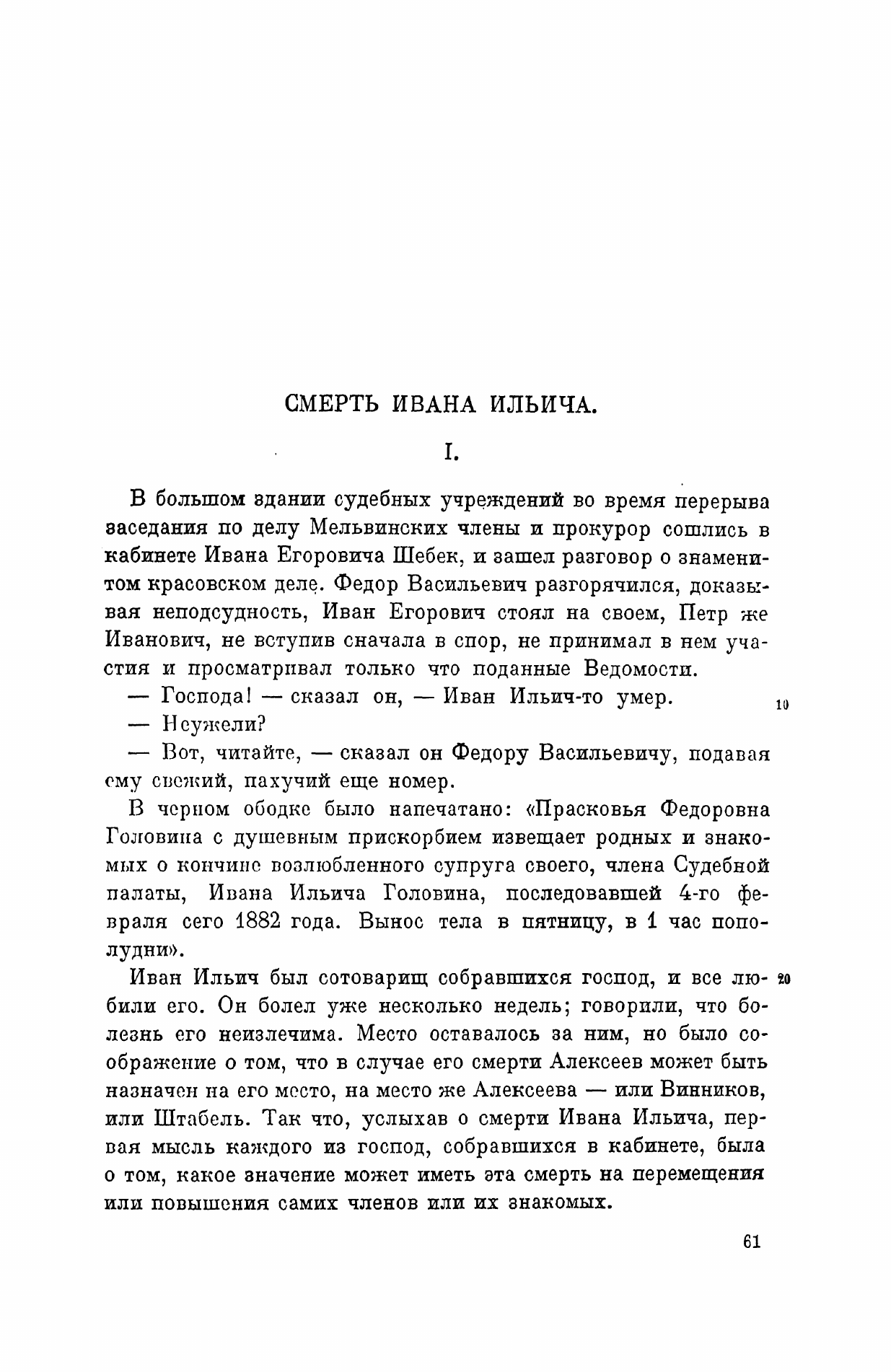
The story is built on an inversion: it opens after the death. Chapter I stands outside the chronology — the colleagues at the law courts read the death notice, and Pyotr Ivanovich sits through the viewing and the widow’s pension-haggling — and only from Chapter II does the narrative flash back to the life and run forward to the death the reader has already seen, now told from inside the dying man.
The premise is stated at the surface, in the colleagues’ first thought:
самый факт смерти близкого знакомого вызвал во всех, узнавших про нее, как всегда, чувство радости о том, что умер он, а не я.
(working English) the very fact of the death of a close acquaintance aroused in all who heard of it, as always, a feeling of joy that it was he who had died and not I.
Ch. I.
The flashback opens on the thesis sentence of the whole work — ordinariness as horror:
Прошедшая история жизни Ивана Ильича была самая простая и обыкновенная и самая ужасная.
(working English) The past history of Ivan Ilyich’s life was the most simple and ordinary and the most terrible.
Ch. II.
The engine of that life is decorum. Ivan Ilyich makes career and marriage by what the highest-placed people count as proper, and his existence runs by a three-word creed:
Но вообще жизнь Ивана Ильича пошла так, как, по его вере, должна была протекать жизнь: легко, приятно и прилично.
(working English) But on the whole the life of Ivan Ilyich went on as, by his faith, life ought to flow: easily, pleasantly, and decorously.
Ch. II.
Death enters through that decorated life literally: a fall while hanging the curtains of the new flat, “для устройства которой он пожертвовал жизнью” (for the arranging of which he sacrificed his life). When the famous doctor examines him, the formality he had perfected as a judge is turned back on him:
Всё было точно так же, как в суде. Как он в суде делал вид над подсудимыми, так точно над ним знаменитый доктор делал тоже вид.
(working English) Everything was exactly as in the court. Just as he in court put on an air over the defendants, so exactly over him the famous doctor put on the same air.
Ch. IV.
The philosophical core is the syllogism he cannot make personal:
Тот пример силлогизма, которому он учился в логике Кизеветера: Кай — человек, люди смертны, потому Кай смертен, казался ему во всю его жизнь правильным только по отношению к Каю, но никак не к нему.
(working English) That example of the syllogism which he had learned in Kiesewetter’s logic — Caius is a man, men are mortal, therefore Caius is mortal — had seemed to him all his life correct only in relation to Caius, but in no way to himself.
Ch. VI.
Against the household’s evasions stands the peasant Gerasim, the one honest relation to death in the book:
— Все умирать будем. Отчего же не потрудиться? — сказал он, выражая этим то, что он не тяготится своим трудом именно потому, что несет его для умирающего человека…
(working English) “We shall all die. So why not take a little trouble?” he said, expressing by this that he was not burdened by his labor precisely because he was bearing it for a dying man…
Ch. VII.
Gerasim’s frankness throws into relief Ivan Ilyich’s chief torment — not the pain but the lie:
Главное мучение Ивана Ильича была ложь, — та, всеми почему-то признанная ложь, что он только болен, а не умирает, и что ему надо только быть спокойным и лечиться, и тогда что-то выйдет очень хорошее.
(working English) Ivan Ilyich’s chief torment was the lie — the lie, for some reason accepted by everyone, that he was only ill and not dying, and that he need only stay calm and undergo treatment, and then something very good would come of it.
Ch. VII.
The turn comes when, looking at Gerasim, he finally admits the suspicion the whole “proper” life had walled off:
а что как и в самом деле вся моя жизнь сознательная жизнь, была «не то».
(working English) what if in fact my whole life, my conscious life, was “not the right thing.”
Ch. XI.
On the last of the three days, what blocks his passage through the “black sack” is not death but the defence of his life; when he stops defending it and feels pity for his son and wife, the obstacle dissolves:
Жалко их, надо сделать, чтобы им не больно было. Избавить их и самому избавиться от этих страданий.
(working English) He pities them; he must do something so that it should not hurt them. To free them and to free himself from these sufferings.
Ch. XII.
And the closing reversal — death negated from within:
Он искал своего прежнего привычного страха смерти и не находил его. Где она? Какая смерть? Страха никакого не было, потому что и смерти не было. Вместо смерти был свет.
(working English) He sought his former habitual fear of death and did not find it. Where is it? What death? There was no fear at all, because there was no death either. Instead of death there was light.
Ch. XII.
«Кончена смерть, — сказал он себе. — Ее нет больше».
(working English) “Death is finished,” he said to himself. “It is no more.”
Ch. XII. The someone who says “Кончено!” (“It is finished” — meaning the man is dead) is inverted in his own soul into “Кончена смерть” — it is death, not the man, that has ended.
Redactions & textual history
The manuscripts (held in the Tolstoy archives; described in the PSS Tom 26 apparatus) preserve three distinct stages:
- A double first-person frame. The story was first told by a colleague of the dead man — named Творогов (later Пётр Иванович) — who visits the widow and receives Ivan Ilyich’s deathbed diary, which then continues in the dying man’s own first person. The first-redaction opening survives verbatim:
Я узнал о смерти Ивана Ильича в суде. В перерыве заседания по скучнейшему делу Мальвинских мы сошлись в кабинете Ивана Егоровича Шебек.
(working English) I learned of the death of Ivan Ilyich at the court. During a recess in a most tedious case, the Malvinskys’, we gathered in the office of Ivan Yegorovich Shebek.
Variant №1, extracts/v26_505_528_Smert_Ivana_Ilicha_Varianty.txt.
In this version the colleagues’ evasion is already present, in the first person — “я подумал столько: Каково: умер таки; а я вот нет” (I merely thought: well now, he’s died after all; but I haven’t) — the line that becomes the final text’s “умер он, а не я.” The marginal note on the first manuscript page states the theme as a thesis:
Нельзя, нельзя и нельзя так жить как я жил и как мы все живем. — Это открыла мне смерть Ивана Ильича и оставленные им записки.
(working English) One cannot, cannot, and cannot live as I have lived and as we all live. — This was revealed to me by the death of Ivan Ilyich and the notes he left.
Variant №2 (marginal programme), per the editorial history comments/v26_679_691.
-
The shift to authorial narration (autumn 1885). Tolstoy abandoned both first-person voices and rebuilt the whole as objective third-person narration. This stage still carried episodes later cut — among them a schoolboy scene in which Ivan Ilyich, nicknamed “la marquise,” plays la donna è mobile on his teeth, and a conversation declaring his perfect happiness.
-
The galley redaction (Feb–Mar 1886). On proof the biography of the hero was expanded and, crucially, de-localised: concrete Moscow markers were removed to universalise the story — “московские расстояния,” the trip “лечиться к Иверской,” the named confectioner Albert (becomes “a dear confectioner”), the newspaper Голос (becomes simply “the gazette”). The editor reads this as a deliberate move toward “большей обобщенности” (greater generality).
The editorial history also notes that the precise internal chronology of the hero’s biography (1837 birth → February 1882 death) does not fully cohere — the ages of the children and the “17 years” of marriage are mutually inconsistent — small fractures left by the heavy reworking.
Publication, censorship & translation
The novella was first published in «Сочинения графа Л. Н. Толстого», Часть двенадцатая, «Произведения последних годов», Москва, 1886 (S. A. Tolstaya’s edition), pp. 394–469, dated 25 March 1886 after the text. The PSS Tom 26 text follows that first publication, checked against the manuscripts.
Unlike the religious works of the same period, the fiction passed without censorship. The editorial apparatus records no censor intervention, and the contrast is structural: the discursive statements of the conversion — What I Believe, What Then Must We Do?, and later The Kingdom of God Is Within You — were suppressed or cut, while the novella that carries the same convictions as a story reached the public freely. (Russian-society and Church reaction to the treatises, including the 1901 excommunication, attaches to those works and to Resurrection, not to this novella; see the What Is Art? dive’s note on the same point.)
Translation lineage is noted here only in outline — a full Maude/edition history is left to notCovered. The novella entered English early and became, with What Is Art?, one of Tolstoy’s most widely translated short works; Aylmer and Louise Maude’s versions later carried it in the Oxford World’s Classics line. The specific 1880s–1890s first-translation chronology is not established from this corpus.
Reception & afterlife
(Secondary layer; attributed. Full triangulation and sources in extracts/_scholarship.md. The contemporary-reception record recoverable here is thin and is flagged honestly in needsReview.)
Contemporary Russian reception (1886) was filtered through ideology more than the death theme. Per Gary Jahn’s Electronic Study Edition (University of Minnesota), critics tended to read the novella as social commentary on the privileged classes rather than as a meditation on mortality. The populist critic N. K. Mikhailovsky gave a mixed verdict — a “fine story” but, by his criteria, not of the first rank — while a critic named Lisovsky called it “without parallel in Russian literature… a triumph of realism and truth in poetry.” The most extravagant response on record is V. V. Stasov’s, reported (in secondary sources, not the corpus) as telling Tolstoy that no nation has a work as great, that “everything is little and petty in comparison with these seventy pages.” The Stasov quotation could not be traced to a dated letter in this corpus and is flagged for verification.
The afterlife is disproportionately philosophical. The novella is the only prose fiction cited in Heidegger’s Being and Time (§51), where it illustrates the breakdown of the “one dies / das Man” evasion of death — the socially managed attitude by which death is something that happens to others. The precision matters: Heidegger invokes it for the collapse of that evasion (which the colleagues of Chapter I, and the failed Caius syllogism of Chapter VI, enact exactly), not as a reading of the closing light; later scholarship (e.g. William Irwin, Tolstoy Studies Journal 25, 2013) has often expanded the single reference into a fuller alignment than Being and Time itself states. From the 1970s the novella became a core text of medical and end-of-life humanities (e.g. Papadimos & Stawicki 2011; a 2009 Lancet editorial), read for Gerasim as the model of honest, compassionate care.
Scholarly context
Where the corpus evidence meets the received scholarly view, four relations recur (the full table is in extracts/_scholarship.md):
- Confirms. The canonical readings of the keystones — ordinariness as horror, the Caius syllogism, Gerasim’s authenticity — match the primary text. The novella’s standing as a masterpiece of late Tolstoy is uncontested (Nabokov, Thomas Mann).
- Complicates (the dating). Mainstream accounts commonly give the composition as 1885–1886, sometimes October 1885. The PSS apparatus dates the literary work to April 1884 – March 1886 and prints Strakhov’s “(1884—1886)”; scholarship that says 1885–86 understates the span by a year. This dive follows the corpus.
- Complicates (the framing). The dominant frame reads the novella as Tolstoy’s first post-conversion fiction and slides from there to a didactic, moralising Tolstoy. The primary record resists the slide: his own diary calls the novella restorative artistic work, a rest from the treatises, and to Chertkov he insists its content is “ко всем,” not to his circle of followers. The “Tolstoyan“/doctrinaire label is the mainstream’s word for the period, not the novella’s own posture — and notably this is the conversion-era text that most completely escaped the censor, the one least reducible to a tract.
- Extends. The corpus reaches below the scholarship in three places: the documented Mechnikov prototype (largely absent from the English mainstream); the genesis of the “universal art” idea in the 1885 Chertkov letter, twelve years before What Is Art? theorised it; and the uncensored-fiction contrast with the suppressed treatises.
On the What Is Art? pairing, one caution carries over from that dive: Tolstoy there relegates “his own artistic works” to bad art, sparing only two short stories — and Ivan Ilyich is not named among the exceptions. Whether he meant to include or exclude the novella is not settled by this corpus and should not be assumed; it is left in needsReview.
Place in the cluster
The novella sits at the centre of the Prophet-period work dives, and is best read against them:
- A Confession (1879–1882) — the crisis whose answer the novella dramatises.
- What I Believe (1882–1884) and What Then Must We Do? (1882–1886) — written in the same years; the discursive statement of the convictions the story carries.
- On Life (1886–1887) — written immediately after; the death-and-life question handled philosophically.
- What Is Art? (1897–1898) — the aesthetic theory the novella is later read as exemplifying (“universal art”).
The author’s later verdict
A firmly sourced statement of Tolstoy’s own later judgement on Ivan Ilyich did not surface in this corpus. The one adjacent datum is the What Is Art? footnote in which he consigns his own artistic works to “bad art” while excepting only two short stories — and the novella is not on that short list of exceptions. Because the footnote neither names nor explicitly excludes it, no verdict is asserted here; the question is logged in needsReview for the ingestion step to resolve against PSS Tom 30.
Material not covered
- Variant-draft collation. The variants file (
v26_505_528) is extracted and sampled, but a systematic stage-by-stage collation of the three redactions is not done. - Translation/edition history. The Maude and other early-English translation chronology is outlined only; no edition-by-edition lineage.
- Full contemporary reception. The 1886 periodical reviews (Русская мысль, Вестник Европы, Отечественные записки) are beyond this dive’s web-accessible scope; the recovered critics (Mikhailovsky, Lisovsky, Stasov) are thin.
- The March 1886 letter to N. N. Ge naming the novella (quoted in the editorial history) is not present in the TEI corpus and would need the PDF/another edition.
- The 1886 first-edition title page (vol. 12) was not found in any open digital repository during the visuals sweep.
Visual & manuscript record
(Full provenance and rights in extracts/_visuals.md. The PSS facsimile below is public-domain and committed in extracts/; the portraits are cached in the git-ignored visuals/ and repopulated by docs/fetch_visuals.py.)
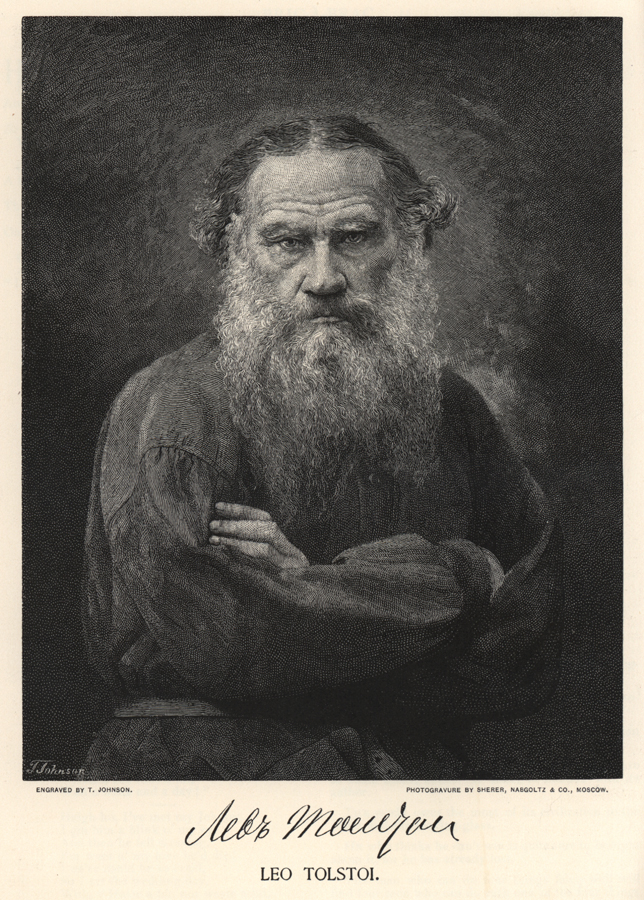
A 1909 photograph of Tolstoy and Élie Metchnikoff together (visuals/commons-tolstoy-mechnikov-1909.jpg) documents that the two men eventually met — long after the novella was written. No public-domain title page of the 1886 first edition was located.
Method
- Scope contract (Phase 0). Subject: the single work Смерть Ивана Ильича. Slug fixed to the composition window 1884–1886 (literary-work window per PSS Tom 26 and Strakhov’s title-page note), against the menu’s “1882–1886” (conception-inclusive) and Sreznevsky’s “1885–1886.” Corpus surface: the work’s TEI (text + variants), the editorial history (all PSS Tom 26), plus a composition-window witness sweep of diaries (Tom 49) and letters (Toms 63, 83, 85). Interactive mode.
- Extraction (Phase 1–2).
extract_tei.py --choice=regon all pre-reform texts (clean, no drop warnings). The novella, its variants, and the editorial history were extracted from Tom 26; the genesis diaries and letters were extracted toextracts/. The work’s own text was read structurally, chapter by chapter (_deepread.md), not merely grepped. - Witness sweep. Diaries Tom 49 + letters Toms 63/83/85; the genesis quotes were located and saved as individual extracts. Findings: the diary-year cataloguing mismatch (filed 1883, dated 1884); the S. A. Tolstaya letters live in Tom 83 (not 84); the March 1886 Ge letter is absent from the corpus. (
_witness_sweep.md.) - Visuals (Phase 2). Light intensity; channels: local Jubilee-Edition PDFs, Wikimedia Commons API, archive.org. One PD facsimile rendered locally (Tom 26 opening); three PD portraits cached; the 1886 title page is a gap. (
_visuals.md.) - Scholarship (Phase 3). English-first, attributed; the Heidegger §51 claim precision-graded; framing watch applied against the didactic-moralist reading. (
_scholarship.md.) - Verification (Phase 5).
verify_quotes.pyover the dossier, then an independent opus verifier pass. - Links. Sibling dives: A Confession, What I Believe, What Then Must We Do?, On Life, What Is Art? (cluster cross-links above). Mainstream-label cross-link: tolstoyanism.
References
Primary (corpus)
- Смерть Ивана Ильича, PSS Tom 26, pp. 61–113 —
works/v26_061_113_Smert_Ivana_Ilicha. - Variants to Смерть Ивана Ильича, PSS Tom 26, pp. 505–528 —
works/v26_505_528_Smert_Ivana_Ilicha_Varianty. - Editorial history (writing & printing), PSS Tom 26, pp. 679–691 —
comments/v26_679_691_Smert_Ivana_Ilicha. - Diaries 1884, PSS Tom 49 —
v49_087_087…,v49_088_089…,v49_089_089…. - Letters to L. D. Urusov (Tom 63), S. A. Tolstaya (Tom 83), V. G. Chertkov (Tom 85) — see
dossier.yamlevidence ledger for ids.
Background (secondary) — full list with URLs in extracts/_scholarship.md:
- Nabokov, V. Lectures on Russian Literature (1981).
- Heidegger, M. Being and Time (1927), §51.
- Irwin, W. “Death by Inauthenticity: Heidegger’s Debt to Ivan Il’ich’s Fall,” Tolstoy Studies Journal 25 (2013).
- Jahn, G. R. (ed.) The Death of Ivan Ilich: An Electronic Study Edition (Univ. of Minnesota, 2018) — writing/publication and reception chapters.
- Papadimos, T. J. & Stawicki, S. P. A. “The Death of Ivan Ilych: A Blueprint for Intervention at the End of Life” (2011); The Lancet editorial (2009).
A short dev-blog note accompanies this dive: 2026-06-07-the-death-of-ivan-ilyich (draft).