A single-work corpus dive on Tolstoy’s essay Christianity and Patriotism (Христианство и патриотизм), written 8 October 1893 – 17 March 1894 (Old Style). It reads the essay from its own text in the tolstoydigital TEI corpus (PSS Tom 39, pp. 27–80), reconstructs its genesis from the Jubilee-Edition editorial history and the 1893–94 diary and letters, traces the thirty-nine redactions the manuscripts preserve, and follows the work through its ban in Russia, its foreign first editions, and its place in the Prophet-period non-resistance cluster. The occasion is the Franco-Russian alliance and the festivities for the Russian squadron at Toulon in October 1893 — the events Tolstoy called “Тулон” (Toulon) throughout composition. The keystone is the essay’s own verdict, “Патриотизм есть рабство” (patriotism is slavery), and its remedy, “нужно только не лгать” (one need only not lie).
The dive prepares ingestion-ready material (this index.md, a machine-readable dossier.yaml, byte-faithful extracts/, and a draft dev-blog note). It does not create vault pages; it plans them.
Key findings
- The slug window is 1893–1894 by composition, not the menu’s “1894.” The first autograph (рук. №1) is signed «1893. 8 октября, Я.П.»; the final redaction (рук. №37) is signed «17 марта 1894» with the note «Совсем, совсем, совсем кончено» (completely, completely, completely finished). Composition crosses the year boundary, so the dive follows the corpus window, as the Ivan Ilyich dive did.
- The argument is a diagnosis, not a denunciation. Tolstoy frames the Franco-Russian enthusiasm as a psychopathic epidemic — borrowing, by name, the Kiev psychiatrist I. A. Sikorsky’s term for the peasant religious mania malevanshchina (рук. and ch. III). Mass patriotism is the same disorder, differing only in that its sufferers “possess rifles, bayonets, fortresses, ironclads, melinite, dynamite” and the post, telegraph and press to spread the contagion.
- The thesis is that patriotism is artificial — instilled from above, alien to the народ. “I have lived half a century among the Russian people … and not once seen or heard any manifestation of this feeling of patriotism” (ch. X). The festivities, like the staged “spontaneous” enthusiasm of a Guards regiment Tolstoy recounts (ch. XII), are manufactured by governments, press, school and clergy; the remedy is therefore not political but personal — that each person stop affirming what he does not believe.
- The genesis was a six-month struggle of abandonment and return. The diary and the Chertkov letters record Tolstoy finishing a draft, declaring it “repugnant” and hearing an “inner voice” against publishing (3 Nov 1893), disowning that voice as “very foolish” two days later, “pounding water in the Toulon mortar” through the winter (8 Feb 1894), deciding to suppress the finished piece — “and that relieved me” (23 Mar 1894) — then releasing it to translators a month later: “Everyone approves” (21 Apr 1894).
- It was banned in Russia and reached the public abroad first. French first (J. Legras, Journal des Débats and Perrin, May 1894), then English (Daily Chronicle, June 1894, via Chertkov after C. I. Turner abandoned his translation) and German (V. E. Henkel, Berlin, Aug 1894). The first Russian-language printing was M. K. Elpidin’s, Geneva 1895; the first legal Russian printing was 1906 (Обновление), for which the publisher N. E. Felten was prosecuted.
- The late redactions deliberately de-named the piece. To soften it, Tolstoy encrypted real names — Avelan → “начальник русской эскадры,” Carnot → “президент республики,” Suvorin → “сторонники войны,” Déroulède → “наш гость,” bishop Mignot → “епископ в Тулоне.” The published text shows the de-naming applied unevenly: “генерал такой-то благодарил г-жу такую-то” stands beside Avelan’s name surviving in the quoted newspaper passages.
- It belongs to the patriotism trilogy and the non-resistance cluster. It is the first of three escalating anti-patriotism statements — followed by Patriotism, or Peace? (1896) and Patriotism and Government (1900), both separate works — and it carries the argument of The Kingdom of God Is Within You (finished months earlier) from non-resistance into a frontal attack on the nation-state.
Why this matters
Christianity and Patriotism is Tolstoy’s sharpest application of non-resistance to the politics of his own moment. Where The Kingdom of God Is Within You lays the foundation — that the Christian may not take part in state violence — this essay names the specific mechanism that recruits him to it: patriotism, the feeling a government manufactures so that the people will consent to be armed against each other. It is occasioned by a concrete public event (the Toulon festivities), it diagnoses that event clinically, and it ends not with a programme but with a single demand on the individual conscience — do not lie — that becomes a refrain of Tolstoy’s late writing. For this project it is the bridge between the religious treatises of the 1880s and the anti-war essays of the 1900s (Bethink Yourselves, 1904; The Law of Violence and the Law of Love, 1908), and the seed of the patriotism-as-superstition argument the mainstream later files under “Christian anarchism.”
The shape of the question
The essay moves in six stages, each a step in a single argument: the festivities are absurd → they are a sickness → the sickness is a lie → the lie serves the state, not the people → patriotism itself is the disease → the cure is individual truthfulness. The stages below quote the work’s own text (PSS Tom 39, pp. 27–80; tolstoydigital works/v39_027_080).
1 · The absurd premise (ch. I).
«все эти миллионы людей русских и французских вдруг вообразили себе, что они как-то особенно любят друг друга» (working English) “all these millions of Russians and Frenchmen suddenly imagined that they somehow specially loved one another.”
2 · The clinical diagnosis (ch. III).
«Недавно профессор психиатрии Сикорский описал в Киевских университетских известиях … психопатическую эпидемию малеванщины» (working English) “Recently Professor of Psychiatry Sikorsky described in the Kiev University News … a psychopathic epidemic, the malevanshchina.” — the same disorder, except that here its sufferers hold «ружьями, штыками, крепостями, броненосцами, меленитами, динамитами».
3 · The lie (ch. VI).
«Дьявол — человекоубийца и отец лжи. И ложь всегда ведет к человекоубийству.» (working English) “The devil is a murderer and the father of lies. And the lie always leads to murder.”
4 · Whom the lie serves (ch. V, IX).
«Приходи лучше с нами работать, да и немца присылай … И немца возьмем. Такие же люди.» (working English) “Better come and work with us, and send the German along too … We’ll take the German too. They’re people just the same.” — the peasant Prokofy’s answer to the war-agitator, against the “cannon fodder” the festivities prepare.
5 · The definition and the verdict (ch. XIII, XIV).
«не что иное, как предпочтение своего государства или народа всякому другому государству и народу» (working English) “[patriotism is] nothing other than the preference of one’s own state or people over every other.” — and therefore: «Патриотизм есть рабство.» / “Patriotism is slavery.”
6 · The remedy (ch. XVII, XVIII).
«нужно только не лгать» (working English) “one need only not lie.” — for «как одна свеча зажигает бесконечное количество других» / “as one candle lights an infinite number of others,” and the peace Christ leaves is “already among us, to be acquired.”
Genesis & composition
(The composition narrative is drawn from the editorial history of writing and printing in PSS Tom 39, comments/v39_229_234, and from the 1893–94 diary (Tom 52) and letters (Toms 66, 67, 84, 87). Editorial commentary is attributed; Tolstoy’s own words are cited from the extracts in extracts/.)
The occasion, October 1893
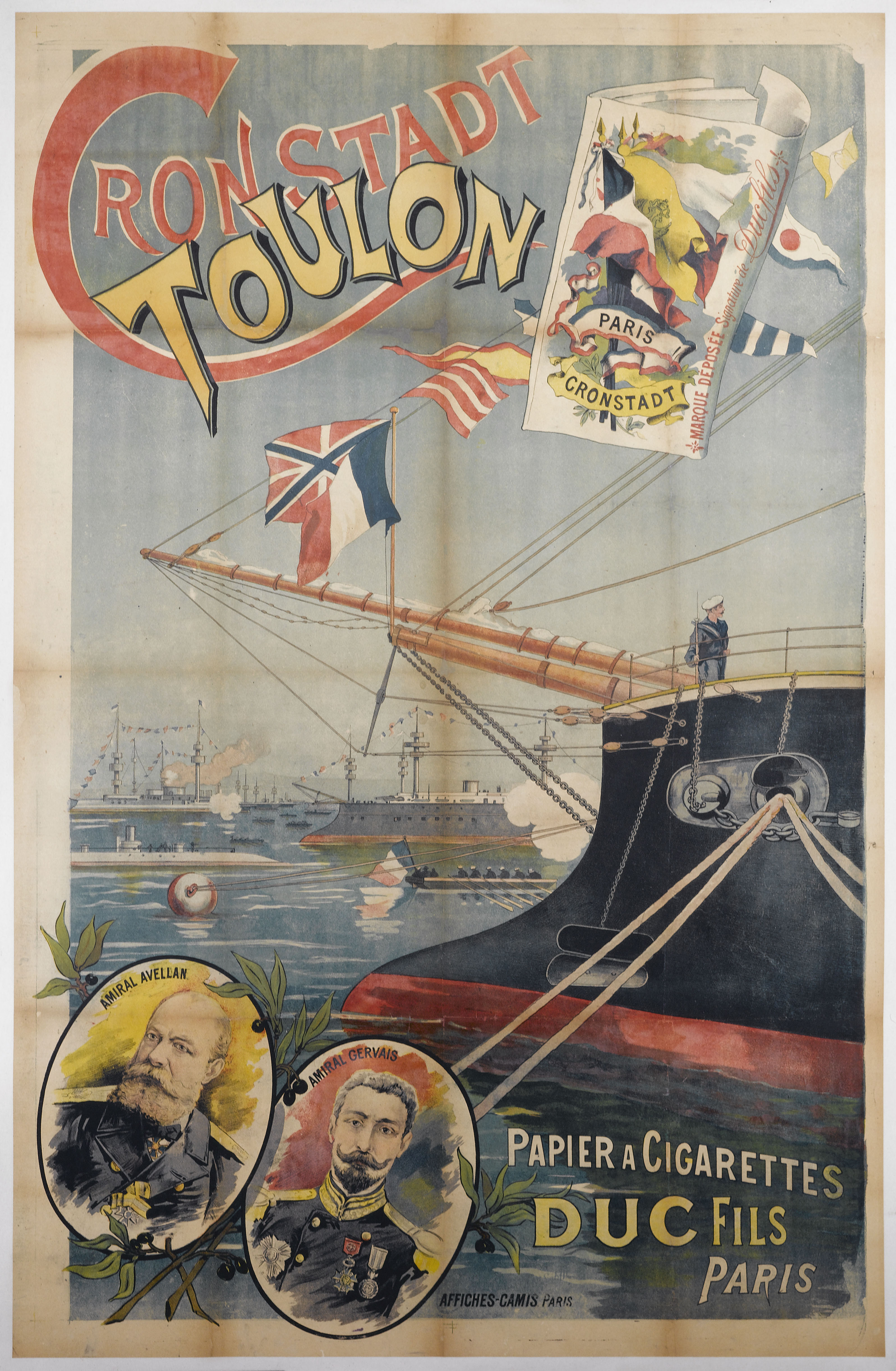
The essay was provoked by what the editorial history calls “the quasi-patriotic clamour” of the Russian and French press around the conclusion of the Franco-Russian alliance and the festivities for the Russian squadron under Vice-Admiral Avelan at Toulon in early October 1893. Tolstoy began on 8 October 1893 (рук. №1, signed that day at Yasnaya Polyana). The first redaction opened directly with a Paris telegram describing the festivities, then turned to the article he had “recently” read by the “learned psychiatrist” Sikorsky on the malevanshchina epidemic — the comparison that became the essay’s spine. He worked the piece in sharply satirical, denunciatory tones, knowing it could not pass the Russian censor and intending from the start to send it abroad.
The interlocutors
The composition network is unusually legible because Tolstoy debated the piece in letters even as he wrote it. The destination was decided in conversation: he first thought of the German press, told L. I. Veselitskaya so in early October, and through her N. S. Leskov urged the English papers instead (“Why German and not English?”). On 20 October Tolstoy agreed (to Leskov, T66). On 30 October he named the piece to D. A. Khilkov:
«Еще написал статью протест против франко-русских празднеств, которыми нас хотят уверить, что мы все сочувствуем. Эту статью пошлю в английские газеты.» (working English) “I have also written an article — a protest against the Franco-Russian festivities by which they want to assure us that we all sympathise. This article I shall send to the English papers.” (letter to D. A. Khilkov, 30 Oct 1893, PSS T66)
The same day he told V. G. Chertkov both intended outlets — the Daily Chronicle and Bertha von Suttner’s pacifist journal Die Waffen nieder! (T87), an idea his wife S. A. Tolstaya had proposed via their daughter Tatyana. I. I. Gorbunov-Posadov supplied raw material, sending the newspaper clipping of the Toulon bishop’s speech that “proved useful” and went almost whole into chapter II.
The struggle: abandonment and return
The diary and the Chertkov letters record a six-month oscillation. A draft was finished by early November — and immediately repudiated:
«Но с Тулоном сделалось то, что он мне опротивел» (working English) “But with Toulon what happened is that it became repugnant to me.” (to Chertkov, 3 Nov 1893, T87) — the same day the diary notes «Написал Тулон и не посылаю» (“I have written Toulon and am not sending it”).
Two days later he disowned the impulse:
«Это было очень глупо с моей стороны. Я опять ею занять, хотя хорошего в ней очень мало» (working English) “That was very foolish of me. I am occupied with it again, though there is very little good in it.” (to Chertkov, 5 Nov 1893, T87)
The central concept surfaced by late November, when he told G. A. Rusanov he was writing “о Тулоне, гипнотизации патриотизма” (“about Toulon, the hypnotisation of patriotism”). The winter was a grind — to Chertkov on 8 February 1894, «Я все продолжаю толочь воду в Тулонской ступе» (“I keep on pounding water in the Toulon mortar … there must be something not yet thought through”). The clearest statement of what the piece had become he gave his wife on 3 February 1894:
«Всё тот же так называемый Тулон, в котором я был вовлечен в разъяснения вопроса «патриотизма» … т. е. доказательство лжи и вреда этого патриотизма.» (working English) “Still the same so-called Toulon, in which I was drawn into clarifying the question of ‘patriotism’ … the demonstration of the lie and harm of this patriotism.” (to S. A. Tolstaya, 3 Feb 1894, T84)
He signed the final redaction on 17 March 1894 and noted in the diary, five days later, that he had “decided not to translate it and not to print it. And that relieved me.” The relief did not hold: on 21 April the diary records «Тулон решил послать переводчикам. Все одобряют» (“Toulon — decided to send to the translators. Everyone approves”), and the essay went out into the world.
What the work says
The essay runs to eighteen short chapters and a preface, signed «Л. Толстой. 17 марта 1894. Москва.» Its movement:
- Preface — I–II · The festivities. The emotional progression (comedy → bewilderment → indignation); the Toulon and Paris receptions quoted at length from Сельский вестник and the press — Avelan, the minister’s “great and noble people,” the menus telegraphed across Russia, the medals and strange gifts (a gold book to the tsar, an aluminium plough to Avelan), and the Toulon bishop blessing the ironclad Jauréguiberry while praying to the god of peace “but ready, if need be, to call on the god of war.”
- III–IV · The epidemic. Sikorsky’s malevanshchina as the diagnostic key; the “complete similarity” between the peasant mania and the patriotic one; the single, enormous difference — the patriotic sufferers possess the means of mass violence and the means (post, telegraph, press) to spread the disease. The ember on the floor versus the house on fire.
- V–VII · The lie. Billions spent on arms while every speech invokes “peace” (si vis pacem para bellum); the Lavisse school textbook teaching French children to avenge Sedan and Metz; the deceived working народ as cannon fodder; the prophetic set-piece of how the next war will begin — the proclamation “by God’s grace … we have deemed it our duty before God to send them to be killed,” the gold-robed clergy praying for murder, the profiteers, the Red Cross ladies; and the protest “we, people free of the stupefaction” enter against it all.
- VIII–XII · Patriotism is not natural to the народ. The French war-agitator at Yasnaya Polyana (Déroulède, unnamed) and the peasant Prokofy who treats his war-plan as a joke; “I have lived half a century among the Russian people …”; the old friend D. and the village elder (“Why should we fight? … Let them set things up our way too”); and the manufacture of “spontaneous” enthusiasm — the Guards regiment in which every tenth soldier was ordered to cross himself, and the Сельский вестник’s own account of the committees, 100,000-ruble allocations and half-price railways behind the Toulon “spontaneity.”
- XIII–XIV · What patriotism is. The definition — “preference of one’s own state over every other,” the formula of “Deutschland, Deutschland über alles” with any name substituted; not high but “stupid and immoral”; a virtue of the ancient world, now mere scaffolding left standing after the building is built; “in all of history not one war that was not provoked by governments”; Divide et impera; “patriotism is slavery.”
- XV–XVI · Public opinion. Government power rests not on force but on public opinion, which governments manufacture through school, church and press — yet public opinion always moves, like the sun, and the old patriotic opinion is a dam holding back the new consciousness of the brotherhood of peoples.
- XVII–XVIII · The remedy. No feats are needed, only that each person stop lying — stop affirming what he does not believe. The single free man who speaks the truth; the sharp blade misused to hammer nails (the wasted power of those who choose “social activity” over truth-telling); the candle that lights infinite candles; and the close on Christ’s “Peace I leave with you” (John 14:27).
Redactions & textual history
The manuscript dossier is large: 1,384 leaves of varying format, arranged chronologically as redactions №1–39. The copyists were M. L. Tolstaya, P. A. Boulanger, E. I. Popov, I. I. Gorbunov-Posadov, P. P. Kandidov, M. A. Schmidt, and unknown hands.
The title evolved across the redactions, the editorial history records, before settling: Тулон → «Психопатическая эпидемия» → «Наваждение» → «Не лгать» → «Гипнотизация и обеспечение мира» → «Гипнотизация патриотизма» → «Патриотизм и христианство» → finally «Христианство и патриотизм» (the title Tolstoy wrote onto рук. №38).
The most telling textual feature is a deliberate softening by encryption in the late redactions. Entering his last corrections into рук. №37 (some in M. A. Schmidt’s red ink), Tolstoy replaced real names with descriptions: Avelan became “начальник русской эскадры”; Carnot, “президент республики”; Delyanov, “министр просвещения”; Suvorin, “сторонники войны”; Déroulède, “наш гость”; bishop Mignot, “епископ в Тулоне”; General Bogdanovich and Mme Adam, “генерал такой-то” and “г-жу такую-то.” (This parallels the de-localising revision found in the Ivan Ilyich dive, where Moscow place-names were stripped to universalise the story.) The published PSS text shows the de-naming applied unevenly — “генерал такой-то благодарил г-жу такую-то” and “наш гость” stand in the text, yet Avelan’s name survives in the quoted newspaper passages of chapter I, a visible seam between the satire’s first impulse and its later muting.
The PSS Tom 39 text (1956) follows the Elpidin edition of 1895, with misprints and errors corrected against the manuscripts.
Publication, censorship & translation
Banned in Russia from the outset, the essay reached the public abroad and in translation first:
- French (first): J. Legras’s translation in the Journal des Débats, May 1894, then as a Perrin pamphlet, L’esprit chrétien et le patriotisme, Paris 1894.
- English: the Daily Chronicle, June 1894. C. I. Turner began a translation but returned it at Tolstoy’s request; Chertkov took it over and arranged publication with Battersby.
- German: V. E. Henkel’s translation, G. Müller, Berlin, August 1894. (S. Yu. Ber’s translation went unpublished after the French edition appeared.)
- Russian (first, abroad): M. K. Elpidin, Geneva/Carouge, 1895.
In Russia the essay was banned and circulated in underground hectograph editions, with printed copies smuggled from abroad — especially into the Baltic provinces and Poland. A Lifland gendarme inquiry of 31 May 1901 prompted the Main Administration for Press Affairs to confirm the import ban (Archive of the St Petersburg Censorship Committee, file 78, pt IV). The first legal Russian printing came in 1906, as a brochure (with other banned articles — Thou Shalt Not Kill, Letter to the Liberals, Letter to a Non-Commissioned Officer) from the Обновление publishing house; the publisher N. E. Felten was prosecuted for it. The essay then appeared, censored, in S. A. Tolstaya’s 1911 collected works (vol. XVIII) and again in the 1913 Biryukov/Sytin collected works.
Reception & afterlife
(The corpus establishes the censorship and circulation history above; the contemporary critical and clerical reception is drawn from the Phase-3 scholarship pass and attributed below.)
The essay’s earliest “reception” in Russia is, in the first instance, the censor’s: it was judged unpublishable, its import policed, its later collected-edition appearances cut. Its public life from 1894 was therefore a translated and émigré one — read in France, England and Germany, and smuggled home.
Abroad it drew sharp response. The Spectator (14 July 1894) dismissed it as “a vast deal of fury and uncommonly little Christianity,” arguing that authentic patriotism is the foundation of Christian universalism and that Tolstoy “attempts to destroy the root and yet gather the fruits” — a representative English conservative-liberal reading of him as an extremist denying the moral reality of national feeling. In 1895 the Polish thinker Marian Zdziechowski opened a correspondence with Tolstoy prompted directly by the essay; Tolstoy’s reply registered a “complete divergence” on patriotism, Polish messianism and national liberation (Kijewska-Trembecka, 2024).
The Church and the 1901 excommunication. A clarification worth making precisely: the Holy Synod’s 1901 excommunication decree does not cite Christianity and Patriotism. Its proximate triggers were Resurrection (1899) — especially its satire of the head of the Synod — together with the Critique of Dogmatic Theology and Tolstoy’s harmonised Gospels (Wikisource, Decree of Excommunication). The essay is part of the broader corpus that established his heterodoxy in the Synod’s eyes, but it is not implicated in the decree; the excommunication should not be presented as targeting his anti-patriotism writings.
Afterlife. Tolstoy’s influence on Gandhi runs chiefly through The Kingdom of God Is Within You, which Gandhi said “overwhelmed” him, not through this essay (British Library, 2024). Charlotte Alston (2014) traces the inter-war reach of the broader Tolstoyan movement and its Bolshevik suppression — a movement that drew on non-resistance and anti-statism generally rather than on any single essay.
Place in the cluster
- The Kingdom of God Is Within You (1890–1893) — the immediate predecessor and the foundation: non-resistance as the core of Christianity. Christianity and Patriotism carries that principle into a direct attack on the state’s chief recruiting device. (Tolstoy is correcting the proofs of Kingdom’s reception even as he drafts Toulon — the Chertkov and S. A. Tolstaya letters mention both at once.)
- What I Believe (1882–1884) — the earlier statement of the ethic of non-resistance the essay assumes.
- The patriotism trilogy — Christianity and Patriotism is the first of three: Patriotism, or Peace? (Патриотизм или мир?, 1896) and Patriotism and Government (Патриотизм и правительство, 1900) are separate works, companions to be cross-linked once their records exist, not merged here.
- The later anti-war essays — Bethink Yourselves! (1904) and The Law of Violence and the Law of Love (1908), both treated in the fire-metaphor dive; Bethink Yourselves extends this essay’s argument into the Russo-Japanese War.
- Mainstream label: the position is usually filed under Christian anarchism — a label this project keeps visible as the mainstream’s word while pointing at the dive that interrogates it (see “Scholarly context”).
The author’s later verdict
Within the composition window itself Tolstoy’s judgment of the essay is markedly ambivalent — by turns “repugnant,” “very little good in it,” a mortar in which he pounds water — an unusual degree of authorial dissatisfaction with a finished polemic. A settled later verdict (after 1894) was not swept in this dive and is flagged for a follow-up pass (needsReview); the continuity is instead visible in the works themselves, in the escalating patriotism trilogy of 1896 and 1900, which shows he did not retreat from the position but sharpened it.
Scholarly context
The received scholarly view treats Christianity and Patriotism as illustrative rather than central. Aylmer Maude — Tolstoy’s friend and first major English biographer — gives it about six lines in The Life of Tolstoy: Later Years (1910), reserving his analysis of “antagonism to governments” for The Kingdom of God Is Within You; Ernest Simmons (1946), Rosamund Bartlett (2010) and A. N. Wilson (1988) likewise treat Tolstoy’s anti-patriotism biographically. The most systematic placement is Alexandre Christoyannopoulos’s (Tolstoy’s Political Thought, 2013), which files patriotism among the targets of Tolstoyan Christian anarchism. Reading the essay on its own terms, the dive’s findings sit against that view as follows:
- The clinical frame extends the scholarship. Scholars paraphrase the essay as “patriotic mass hypnosis” in general terms (the 2024 Zdziechowski study does exactly this); none unpacks the specific psychiatric borrowing — that Tolstoy names the Kiev psychiatrist Sikorsky and adopts his term malevanshchina for a “psychopathic epidemic” (W3). The primary text reaches a clinical analogy the literature only gestures at.
- “Patriotism is alien to the народ” extends it. The literature reads patriotism as an elite-imposed ideology; Tolstoy’s sharper claim — that it is not a natural feeling of the people at all (W8) — is rarely foregrounded. (Christoyannopoulos, 2013.)
- “Government-manufactured hypnosis” the scholarship confirms. That governments produce patriotism through press, school, church and clergy is the one widely-cited core claim (W9; Christoyannopoulos 2013, McKeogh 2009).
- The “pacifist” label complicates the picture. This is the point most often flattened. Colm McKeogh (Tolstoy’s Pacifism, 2009) usefully calls Tolstoy a “dissident” rather than a peace-congress activist, but the blanket label — and Christoyannopoulos’s own “Christian Anarcho-Pacifist” — risks collapsing the distinction the essay itself insists on: Tolstoy rejects arbitration/congress pacifism, because “peoples subordinate to governments cannot be rational” (W16). He made this explicit five years later in his Letter to the Peace Conference (1899), arguing that an arbitration court enforced by armies is self-refuting. Christianity and Patriotism predates the 1899 Hague Conference; the Hague critique sharpens this essay, not the reverse.
- The “do not lie” remedy the scholarship under-reads. No named scholar isolates “не лгать” (W13) as the essay’s specific prescription; Charlotte Alston’s Tolstoy and his Disciples (2014) centres the lived Tolstoyan communities (the doing), not the diagnostic that lying sustains the system.
Labels to attribute, not assert. The mainstream charges Tolstoy’s pacifism with being “utopian or naïve” (Christoyannopoulos reports this as a received charge he contests) and his method “strict, literalist, and simplistic” (McKeogh); The Spectator (1894) dismissed the essay as “a vast deal of fury and uncommonly little Christianity.” These are the outside’s words; the dive keeps them visible as such rather than adopting them.
Material not covered
- The full redaction-by-redaction collation of the 39 manuscripts (1,384 leaves) — only the title evolution and the name-encryption list are taken from the editorial apparatus.
- A page-by-page cross-check against the printed PSS Tom 39 PDF (not held locally) — extraction relied on the tolstoydigital TEI (
needsReview). - The patriotism-trilogy siblings (Patriotism, or Peace?, 1896; Patriotism and Government, 1900) — cross-linked, not dived.
- Tolstoy’s correspondence with the translators after April 1894 (Turner’s withdrawal, Chertkov/Battersby, Henkel) beyond the composition window.
- A post-1894 statement of Tolstoy’s own later verdict on the essay.
Visual & manuscript record
Six openly-licensed images were cached locally (in the git-ignored visuals/; rights recorded in dossier.yaml for any later publication). On a fresh clone, python3 docs/fetch_visuals.py 1893-1894-christianity-and-patriotism repopulates them from the dossier url: fields.
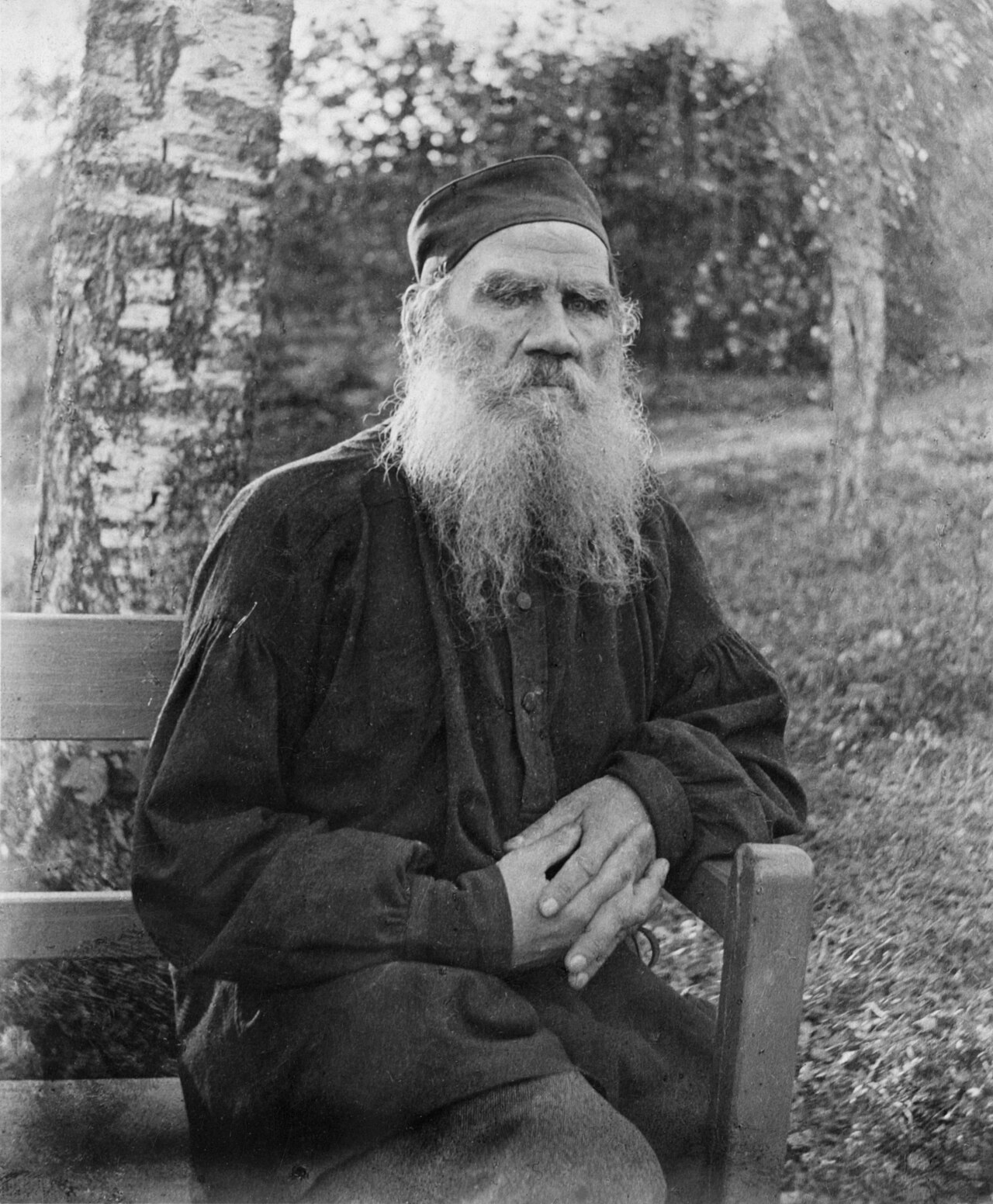
- Leo Tolstoy, 1897 (F. W. Taylor; Library of Congress ppmsca.37767) — PD. Closest dated portrait to the composition period. (embedded above)
- Tolstoy and S. A. Tolstaya at Yasnaya Polyana, c.1890 (American Review of Reviews, 1910) — no known copyright restrictions. The estate where the essay was begun.
- Cronstadt–Toulon commemorative lithograph, c.1893 (Musée Carnavalet, AFF1388) — CC0. Admirals Avelan and Gervais with the fleet. (embedded above)
- Illuminations of the Hôtel de Ville, Franco-Russian fêtes, Paris, 19 Oct 1893 (Fédor Hoffbauer; Musée Carnavalet, D.1345) — CC0. The Paris reception of chapter I.
- Straw triumphal arch at the Villette abattoirs for Avelan’s visit, 20 Oct 1893 (Musée Carnavalet) — CC0. Identified, not yet downloaded.
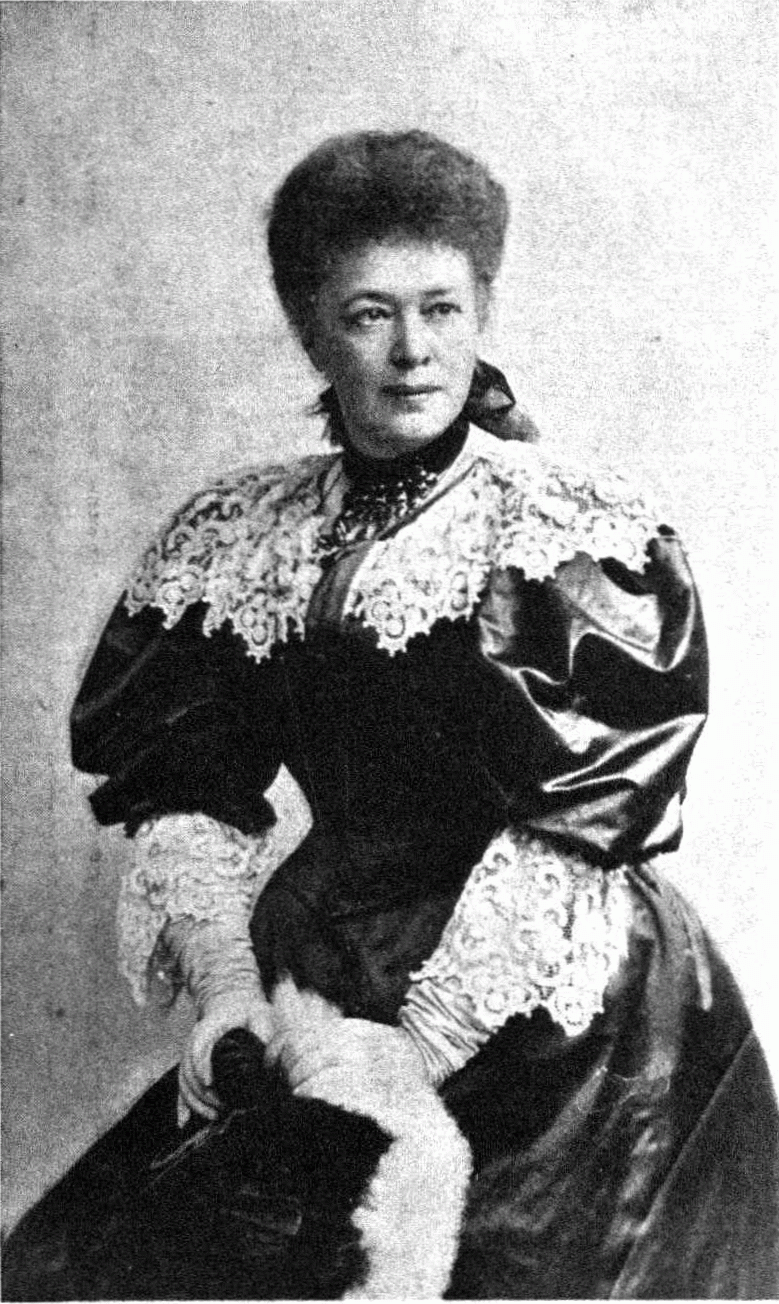
- Bertha von Suttner, 1903 and 1906 (Carl Pietzner) — PD. The pacifist whose journal Tolstoy considered as an outlet.
Manuscript record. The 1,384 leaves of the redactions are held in the Tolstoy manuscript collections (GMT / RGB); no facsimile was rendered for this dive. Not openly available: a scan of the Elpidin 1895 Geneva first Russian edition title page — none found on Wikimedia Commons; a targeted search of imwerden.de / vtoraya-literatura.com / the Russian State Library is recommended (needsReview).
Method
This dive followed the corpus-dive skill. Scope: a single-work dive on Christianity and Patriotism, corpus surface = PSS Tom 39 (work + editorial history) as the spine, with a composition-window witness sweep of the 1893–94 diary (Tom 52) and letters (Toms 66, 67, 84, 87), and a light visuals sweep. Phase 0: the slug was confirmed as 1893-1894-christianity-and-patriotism (composition window, per the skill’s composition-not-publication rule). Phase 1–2: a full structural read of the work text; targeted extraction of the cited diary and letter passages (matched by content, guarding against the TEI diary filename-date artifact — two entries here are filed under the wrong day); all pre-1918 text extracted with extract_tei.py --choice=reg. Phase 2 visuals: a single-channel (Wikimedia Commons) light sweep, 8 candidates, 6 cached. Phase 3: an English-first scholarship and reception gather (see “Scholarly context”). Phase 5: verify_quotes.py PASS (27/27 quotes byte-faithful) plus an independent opus verifier pass (verdict: clean).
Links (sibling dives): The Kingdom of God Is Within You · What I Believe · The Death of Ivan Ilyich · fire-metaphor · christian-anarchism · tolstoyanism.
References
Primary
- Л. Н. Толстой. Христианство и патриотизм. ПСС, Т. 39, с. 27–80. М.: ГИХЛ, 1956.
- «Христианство и патриотизм». История писания и печатания и описание рукописей. ПСС, Т. 39, с. 229–234.
- Л. Н. Толстой. Дневник 1893–1894. ПСС, Т. 52.
- Л. Н. Толстой. Письма 1893–1894. ПСС, Тт. 66, 67, 84, 87 (to Leskov, Khilkov, Rusanov, Legras, S. A. Tolstaya, V. G. Chertkov).
Background
- Maude, Aylmer. The Life of Tolstoy: Later Years (1910); Leo Tolstoy (1918).
- Simmons, Ernest J. Leo Tolstoy (1946); Bartlett, Rosamund. Tolstoy: A Russian Life (2010); Wilson, A. N. Tolstoy: A Biography (1988).
- Christoyannopoulos, Alexandre. Tolstoy’s Political Thought: Christian Anarcho-Pacifist Iconoclasm Then and Now (2013); McKeogh, Colm. Tolstoy’s Pacifism (2009); Alston, Charlotte. Tolstoy and his Disciples (2014).
- Kijewska-Trembecka, M. “Marian Zdziechowski and Leo Tolstoy: on true Christianity and Polish patriotism,” Studies in East European Thought (2024).
- The Spectator, “Christianity and Patriotism” (14 July 1894); Wikisource, Decree of Excommunication of Leo Tolstoy (1901); Tolstoy, Letter to the Peace Conference (1899).
- Naval Central Museum, St Petersburg, “On the Way to the Franco-Russian Union” (Toulon-visit exhibition).
Draft dev-blog note: website/src/posts/notes/2026-06-07-christianity-and-patriotism.md (draft: true).