Art & aesthetics satellites
Four short pieces orbit Tolstoy’s treatise What Is Art? (1897–98): the preface to the works of Maupassant (1893–94), the preface to the English edition of What Is Art? (1898), On Gogol (an unfinished note of 1888 and a published article of 1909), and the preface to Edward Carpenter’s “Modern Science” (1898). Each takes the treatise’s religious-art test off the page and presses it against a single case — a writer Tolstoy admired despite himself, the censored text of his own book, a fellow religious-turn writer, and the boundary between art and science. This dive reads all four against the doctrine and proposes a works/ record for each (none exists yet). It is the satellite cluster to the marquee case-study already dived, On Shakespeare and the Drama.
Key findings
- The Maupassant preface is the seedbed of What Is Art?, not a satellite of it. Three years before the treatise, this preface already states the “three conditions of true artistic creation” — (1) a correct, i.e. moral, relation of the author to the subject, (2) clarity / beauty of form, (3) sincerity — and the PSS commentary itself calls the preface «вступительную часть к трактату «Что такое искусство?»» (an introductory part of the treatise). Maupassant is the hard case the doctrine was built to handle: a writer Tolstoy grants real talent, clarity, and full sincerity, yet rules “bad art” for lacking the moral relation. He is the live proof that infectiousness alone is not enough — a content criterion must be added.
- The English-edition preface turns the treatise’s own test on the treatise’s own text. Every Russian edition of What Is Art? in Tolstoy’s lifetime was mutilated — first by the secular censor, then by the church censor, who cut whole passages and replaced “Christ went to the cross for the truth he professed” with “for the human race,” inserting under Tolstoy’s signature the Redemption dogma he rejected. Tolstoy describes the censored book in the treatise’s own currency — its «цельность и искренности» (wholeness and sincerity) drained out — so the faithful vessel becomes Aylmer Maude’s uncensored 1898 English translation. The integrity-of-transmission test, stated in the treatise as a test of artworks, is here applied to the text’s own transmission.
- On Gogol vindicates the penitent writer, not the moralising art. Tolstoy reads Gogol’s despised late religious turn (the Selected Passages from Correspondence with Friends) sympathetically, against the radical-critic consensus (Belinsky’s 1847 letter), recognising in the “reborn” Gogol buried «под спудом» a self-portrait. But the test stays discriminating: it rescues the religious feeling of the letters while judging the attempt to fuse art and doctrine — the second part of Dead Souls — “ужасная, отвратительная чепуха” (terrible, repulsive nonsense). The defence is against the contempt, not a claim that the moralising fiction is good art.
- The Carpenter preface is the deliberate science-twin of the religious-art test. Written in the same months as the treatise, it runs the same argument across the art/science boundary: true science is the knowledge of «как должны жить люди» (how people should live); experimental science has usurped that place, studying what is profitable to the upper classes that fund it, exactly as upper-class art does. The twin is explicit, not merely structural — but the join shows: the preface carries Carpenter’s own methodological critique as ballast, and its diagnosis of why science goes wrong oscillates between a religion-shaped answer and a class-shaped one.
- A shelving gap surfaced, flagged not invented. Three of the four pieces are prefaces, but the works schema has no “Prefaces” subcategory and no
prefacegenre value. All four are shelved under Essays and Criticism /genre: essay, with the gap recorded inneedsReviewfor a possible Johan-approved vocabulary decision. - One source correction and one resolution. The dive brief named “Grant Richards” as the publisher of the 1898 English What Is Art?; the PSS commentary and independent rare-book records confirm it was The Brotherhood Publishing Company (London, 1898) — Grant Richards belongs to the later 1903 Essays and Letters volume. And the Carpenter preface, flagged in close-read as possibly untranslated, is translated (N. H. Dole, 1899).
Why this matters
What Is Art? is read in the West almost as a freestanding manifesto. These four pieces show it instead as the middle of a working argument: the Maupassant preface is where its central distinction was first cut, the Carpenter preface is its science wing written in the same season, the English-edition preface is Tolstoy’s anxious note that his own book had been falsified in print, and the Gogol pieces are the doctrine turned into a tool of self-recognition. Together they let the project hold What Is Art? not as a verdict but as a method being tested case by case — and they show Tolstoy applying that method more discriminatingly than the “he condemned Beethoven and Shakespeare” caricature predicts. For the vault, they are four unrecorded works with a clean genesis trail and a single governing relation to one already-recorded treatise.
The four pieces
Each piece below carries its marquee passage verbatim (with a working-English translation), its place in the genesis, and how it sits against the doctrine. The triangulation verdicts are tested as hypotheses, not asserted.
1 · The preface to the works of Maupassant (1893–94) — the seedbed
Tolstoy wrote this as a preface for the Posrednik edition of selected Maupassant he himself curated, at the request of the translator L. P. Nikiforov. He began the first draft in early September 1893 (OS) and signed it «2 апреля 1894. Воронеж» — completed 2 April 1894 (OS) / 14 April (NS), with proof corrections running into May. The article quickly outgrew its subject: a fellow Tolstoyan wrote that “Maupassant is only the occasion; this will be the long-awaited essay on art” — which became What Is Art?.
The marquee is the triad itself, stated against Maupassant’s failure:
Из этих трех условий: 1) правильного, т. е. нравственного, отношения автора к предмету, 2) ясности изложения или красоты формы, что одно и то же, и 3) искренности, т. е. непритворного чувства любви или ненависти к тому, что изображает художник, из этих трех условий Мопассан обладал только двумя последними и был совершенно лишен первого.
(working English) “Of these three conditions — (1) a correct, i.e. moral, relation of the author to the subject; (2) clarity of exposition, or beauty of form, which is one and the same; and (3) sincerity, i.e. an unfeigned feeling of love or hatred toward what the artist depicts — of these three conditions Maupassant possessed only the last two, and was entirely deprived of the first.” — PSS Tom 30, pp. 3–24 (maup-three-conditions).
Conditions (2) and (3) map onto two of the three infection-conditions of What Is Art?; condition (1), the moral relation — “knowledge of the difference between good and evil” — is the added “good art” criterion. Maupassant strains the theory precisely because Tolstoy grants him talent, clarity, and sincerity in full, yet still convicts him: the case forces the moral criterion into the doctrine. The strain is then partly relieved by Tolstoy’s claim that true talent, fully exercised, corrects a defective moral relation over a career — “an artist is an artist only because he sees things not as he wants to see them, but as they are.”
Verdict: extends — not a confirmation (the doctrine did not yet exist) but the place its central distinction was first made, with Maupassant as the test case.
2 · The preface to the English edition of What Is Art? (1898) — the meta-plane
Tolstoy signed this short note «17 марта» (17 March 1898 OS / 29 March NS), the same day the second, church-censored installment of the Russian text appeared. He had broken his own rule against submitting work to the censorship by letting N. Ya. Grot place the treatise in a Moscow journal; the result was double mutilation. The preface is his recantation, and his instruction to the English reader to trust only Maude’s translation.
уже некоторая доля ее цельности и искренности была вынута из нее
(working English) “already a certain part of its wholeness and sincerity had been taken out of it.” — PSS Tom 30, pp. 204–206 (engwia-wholeness).
The load-bearing word is the treatise’s own: a book drained of its цельность (wholeness) and искренность (sincerity — the decisive condition of true art) cannot faithfully transmit. Worse, the church censor did not only subtract but substitute: “where I speak of Christ, who went to the cross for the truth he professed, the censor struck this out and put ‘for the human race’” (engwia-christ-censored), so that “there appeared a book signed with my name, containing thoughts put forward as mine but not belonging to me” (engwia-not-mine). The authentic vessel becomes the translation.
Verdict: extends (onto the meta-plane) + confirms — nothing in the doctrine is revised; the novelty is the object the test is applied to, the treatise’s own censored text. The faithful carrier of the feeling turns out to be Maude’s English, not the Russian original-language printing.
3 · On Gogol (1888 note + 1909 article) — the religious-turn writer
Tolstoy wrote on Gogol twice. An unfinished, unpublished note of January–February 1888 (Tom 26) was abandoned because, the commentary records, he “did not want to enter into polemic with Belinsky.” A completed article followed for the 1909 Gogol birth-centenary, commissioned by V. A. Posse for his own journal «Жизнь для всех» and first published — via the Русское слово correspondent S. P. Spiro — in Русское слово on 24 March 1909 (OS). Both defend Gogol’s late religious turn — the Selected Passages from Correspondence with Friends — against the radical-critic consensus.
The 1909 article’s calibration is the marquee:
Но как только хочет он писать художественные произведения на нравственно-религиозные темы или придать уже написанным произведениям несвойственный им нравственно-религиозный поучительный смысл, выходит ужасная, отвратительная чепуха, как это проявляется во второй части «Мертвых Душ», в заключительной сцене к «Ревизору» и во многих письмах.
(working English) “But the moment he wants to write artistic works on moral-religious themes, or to lend already-written works a moral-religious didactic sense not proper to them, out comes terrible, repulsive nonsense, as appears in the second part of Dead Souls, in the closing scene of The Inspector General, and in many of the letters.” — PSS Tom 38, pp. 50–53 (gogol-talent-heart).
The 1888 note states the grievance more rawly: the public keeps “the Gogol who entertains us” and calls the penitent Gogol “a madman” (gogol-public-comic); by the moral measure the celebrated Taras Bulba “extols murder” while the despised late writing is the one touched by «учение Христа» (gogol-canon-inversion). Tolstoy names Belinsky directly (gogol-belinsky) and universalises Gogol’s case as «рождение к истинной жизни» (birth into true life). The self-recognition is loudest in the image of the reborn Gogol lying forty years «под спудом» (under a bushel).
Verdict: confirms + extends, with a documented strain. The test reverses the establishment’s verdict on Gogol’s turn (confirms), and is turned into a tool of self-recognition and a general theory of why moral conversion is despised (extends). But it does not vindicate Gogol’s late fiction as art — it rescues only the religious feeling of the letters. The word “vindicates” needs that qualifier: it is the penitent man, not the moralising art-works, that Tolstoy defends.
4 · The preface to Carpenter’s “Modern Science” (1898) — the science-twin
Tolstoy read Edward Carpenter’s essay “Modern Science: A Criticism” in October 1896 (sent by the English Tolstoyan J. C. Kenworthy at Carpenter’s request) and called it «прекрасной» (splendid). He wrote the preface for the Russian translation — made by his eldest son Sergei Lvovich Tolstoy — between 21 October 1897 (OS) and a dating supplement of February 1898, published in Северный вестник in 1898.
Людям надо жить. А для того, чтобы жить, им надо знать, как жить. И все люди всегда — плохо ли, хорошо ли — узнавали это и, сообразно с этим знанием, жили, двигались вперед, и это знание того, как должно жить людям, со времен Моисея, Солона, Конфуция считалось всегда наукой, самой наукой наук.
(working English) “People must live. And in order to live, they must know how to live. And all people have always — well or badly — learned this and, in accordance with this knowledge, lived and moved forward; and this knowledge of how people should live has, since the times of Moses, Solon, and Confucius, always been considered a science, the very science of sciences.” — PSS Tom 31, pp. 87–95 (carp-how-to-live).
The twin is then made explicit. Experimental science studies what is “more profitable… to the upper classes to which the people engaged in science belong” (carp-upper-classes) — the exact mechanism by which upper-class art serves whoever pays for it; the moral and religious sciences are exiled to those who “prove… that the existing order of life… is the very one that ought to exist” (carp-counterfeit). The remedy mirrors the treatise’s: science must “renounce its experimental method… and return to… the study of how people should live” (carp-remedy).
Verdict: extends to science — but the join shows. The preface fuses two distinct critiques: Carpenter’s own methodological charge (explaining the higher by the lower never explains the higher) and Tolstoy’s moral one (science serves the wrong class, asks the wrong question). And it answers “why does science study trivia?” twice — once structurally (no religion → no priorities) and once venally (self-interest of the scientist-class) — without reconciling them.
Where the theme clusters
| Piece | RU | TEI / Tom | Comp. (NS) | Relation to What Is Art? |
|---|---|---|---|---|
| The Works of Guy de Maupassant | Предисловие к сочинениям Гюи де Мопассана | v30_003_024 (Tom 30) |
1893–94 | extends — the doctrine’s seedbed |
| Preface to the English ed. of What Is Art? | Предисловие к английскому изданию ЧТИ | v30_204_206 (Tom 30) |
1898 | extends (meta) + confirms |
| On Gogol | О Гоголе | v38_050_053 (Tom 38); note v26_648_651 (Tom 26) |
1888 note; 1909 article | confirms + extends (strain on “vindicates”) |
| Preface to Carpenter’s “Modern Science” | Предисловие к статье Карпентера | v31_087_095 (Tom 31) |
1897–98 | extends to science (the join shows) |
Supporting genesis (not records). The What Is Art? genesis-draft cluster (v30_213–v30_270, Tom 30) was read as background only. It shows the doctrine forming by trial titles across 1889–1896 — and, in «Наука и искусство» and «О науке и искусстве», shows that Tolstoy first reached for art and science together before splitting them into the treatise (art) and the Carpenter preface (science). These drafts belong to What Is Art?, not to this cluster.
Scholarly context
Mainstream Tolstoy scholarship does not treat these four as a cluster; it treats What Is Art? as the centre and these as satellites of uneven visibility. The mainstream is read here critically and attributed, never as a baseline the dive confirms.
The Maupassant preface has the most settled status. Aylmer Maude’s editorial apparatus (Tolstoy on Art, 1924) presents it as a “discriminating preface” that states the very “three conditions” later carried into What Is Art? — an editorial adjacency that signals the genesis link without arguing it; the PSS commentary states it outright, so the corpus extends what the scholarship gestures at. The English-edition preface is well documented as the authorial note fronting the first uncensored text of the treatise; the standard accounts (Wikipedia; Aylmer and Louise Maude) agree Maude’s is “the first unexpurgated version… in any language,” and rare-book records (Raptis, Biblio) confirm The Brotherhood Publishing Company, London, 1898 as the first English edition — correcting the dive brief’s “Grant Richards,” which belongs to the later 1903 Essays and Letters volume. The Carpenter preface has a small science-critique literature (the Visions for Sustainability article “Lev Tolstoy and modern science”; the MIT redingtn Carpenter pages), which records that “Tolstoy’s imprimatur helped spread Modern Science beyond the English-speaking world” and that he ranked Carpenter “a worthy successor to Carlyle and Ruskin.” The Gogol pieces are the thinnest: no English-language treatment of the 1909 article surfaced — English coverage stops at the Selected Passages reception (Belinsky’s letter), so the dive’s reading runs ahead of the secondary literature there.
Across the cluster, critics (John Bayley; Gary Jahn) read What Is Art? itself as over-reaching — it disqualifies Beethoven, Wagner, Shakespeare, Dante, and Tolstoy’s own War and Peace — and the prefaces’ case-verdicts inherit that reputation for over-application. The dive’s close-reads complicate that frame: applied to Gogol, the test rescues only the religious feeling and still condemns the moralising fiction — more discriminating than the caricature predicts. That nuance is the dive’s own primary-grounded contribution, not a received consensus.
Material not covered
- Tolstoy’s earlier scattered remarks on Maupassant (1881–1890 diaries/letters) — characterised from the Tom 30 commentary, not independently swept.
- Carpenter’s own English “Modern Science: A Criticism” (the article Tolstoy prefaces) — not Tolstoy’s text; in Carpenter’s collections (Internet Archive).
- Gogol’s Selected Passages from Correspondence with Friends itself (the object of both Gogol pieces) — not in this corpus; English: Jesse Zeldin (1969).
- The fine-grained collation of the Maupassant preface’s ~20 manuscripts and 4 proof passes — only the keystone redaction moves are characterised from the commentary.
- Tolstoy’s March-1909 grading marks on each piece of Gogol’s Selected Passages (embedded in the article extract) — a distinctive primary artifact, noted but not transcribed into an evidence table this pass.
- A published English translation of Tolstoy’s two Gogol articles — none surfaced; both are routed to the late-voice translation-gaps ledger as likely gaps.
Visual & manuscript record
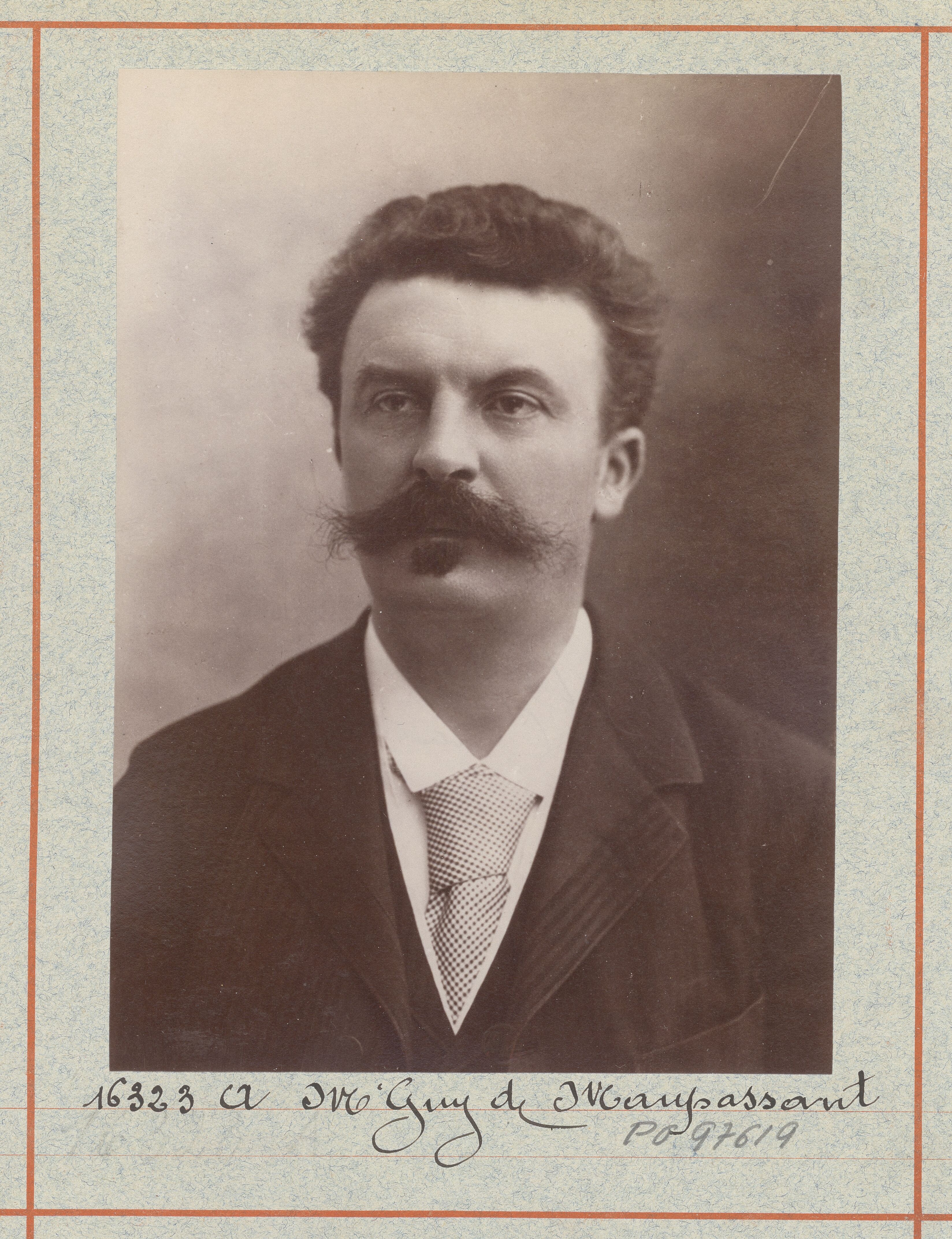
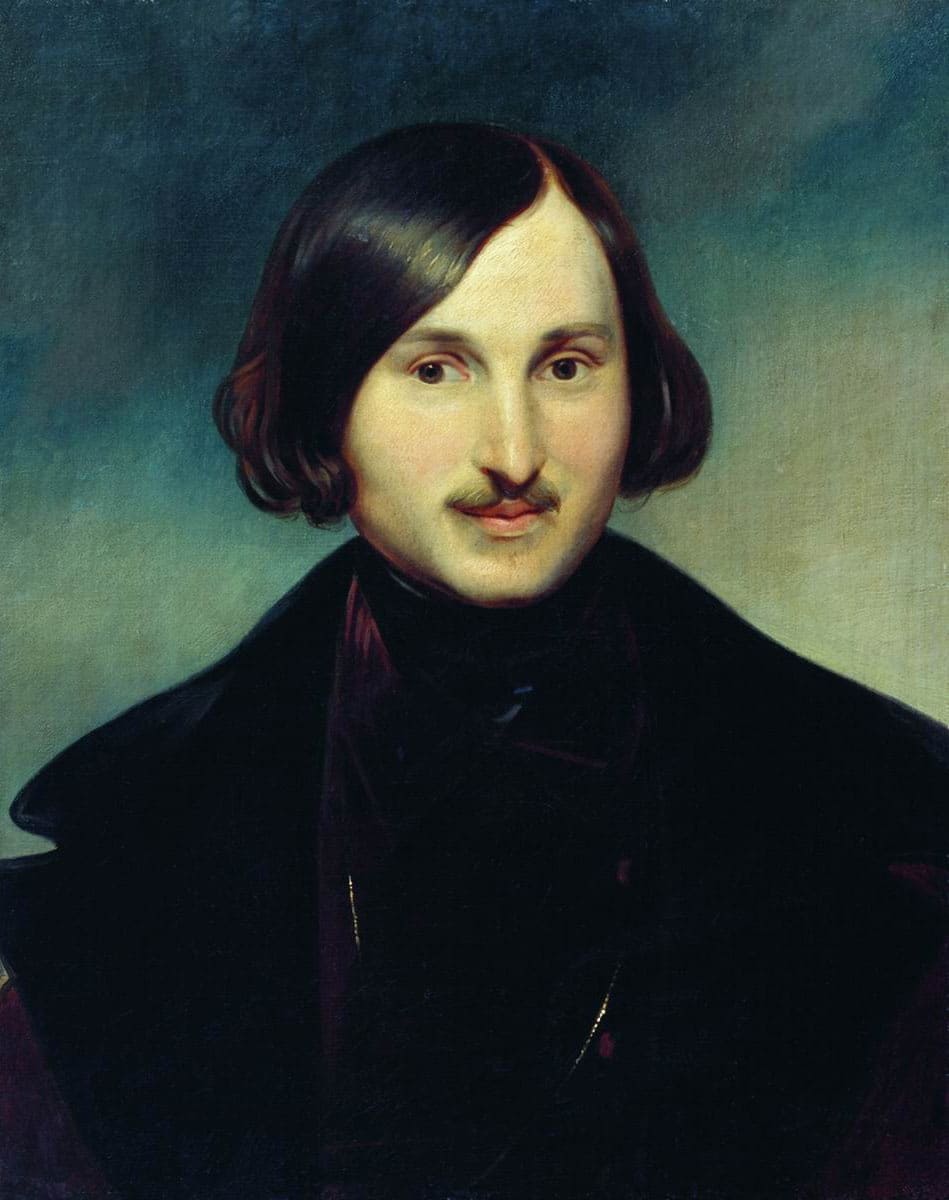
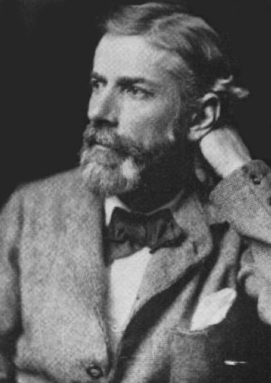
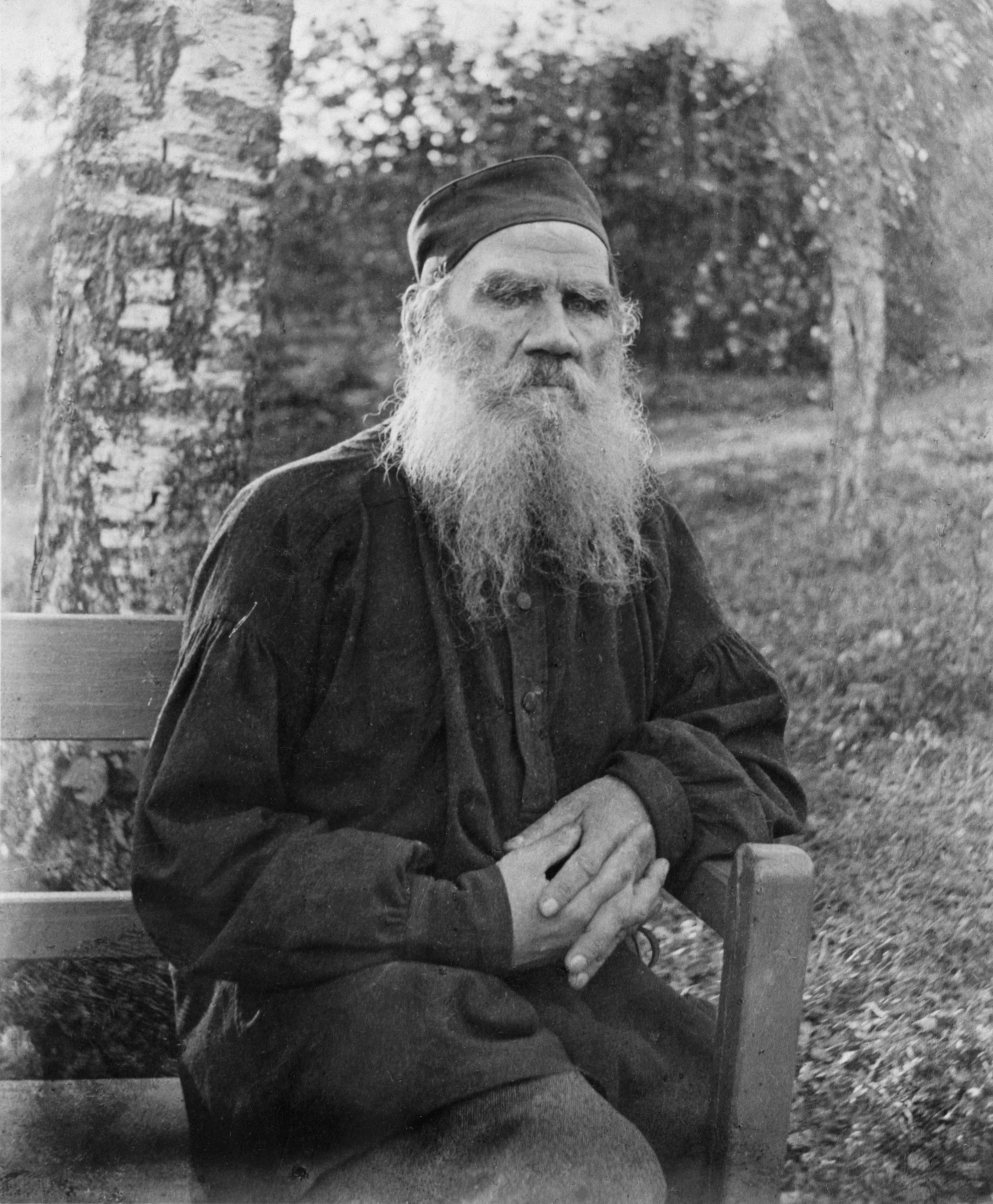
Four public-domain portraits are cached locally (provenance and licences in the dossier). No manuscript facsimiles are rendered — the keystones are typeset PSS text. The one image work-order is an open-licence-free portrait of Aylmer Maude (only a CC BY-SA candidate was found).
Method
This was a multi-work theme dive (not --novel): four short pieces, each proposing its own works/ record. The four texts, their variants, and the supporting What Is Art? genesis-draft cluster were extracted with extract_tei.py --choice=reg --notes=auto (pre-reform orthography resolved to modern spelling); the composition windows and genesis were pinned from each Tom’s commentary (история писания). Four parallel close-reads (one per record-piece) produced the byte-faithful keystones; a separate scholarship pass triangulated each against What Is Art? and the mainstream; a light Wikimedia-Commons visual sweep cached four PD portraits. The mechanical gate verify_quotes.py passed 26/26 quotes verbatim before the verifier ran.
The dive proposes four works/ records and a routing map of entities; it writes no vault pages — that is the separate, human-in-the-loop ingestion step. The shelving gap (no “Prefaces” subcategory or preface genre) is flagged for a vocabulary decision, not patched in the dive.
Links. Governing theory: What Is Art?. Marquee case-study sibling: On Shakespeare and the Drama. The doctrine’s roots: The Kingdom of God Is Within You; the late-voice translation map: late-voice-encryption-compression.
References
Primary (PSS / Jubilee Edition):
- Толстой Л. Н. Предисловие к сочинениям Гюи де Мопассана // ПСС, Т. 30. С. 3–24 (варианты 273–302; комм. 487–508).
- Толстой Л. Н. Предисловие к английскому изданию трактата «Что такое искусство?» // ПСС, Т. 30. С. 204–206 (комм. 509–555).
- Толстой Л. Н. О Гоголе [1909] // ПСС, Т. 38. С. 50–53 (вариант 280; комм. 498); [1888] // ПСС, Т. 26. С. 648–651 (комм. 874–877).
- Толстой Л. Н. Предисловие к статье Эдуарда Карпентера «Современная наука» // ПСС, Т. 31. С. 87–95 (комм. 282–285).
Background (secondary — attributed, read critically):
- Aylmer Maude (trans./ed.), Tolstoy on Art (Oxford, 1924) — includes the Maupassant and What Is Art? prefaces.
- Leo Tolstoy (Maude trans.), The Works of Guy de Maupassant (1894) — marxists.org.
- What Is Art? — Wikipedia (censorship history; Brotherhood Publishing Co., 1898); Aylmer and Louise Maude — Wikipedia; Raptis / Biblio rare-book records.
- V. G. Belinsky, Letter to N. V. Gogol (1847) — marxists.org.
- “Lev Tolstoy and modern science,” Visions for Sustainability (Univ. of Turin); MIT redingtn Carpenter pages; Journal of Leo Tolstoi, Vol. 1 — Notes (marxists.org); Leo Tolstoy (N. H. Dole trans.), Modern Science (Crowell, 1899, vol. 11).
- Gary R. Jahn, The Aesthetic Theory of Leo Tolstoy’s “What Is Art?” (1975); John Bayley on What Is Art? (via Wikipedia); Edward Carpenter bibliography — edwardcarpenter.net.
Draft dev-blog note: 2026-06-21-art-aesthetics-satellites (draft).