A theme-dive across the whole late period, following one phenomenon through every genre and channel: how the late Tolstoy said what he was forbidden to say. Two threads, encryption leading. (1) Encryption under censorship — which truths he encoded because he could not state them in legal Russian print, and how genre (parable/legend/fiction vs treatise) and channel (legal Posrednik print vs Chertkov’s «Свободное слово» (Free Age Press) abroad vs posthumous vs withheld) served concealment or directness. (2) Compression — how the late metaphysics distilled argument → story → aphorism, ending in the four wisdom-anthologies (Мысли мудрых людей / Thoughts of Wise People 1903 → Круг чтения / Circle of Reading 1906 → На каждый день / For Every Day 1909 → Путь жизни / The Path of Life 1910).
This dive is synthesis-first: it mines nineteen finished sibling dives for reusable evidence, then adds fresh sweeps of the un-mined late letters (Toms 73–82), the Chertkov correspondence (Toms 88–89), the late diaries (Toms 55–58), and a structural read of the four anthologies. The grain of the argument is Tolstoy’s own words; the scholarship is read as a divergence map, not a baseline to confirm.
Throughout, the English in quotation marks (and the parenthetical title translations) are working cribs — see Method — not finished published translations.
Key findings
- One constraint, two solutions. A truth that could not pass the legal Russian censor could still be told — if it changed either its genre (a legend or parable says what a treatise would have had banned) or its channel (abroad through Chertkov, posthumous, or withheld). Encryption (change the form) and routing (change the venue) are two answers to the same wall.
- The constraint, named. The keystone is the 6 May 1903 letter to Sholom Aleichem: the culprit of the Kishinev pogrom is «одно правительство» — the government alone — and «этого-то я не могу сказать в русском легальном издании» (“this is precisely what I cannot say in a legal Russian publication”). What he could not say as statement he published as legend. He says «нельзя печатать» (“it cannot be printed”) to a newspaper that offered to run a cut version; he calls all censored literature «праздное занятие» (“an idle occupation”).
- The channel was a built system with a stated rule. To Chertkov, 1900: everything going abroad passes «только через вас» (“only through you”). He sets an all-or-nothing condition against partial printing («печатать всю или ничего» — “to print the whole thing or nothing”), names the abroad route in one sentence («не пройдет в России, но может быть напечатано за границей» — “it won’t get through in Russia, but can be printed abroad”), and reserves the posthumous estate to Chertkov from a written 1895 instruction. The result is an eight-tier channel spectrum, from legal-uncensored down to author-withheld.
- Fiction did the encryption a treatise could not. Resurrection’s prison-Eucharist survived the legal «Нива» (Niva) serial as four words — «Началось богослужение.» (“The church service began.”) — while the complete text was printed simultaneously at Chertkov’s Purleigh press; the same passage is both the most-censored in Russia and the «последняя и высшая степень» (“the last and highest degree”) named in the 1901 excommunication. The народный рассказ (folk tale) is the form built to carry a forbidden truth.
- Compression is the same impulse turned inward. The late metaphysics distils to a formula (the four-proposition religion; «Патриотизм есть рабство» — “Patriotism is slavery”; the title-as-doctrine of The Law of Violence and the Law of Love) and finally to the wisdom-anthologies — one project squeezed four times. Across 1903→1910 the attributions drop away (in Путь жизни / The Path of Life he «нахожу неудобным подписывать их именами их авторов» — “finds it inconvenient to sign them with their authors’ names”), the calendar is abandoned for thirty thematic chapters, and whole paragraphs carry verbatim from book to book.
- The two threads fuse. The daily-anthology form let the church-and-state critique sit as one unsigned numbered maxim among foreign sages — and the publisher still cut some entries «по цензурным соображениям» (“for reasons of censorship”). Tolstoy proposed publishing the complete Круг чтения (Circle of Reading) abroad «без цензурных соображений» (“without censorship considerations”), and suggested filling the legal Readings with «из запрещенных моих» (“from my banned”) works. The wisdom-book is also a smuggling vessel.
- Scholarship confirms the plumbing, not the design. English scholarship documents the abroad channel (Alston 2014; Holman 1988) and the Resurrection mutilation, but does not reach the dive’s three live findings — genre-as-encryption, the explicit 1900 protocol, and compression-as-encryption. The corpus supplies primary grounding for points the literature only gestures at.
Why this matters
The standard picture of the late Tolstoy is of a writer who renounced art for doctrine and simplified himself into dull tracts. The corpus shows something else: a writer running a sophisticated system of concealment and distillation, forced on him by a censorship that would not let him speak plainly at home. The folk tale, the abroad press, the posthumous reserve, and the aphorism are not a retreat from craft — they are the craft a constraint produced. Seen together, encryption and compression are one gesture: the late voice is the sound of a man getting an unsayable truth past a wall, either by disguising its form or by routing it around the guard — and, at the end, by pressing it small enough to hide in a calendar of wise sayings.
The shape of the question
Stage 1 — the constraint named. The truth exists; the legal channel will not carry it.
«этого-то я не могу сказать в русском легальном издании» “this is precisely what I cannot say in a legal Russian publication” (working English)
Date: 6 May 1903. To S. N. Rabinovich (Sholom Aleichem), declining to name in print what he names in the letter — that the Kishinev pogrom’s culprit is «одно правительство» (“the government alone”). PSS Tom 74, pp. 118–119 (v74_144). The sentence was cut from all Russian reprints; the contribution he did make came as three folk tales. This is the seed of the whole theme: the forbidden statement becomes an encoded legend.
The same wall, stated barest of all, to a newspaper that offered to print a cut version of «Не убий никого» (Thou Shalt Not Kill Anyone):
«В таком случае нельзя печатать.» “In that case it cannot be printed.” (working English)
Date: 5–6 September 1907. To the editors of «Час» (Chas). PSS Tom 77 (v77_218). Incomplete truth is no truth; silence is preferred to mutilation.
Stage 2 — the first solution: change the channel. When the truth cannot print at home, route it abroad. The rule, stated to the man who ran the route:
«чтобы за границу все мои писания проникали только через вас» “that all my writings reach abroad only through you” (working English)
Date: 12 December 1900. To V. G. Chertkov. PSS Tom 88 (v88_607). The abroad channel is not improvised; it is a protocol Tolstoy commits to keeping strictly.
Stage 3 — the second solution: change the genre. What a treatise could not get past the censor, a legend could. From «Разрушение ада и восстановление его» (The Destruction of Hell and Its Restoration), the devil explaining how the Church was built on a forged gospel:
«я боялся, как бы они не увидали слишком очевидного обмана, и тогда я выдумал церковь» “I feared they might notice the too-obvious deception — and so I invented the Church” (working English)
PSS Tom 34 (v34_100_115, reused from 1903-folk-tales). The charge would never have passed as a statement; as a satirical legend it was merely unprintable in Russia until 1917 — and printed abroad in 1903. The genre is the encryption.
And the sharpest exhibit of all, where fiction carries what a treatise could not — the whole prison-liturgy of Resurrection, reduced by the «Нива» censor to four words:
«Началось богослужение.» “The church service began.” (working English)
PSS Tom 32 (v32_003_445, reused from 1889-1899-resurrection). Part I, chapters XXXIX–XL were cut wholesale and the part renumbered to hide the gap; the complete text was printed at the same moment by Chertkov’s press at Purleigh. The defamiliarised Eucharist is both the most-censored passage in the legal text and the «последняя и высшая степень» (“the last and highest degree”) the Synod named in excommunicating him.
Stage 4 — compression: the same impulse, turned on the doctrine itself. The late metaphysics contracts to a formula. The unity of all life, stated in a 1903 parable as a two-word self-naming:
«выражается словами: это ты» “expressed in the words: this is you” (working English)
PSS Tom 34 (v34_138_140, reused from 1903-folk-tales). Tat tvam asi — argument, story, and bald proposition in a single cluster, where Thread 1 (the encoded form) and Thread 2 (the compressed doctrine) meet.
Stage 5 — the endpoint, and the fusion. The compression ends in the wisdom-anthologies; and the anthology form is itself a hiding place. The method, stated in the Круг чтения preface:
«дать большому числу читателей доступный им ежедневный круг чтения, возбуждающего лучшие мысли и чувства» “to give a large number of readers an accessible daily round of reading that arouses the best thoughts and feelings” (working English)
PSS Tom 41 (v41_009_009). The source text is raw material, deliberately re-cut and re-worded; fidelity to the original is subordinated to the daily effect. By Путь жизни (1910) the named voices have been re-worked so far into his own diction that he drops the attributions outright — and the very form lets a church-and-state critique stand as one unsigned maxim among foreign sages. The wisdom-book is the last encryption.
Where the theme clusters
The channel spectrum (Thread 1) — ordered most-direct to most-hidden
| Tier | What it means | Worked example |
|---|---|---|
| 1 · legal Russian, uncensored | content was sayable; published cheaply at home | Master and Man (1895), 15,000 copies in four days |
| 2 · legal Russian, censored | printed but cut / softened / distorted | What Is Art? journal serial; the народные рассказы (folk tales); two of the five 1903 tales |
| 3 · print free / stage banned (genre as channel) | the medium itself splits | The Power of Darkness (stage ban 1887–95); The Fruits of Enlightenment (stage-only ban) |
| 4 · abroad-first / abroad-only | foreign edition precedes or replaces the Russian | The Kingdom of God (Paris 1893); What Is Religion (Christchurch 1902); «Разрушение ада» (The Destruction of Hell, Russia 1917 only) |
| 5 · underground / samizdat | banned text circulates hand-copied | The Kreutzer Sonata (8th redaction, lithographed/hectographed) |
| 6 · legal Russia by personal dispensation | reaches print only by special grace | The Kreutzer Sonata (Sofia’s audience with Alexander III → Collected Works only) |
| 7 · posthumous, cut at home / restored abroad | a dead author still censored | Hadji Murat (Moscow 1912 cut / Berlin uncensored); Father Sergius (Moscow 1911 cut / Berlin 1912) |
| 8 · withheld / secret (author-suppressed) | the author himself holds it back | Hadji Murat (not in his lifetime); The Devil (secret twenty years) |
The mechanism that makes tiers 4–8 possible is the 1891/1910 copyright renunciation (anyone may reprint, in Russia or abroad) — documented in the copyright-renunciation dive.
The “can’t say it” letters (Thread 1, fresh sweep)
| Tom | id | Date | Addressee | What it shows |
|---|---|---|---|---|
| 73 | v73_317 |
1902-08-20 | A. P. Naugolnikov | works «запрещенных в России и печатаемых в Англии» (“banned in Russia and printed in England”) — the two-state corpus |
| 74 | v74_144 |
1903-05-06 | Sholom Aleichem | keystone — «не могу сказать в русском легальном издании» (“I cannot say it in a legal Russian publication”) |
| 74 | v74_346 |
1903-12-18 | M. A. Taube | the two-track workaround (soften for home / publish whole abroad) |
| 76 | v76_116 |
1906-01-14 | press (public notice) | Chertkov declared the sole node for everything abroad |
| 77 | v77_218 |
1907-09-05 | «Час» (Chas) editors | «В таком случае нельзя печатать.» (“In that case it cannot be printed.”) |
| 79 | v79_109 |
1909-03-05 | V. A. Posse | «неюбилейно и нецензурно» (“non-jubilee and uncensorable”) — the double bind |
| 80 | v80_112 |
1909-08-30 | P. A. Stolypin | abroad publication as a dated political weapon |
| 80 | v80_370 |
1909-12-19 | N. N. Ge (son) | Chertkov «заведует печатанием всего мною писанного» (“is in charge of the printing of everything I have written”) |
| 81 | v81_116 |
1910-02-09 | M. G. Bolkvadze | predicts his own text will be «нецензурно» (“uncensorable”) |
The Chertkov channel (Thread 1, Toms 88–89)
| Tom | id | Date | What it shows |
|---|---|---|---|
| 88 | v88_607 |
1900-12-12 | the protocol as a rule — everything abroad «только через вас» (“only through you”) |
| 88 | v88_719 |
1904-05-13 | reaffirms the 1895 written instruction reserving the posthumous papers to Chertkov |
| 89 | v89_738 |
1905-04-17 | «не пройдет в России, но может быть напечатано за границей» (“it won’t get through [the censor] in Russia, but it can be printed abroad”) |
| 89 | v89_757 |
1906-02-13 | «печатать всю или ничего» (“to print the whole [article] or nothing”) |
| 89 | v89_809 |
1908-06-01 | «Не могу молчать» (I Cannot Be Silent) — abroad first, Russia gets excerpts a day later |
The compression arc (Thread 2) — one project, squeezed four times
| Year | Book | The unit | What tightened |
|---|---|---|---|
| 1903 | Мысли мудрых людей на каждый день (Thoughts of Wise People for Every Day) | a bouquet of attributed sayings per day | no preface; a commonplace book |
| 1906 | Круг чтения (Circle of Reading) | a dated chord of signed sayings + a weekly story/essay | the method preface added; the story layer still present |
| 1909 | На каждый день (For Every Day) | a day = one theme, mostly his own unsigned prose | named voices recede to a near-monologue |
| 1910 | Путь жизни (The Path of Life) | 30 thematic chapters of numbered aphorisms; calendar gone | attributions dropped; the preface is the whole metaphysics in 31 points |
The diaries record the project from inside: the 400-day calculation he was «почти уверен, что этого не проживу» (“almost certain I will not live to see it”) (v56_078, 1907); «Чем ближе смерть, тем сильнее чувствую обязанность сказать то, что знаю» (“The closer death comes, the more strongly I feel the obligation to say what I know”) (same); and the recognition that the truth is «до глупости простая» (“simple to the point of stupidity”) and the whole labour is the form (v55_172, 1905). Verbatim carry-over proves it is one text: the «суеверие государства» (“the superstition of the state”) paragraph passes from На каждый день into Путь жизни ch. XVII, «суеверие» (“superstition”) sharpened to «лжеучение» (“false teaching”); the water-vessels unity simile is re-cut between the two books.
Scholarly context
The received scholarly view is a divergence map, not a confirmation. Where it agrees, it agrees on the plumbing; the dive’s live findings lie below its resolution.
Confirmed. That the abroad channel existed and mattered is well documented: Alston (2014) treats Chertkov’s «Свободное слово» / Free Age Press as an organised international movement, and Holman (1988) gives its operational record — managed by Arthur Fifield from Tuckton House near Christchurch, 43 publications and roughly 209,000 copies between 1900 and 1902. The Resurrection mutilation (the ~497 «Нива» distortions; the complete text only from Purleigh, and in Russia only in 1936) is also documented. On these the corpus confirms.
Extended. Three findings reach below the scholarship. First, genre-as-encryption: scholars read the folk turn aesthetically and through access (cheap booklets for peasant readers) and record the Kishinev–Sholom-Aleichem contribution biographically — but none reads those 1903 tales as encoding the pogrom-condemnation Tolstoy said he could not publish legally. Second, the explicit 1900 protocol: Alston and Holman describe the operation but not the named rule that all writings abroad pass only through Chertkov — a procedural architecture the PSS correspondence states outright. Third, compression-as-encryption: the four anthologies are acknowledged as one sustained project (and Tulyakova et al. 2018 show the second Круг чтения was polemically active), but the reading that dropped attributions and a thematic re-ordering also lowered the collection’s censorship profile is absent from the English literature. English coverage of the anthologies is itself thin.
Read critically. Popoff (2014) supplies the contested frame of Chertkov as a controlling editor-censor who extracted the posthumous will «under duress» — the same Chertkov-as-antagonist framing the project interrogates elsewhere (see biryukov-sofia-relationship and tolstoyanism). The primary record here complicates that reading rather than confirming it: Tolstoy states the channel as his own settled wish, freely and repeatedly, across 1900–1910, and reaffirms the 1895 papers-instruction in his own hand in 1904 — years before the contested 1909–1910 legal will. The “two censors” framing (the state and the liberal press that mutilated his articles) is Chertkov’s, from his 1909 article «Две цензуры для Толстого» (“Two Censorships for Tolstoy”); it is carried here as his attributed idea, not asserted in the dive’s voice.
Material not covered
- The un-dived direct-treatise comparators in Toms 34–35 («Царю и его помощникам» / To the Tsar and His Assistants, «К духовенству» / To the Clergy, «Не убий» / Thou Shalt Not Kill, «Ответ на определение Синода» / Reply to the Synod’s Edict, «К рабочему народу» / To the Working People, «О Шекспире и о драме» / On Shakespeare and Drama) — left as a future light pass; the direct/abroad pole is already carried by four full dives and the threadmap.
- The 1905–06 Круг чтения weekly tales treated as tales (genre-craft, sources, redactions) — reserved for a planned sibling dive; this dive treats the anthology only as the compression endpoint.
- Full publication histories of the four anthologies (editions, print runs, translation lineage) — only first-publication outlines are captured; needed before the proposed work-records are finalised.
Visual & manuscript record
A light sweep (Wikimedia Commons; licences read from the file metadata, not assumed). The local visuals/ cache is git-ignored — these are for local viewing and the rights metadata is the gate for any later publication to the public site.
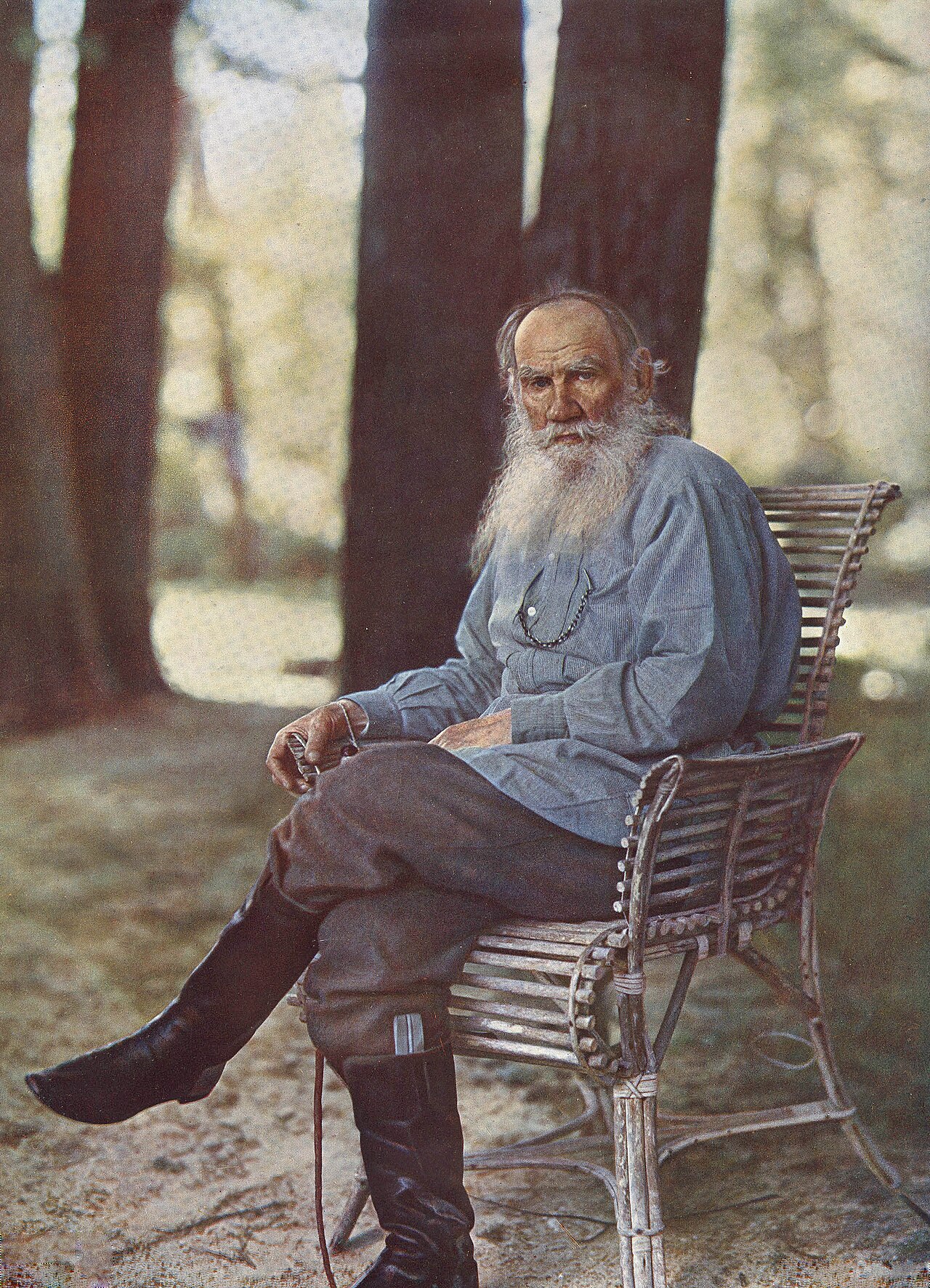
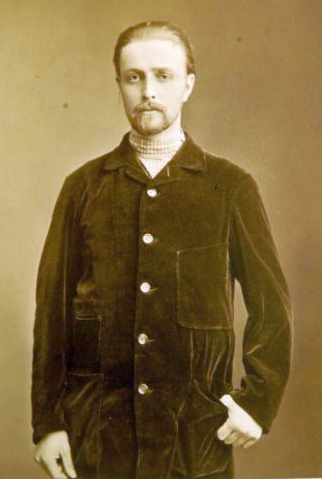
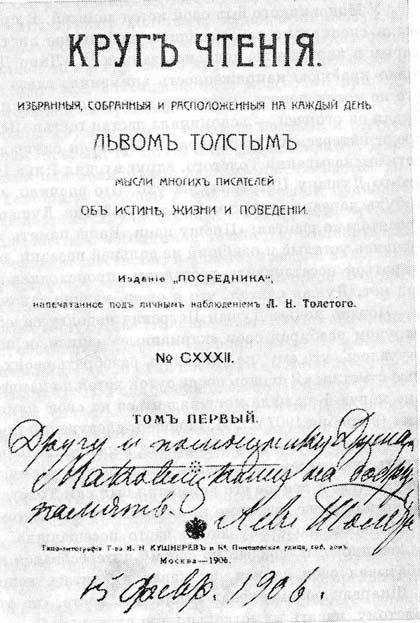
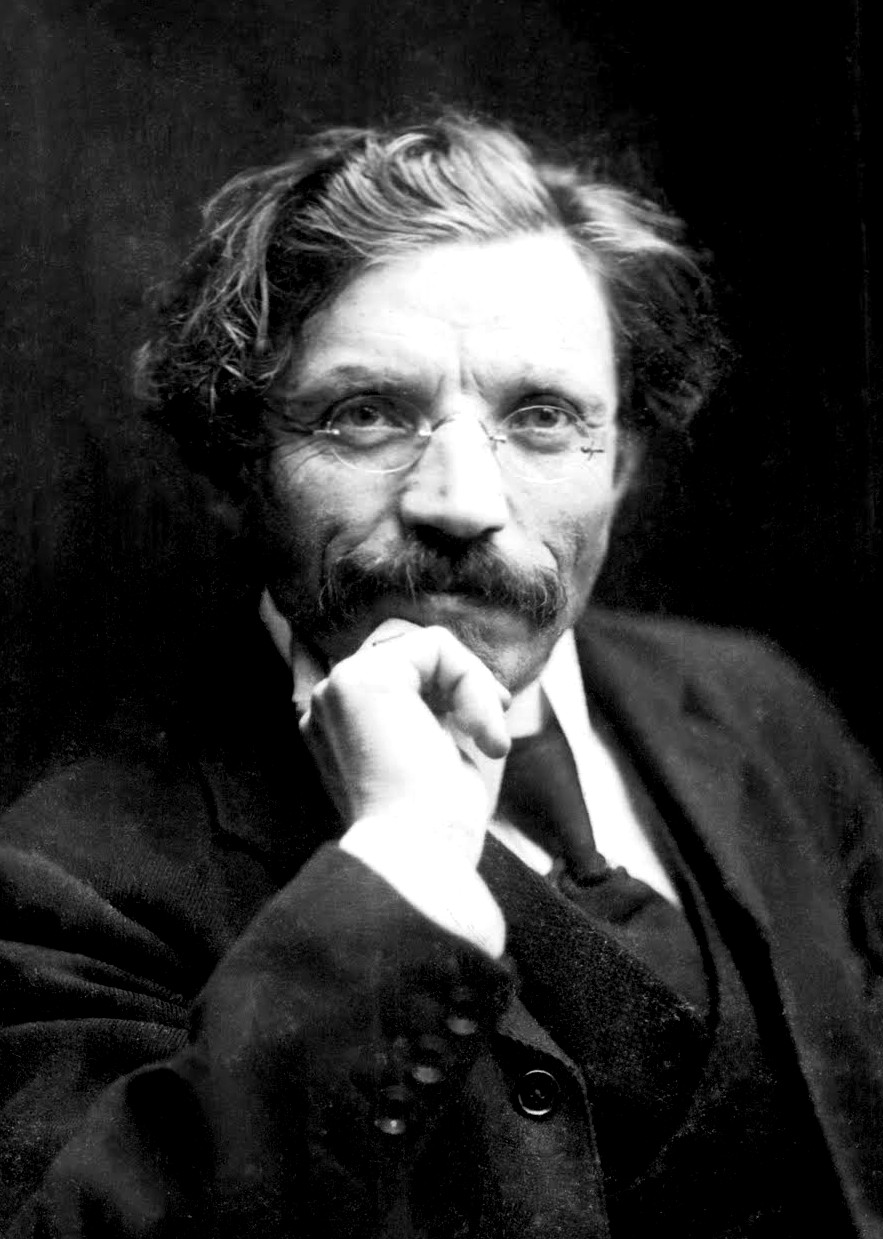
The one genuine gap: no «Свободное слово» / Free Age Press masthead exists on Commons. The closest surrogate is the Free Age Press Pamphlets title page (File:Tolstoy_-_Pamphlets.djvu, Christchurch), a DJVU with no standalone cover image; the press is otherwise documented bibliographically (British Library, Hoover Institution). Acquiring a masthead or a Tuckton-House photograph is a visuals work-order for a later pass.
Method
The Phase-0 contract (settled with the reader, handed off from the 1903-folk-tales dive): synthesis-first; both threads with encryption leading; window 1900–1910 core, with 1880s–90s roots admitted only through existing dives. Executed as: regenerate the cross-dive evidence index (36 dives, 894 rows); mine nineteen sibling dossiers into two thread-maps (76 reusable rows, classified by genre × channel × thread); fan-out fresh sweeps over letters Toms 73–82 + Chertkov 88–89 + diaries 55–58 (62 finalists from ~390 candidates) and a structural read of the four anthologies; a Phase-3 scholarship pass (19 sources) for the divergence map; a light visuals sweep. All pre-1918 text extracted with extract_tei.py --choice=reg --notes=auto; every quoteRu byte-checked by verify_quotes.py (56/56 PASS); a separate-context opus verifier closed the dive. Reused citations point at the sibling dives’ own extracts by relative path; fresh citations sit in this dive’s extracts/.
Links. Sibling dives this one rests on: 1903-folk-tales (the seed), copyright-renunciation (the legal mechanism), 1889-1899-resurrection (the mutilated-legal/full-abroad keystone), 1897-1898-what-is-art (the theory of the encoded form), stories-for-the-people, 1886-the-power-of-darkness, 1886-1890-the-fruits-of-enlightenment, 1887-1889-the-kreutzer-sonata, the posthumous-fiction cluster (1896-1904-hadji-murat, 1890-1898-father-sergius, 1889-1909-the-devil), the direct-treatise dives (1900-the-slavery-of-our-times, 1901-1902-what-is-religion, 1904-bethink-yourselves, 1908-the-law-of-violence-and-the-law-of-love, 1890-1893-the-kingdom-of-god-is-within-you, 1893-1894-christianity-and-patriotism), and fire-metaphor (the anthology compression datapoints). For the contested Chertkov framing, see biryukov-sofia-relationship and tolstoyanism.
References
Primary. L. N. Tolstoy, Полное собрание сочинений (Jubilee Edition / PSS): works & anthologies Toms 26–45; diaries Toms 52–58; letters Toms 64–66, 71–82; letters to Chertkov Toms 87–89 — via the tolstoydigital-TEI corpus, extracted with --choice=reg --notes=auto. Full citation ledger in dossier.yaml.
Background (read critically, attributed). Alston, Tolstoy and His Disciples (2014); Holman, “Translating Tolstoy for the Free Age Press,” SEER 66/2 (1988); Popoff, Tolstoy’s False Disciple (2014) — the contested frame; Bartlett, Tolstoy: A Russian Life (2010); Chertkov, The Last Days of Tolstoy (1911); Emerson, “Theater,” in Tolstoy in Context (2021); Hapgood, “Count Tolstoi and the Public Censor” (1887); Tulyakova et al., Slověne (2018); Wenzer (1997); Simmons, Introduction to Tolstoy’s Writings. Full list in dossier.yaml.
Draft dev-blog note: website/src/posts/notes/2026-06-12-late-voice-encryption-compression.md (held draft: true).