A primary-source dive on Tolstoy’s last work of fiction, written in secret across 1896–1904 and published only after his death. It reads the novella against the fullest composition record in his fiction — the eight-year genesis, the unusual archival source-hunt, the ten redactions, and the posthumous censorship — to test one question: is Hadji Murat a betrayal or a fulfilment of the doctrine of What Is Art? (1897–98), the treatise on art Tolstoy was publishing at the very time he was hiding this story from himself.
The dive leads with Tolstoy’s own words — the diaries, letters, and the PSS Tom 35 commentary — and treats the mainstream framings (“his farewell to art,” “anti-imperialist masterpiece”) as positions to attribute, not baselines to confirm. Working-English translations are labelled and provisional; the Russian is byte-verified against the corpus extracts (verify_quotes.py: 34/34).
Key findings
- The genesis seed is exact and datable. A crushed-but-living “Tatar” thistle by a roadside near Pirogovo, seen 18 July 1896 and recorded the next day, is the germ: «Напомнил Хаджи-Мурата. Хочется написать» (“It reminded me of Hadji Murat. I want to write it”). The thistle becomes the work’s controlling image and its final simile.
- The composition record is the heaviest of any Tolstoy fiction — and it carries a source-research layer most of his fiction lacks. Across 1896–1904 he built the story from archives: he wrote to V. V. Stasov at the Imperial Public Library, to Grand Duke Nikolai Mikhailovich for imperial rescripts, to P. I. Bartenev, and to a Tiflis chain (Esadze, Nakashidze, Potto) and the Korganov family at Nukha for eyewitness detail. The PSS «Список источников» runs to 82 items; the manuscripts to 2166 sheets; the editors count ten redactions.
- Tolstoy was ashamed of it the whole time, and could not stop. The diaries and letters carry a sustained thread of self-reproach — «баловство и глупость» (self-indulgence and foolishness), «упражнялся — глупо, почти душевная болезнь», «Пишу Хаджи Мурата и все совестно», «глупого Хаджи Мурата» — and the decisive statement of the tension: he wrote it «то с охотой, то с неохотой и стыдом» (“now with eagerness, now with reluctance and shame”). He resolved never to publish it in his lifetime.
- The marquee answer: the contradiction was lived, not reconciled. Scholarship splits three ways — Hadji Murat as a fulfilment of What Is Art? (Simmons 1968), as a flagrant violation structured by “silence” (Herman 2005), or as a private relapse he disowned (Wilson). The corpus locates the seam none of these resolves: Tolstoy never argued, anywhere, that the work satisfied his theory — he experienced writing it as guilt over whether making art was a worthy use of a moral man’s time, and yet the way the text withholds all moralizing is the closest it comes to obeying What Is Art?’s own attack on didacticism.
- The mirrored despots are Tolstoy’s own design, not only a critic’s reading. He described the parallel between Nicholas I and Shamil as «два полюса властного абсолютизма — азиатского и европейского» (“two poles of governmental absolutism — Asiatic and European”) — a remark recorded by S. N. Shulgin in the PSS commentary (an oral statement via memoir, not from Tolstoy’s own hand). The novella builds the two rulers in identical strokes. The “anti-imperialist” label, however, is the mainstream’s, and post-colonial scholarship (Bojanowska 2022; Gould 2013) complicates it.
- The censorship is posthumous. Tolstoy died in 1910; the work first appeared in 1912 in two simultaneous editions — a censored Moscow text that cut the Nicholas I chapter from over ten pages to four-and-a-half and excised the burned-aul chapter, and Chertkov’s uncensored Berlin edition that restored everything. This is state and dynastic censorship of a dead author, not a living-author ban.
Why this matters
Hadji Murat is the one place where Tolstoy’s renunciation of art is most directly on trial — by him. He had spent two decades teaching that fiction was, at best, a lesser calling and, at worst, a vanity; What Is Art? (1897–98) gave that conviction its theoretical form in the middle of these very composition years. And in the same window he was secretly writing his most vivid, sensuous, least didactic fiction — and hiding it. The dive’s value is that the corpus lets us watch the conflict in real time, in his own diary, rather than reconstruct it from the finished work.
It also matters as the project’s third flagship novel-dive (after Resurrection and The Kreutzer Sonata), and the first whose principals are mostly historical persons, drawn from an archive Tolstoy assembled deliberately — so the dive’s entity record carries the fiction→life edge that the new character wiki type was built for.
The marquee question, staged
The hypothesis: tested, not asserted. The stages are the primary record, each a verbatim quotation.
1. He framed the work to himself as self-indulgence — repeatedly, across years.
«Писал Хаджи-Мурата неохотно. Опять упражнялся — глупо, почти душевная болезнь.»
(working English) “Wrote Hadji Murat reluctantly. Again indulged [in it] — stupid, almost a mental illness.”
Diary, 15 May 1898 — PSS Tom 53, pp. 195–196.
2. The conflict at its most exact: appetite and shame together.
«писал Хаджи Мурата, то с охотой, то с неохотой и стыдом.»
(working English) “[I] have been writing Hadji Murat, now with eagerness, now with reluctance and shame.”
Diary, 5 August 1902 — PSS Tom 54, pp. 134–135. Three days later the shame stands alone: «Пишу Хаджи Мурата и все совестно» (“I write Hadji Murat and feel ashamed the whole time,” 8 Aug 1902).
3. He decided not to publish it in his lifetime.
«Кончил Хаджи Мурата, который в неотделанном вполне виде отложил и при жизни не буду печатать»
(working English) “Finished Hadji Murat, which, not fully polished, I’ve set aside and will not publish in my lifetime.”
Tolstoy to V. G. Chertkov, 11 October 1902 — PSS Tom 35 «История писания», pp. 583–629.
4. And yet the text itself withholds all moralizing — the close is pure, indifferent nature over the severed head.
«Соловьи, смолкнувшие во время стрельбы, опять защелкали, сперва один близко и потом другие на дальнем конце.»
(working English) “The nightingales, which had fallen silent during the shooting, began to trill again, at first one close by and then others at the far end.”
PSS Tom 35, p. 5–118 (ch. XXV).
The reading. The diaries show no moment of reconciliation: Tolstoy never claims the work fulfils his aesthetic theory, and his shame is not about What Is Art?’s aesthetic criteria (sincerity, universality, “infectiousness”) but about the prior, ascetic question — whether a man who had renounced art should be making it at all. On the criteria themselves, the novella arguably does what the treatise demands: it transmits feeling across every faction — Russian peasant-soldier, Avar naib, Chechen villager, Tsar — without a class-bound or didactic frame, and it carries its moral judgment structurally (Nicholas’s order → the burned aul → the severed head) rather than by statement. That is why Simmons can call it “good universal art” and Herman can call it a “violation” structured by silence: both are partly right about the work, and both miss that Tolstoy himself never resolved it — he lived it as guilt and refused to publish. Rendered as the record shows it: neither a secret repudiation of his ideals nor a tidy fulfilment of them.
Genesis & composition
This is the dive’s heaviest layer, and it has two strands the rest of Tolstoy’s fiction rarely shows together: a precisely datable emotional seed, and a sustained archival research campaign.
The thistle seed (1896)
The germ is an image, not an idea. Walking near Pirogovo on 18 July 1896, Tolstoy noted in his pocketbook «Татарин на дороге. Хаджи-Мурат» (“A tatar [thistle] on the road. Hadji Murat”). The next day the diary develops it: a clump of crushed roadside thistle, run over by a cartwheel, one shoot still standing —
«Напомнил Хаджи-Мурата. Хочется написать. Отстаивает жизнь до последнего, и один среди всего поля, хоть как-нибудь, да отстоял ее.»
(working English) “It reminded me of Hadji Murat. I want to write [it]. It defends its life to the last, and alone in the whole field, somehow or other, has held on to it.”
Diary, 19 July 1896 — PSS Tom 53, pp. 99–102.
A first sketch, titled «Репей» (The Thistle), was written at the Shamordino convent and dated 14 August 1896. Tolstoy had served in the Caucasus as a young officer in 1851–53 — the years of Hadji Murat’s actual defection (November 1851) and death (April 1852) — and had reacted at the time with disdain, calling the historical naib’s surrender «подлость» (a vile thing) in an 1851 letter to his brother. The work returns to that lived ground forty-five years on.
The shame thread
From the start the writing is shadowed by self-reproach, tied to the renunciation of art. In 1897 he assigns the work its theme — «надо выразить обман веры» (to express the deceit of faith) — in the same diary entry that records his shame at «незаконность своей жизни» (the unlawfulness of his own life). The keystone of the conflict (staged above) recurs through 1902–1903, hardening into dismissal: «Все это много важнее глупого Хаджи Мурата» (“All this is far more important than the stupid Hadji Murat,” 18 June 1903). His brother Sergei got the plainest version: «Это баловство и глупость, но начато и хочется кончить» (“This is self-indulgence and foolishness, but it’s begun and I want to finish it”). Biryukov records that Tolstoy admitted writing it in a whisper, “in the tone a schoolboy uses to tell a friend he ate a pastry — recalling the pleasure he felt and ashamed to admit it.”
(The 2026-06-08 scope handoff expected the word «озорство» here; the apparatus does not use it — the recurring terms are «баловство», «глупость», «балуюсь», «совестно» / «стыдно». Rendered as found.)
The source-research campaign — the genesis distinctive
Unusually for his fiction, Tolstoy built Hadji Murat from documents. The «Список источников» (PSS Tom 35, pp. 631–633) lists 82 items. The letters, Tom 69–75, map the network he ran to get them:
«Главное, нужно мне историю, географию, этнографию Аварского ханства в нынешнем столетии.»
(working English) “The main thing I need is the history, geography, ethnography of the Avar Khanate in the present century.”
Tolstoy to V. V. Stasov, 27 December 1896 — PSS Tom 69. The first confirmed research request.
He pursued the Caucasus material through Stasov (the Imperial Public Library: the Сборник сведений о кавказских горцах, the Кавказский сборник, maps), and the single most-chased item — volume X of the Акты Кавказской археографической комиссии — through Stasov, the Grand Duke, and the Tiflis military-historical archive. For the Nicholas I chapter he requested the Камер-фурьерский журнал, Shilder’s biography, and Custine. The autobiography of Hadji Murat in the novel (chs. XI–XIII) rests on the record of the man’s own account taken down by General Loris-Melikov and printed in Русская старина (1881, no. 3). To the Grand Duke he described the work in its own terms:
«Теперь же я занят окончанием давно начатого и всё разрастающегося одного эпизода из кавказской истории 1851, 52 годов.»
(working English) “I am now occupied with finishing a long-begun and ever-expanding episode from Caucasian history of 1851–52.”
Tolstoy to Grand Duke Nikolai Mikhailovich, 20 August 1902 — PSS Tom 73.
His standard to his eyewitness sources was strict — to the Korganov family at Nukha: «когда я пишу историческое, я люблю быть до малейших подробностей верным действительности» (“when I write historical [fiction], I like to be faithful to reality down to the smallest particulars”). The Tiflis archivist S. S. Esadze hand-copied 151 documents; by May 1903 Tolstoy could tell him the materials were “fully sufficient” and ask him to stop. The same letters carry the dismissive bracket — to Stasov, even while chasing the archive: «Продолжаю заниматься пустяками, Хаджи-Муратом» (“I continue to occupy myself with trifles — Hadji Murat”).
What the work says
The novella is short (~110 pages, 25 chapters plus a first-person frame) and structurally simple, so the dive close-reads the pivotal scenes rather than every chapter.
The thistle frame
The narrator gathers flowers, struggles to break off a fiercely resistant “Tatar” thistle, and later sees one crushed in a ploughed field:
«Но он всё стоит и не сдается человеку, уничтожившему всех его братий кругом его.»
(working English) “But it still stands and does not surrender to man, who has destroyed all its brothers around it.”
The image is redeemed at the very end: «Вот эту-то смерть и напомнил мне раздавленный репей среди вспаханного поля» (“It was this very death that the crushed thistle in the middle of the ploughed field reminded me of”).
Nicholas I (ch. XV) — the European pole
The Emperor’s chapter is the political centre. Sentencing a student to run the gauntlet, Nicholas writes “twelve times through a thousand men” and reflects:
«Но ему приятно было быть неумолимо жестоким, и приятно было думать, что у нас нет смертной казни.»
(working English) “But it pleased him to be implacably cruel, and it pleased him to think that we have no death penalty.”
Tolstoy diagnoses the autocrat’s detachment from reality — «все его распоряжения, как бы они ни были бессмысленны… становились и осмысленны, и справедливы… только потому, что он их делал» — and has him issue the war policy whose consequence the next chapters show: «Твердо держаться моей системы разорения жилищ, уничтожения продовольствия в Чечне и тревожить их набегами».
Shamil (ch. XIX) — the Asiatic pole, drawn in the same ink
Shamil is built as the mirror. His staged grandeur «производила то самое впечатление величия, которое он желал и умел производить в народе»; his orders come from a self-attributed divine voice — «он слушает теперь говорящий ему голос пророка»; and his cruelty matches Nicholas’s, threatening Hadji Murat’s son Yusuf:
«Напиши, что я пожалел тебя и не убью, а выколю глаза, как я делаю всем изменникам.»
(working English) “Write that I had pity on you and will not kill you, but will gouge out your eyes, as I do to all traitors.”
The burned aul (ch. XVII) — the cost, from the highlanders’ side
Nicholas’s “system” becomes a destroyed village: a fouled well and mosque, burned beehives, and Sado’s son bayoneted —
«Сын же его, тот красивый, с блестящими глазами мальчик, который восторженно смотрел на Хаджи-Мурата, был привезен мертвым к мечети на покрытой буркой лошади.»
(working English) “And his son, that handsome, bright-eyed boy who had gazed in rapture at Hadji Murat, was brought dead to the mosque on a horse covered with a burka.”
The feeling it produces is «сильнее ненависти» — stronger than hatred. The raid is the moral indictment the political frame builds toward.
Hadji Murat’s death (ch. XXV)
The climax makes the frame literal: cut down in his last stand, he rises once more and falls —
«со всего роста, как подкошенный репей, упал на лицо и уже не двигался.»
(working English) “he fell face down at his full height, like a thistle that has been mown down, and moved no more.”
The nightingales resume; the killer is careful not to soil his shoes with blood. Violence is set inside an unbroken natural ordinariness.
Redactions & textual history
The editors count ten redactions across 1896–1904; the surviving manuscripts run to 2166 sheets (PSS Tom 35 «Описание рукописей»). The title moved from «Репей» (The Thistle, 1896) through «Хазават» (1898) to «Хаджи-Мурат». Most of the work was done in a single 49-day burst from 6 August 1902 («была начата новая работа (редакция десятая)»), during his convalescence at Gaspra; the rest was “finishings,” dominated to the end by the Nicholas I chapter, which he revised eight times. The dive samples the redaction history rather than collating the ~270-page variants file — a verbatim collation of the keystone variants remains open (see Material not covered). The editors judge the work unfinished: the second part was not revised as Tolstoy intended.
Publication, censorship & afterlife
Tolstoy withheld the work; it appeared posthumously in 1912 in two simultaneous editions. The censor of the Moscow «Посмертные художественные произведения», A. V. Belgard of the Main Directorate for Press Affairs, found that in Hadji Murat:
«император Николай I подвергается недопустимым, крайне грубым и оскорбительным для его памяти нападкам»
(working English) “Emperor Nicholas I is subjected to impermissible, extremely crude attacks insulting to his memory.”
PSS Tom 35 «История печатания», pp. 629–631.
The Nicholas I chapter was cut from over ten pages to four-and-a-half, and the burned-aul chapter (XVII) was excised down to its opening line. In parallel, Chertkov printed the full text abroad: «В. Г. Чертковым был напечатан „Хаджи-Мурат” полностью, с восстановлением всех цензурных пропусков» (the Berlin Ladyzhnikov edition). Russian editions to 1917 reprinted the censored text; the uncensored Russian text appeared in 1917; PSS Tom 35 (1950) is freshly collated from the autographs. This is the dive’s reception spine — censorship of a dead author by the state whose founder-figure the work portrays.
Characters & prototypes
This dive applies the wiki schema’s new (v1.4) character and group types, which separate a fictional figure from the real person behind it via a structured prototypes[] edge.
- Hadji Murat →
character(titular), with a prototype edge to the historical Avar naib. The work is so grounded in the documentary record (the Loris-Melikov account, AKAK vol. X, eyewitness letters) that the fiction/life line is unusually thin here; whether the historical figure also warrants a standalonepersonpage is flagged for the ingestion step. - Nicholas I, Imam Shamil, M. S. Vorontsov, M. Loris-Melikov →
person. Major historical figures who appear in the novel; their primary identity is historical, with the novel-appearance carried by backlinks. (Whether Tolstoy’s satirical Nicholas warrants a separatecharactertreatment is noted as a judgment call.) - Butler →
character(invented), with a prototype edge to F. F. Kutler, named by the PSS editors as the model (from Poltoratsky’s memoirs, personally known to Tolstoy). Marya Dmitrievna →character(invented, no documented prototype) — a tiering-rule judgment call. - The Caucasus highlanders →
group(groupType: ethnic-group) — the schema’s own worked example. Distinct from Muridism (aconcept) and the Imamate (aninstitution). - The source-research network (Stasov, Grand Duke Nikolai Mikhailovich, the Tiflis archivists, the Korganov eyewitnesses) →
personrouting clusters, to be split at ingestion.
Themes
- Mirrored despotism: Nicholas ‖ Shamil. Built in identical strokes — staged grandeur, a self-attributed divine/inner voice, casual cruelty, confirming flatterers. Tolstoy’s stated design: “two poles of governmental absolutism.”
- The life-force (the thistle). Tenacity, not victory, is the value; the crushed thistle “that will not surrender” frames the whole and is made literal in the death.
- The brutality of empire. An abstract “system of laying waste dwellings” rendered, two chapters later, as a bayoneted child and a fouled mosque.
- Honour, betrayal, divided loyalty. Hadji Murat caught between Shamil (who holds his family) and the Russians (who distrust him) — the falcon parable names the trap.
- The highlanders’ world from inside. Hospitality (kunak), faith, song, and grief rendered from within, not as exotic backdrop.
- Sensuous prose against the renunciation of art — the marquee tension, carried by the flower catalogue, the nightingales, the snow-mountains that “pretend to be clouds.”
Scholarly context
The mainstream reading treats Hadji Murat as Tolstoy’s last great fiction and the aesthetic capstone of a career whose public author had renounced art — Harold Bloom’s “the best story in the world” (The Western Canon, 1994) anchors the popular reception, and biographers (Bartlett 2010; A. N. Wilson; Simmons 1968) read it as a “return” to the Caucasian energies of his youth, free of the didacticism that marks the other late fiction. The dive treats these as framings to attribute, and finds the corpus supports the design claim while complicating the labels.
On the marquee question, the literature divides three ways and is not settled in one place: Ernest Simmons (1968) calls the novella “almost a perfect example of the good universal art” What Is Art? demands; David Herman (“Khadzhi-Murat’s Silence,” Slavic Review 64.1, 2005) reads it as a flagrant violation of Tolstoy’s late standards, structured by a “silence” that withdraws from all moralizing; and the biographical camp (Wilson; Grasso) reads it as a private relapse. The dive reports this as extends: the diaries show Tolstoy never reconciled the contradiction — he lived it as shame and refused to publish — so the “fulfilment” reading is the scholar’s reconstruction, not his. Herman’s “silence,” meanwhile, the text bears out: the un-moralized close is the closest the work comes to obeying the treatise’s attack on didacticism (confirms).
On the political reading, the corpus confirms that the Nicholas ‖ Shamil parallel is Tolstoy’s own stated design — but the “anti-imperialist masterpiece” label stays the mainstream’s. Edyta Bojanowska (“Was Tolstoi a Colonial Landlord?”, Slavic Review 81.2, 2022) argues Tolstoy’s own estate operated within Russian settler colonialism; Rebecca Gould (2013) reads his Caucasian writing as an “ethnographic gaze” on Russia’s enemies; Ani Kokobobo (2017) argues the novella’s Sufi/Islamic dimension was omitted from earlier readings. These complicate the clean anti-colonial story, and the corpus does not resolve the question beyond Tolstoy’s design statements. Viktor Shklovsky (Energy of Delusion, 1981) held that no final version exists — Tolstoy simply stopped; the apparatus confirms this (ten redactions, an unfinished verdict). Where this dive uses the contested movement-label, it points to the project’s own dives on Tolstoyanism and Christian anarchism and the Law of Violence dive; full attribution and 25 sources are in extracts/_scholarship.md.
Where the material clusters
Diaries (Tom 53–55, 1895–1904)
| Tom | Entry | Date | Material |
|---|---|---|---|
| 53 | pp. 99–102 | 1896-07-19 | The thistle seed — «Напомнил Хаджи-Мурата. Хочется написать» |
| 53 | pp. 143–145 | 1897-04-04 | Theme assigned («обман веры») + shame at his own life |
| 53 | pp. 186–189 | 1898-03-21 | The “peepshow” method of characterization |
| 53 | pp. 195–196 | 1898-05-15 | «упражнялся — глупо, почти душевная болезнь» |
| 54 | pp. 134–135 | 1902-08-05 | «то с охотой, то с неохотой и стыдом» |
| 54 | pp. 135–136 | 1902-08-08 | «Пишу Хаджи Мурата и все совестно» |
| 54 | pp. 178–180 | 1903-06-18 | «глупого Хаджи Мурата» |
| 55 | pp. 15–16 | 1904-02-25 | «бросил» — the terminal composition note |
Letters (Tom 69–75, 1896–1904) — the source-research network
| Tom | Letter / addressee | Date | Material |
|---|---|---|---|
| 69 | V. V. Stasov | 1896-12-27 | First request: history/geography/ethnography of the Avar Khanate |
| 73 | Grand Duke Nikolai Mikhailovich | 1902-08-20 | Imperial rescripts; “ever-expanding episode from Caucasian history 1851–52” |
| 73 | V. V. Stasov | 1902-09-11 | «пустяками, Хаджи-Муратом»; requests AKAK vol. X |
| 73 | I. I. Korganov | 1902-12-25 | The historicist credo; eyewitness detail of Hadji Murat at Nukha |
| 73 | I. P. Nakashidze | 1902-12-20 | «Нет ли его резолюций о Хаджи-Мурате» (Nicholas I rescripts) |
| 74 | S. S. Esadze | 1903-05-06 | Tiflis archive (151 hand-copied docs); “materials fully sufficient” |
Works & commentary (Tom 35)
| File | Pages | Material |
|---|---|---|
v35_005_118_Hadzhi_Murat |
5–118 | The novella (close-read of 5 nodes) |
v35_284_556_..._Varianty |
284–556 | Variants (~270 pp; sampled, not collated) |
v35_583_629_..._Istorija_pisanija |
583–629 | Genesis, chronology, the source-hunt, the shame thread |
v35_629_631_..._Istorija_pechatanija |
629–631 | Posthumous publication + Belgard censorship |
v35_631_633_..._Spisok_istochnikov |
631–633 | The 82-item source list |
v35_648_666_..._Opisanie_rukopisej |
648–666 | Ten redactions; 2166 manuscript sheets |
Material not covered
- The ~270-page variants file (
v35_284_556) — sampled for the redaction count and chronology, not collated verbatim. A follow-up could do for Hadji Murat what the Kreutzer dive did with the lithographed redaction: extract the keystone variant text (e.g. the fuller, later-trimmed Nicholas I chapter). - The working notes / conspectuses (
v35_275_283) and the glossary of mountaineer words (v35_644_647) — the latter would support verbatim translation of the highlander vocabulary. - Early Russian critical reception 1912–1917 in the periodical press, beyond the PSS commentary’s account of the censorship.
- The translation lineage (Aylmer Maude 1912 onward) — outside the primary corpus.
- The post-1994 Chechen-war reception surge as a documented event — known via scholarship, no dedicated primary layer.
Visual & manuscript record
A heavy four-channel sweep of Wikimedia Commons cached 24 public-domain images (full catalogue with provenance and licences: visuals/_sweep.md). The canonical illustration cycle is Yevgeny Lanceray’s, made for the 1912/1913 edition; portraits of the historical principals (Shamil, Nicholas I, Vorontsov, Loris-Melikov) and the major Caucasian-War painters (Roubaud, Gagarin, Horschelt, Kivshenko, Aivazovsky) are all in the public domain.
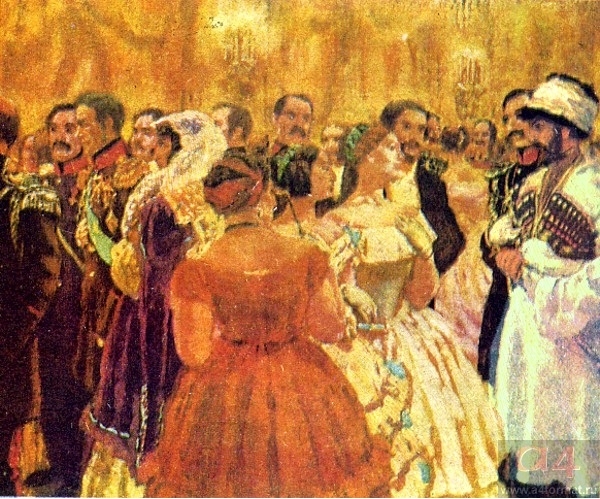
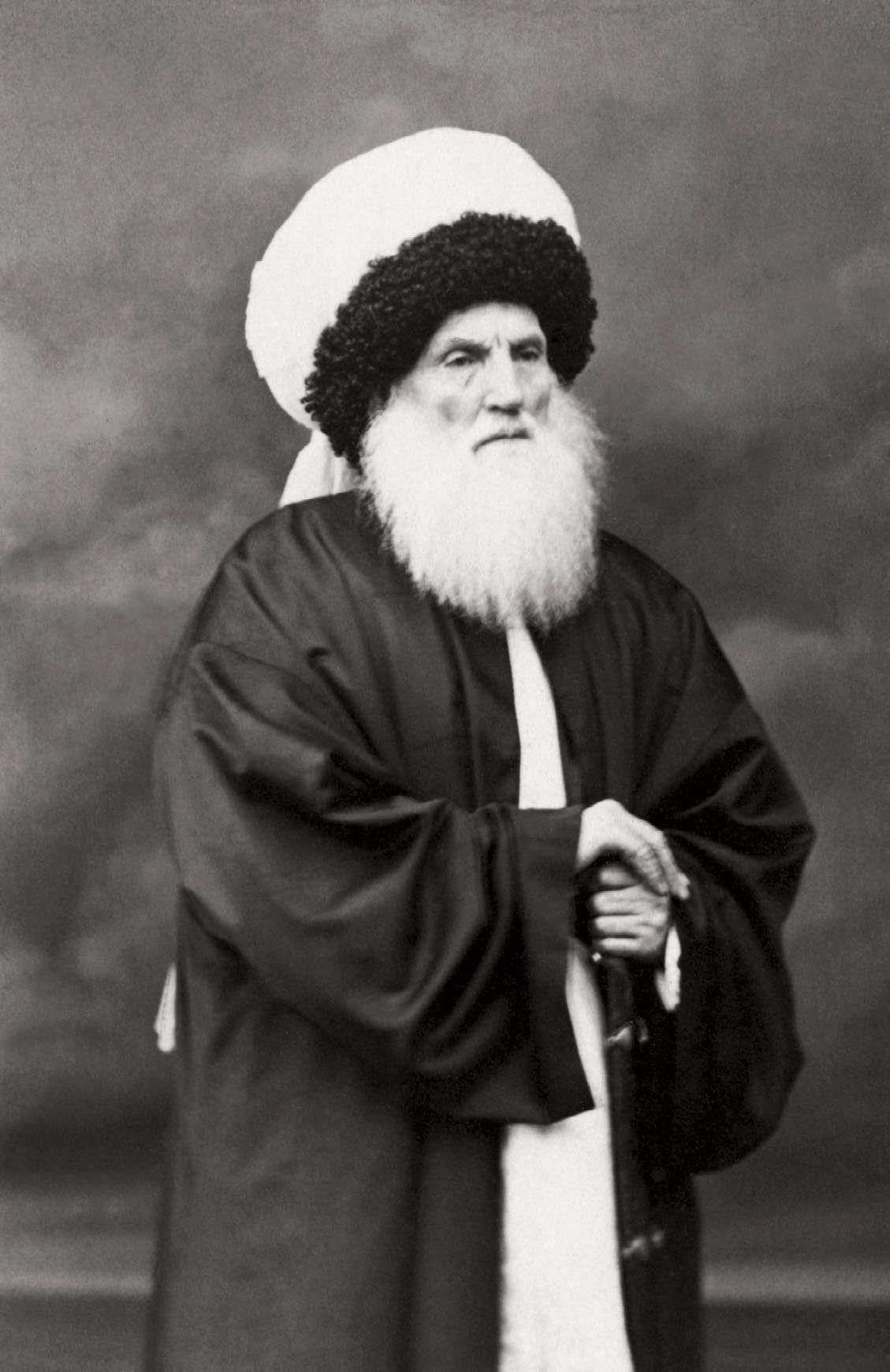
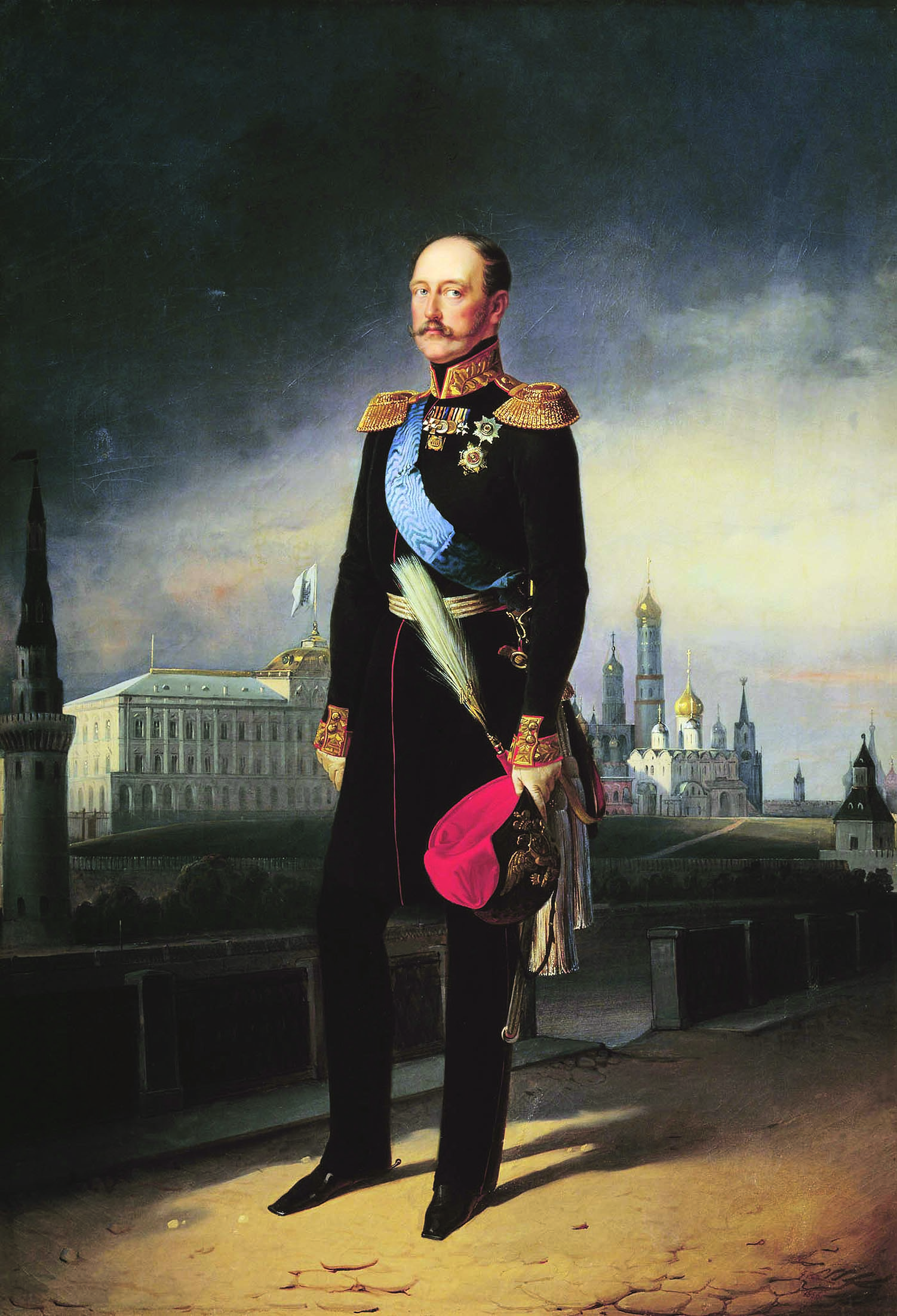
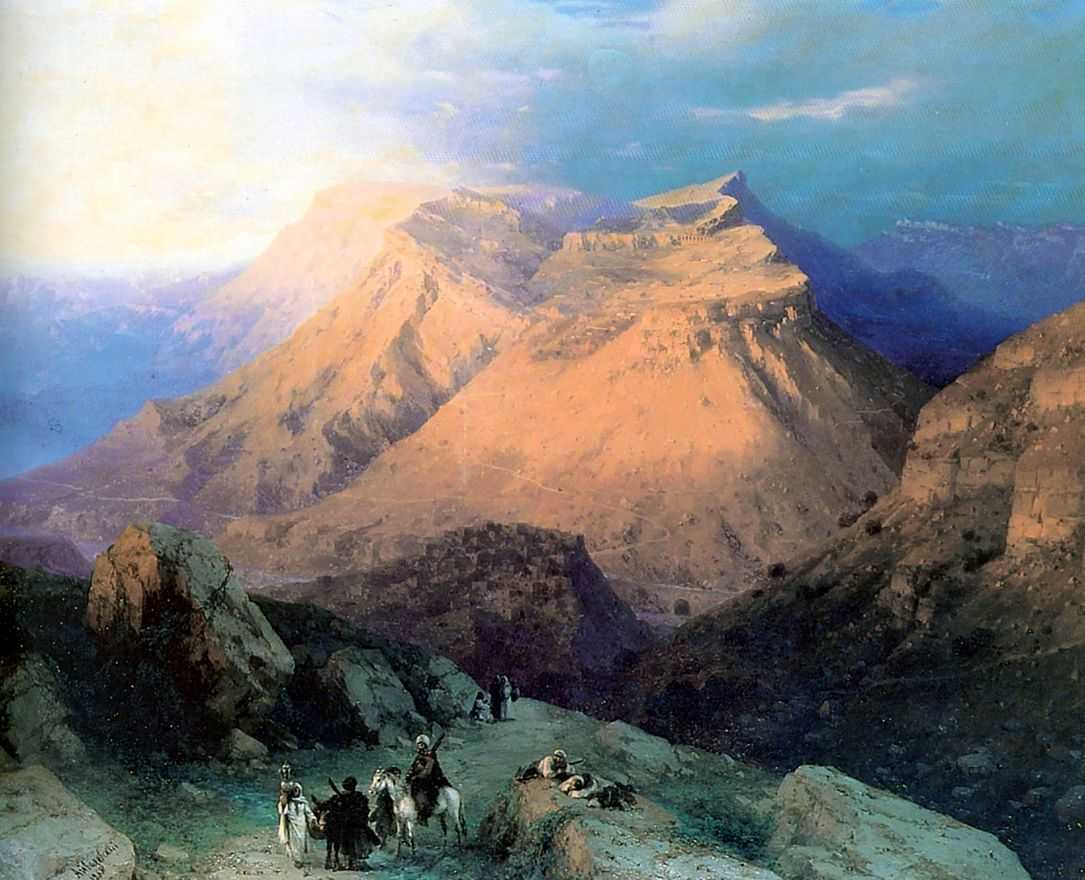
Not openly available (request channels in visuals/_sweep.md): the full Lanceray plate cycle and the 1851 daguerreotype of young Tolstoy in Caucasus uniform (both held by the State Tolstoy Museum, Moscow); a contemporary lithograph of the historical Hadji Murat (candidate holding: GMT or the Makhachkala museum); manuscript leaves via Goskatalog and RGVIA.
Method
This is the project’s third novel-dive, run on the spine codified after Resurrection (docs/research/1889-1899-resurrection/novel-dive-proposal.md): the textual layer is light (extract once, close-read the pivotal scenes, map the rest); genesis & composition is the heaviest layer and here carried an extra source-research strand; redactions sampled not collated; reception is posthumous. Hard gates: extraction with extract_tei.py --choice=reg --notes=auto (mandatory for this pre-1918 text); verify_quotes.py exit 0 (34/34); a separate-pass verifier; no vault writes (the dive plans pages, it does not create them); a record-creating workRecord proposal.
Corpus surface: PSS Tom 35 (the novella + the full apparatus); diaries Tom 53–55; letters Tom 69–75. Scholarship: an English-first web sweep (25 sources), triangulated against the primary findings. Visuals: a heavy four-channel Commons sweep. Schema: the dive applies wiki-schema v1.4 (character + group), resolving the gap the Resurrection and Kreutzer dives had flagged.
Links: sibling novel-dives — Resurrection, The Kreutzer Sonata; the aesthetic counterpart — What Is Art?; the political kin — The Law of Violence and the Law of Love; contested labels — Tolstoyanism, Christian anarchism.
References
Primary — PSS (Jubilee Edition) Tom 35: Хаджи-Мурат (pp. 5–118), variants (pp. 284–556), and the commentary apparatus (pp. 583–666); diaries Tom 53–55 (1895–1904); letters Tom 69–75 (1896–1904). Full evidence ledger: dossier.yaml.
Background (selected; full 25-source list with URLs in extracts/_scholarship.md) — Bloom, The Western Canon (1994); Bartlett, Tolstoy: A Russian Life (2010); Simmons, Introduction to Tolstoy’s Writings (1968); Herman, “Khadzhi-Murat’s Silence,” Slavic Review 64.1 (2005); Shklovsky, Energy of Delusion (1981, tr. 2007); Bojanowska, “Was Tolstoi a Colonial Landlord?”, Slavic Review 81.2 (2022); Gould, “Topographies of Anticolonialism,” CLS 50.1 (2013); Kokobobo, “Tolstoy’s Enigmatic Final Hero,” The Russian Review 76 (2017).
Dev-blog note: website/src/posts/notes/2026-06-09-hadji-murat.md (draft).