A primary-source dive on the novella Tolstoy began in 1890, set aside for nearly seven years, and finished in 1898 — to raise money for the Doukhobors’ emigration to Canada. It was never printed in his lifetime. The dive reads the work against its own composition record — the diaries and letters of the writing years, the four manuscript redactions, and the posthumous censorship — to test one claim Tolstoy made about it himself: that its subject is not lust but слава людская, the pursuit of human esteem, and that the pursuit of holiness is itself a form of that pride.
The dive leads with Tolstoy’s own words — the 1890–1898 diaries, the 1891 letters to Chertkov and Zolotarev, and the PSS Tom 31 commentary — and treats the mainstream framings (the tale of sexual temptation; the autobiographical confession; the anti-Church polemic) as positions to attribute, not baselines to confirm. Working-English translations are labelled and provisional; the Russian is byte-verified against the corpus extracts.
Key findings
- Tolstoy named the subject himself, and it is not lust. Writing to Chertkov on 16 February 1891 he calls the carnal struggle “одна ступень” — one rung — and the real subject “славой людской,” human glory (
v87_280_a16). The novella’s own centrepiece has Father Sergius pray, in those exact words, to be cleansed “от скверны славы людской” (ch. VII) — and fall anyway, within the hour. - The cure the work proposes is not a better asceticism but the abandonment of holiness as a project — anonymity, the obscure service of his cousin Pashenka, who “lives for God, imagining that she lives for people.” Tolstoy stated this resolution in his own voice across the writing years (“Надо опустить руки, чтобы стать на ноги,” 14 March 1891) and dramatized it in the chapter he added in 1898.
- The protagonist’s defining trait has a documented, author-stated prototype. On 31 October 1890 Tolstoy grounds Sergius’s “большое самолюбие… честолюбие и потребность безукоризненности” in two real men — his brother-in-law A. M. Kuzminsky and the Tula vice-governor L. D. Urusov (
v51_098_101_1890_10_31). The monastic material draws on his February 1890 visit to Optina Pustyn. - The work was finished for the Doukhobors. The 17 July 1898 diary records the decision to give Resurrection and Father Sergius “в печать для духоборов” — to print, to fund their emigration (
v53_203_204_1898_07_17). The same entry that the Doukhobors dive cites for Resurrection names this novella beside it. - The early redaction was a murder story. Through 1891 the hero killed the merchant’s daughter Marya with an axe and fled to drown himself; the 1898 reworking cut the killing entirely (variant № 7). The difference is between Sergius as a murderer and Sergius as a broken man from whom recovery is still possible.
- Nicholas I appears in the text as himself, and the betrayal-by-the-Tsar plot turns on him. The first Russian edition (Moscow 1911) cut the Nicholas-I material by censorship; the Berlin 1912 edition restored it in brackets — the same posthumous pattern documented in the Hadji Murat dive.
- Marquee verdict:
confirms+extends. Unusually, the mainstream already reads the work as a study of pride, not lust; the dive’s contribution is to ground that reading in the documentary record scholars rarely cite, and to sharpen the cure.
Why this matters
Father Sergius is the most concentrated statement of a danger Tolstoy spent his last thirty years living inside: that the visible pursuit of goodness corrupts the goodness it pursues. The novella is built as an ironic saint’s-life — renunciation, asceticism, miraculous healing, fame — that exposes the ego driving each holy act, and answers it not with a sterner discipline but with disappearance. Because Tolstoy wrote it intermittently from 1890 to 1898, refused to publish it, and folded its completion into the Doukhobor relief effort, the work sits at the intersection of three things the project tracks: his fiction, his religious thought, and the practical Tolstoyan causes of the 1890s. And because he set Sergius’s vainglory in his own most autobiographical register — a man of the world who renounces it for God and finds the renunciation itself a new vanity — the novella is the closest his fiction comes to diagnosing the author.
The marquee question
Hypothesis. Father Sergius dramatizes Tolstoy’s thesis that the pursuit of holiness and asceticism is itself a form of pride — слава людская, the craving for human esteem — and that humble, anonymous service (Pashenka) is the real thing.
Unlike a causal marquee (did a scene cause an event), this is interpretive — and it is unusually well grounded, because Tolstoy stated it himself while composing. The dive stages the evidence and reports the outcome.
The external statement (the letters). Against the popular reading of the novella as a tale of carnal temptation, Tolstoy tells his closest collaborator the opposite. To V. G. Chertkov, 16 February 1891:
Борьба с похотью тут эпизод, или скорее одна ступень, главная борьба с другим — с славой людской.
(working English) “The struggle with lust is here an episode, or rather one step; the main struggle is with something else — with human glory.”
To V. P. Zolotarev, 14 March 1891, he states the redemptive logic in a single sentence:
То он думал, что живет для бога, а под эту жизнь так подставилось тщеславие, что божьего ничего не осталось, и он пал; и только в падении, осрамившись навеки перед людьми, он нашел настоящую опору в боге. Надо опустить руки, чтобы стать на ноги.
(working English) “He thought he was living for God, but vainglory so substituted itself under that life that nothing of God’s remained, and he fell; and only in the fall, having disgraced himself forever before people, did he find a true support in God. One must lower the hands in order to stand on the feet.”
The internal statement (the text). The thesis is named inside the novella, in the protagonist’s own prayer in chapter VII — and the naming does not save him (see What the work says). The diary had already named it as the work’s subject before the letters did, on 18 August 1890: “Соблазн славы людской и прославления, — т. е. обман, чтоб скрыть веру” — the temptation of human glory, a deceit to hide faith (v51_078_078_1890_08_18).
Outcome: confirms + extends. On the reading itself this is a confirms, and a strong one — the pride interpretation is the received English-language reading, not a contested minority position (see Scholarly context). The dive’s contribution is the extends: where scholars argue the vainglory reading thematically, from the finished text, the primary record shows Tolstoy stating it in his correspondence while composing, and working out its positive pole — humble obscurity — across the whole writing span. Against the three rival readings: the work itself demotes the sexual-temptation reading (“одна ступень”), so the marquee contradicts lust-first; it confirms the autobiographical dimension while resisting collapse into biography; and it complicates rather than adopts the anti-Church-polemic label, since the primary record subordinates the institutional satire to the pride-diagnosis, and the work played no part in the 1901 excommunication.
Genesis & composition
This is the layer a novel-dive weights most heavily, and Father Sergius has a long, well-witnessed one: eight years, four manuscript redactions, two abandonments, and a completion driven by an external cause.
The seed (1889–1890). By P. I. Birukoff’s testimony the idea arose in late 1889 or early January 1890. After Chertkov’s 28–30 January 1890 visit to Yasnaya Polyana, Chertkov — fearing that telling the plot aloud would discharge the impulse to write it — asked Tolstoy to send the story by letter, deliberately to pull him into the work. The first written trace is the 3 February 1890 diary entry (preserved in the PSS commentary), in which Tolstoy laughs over the plot with his sister-in-law Marya Mikhailovna at Pirogovo and sketches its motifs: the saint’s life, the music teacher, the sick merchant’s daughter, the verb “убивает” — kills — which the commentary attaches to the hero, who in the early redaction axed his temptress to death.
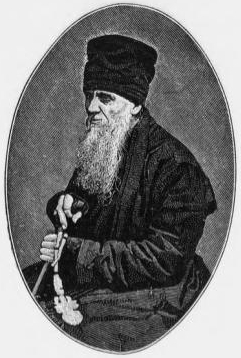
Optina Pustyn (February 1890). Before writing, Tolstoy visited the Optina Pustyn monastery to refresh his sense of the milieu he meant to depict. His impression of its demonstrative asceticism was sharply negative — “духовное сибаритство,” spiritual self-indulgence barely covering idleness; of the famous elder Amvrosy he wrote that he was “жалок, жалок своими соблазнами” (PSS commentary). That hostile fieldwork fed the careerist abbot and the critique of starchestvo in the novella. He also met the writer Konstantin Leontyev there, preparing for secret monastic tonsure, and his wife’s cousin B. V. Shidlovsky, about to take the schema.
The conception note (6 June 1890). In a retrospective diary entry covering 2–8 June (written on the 8th, the date the TEI file carries), Tolstoy dates the start of the work to the 6th — per the PSS commentary — and locates its interest not in plot but in interior development:
Начал Отца Сергия и вдумался в него. Весь интерес — психологические стадии, которые он проходит.
(working English) “Started Father Sergius and thought my way into it. The whole interest is the psychological stages he passes through.”
The prototype (31 October 1890). The single most important datum for the character layer: Tolstoy grounds Sergius’s defining trait in two real men.
Надо рассказать всё, что было у него в душе: зачем и как он пошел в монахи. Большое самолюбие ( Кузмннский и Урусов ), честолюбие и потребность безукоризненности.
(working English) “Must tell everything that was in his soul: why and how he became a monk. Great self-love (Kuzminsky and Urusov), ambition, and a need for impeccability.”
(The TEI renders the surname “Кузмннский” — a source slip for Кузминский; quoted as it stands.)
The people around the work. The genesis network is small and well-defined. V. G. Chertkov instigated the work and received its first draft and the marquee letter; Tolstoy’s daughter Maria Lvovna copied the manuscripts (her hand dates the 1891 redaction “Отец Сергий. 1891 год. Лето”); P. I. Birukoff witnessed the conception and corresponded on its progress; V. P. Zolotarev drew out the second marquee statement; Maxim Gorky heard Tolstoy tell the plot at Yasnaya Polyana in October 1900; P. A. Boulanger wrote the first historical note for the 1911 edition. Each is carried into the entity routing as a person.
Two abandonments. The bulk was drafted across the summers of 1890 and 1891; on 25 September 1891 Tolstoy read it at Pirogovo, judged it “к удивлению, недурно, как есть,” failed to revise the opening, and dropped it for nearly seven years. Only stray notes touch it in 1893 and 1895.
The 1898 completion — for the Doukhobors. In summer 1898, with sympathizers raising money for the persecuted Doukhobors to emigrate to Canada, Tolstoy decided to publish three manuscript works to fund them. The 17 July 1898 diary records the decision and, in the same entry, the resolved meaning of the new final chapter:
Решил отдать свои повести: Воскресение и Отец Сергий в печать для духоборов.
(working English) “Decided to give my novellas — Resurrection and Father Sergius — to print, for the Doukhobors.”
6) Нет успокоения ни тому, который живет для мирских целей среди людей, ни тому, который живет для духовной цели один. Успокоение только тогда, когда человек живет для служения Богу среди людей.
(working English) “There is no peace for the man who lives for worldly ends among people, nor for the man who lives for a spiritual end alone. Peace comes only when a man lives to serve God among people.”
This is the twin of Resurrection, finished in the same months for the same cause; the two novellas are a matched pair in the Doukhobor relief effort the Doukhobors dive documents.
What the work says
Novel mode reads the text by locating its pivotal scenes, not marching through it. The eight chapters trace one arc: Prince Stepan Kasatsky, a proud Guards officer devoted to Nicholas I, discovers that his fiancée had been the Tsar’s mistress, renounces the world, and becomes the monk Sergius; monastic ambition, then the hermit’s fame as a healer; the seductions he resists (Makovkina) and the one he fails (Marya); flight, the brink of suicide, and the recognition — through his obscure cousin Pashenka — that holiness pursued for an audience was never holiness at all; finally a nameless wandering beggar, arrested and exiled, at peace.
The centrepiece (chapter VII). This is the one place where the protagonist names the marquee thesis in Tolstoy’s own vocabulary — and then fails. Hollowed out by his fame as a healer, Sergius recognizes the substitution at the root of his life:
дьявол подменил всю его деятельность для бога деятельностью для людей.
(working English) “the devil had substituted, for all his activity for God, activity for people.”
Then, his vanity stirred by the prospect of a new miracle on the merchant’s daughter, he prays against the very sin that is his subject:
Очисти от скверны славы людской, обуревающей меня», — повторил он и вспомнил, сколько раз он молился об этом и как тщетны были до сих пор в этом отношении его молитвы: молитва его делала чудеса для других, но для себя он не мог выпросить у бога освобождения от этой ничтожной страсти.
(working English) “‘Cleanse me of the defilement of human glory that besets me,’ he repeated — and he remembered how many times he had prayed for this and how vain his prayers had been in this respect until now: his prayer worked miracles for others, but for himself he could not beg of God release from this paltry passion.”
Within hours he falls with Marya. The diagnosis and the failure are deliberately adjacent: the self-conscious saint can articulate his disease, even pray against it, and still succumb, because the praying-against-it is one more performance of holiness. The fall with the least flattering possible partner strips the pride of its grandeur and makes it visible as pride.
The finger (chapter V). The novella’s most famous image: to resist Makovkina, who has wagered she can spend the night at his cell, Sergius lays his finger on the chopping block —
положил указательный палец левой руки на чурбан, взмахнул топором и ударил по нем ниже второго сустава.
(working English) “laid the index finger of his left hand on the chopping-block, swung the axe, and struck below the second joint.”
It works — as an act of will, not of humility. The elder’s earlier letter has already framed even his finest renunciations as pride; the cut finger is a victory that chapter VII shows the will eventually losing anyway.
Pashenka (chapter VIII). The thesis stated from the positive side. Sergius’s worn-out cousin, a poor music teacher who does not even recognize her famous relative and thinks herself a failure, embodies the self-forgetful service he spent decades counterfeiting:
Я жил для людей под предлогом бога, она живет для бога, воображая, что она живет для людей.
(working English) “I lived for people under the pretext of God; she lives for God, imagining that she lives for people.”
The resolution (chapter VIII, written 1898). Stripped of name and esteem, finally arrested as a passport-less vagrant whose only answer is “раб божий,” Kasatsky finds what the hermitage never gave him:
Чем меньше имело значения мнение людей, тем сильнее чувствовался бог.
(working English) “The less the opinion of people mattered, the more strongly God was felt.”
Anonymity, not asceticism, is the cure — the marquee’s positive pole, written in the chapter Tolstoy added for the Doukhobor edition.
Redactions & textual history
The novella has no fair copy; Tolstoy considered it roughed-out but unfinished, and the PSS prints it from a composite of parts written at different times. The stages: the epistolary first redaction (1890), drafted inside a letter to Chertkov (variant № 1); “Chertkov’s manuscript,” Chertkov’s copy developed by Tolstoy across the summers of 1890 and 1891; Maria Lvovna’s fair copy of 3 July 1891, to which Tolstoy appended the suicide-meditation and the first memory of Pashenka; and the 1898 Remington typescript, the final redaction, on which he developed the backstory, struck the murder of Marya, and added the wandering chapter (VIII). By the PSS’s approximate attribution, chapters I–III and part of IV belong to 1890, the rest of IV through VII to 1891, and VIII to 1898.
The keystone variant: the axe-murder of Marya (cut). In the 1891 redaction, the fall with the merchant’s daughter does not end in despair alone — Sergius kills her and flees toward the river to drown himself (variant № 7):
На рассвете он вышел на крыльцо. Неужели всё это было? Отец придет. Она расскажет. Она дьявол. Да что ж я сделаю? Вот он тот топор, которым я рубил палец. Он схватил топор и вбежал в келью. Она лежала раскинувшись и спала. Он подошел, примерился и, взмахнув топором, ударил ее вдоль головы ниже темени.
(working English) “At dawn he went out onto the porch. Could all of it really have happened? The father will come. She will tell. She is a devil. What am I to do? There is the very axe I chopped my finger with. He seized the axe and ran into the cell. She lay sprawled out, asleep. He went up, took aim, and, swinging the axe, struck her along the head below the crown.”
The 1898 revision cut the killing. The change is decisive: in the early version the act that breaks Sergius is a violent crime, and his story is a fugitive’s flight from blood-guilt; in the final text the same despair (“Да, надо кончить, нет бога”) is reached through the sexual fall alone, his ruin is his own pride and lust rather than murder, and the door stays open to the redemptive turn — the Pashenka memory, the wandering, the anonymous service. The axe is the same instrument he earlier used to mutilate himself against Makovkina, so the early version turned the tool of ascetic self-coercion into a murder weapon.
Publication, censorship & afterlife
The novella was never printed in Tolstoy’s lifetime; he classed it among the unfinished “romans” he would not return to (to Felix Ortt, 18 October 1900). It first appeared in «Посмертные художественные произведения Л. Н. Толстого» (Posthumous Artistic Works), volume II, edited by V. G. Chertkov with A. L. Tolstaya, Moscow 1911, pp. 3–48, in eight chapters — one of the cluster of suppressed-in-life fictions Chertkov shepherded into print after Tolstoy’s death.
The censored text. The imperial censor forced cuts in the early chapters of the Moscow 1911 edition, marked by rows of ellipses. The cuts concerned Nicholas I and, the PSS commentary specifies, “especially his love affairs” — Kasatsky’s youthful adoration of the Tsar, the cadet-corps episode, and the strand in which the fiancée had been the Emperor’s mistress. Following Chertkov’s standard practice, the Berlin 1912 edition restored the censored passages in square brackets and renumbered the chapters (six instead of eight). This is the matched posthumous-censorship pattern the Hadji Murat dive documents — the two are the pair of dynastically-censored posthumous Tolstoy fictions. (For the work record this is a passages-cut censorship of a printing, not a ban on the work.)
The authorised English text is Louise and Aylmer Maude’s translation, published 1911, the version carried by the standard collections and the public-domain transcriptions. The major screen adaptation is Yakov Protazanov’s «Отец Сергий» (1918), with Ivan Mozzhukhin as Kasatsky — a landmark of Russian cinema that could be made only after 1917, since the depiction of priests had not been permitted in Imperial-era film.
Characters & prototypes
Routing follows the wiki-schema v1.4 tiering rule (a standalone node only for a figure that is principal/titular, carries a documented or attributed prototype, or recurs across works) and routes each figure by what it is.
- Prince Stepan Kasatsky / Father Sergius (
character, protagonist) — the proud officer turned monk turned hermit-healer turned wandering beggar. Prototype edge: Tolstoy author-states the model for the character’s defining trait (vainglorious self-love, ambition, a craving to be beyond reproach) as A. M. Kuzminsky and L. D. Urusov (31 October 1890 diary);basis: author-stated,certainty: documentedfor the trait. The mainstream additionally derives the plot-motifs from devotional sources (the finger-cutting from a hermit legend; the healer-figure from the type of Serafim of Sarov) — a separate layer, attributed below and flagged as not yet verified against the PSS. - Nicholas I (
person, notcharacter) — the historical Tsar appears in the narration with speech and action; his past affair with Kasatsky’s fiancée is the plot’s hinge. A real figure appearing as himself, routedperson(the Hadji Murat precedent). - Makovkina (
character, principal) — the divorcée who wagers she can seduce the hermit and provokes the finger-cutting; later takes vows. - Praskovya Mikhailovna / Pashenka (
character, principal — the moral centre) — the poor cousin whose unselfconscious service is the holiness Sergius never reached. - Marya (
character, secondary) — the merchant’s feeble-minded daughter with whom he falls; in the early redaction his murder victim. - Countess Korotkova / “Mary” (
character, secondary) — the fiancée whose confession breaks him. - The careerist abbot, the diagnosing elder, Father Nikodim, the merchant, the unbelieving young professor, Pashenka’s dependent household — minor figures that fold into the work’s overview page rather than minting standalone nodes.
The real persons of the genesis (Chertkov, Birukoff, Maria Lvovna Tolstaya, Urusov, Kuzminsky, Zolotarev, Leontyev, Amvrosy, Gorky, Boulanger, Ortt) route person; the Doukhobors route group.
Themes
- Pride / слава людская vs humble service — the spine. Asceticism is pride wearing a habit; the cure is not a sterner discipline but the abandonment of holiness as a visible project. Stated negatively in chapter VII and positively in chapter VIII.
- Sexuality and asceticism as one struggle — the narrator collapses the two enemies, doubt and lust, into one; the finger and the fall are the two poles of a single self-coercion.
- The institutional Church vs lived faith — the careerist abbot, the monk as a tourist attraction, the railed enclosure built so crowds will not crush the healer; the machine manufactures the saint it profits from. The dive keeps this subordinate to the pride-diagnosis, as the primary record does, rather than reading it as free-standing anti-clerical polemic.
- Self-deception — Sergius performs holiness for an audience of one, himself, and cannot tell; Pashenka’s inversion is that she cannot see her own goodness, which is what makes it real.
- The value of obscurity — holiness invisible to itself is the only kind the novella credits.
- Death and despair as the door to grace — at the nadir, with God gone, Sergius inventories methods of suicide; the dream of Pashenka interrupts it. As in the renunciation of chapter II, despair turns toward God.
Reception & afterlife
The Russian publication (1911) and the Church. The posthumous first printing put the novella before Russian readers in the censored Moscow text, with the uncensored Berlin edition following in 1912. The work’s satire of monastic starchestvo and the careerist abbot landed in a charged context: Tolstoy had been declared “fallen away” from the Orthodox Church by the Holy Synod’s decree of 20–22 February 1901. But the chronology forbids a causal link — Father Sergius was unpublished in his lifetime and played no part in the 1901 action, whose proximate literary trigger was Resurrection. The dive sets excommunicationRelated: false and records the relation as thematic context only; it also keeps the contested label “Tolstoyan” as the mainstream’s word, not its own.
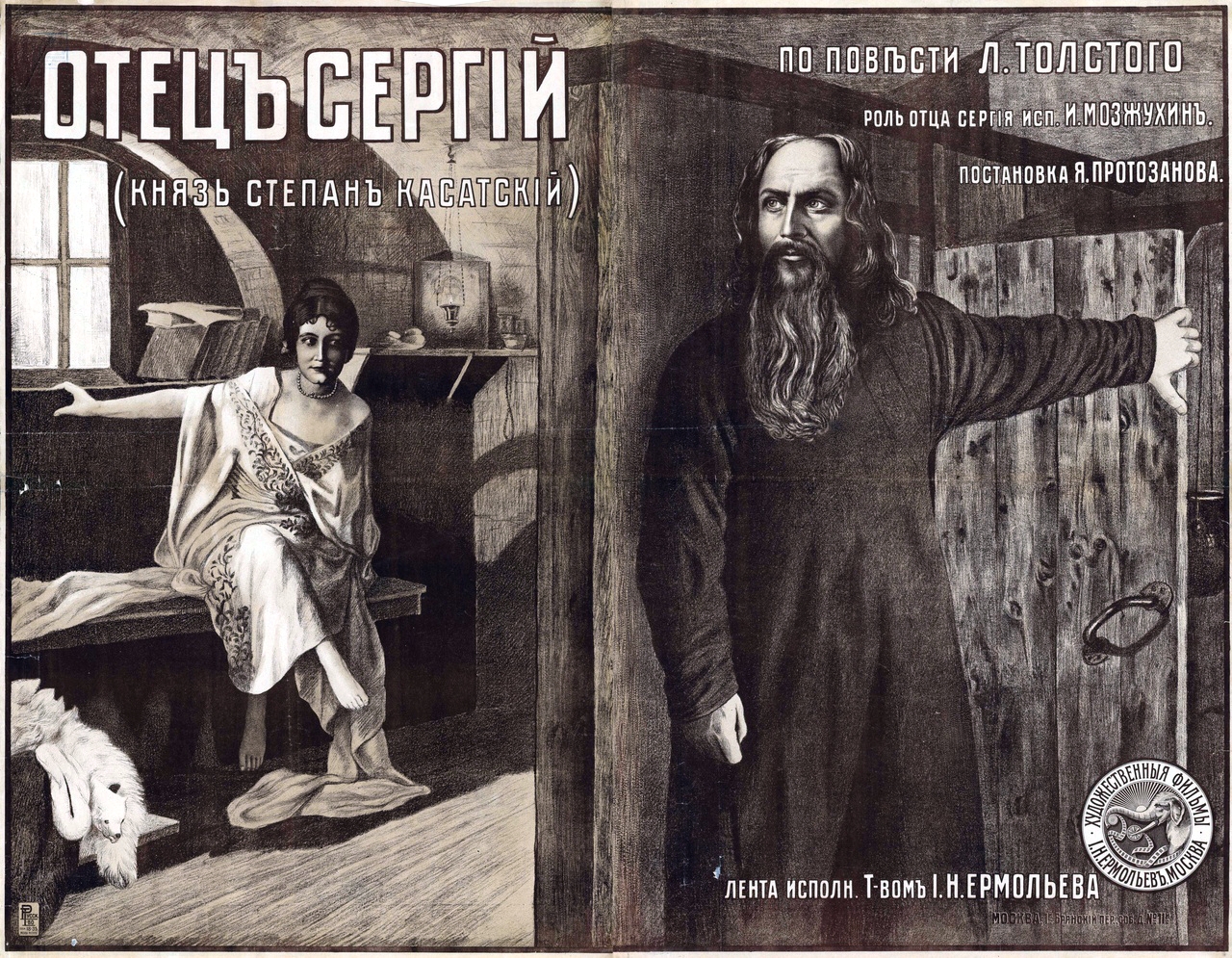
Afterlife. The 1918 Protazanov–Mozzhukhin film is the canonical adaptation; later versions followed (a 1945 Father Serge, a 1978 Soviet film, the Taviani brothers’ loose 1990 The Sun Also Shines at Night). In the English-language canon the novella is read as one of Tolstoy’s three late “ascetic fictions” alongside The Kreutzer Sonata and Resurrection — the grouping E. B. Greenwood made in 1975 and the project’s own dives instinctively share.
Scholarly context
This section is a divergence map, not corroboration. The striking feature of the Father Sergius literature is that the mainstream already leads with pride, not lust — so the contest is about grounding, not reading.
- The pride reading is the received reading. Encyclopædia Britannica frames the work as the story of “a proud man who wants to become a saint but discovers that sainthood cannot be consciously sought,” and “potentially Tolstoy’s self-critique.” Edmund Wilson (“Notes on Tolstoy,” NYRB, 1971) reads Sergius as a study in spiritual pride — renouncing the world from wounded pride, resolving to excel the Tsar “in piety and penance” — though he judges the hermit chapters an imaginative failure “deformed by the moralistic bias.” Where the dive
extendsthe scholarship is in documentary grounding: the 1891 letters in which Tolstoy states the thesis while composing, which the criticism rarely cites. - A different prototype genealogy. The mainstream supplies a devotional source-genealogy — the finger-cutting from the legend of a sixth-century hermit (Jacob the Monk), the hermit-healer from the type of Serafim of Sarov, the monastic atmosphere from Optina and Ambrose of Optina (Wikipedia; Grokipedia). These name the motifs; Tolstoy’s author-stated prototype (Kuzminsky/Urusov) names the character’s defining trait. The two are layers, not rivals — but the hagiographic attribution is mainstream-asserted and was not verified against the PSS Tom 31 commentary in this dive, so it is attributed to those secondary sources, not stated in the dive’s own voice.
- The axe-murder variant is essentially absent from the English-language literature, which reads only the published text; the dive carries it from the PSS variants as a primary-record
extends.
Where the material clusters
Diaries (PSS Toms 51–53). The genesis is densest here.
| Tom | TEI id | Date | One-line material |
|---|---|---|---|
| 51 | v51_047_048_1890_06_08 |
6 Jun 1890 (in the 8 Jun bundle) | “Started Father Sergius… the whole interest is the psychological stages.” |
| 51 | v51_078_078_1890_08_18 |
18 Aug 1890 | The subject named in the diary: “Соблазн славы людской… обман, чтоб скрыть веру.” |
| 51 | v51_098_101_1890_10_31 |
31 Oct 1890 | The prototype note: “Большое самолюбие (Кузмннский и Урусов).” |
| 52 | v52_048_050_1891_08_12 |
12 Aug 1891 | The ethical resolution: “не нужно искать добрых дел, подвигов.” |
| 53 | v53_203_204_1898_07_17 |
17 Jul 1898 | The Doukhobor decision: “в печать для духоборов”; “Один хорош — с людьми падает.” |
Letters.
| Tom | Letter id | Date | Addressee | Material |
|---|---|---|---|---|
| 87 | v87_280_a16 |
16 Feb 1891 | V. G. Chertkov | The marquee: lust is “одна ступень”; the main struggle is “с славой людской.” |
| 65 | v65_254_V_P_Zolotarevu |
14 Mar 1891 | V. P. Zolotarev | “Надо опустить руки, чтобы стать на ноги.” |
| 72 | v72_396_FeliksuOrtuFelixOrtt |
18 Oct 1900 | Felix Ortt | Classes the work among the unfinished “romans.” |
Works & commentary (PSS Tom 31).
| TEI id | Material |
|---|---|
v31_005_046_Otets_Sergij |
The canonical text (pp. 5–46). |
v31_203_210_Otets_Sergij_Plany_i_varianty |
Plans and variants (№ 1–7; № 7 = the axe-murder). |
v31_257_267_..._Istorija_pisanija_i_pechata |
Gudzy’s «История писания и печатания» — the genesis and publication record. |
v31_267_269_..._Opisanie_rukopisej |
Manuscript description (6 manuscript items). |
The author’s later verdict
Tolstoy never declared the work finished. To Felix Ortt, editor of the Dutch Vrede, on 18 October 1900, asked whether the reports of a “novel Father Sergius” were true, he answered that he had “begun several things, among them the novel you mention, but my time is short, and conscience demands that I write not what is pleasant to me, but what seems necessary” — subordinating the fiction to the doctrinal writing. He told the plot to Gorky that same month but did not return to the manuscript. The sharpest later verdict, though, is in the 18 March 1895 diary, where he turns the novella’s own diagnosis on himself: “когда я писал Хозяина и Работника, поддавался желанию славы” — when he wrote Master and Man he had given way to the desire for glory, the very слава людская that is Sergius’s sin.
Material not covered
- The censored Nicholas-I passages are not quoted verbatim — the corpus extracts describe what was cut, but the bracketed Berlin 1912 text itself is not in the local sources; a first-class quote needs the printed Berlin edition.
- The notebook (Записная книжка) Sergius jottings the PSS commentary cites (e.g. “Отец Сергий ждет солнца”) are not in the diary TEI files and were not separately byte-verified.
- The hagiographic prototype claims (Jacob the Monk, Serafim of Sarov) are attributed to secondary sources and not verified against the PSS commentary.
- The academic Tolstoy-studies layer (Greenwood 1975; Gustafson; Orwin; Bartlett) was not readable in full; the secondary citations lean on reference works, criticism indexes, and review-essays.
Visual & manuscript record
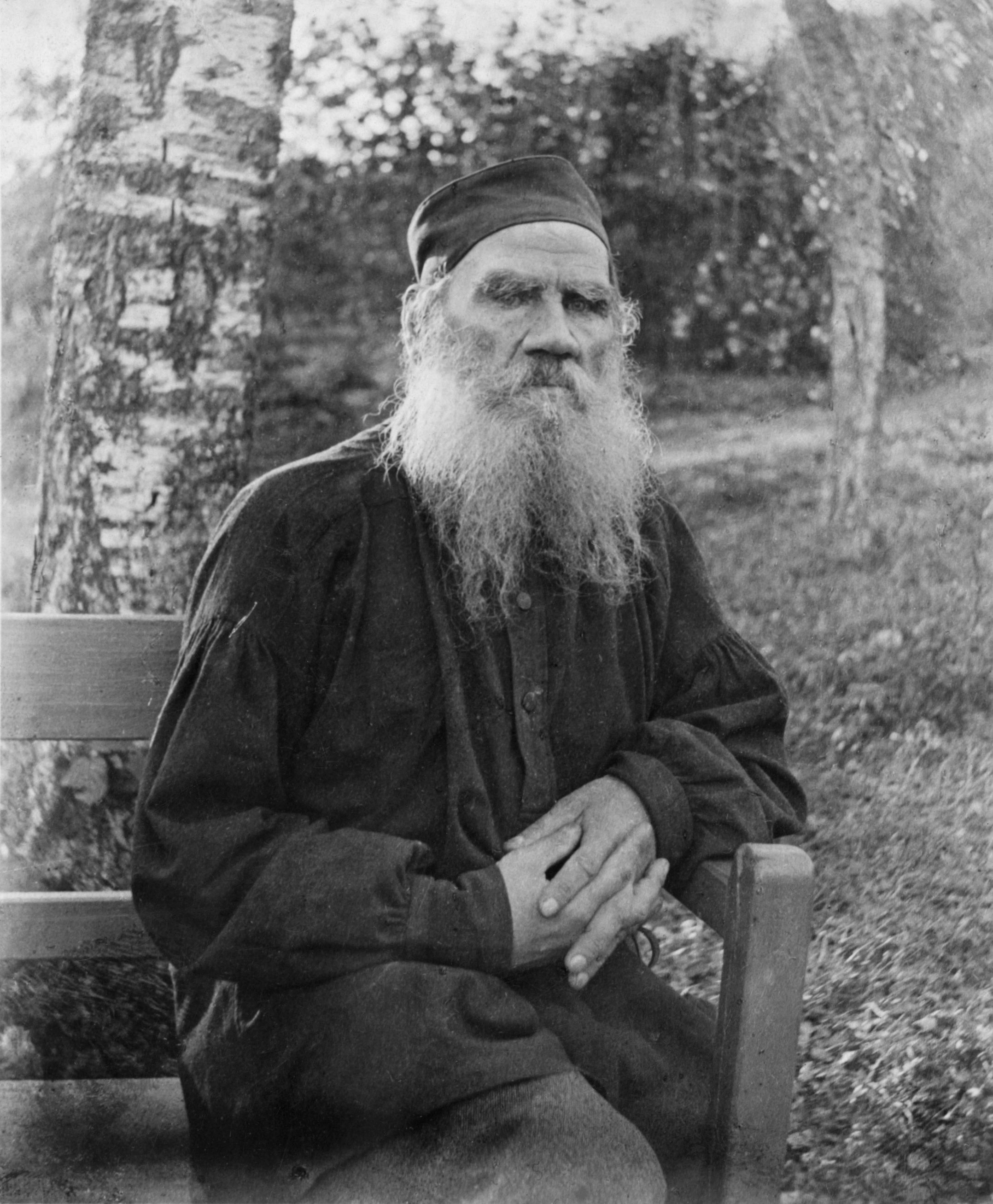
The visuals sweep ran at light-to-moderate intensity (Wikimedia Commons, public-domain). Nine images were catalogued and cached locally: a keystone portrait of Tolstoy (1897); Repin’s 1891 portrait of Tolstoy resting in a wood (painted in the drafting years); the elder Amvrosy of Optina and a pre-revolutionary view of Optina Pustyn; the 1918 film poster, a film still, and a production photograph of Mozzhukhin as Sergius; Repin’s c. 1890 portrait of Chertkov; and Biryukov’s 1895 photograph of Maria Lvovna Tolstaya, who copied the manuscripts. Full metadata (provenance, holding, licence) is in the dossier visuals block.
Not openly available (request paths in the dossier): a page-level scan of the 1911 first-edition title page (Russian National Library); a photograph of the February 1890 Optina visit (State Tolstoy Museum); and the manuscript plates of the 1890–1898 drafts (Russian State Library, fond 93).
Method
Phase 0 pinned the corpus surface (PSS Tom 31: text, variants, two commentary files) and verified the 1890–1898 composition window against the «История писания» before it drove the slug. The composition-years witness sweep (diaries Toms 51–53, letters Toms 65/87/72) ran heaviest, per novel mode; the text was read by locating pivotal scenes rather than chapter by chapter; redactions were sampled with one keystone variant promoted first-class; reception ran heavy. Pre-1918 orthography was resolved with extract_tei.py --choice=reg --notes=auto throughout. All Russian quotes are byte-verified against the corpus extracts (verify_quotes.py). Scholarship is attributed, not asserted, and grounded in the project’s prior dives before the mainstream.
This is the fourth novel-dive and the first run after the --novel mode was codified. Two handoff assumptions were corrected by the evidence: the cast is not wholly fictional (Nicholas I appears as himself → person), and a documented author-stated prototype exists for the protagonist (Kuzminsky/Urusov).
Links. Sibling dives: Doukhobors · Resurrection · The Kreutzer Sonata · Hadji Murat · A Confession · tolstoyanism (the contested label, attributed to the mainstream).
References
Primary. PSS Tom 31 (the text, variants, and commentary); diaries Toms 51–53; letters Toms 65, 72, 87. TEI ids as cited above; extracts in extracts/.
Background (attributed, secondary — clear sources only).
- Wilson, Edmund (1971). “Notes on Tolstoy.” The New York Review of Books, 25 February 1971.
- Greenwood, E. B. (1975). “Tolstoy the Ascetic? The Kreutzer Sonata, Father Sergius and Resurrection” (cited via criticism index; not read in full).
- Encyclopædia Britannica, “Father Sergius” (work by Tolstoy), accessed June 2026.
- Wikipedia, “Father Sergius” and “Father Sergius (1918 film),” accessed June 2026.
- Tolstoy, Leo (1911). Father Sergius, trans. Louise and Aylmer Maude (Project Gutenberg #985).
- “Decree of Excommunication of Leo Tolstoy” (Holy Synod, 20–24 Feb 1901), Wikisource.
See the draft dev-blog note: 2026-06-09-father-sergius.