---
layer: reference
lastUpdated: 2026-06-10
tags: [research, corpus-dive, novel-dive, work-dive, drama, fiction, the-power-of-darkness, censorship]
---
# The Power of Darkness (Власть тьмы, 1886) — a corpus novel-dive
A single-work corpus dive on Tolstoy's five-act peasant tragedy *The Power of Darkness* (*Власть тьмы, или «Коготок увяз, всей птичке пропасть»*), written in autumn 1886. It is run in the `--novel` mode (drama flex): the whole short play is read in full, act by act, while the heaviest effort goes to genesis, redaction history, and reception — the layers where the work's depth lives. It reads the play from its own text in the tolstoydigital TEI corpus (PSS Tom 26), reconstructs its genesis from the Jubilee-Edition editorial history (Gudzy's commentary, Tom 26 pp. 705–736) and the 1886–87 letters, traces the keystone variant fourth act, and follows the censorship and staging history from the 1887 ban to the 1895 Russian première.
The dive prepares ingestion-ready material (this `index.md`, a machine-readable `dossier.yaml`, byte-faithful `extracts/`, a heavy visual record, and a draft dev-blog note). It does not create vault pages; it plans them. The works record [The Power of Darkness](../../../../../../website/src/works/plays/drama/the-power-of-darkness/) already exists as a draft stub — the dive proposes a `workRecord` fill (with two corrections), not a new record.
---
## Key findings
- **The plot is an almost-verbatim criminal case.** Tolstoy told the journalist Rakshanin that "the plot of *The Power of Darkness* is taken by me almost entirely from a real criminal case heard in the Tula court" — the 1879–80 Koloskov case, supplied by his friend the Tula prosecutor N. V. Davydov. Tolstoy met the convicted peasant Efrem Koloskov twice. The one invented crime is the poisoning of the husband, which darkens Anisya beyond her real-life prototype.
- **It was written fast, bedridden, for the people's stage.** Tolstoy wrote the play in roughly two to three weeks in late October–November 1886, during three months bedridden with erysipelas after a hay-cart leg injury, prompted by M. V. Lentovsky's appeal for his Skomorokh people's theatre and by A. A. Stakhovich's reading-aloud of Ostrovsky. To Strakhov (14 Nov 1886): "I have written a play for the folk theatres."
- **The doctrine is the subtitle: a claw caught, the whole bird is lost.** The chain-of-sin reading is not imposed — it is in the night-written plan and bookends the finished play: Akim warns Nikita with the proverb «коготок увяз, всей птичке пропасть» at the start, and Nikita names it back as fulfilled at his Act-5 confession.
- **Redemption is located in confession, not in the horror.** The play turns not on the infanticide that scandalised the censors but on Nikita's public self-accusation at the wedding and Akim's rapture: "You did not spare yourself — He will spare you." Tolstoy coached the actor playing Akim toward exactly this arc.
- **The censorship history is a reversal.** Alexander III first praised the play ("Чудная вещь") at a 27 Jan 1887 court reading and ordered it staged; Pobedonostsev's horrified 18 Feb letter — "hardly even Zola reached such crude realism" — reversed him the next day. The stage ban held until Nicholas II lifted it on 15 September 1895.
- **The print escaped where the stage did not.** The play was permitted for print (13 Jan 1887, only the Gospel epigraph cut) and sold in more than 100,000 cheap Posrednik copies in 1887, while banned from the Russian stage and premièred abroad — André Antoine's Théâtre Libre, Paris, 10 February 1888 — four years before Russia saw it.
- **"Art for the people" was its method, not its achieved reception.** The forty Yasnaya Polyana peasants who heard it read aloud did not understand it; Chertkov and Stakhovich then *used* that fact to argue the play past the censor as "above the masses." Its triumphs were salon, court, and student. By January 1887 Tolstoy himself reframed the audience: the play "will be useful... for the 'great world,' for whom I wrote it."
---
## Why this matters
*The Power of Darkness* is Tolstoy's first major work of imaginative art written wholly inside the convictions of his post-conversion period, and the one in which he tried hardest to make art *for the people* — in peasant speech, on the show-booth stage, carrying a doctrine the simplest listener might feel. It puts into a five-act tragedy the argument he was making discursively at the same time: that one unrepented sin drags a whole life into darkness, and that the only way out is the recognition of guilt and a turn toward God. It is the dramatic companion to [The Death of Ivan Ilyich](../1884-1886-the-death-of-ivan-ilyich/index.html) (the same years) and the bridge between his folk tales and the aesthetics he would codify a decade later in [What Is Art?](../1897-1898-what-is-art/index.html). And because it was at once printed in vast cheap editions and banned from the stage for eight years, it is also a case study in how the late-imperial censorship apparatus handled a Tolstoy who could no longer be ignored.
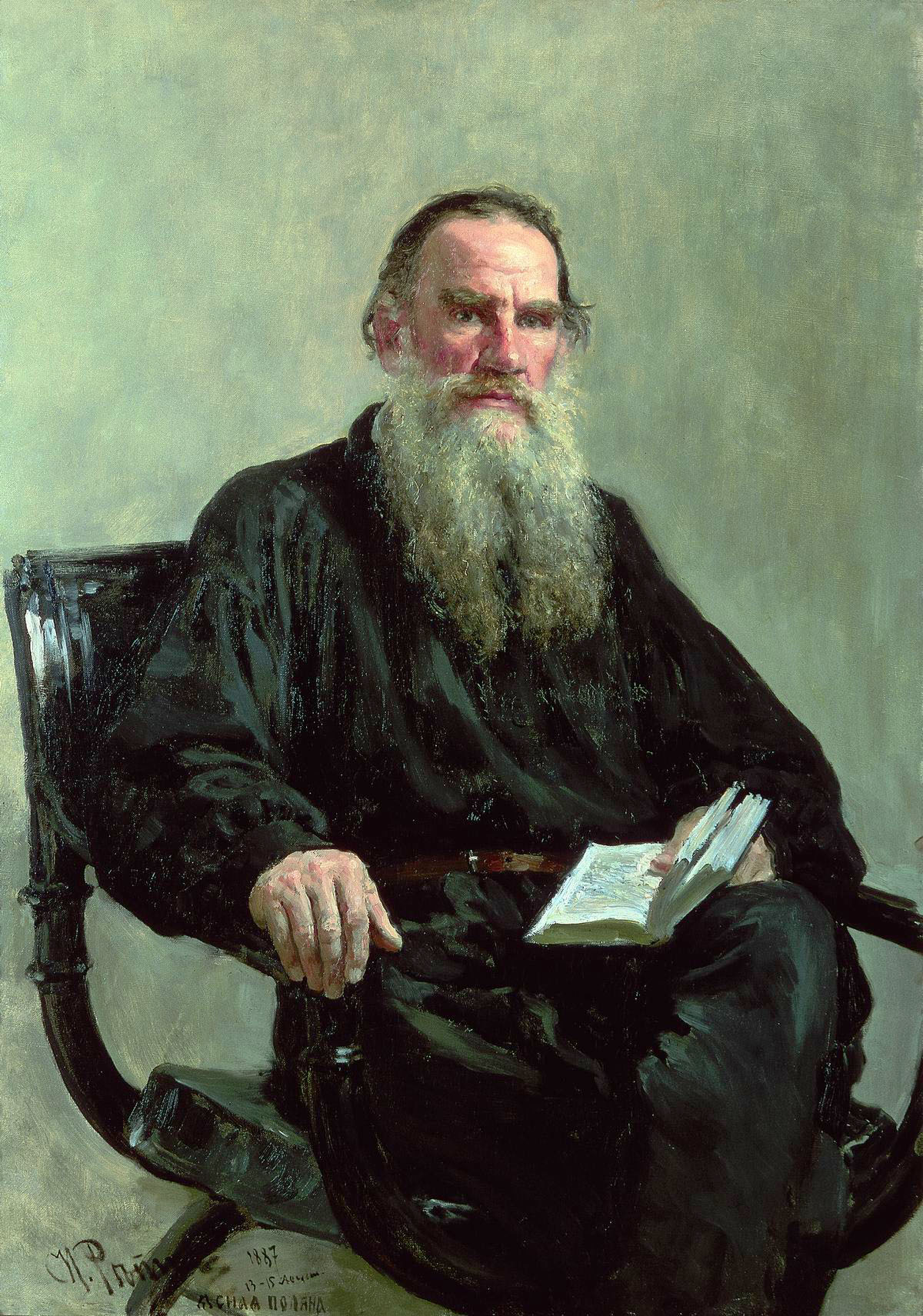
Ilya Repin, Portrait of Leo Tolstoy, 1887 — the year The Power of Darkness was finished and published. State Tretyakov Gallery (public domain, via Wikimedia Commons).
---
## The marquee question (hypothesis tested)
**The claim this dive set out to test:** *The Power of Darkness* enacts Tolstoy's chain-of-sin doctrine («коготок увяз, всей птичке пропасть») in peasant speech, and locates redemption not in the naturalist horror — the infanticide that drove the censors — but in Akim's inarticulate moral truth and Nikita's public confession; i.e. it is "art for the people" *practised* a decade before [What Is Art?](../1897-1898-what-is-art/index.html) (1897–98) *theorised* it.
**Outcome: `confirms` on the doctrine and the locus of redemption; `extends` on the practice-before-theory link; `complicates` on "art for the people."**
**Confirmed — the doctrine and where the play puts redemption.** The chain of sin is the play's spine, named from inside the work and from inside Tolstoy's circle, not read into it. The proverb is the subtitle, and it is the last lesson the play draws:
Date: Act 5 (PSS Tom 26). Context: Nikita, having confessed the infanticide publicly, kneels to his father Akim.
> ...говорил ты мне: «коготок увяз и всей птичке пропасть», не послушал я, пес, твоего слова, и вышло по-твоему.
*(working English)* "...you told me: 'a claw caught, the whole bird is lost' — I did not heed your word, dog that I am, and it came out as you said."
And the redemption is located precisely in the self-not-sparing confession, blessed by the father — not in the crime:
> Себя не пожалел, Он тебя пожалеет. Бог-то, Бог-то! Он во!..
*(working English)* "You did not spare yourself — He will spare you. God, God! He's there!.." (Akim, "в восторге" / in rapture, embracing his son.)
That this is *where* the play's meaning lands is confirmed by its best contemporary audience: at the court reading of 27 January 1887, per Stakhovich's letter, the talk after the fifth act was "of Nikita's heartfelt confession, of Akim's holy joy." Tolstoy's own staging note to the actor Svobodin (5 Mar 1887) directs Akim to move from resistance to "rapture at his son's deed." Biryukov, from inside the circle, names the play's idea as "the lingering force of sin and the brilliance of truth in the humble form of Akim." Simmons reads the proverb-subtitle as the whole thematic weight of the work. The doctrine-in-peasant-speech reading is solidly grounded.
**Extended — the link to *What Is Art?*.** The 1886 play is built for the show-booth audience, in folk speech, and stakes everything on feelings a simple listener can share: a father's grief, a man's confession, the horror of a murdered child. That is precisely what the 1897–98 treatise would later define as *good* art — the "infection" of universally accessible feeling, religious and common. No single mainstream source draws the practice-to-theory line this sharply; the corpus supplies the grounding, and Sizova (2023), working from archival materials, independently places the play inside the nineteenth-century declaration on the accessibility of art "the active creator of which was Tolstoy." This is the dive's synthesis, attributed as such.
**Complicated — "art for the people."** This is the honest heart of the test, and the complication is in the primary record. The play was written *for* the people's theatre, yet its first peasant audience did not grasp it:
> Крестьянами драма не была понята и не произвела на них того впечатления, на которое рассчитывал автор.
*(working English)* "The drama was not understood by the peasants and did not produce on them the impression the author had counted on."
Worse — or stranger — Chertkov and Stakhovich then turned that failure into the argument that got the play past the censor for the cheap popular edition: that *The Power of Darkness* is "altogether above the understanding of the masses." Its real triumphs were aristocratic salons, the imperial court, and, when it was finally staged, Moscow students. Tolstoy felt the gap and recorded it: by January 1887 he was telling Countess A. A. Tolstaya that the play "will be useful... for the 'great world,' for whom I wrote it." So "art for the people" describes Tolstoy's *intent and method* faithfully, but not the play's *achieved reception* — and that gap is itself a quiet complication of the *What Is Art?* thesis of universal accessibility, surfacing eleven years before he wrote it.
---
## Genesis & composition
### The seed: a real crime
The plot came from the courtroom. Tolstoy's friend N. V. Davydov, prosecutor of the Tula circuit court, told him the case of the peasant Efrem Koloskov, who in 1879 fathered a child on his stepdaughter, crushed the newborn in the cellar, and — unable to bless the girl at her wedding — confessed publicly before the assembled people. Tolstoy met Koloskov twice. He confirmed the debt himself:
Date: interview with the journalist N. Rakshanin (quoted in the PSS commentary).
> Фабула «Власти тьмы» почти целиком взята мною из подлинного уголовного дела, рассматривавшегося в Тульском суде.
*(working English)* "The plot of *The Power of Darkness* is taken by me almost entirely from a real criminal case heard in the Tula court."
> Отравление мужа было придумано мною, но даже главные фигуры навеяны действительным происшествием.
*(working English)* "The poisoning of the husband was invented by me, but even the main figures were inspired by the actual event."
The one invented crime — Anisya's poisoning of her first husband Pyotr — is the change that matters most: it makes the wife the active engine of evil and darkens her well beyond the real Marfa Koloskova. The idea first surfaces, undated, on a sheet of ten plot-subjects (alongside the future *Fruits of Enlightenment* and *The Forged Coupon*) under the title «Месть над ребенком» (Revenge over the child) — a framing the finished play outgrew.
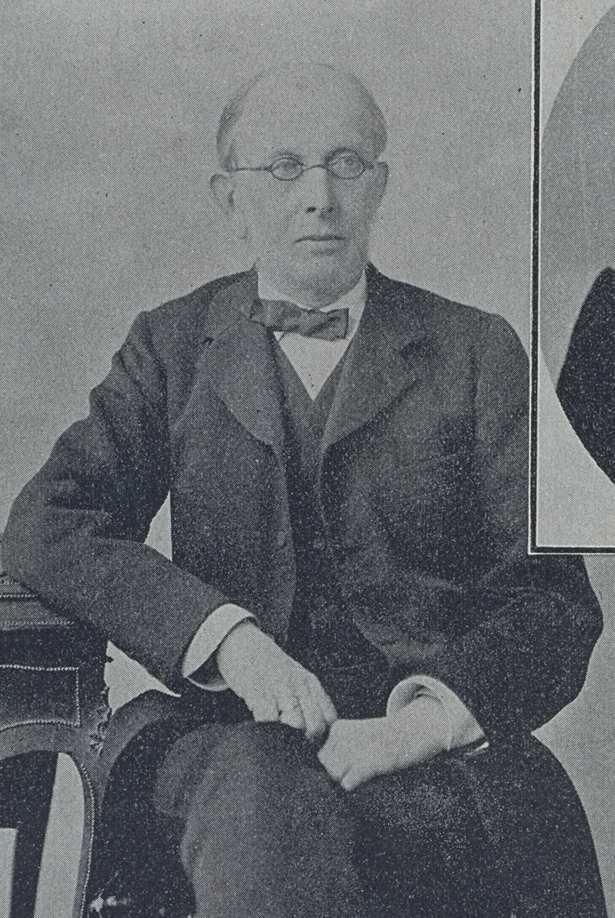
N. V. Davydov, prosecutor of the Tula circuit court, who gave Tolstoy the Koloskov criminal case that became the plot — and, by his recollection, the meek old highway peasant said to be the model for Akim (public domain, via Wikimedia Commons).
### The writing: autumn 1886
In August 1886 Tolstoy, loading hay, struck his leg against the cart and lay for roughly three months with erysipelas that threatened blood poisoning.
> Во время болезни и вынужденного бездействия он и написал «Власть тьмы».
*(working English)* "It was during this illness and forced inactivity that he wrote *The Power of Darkness*."
Two impulses lit the work. M. V. Lentovsky, director of the Moscow people's theatre Skomorokh, wrote on 31 August 1886 begging Tolstoy's support for his popular stage; Tolstoy intended the play for that stage from the first line. And around 20 October the theatre-loving A. A. Stakhovich, an admirer of Ostrovsky and a fine reader, visited Yasnaya Polyana and read Ostrovsky and Gogol aloud — after which, by Stakhovich's account, Tolstoy said: "Your reading stirred me up. After you I wrote a drama." Sofya Andreyevna's diary dates the burst precisely:
Date: 26 October 1886 (Old Style), S. A. Tolstaya's diary.
> Левочка написал 1-е действие драмы. Я буду переписывать
*(working English)* "Lyovochka has written the 1st act of the drama. I shall copy it."
By 14 November the draft was done. To Chertkov that day: "Написал драму на прелюбодеяние. Кажется хорошо" — *"I have written a drama on adultery. Seems good."* To Strakhov the same day: *"I am living very well, joyfully — writing. I have written a play for the folk theatres."*
### The people around the work
The composition window is dense with names, most of them carried into the dossier's routing map: **N. V. Davydov** (the source case, and the likely model for Akim — a meek old migrant-labourer peasant Davydov recalled Tolstoy describing); **A. A. Stakhovich** (the spark, then the salon and court reader); **M. V. Lentovsky** (the people's-theatre commission); **S. A. Tolstaya** (copyist and diarist of the writing); and, in the censorship months, **M. G. Savina**, **A. A. Potekhin**, **E. M. Feoktistov**, **K. P. Pobedonostsev**, and **V. G. Chertkov**. Tolstoy's own diary for these weeks is nearly silent — he kept very few entries between 1881 and 1888 — so the witness is carried almost entirely by the letters.
### The variant fourth act
After the play went to print and censorship, Tolstoy heard that the fourth act — the infanticide — was too brutal for the stage, and wrote an alternative.
> ...четвертый акт слишком реалистичен и потому для исполнения на сцене мало пригоден, решил написать вариант последних четырех явлений этого действия. Работа над ним происходила в декабре 1886 г.
*(working English)* "...the fourth act was too realistic and therefore little suited for stage performance, [so he] decided to write a variant of the last four scenes of that act. Work on it took place in December 1886."
The date matters: a common secondary claim credits Stanislavski with prompting this rewrite, but Stanislavski's involvement was 1902 — the variant was written sixteen years earlier, in December 1886, prompted (per A. K. Chertkova's memoir) by literary and theatre people. It was in writing this softer ending that Tolstoy developed Mitrich, the retired soldier to whom he assigned, in his own phrase, "the function of the chorus of ancient Greek tragedy."
---
## What the play says
The play is short enough to read whole. Its movement is a single descent with one reversal. Act 1 sets the moral frame: the farmhand Nikita has already wronged the orphan Marina, and his God-fearing father Akim — speaking in the stammering "тае" that is his signature — insists he marry her, because the wrong cannot be hidden: *"От людей утаишь, а от Бога не утаишь"* ("You can hide it from people, but you cannot hide it from God"). Nikita does not listen. That is the first claw.
The chain then tightens. In Act 2 the wife Anisya, helped by Nikita's mother Matryona, poisons her sick husband Pyotr to clear the way to marry Nikita. In Act 3 Nikita, now master of the house, seduces Pyotr's half-witted daughter Akulina; here Akim returns and delivers the play's positive doctrine in its most concentrated and, to the censor, most provocative form — the attack on living off money instead of labour:
> Бог трудиться велел. А ты, значит, тае, положил в банку деньги, да и спи, а деньги тебя, значит, тае, поваля кормить будут. Скверность это, значит, не по закону это.
*(working English)* "God bade us labour. But you, see, *tae*, put money in the bank and sleep, and the money, *tae*, lying down, will feed you. That's vileness, that is — that's not by the law."
**The centrepiece — Act 4, the infanticide.** Akulina bears Nikita's child, and Anisya and Matryona force him to destroy it. It is the scene Pobedonostsev and Feoktistov fixed on as unstageable, and Tolstoy stages it almost entirely through speech. Anisya throws the living infant into the cellar:
> Задуши скорей, не будет живой.
*(working English)* "Smother it quick, it won't stay alive."
Matryona, on the cellar step, supplies the chorus of worldly accommodation:
> О-ох! И рад бы не грешить, а что сделаешь?
*(working English)* "Oh-oh! Glad enough not to sin, but what can you do?"
And Nikita, who has crushed the child under a board, breaks:
> Как запищит, да как захрустят эти косточки[…]не человек я стал.
*(working English)* "The way it squealed, and the way those little bones crunched — *kr... kr...* — I am no longer a man."
In the **variant fourth act** the same horror is held off-stage and reached through a child: little Anyutka, on the stove, intuits what is being done in the cellar — "they'll destroy him, he's so tiny..." — while the drunk old soldier Mitrich comforts her and delivers his aria on the abandonment of peasant women ("there are great millions of your sisters in Russia, and all like blind moles — you know nothing"). The variant is gentler on the nerves and, for many directors since, more devastating.
**The reversal — Act 5.** At Akulina's wedding feast Nikita stops the proceedings, confesses every crime before the assembled people, and refuses to let Akulina shield him — *"Прости меня, мир православный!"* ("Forgive me, Orthodox world!"). He kneels to his father, names the proverb come true, and Akim, in rapture, blesses him: *"You did not spare yourself — He will spare you."* The play ends on Nikita's insistence that the guilt is wholly his: *"Всё я один сделал. Мой и умысел, мое и дело"* ("I did it all alone. Mine the intent, mine the deed").
---
## Redactions & textual history
The play was written and revised fast but heavily. By the time it went to print (manuscript №20) the first act had been reworked four times, the second five, the rest three each; counting at least three proof corrections, the play passed through no fewer than seven redactions even before the variant fourth act, which itself had four manuscript redactions. The work was overwhelmingly stylistic — Tolstoy labouring over the characters' speech, above all Matryona's, packing it with folk proverbs and dialect. Two structural additions came late: Nikita's near-suicide, and the whole figure of Mitrich, who enters only in the third redaction of Act 3 and is most developed in the variant Act 4 and the proofs of Act 5.
The keystone variant is the alternative fourth act (PSS Tom 26, the text follows Act 4 in every edition at Chertkov's insistence). It is sampled here as a first-class text because it changes the reading: it converts the play's most unstageable scene into its most-performed one, and it is where Mitrich — the choric conscience — comes fully to life.
The title and its frame have their own textual history. The title «Власть тьмы» appears nowhere in the manuscripts or surviving proofs; Tolstoy supplied it in a lost final proof, from the Gospel of Luke:
> ...видимо, заимствовано из «Евангелия» от Луки, гл. XXII, ст. 53: «Но теперь — ваше время и власть тьмы».
*(working English)* "...evidently borrowed from the Gospel of Luke, ch. XXII, v. 53: 'But now is your hour, and the power of darkness.'"
The original title became the subtitle proverb; and the epigraph — Matthew 5:28–29, on the lust of the heart and the plucked-out eye — was the one thing the censor struck from the printed text, restored only in the 1913 Biryukov edition. Title (the hour of darkness), subtitle (the claw caught), and epigraph (the lustful heart) together fix the play between the moment evil reigns and the inward root of sin.
---
## Publication, censorship & afterlife
The censorship history runs in two channels that diverge sharply: the print passed, the stage did not.
**Print.** After an initial check in the Moscow spiritual censorship, the play was permitted for print on 13 January 1887 — only the Gospel epigraph and two or three church-sharp expressions cut — largely through Chertkov's campaign of high-society readings (by Stakhovich) and his and Stakhovich's argument that the people would not understand so serious a work. It appeared in early February 1887 in the cheap Posrednik edition (Sytin's press, 9 kopecks, marked "For adults"), and was reprinted at once:
> в течение первых месяцев 1887 г. «Власть тьмы» была напечатана в количестве свыше 100 000 экземпляров
*(working English)* "...within the first months of 1887 *The Power of Darkness* was printed in more than 100,000 copies."
(S. A. Tolstaya's reminiscence gives a still larger figure — 250,000 in three days; the two figures are recorded, not merged.) Immediately after publication Tolstoy renounced his literary-property rights in the play — *"I ask everyone to print it where and how they wish"* — the same [copyright renunciation](../copyright-renunciation/index.html) the project dives separately. The vast cheap circulation is exactly what alarmed the authorities.
**Stage.** The stage history is a reversal, dramatised by the two emperors who bracket it.
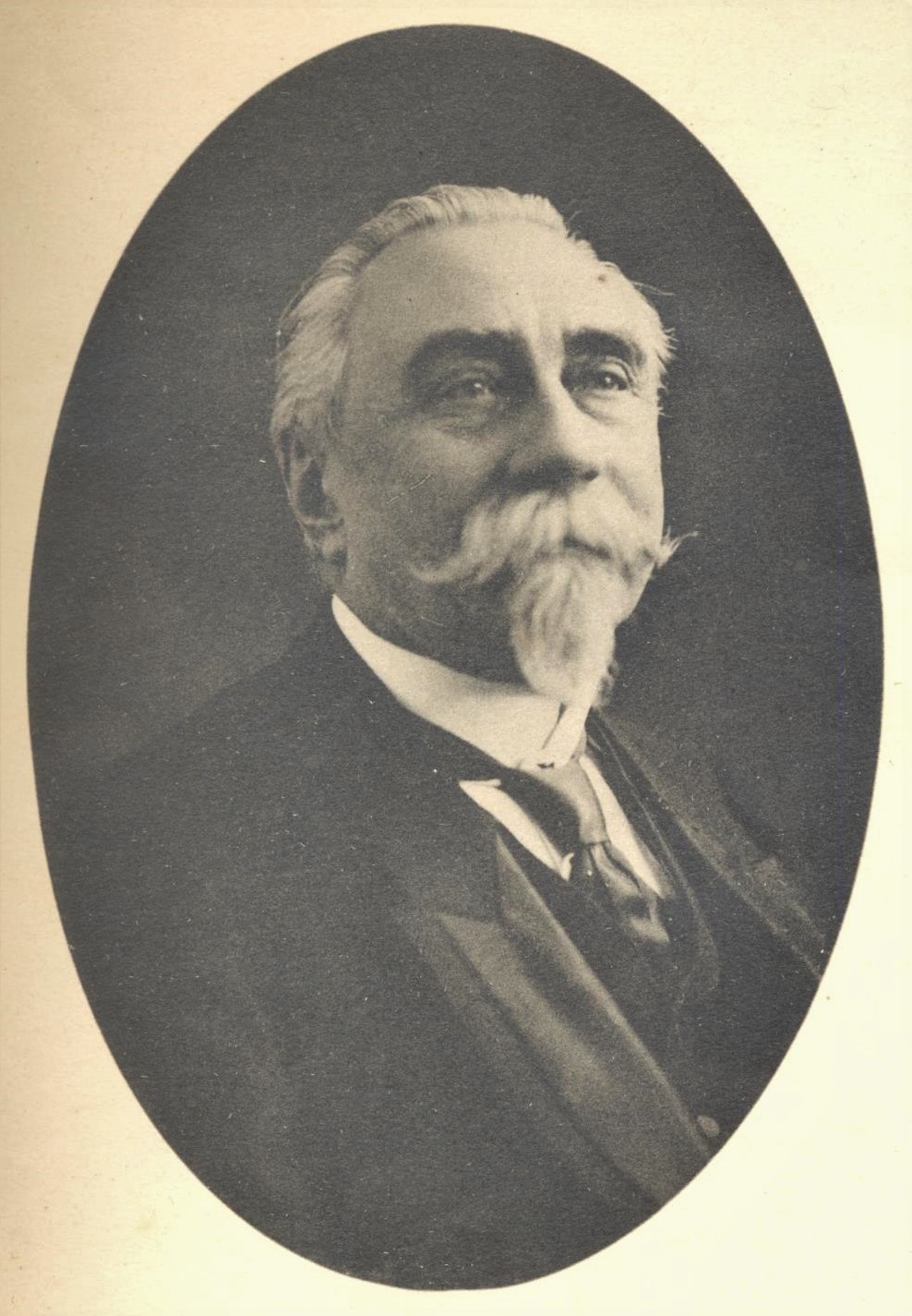
K. P. Pobedonostsev, Ober-Procurator of the Holy Synod, whose 18 February 1887 letter to Alexander III reversed the Tsar and secured the eight-year stage ban (public domain, via Wikimedia Commons).
At a court reading on 27 January 1887, Alexander III was delighted: "Александр III остался очень доволен пьесой и после пятого акта воскликнул: «Чудная вещь»" — and ordered it staged at the imperial theatres. Then Pobedonostsev intervened:
Date: 18 February 1887, K. P. Pobedonostsev to Alexander III.
> Едва ли сам Золя дошел до такой степени грубого реализма, на какую здесь становится Толстой.
*(working English)* "Hardly even Zola himself reached such a degree of crude realism as Tolstoy attains here."
The Tsar reversed himself the next day: *"this drama is impossible to give on stage — it is too real and horrible in subject."* The press chief Feoktistov, who had already judged that "one must have iron nerves to bear all this," now banned the stage while letting the print stand. The ban held for eight years. It was lifted only by the new emperor:
> 15 сентября 1895 г. последовало, помимо Феоктистова и без его ведома, разрешение Николая II на постановку пьесы на императорской сцене.
*(working English)* "On 15 September 1895 there followed — bypassing Feoktistov and without his knowledge — Nicholas II's permission to stage the play on the imperial stage."
Russian premières followed at once: St Petersburg (Literary-Artistic Circle, 16 Oct; Alexandrinsky, 18 Oct), Lentovsky's Skomorokh (25 Oct), and the Moscow Maly Theatre (29 Nov 1895).
**Abroad first.** Long before Russia saw it, the play had its world première in Paris:
> 10 февраля 1888 г. она была поставлена в Париже в «Théâtre libre» в переводе И. Я. Павловского и Оскара Магенье под названием «La Puissance des Ténèbres».
*(working English)* "On 10 February 1888 it was staged in Paris at the Théâtre Libre, in the translation of Pavlovsky and Oscar Méténier, under the title *La Puissance des Ténèbres*."
André Antoine directed and played Akim; the play then ran in Geneva, Berlin, Milan and other European cities while still banned at home.
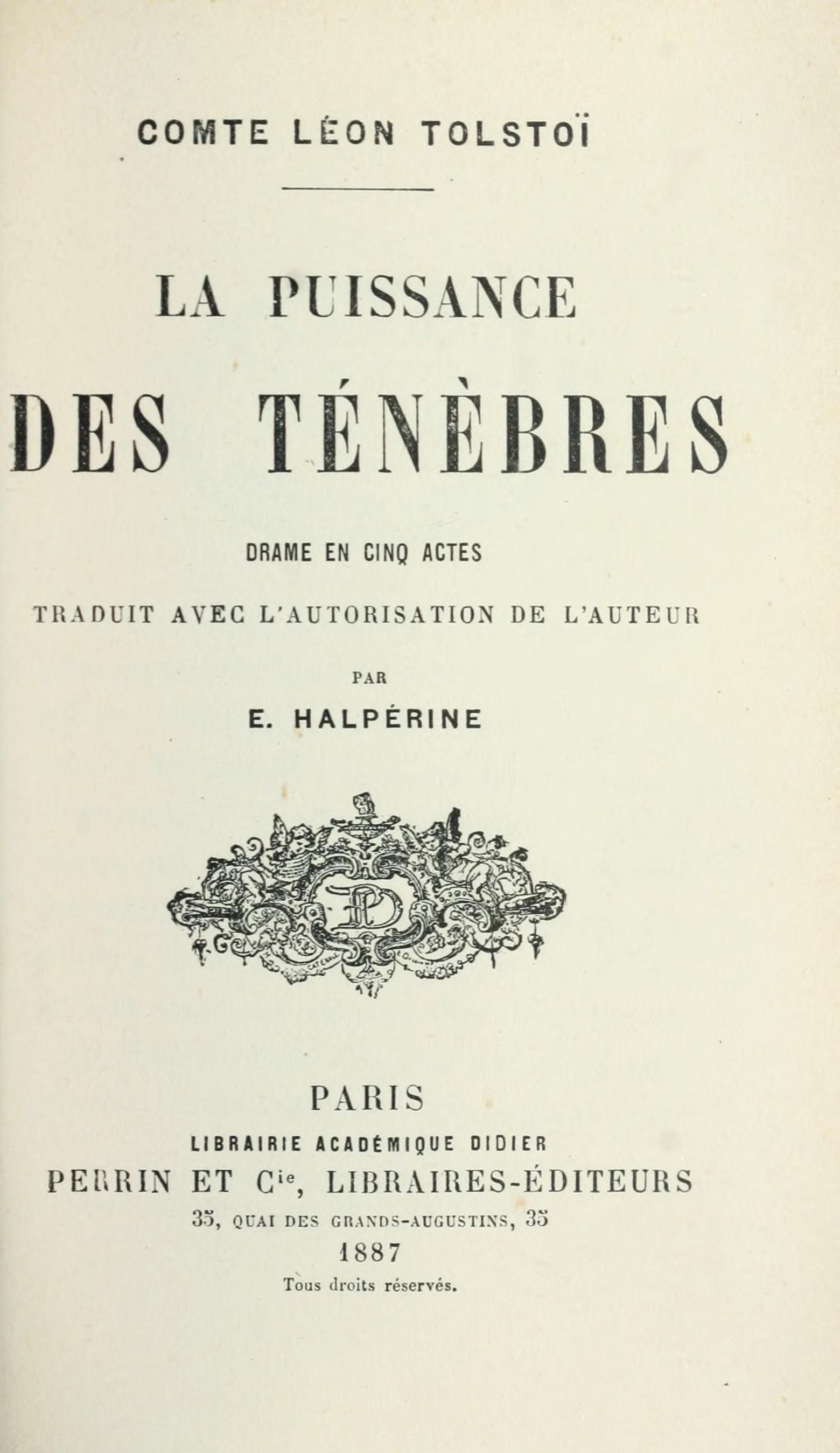
Title page of the 1887 French first edition (Perrin, trans. Halpérine) — the text André Antoine staged at the Théâtre Libre for the world première, 10 February 1888, four years before Russia (Internet Archive, public domain).
---
## Characters & prototypes
The cast is wholly fictional but four of its figures are drawn, by Tolstoy's own statement, from the Koloskov case, and two more from people he had met. The dossier routes seven figures as `character` nodes (each with a structured `prototypes[]` edge); the real people of the genesis and censorship are routed as `person`.
- **Nikita** — the weak farmhand who lets himself be led from sin to sin. Prototype: Efrem Koloskov (author-stated), but softened — no rapist, "soft-hearted" in the plan.
- **Akim** — Nikita's father, the inarticulate moral conscience and the play's spiritual centre. Prototype: a meek old migrant-labourer peasant Davydov recalled Tolstoy describing (editorial, probable).
- **Anisya** — the wife who poisons Pyotr (named Aksinya in the plan). Prototype: Marfa Koloskova (author-stated), darkened by the invented poisoning.
- **Matryona** — Nikita's mother, who supplies the poison and rationalises every sin (named Katerina, "a cunning witch," in the plan). No documented life-prototype.
- **Mitrich** — the retired soldier and reformed drunkard added late, the "Greek chorus." Prototype: a remembered soldier "type" (author-stated, per A. K. Chertkova).
- **Akulina** — Pyotr's deaf, half-witted daughter, seduced by Nikita; mother of the murdered child. Prototype: Koloskov's stepdaughter Elena — but inverted (the real Elena was, per witnesses, "a kind, meek, hardworking girl").
- **Anyutka** — the 10-year-old whose terror carries the variant Act 4. Prototype: Koloskov's daughter Efimya (age raised 6→10).
The routing judgment calls (e.g. disambiguating character page-names) are logged in the dossier's `needsReview`.
---
## Themes
- **The chain of sin.** The governing idea and the subtitle: one small sin, caught fast, drags the whole person to ruin. It is stated as Akim's warning and fulfilled as Nikita's confession.
- **The inward root of sin.** The struck-out Matthew epigraph — lust in the heart is already adultery — locates the first cause not in the deed but in the will; the same Gospel verse (Matt. 5:28) grounds the chastity argument of [The Kreutzer Sonata](../1887-1889-the-kreutzer-sonata/index.html).
- **Confession and the not-sparing of self as the only way out.** Redemption is public, humiliating, and bodily — kneeling before the people and the wronged father — not private remorse.
- **Truth in the humble.** The play's positive pole is Akim, the least articulate man on stage; the doctrine is carried by stammering, not eloquence. (Tolstoy's "Greek chorus," Mitrich, is likewise a drunk.)
- **Money and labour.** Akim's "bank" speech makes living off money a form of the same darkness — the strand the censor circled.
- **Drink** runs through every crime, but the in-circle record does not present the play as a temperance tract; drink is one of the entangling sins, not the thesis.
---
## Reception & afterlife
**Russian society, court and church first.** The play's reception in Russia was, at first, almost entirely a reception by the educated and the powerful. The court reading of 27 January 1887 read its moral centre exactly — "of Nikita's heartfelt confession, of Akim's holy joy"; the salons of Countess Shuvalova, Princess Paskevich and Countess A. A. Tolstaya passed it hand to hand. Against this, Pobedonostsev's church-and-state horror (the Zola comparison, the "negation of the ideal") drove the stage ban and a reactionary-press campaign; the Minister of Internal Affairs even forbade the street and peddler sale of the cheap brochure. The one audience the play was written *for* — the peasantry — is the audience it failed: the forty Yasnaya Polyana peasants who heard it read aloud "listened in silence," and the most a thoughtful peasant listener would venture was that Nikita "managed the business cleverly at first... but then he muffed it." When it reached the Maly stage (the première was 29 November 1895), it was Moscow *students* who, the following winter, mobbed Tolstoy's gate in gratitude. Tolstoy felt the whole episode as a burden of his "own circle," not the people (see *The author's later verdict*).
**Abroad and after.** The Théâtre Libre première (1888) made the play a landmark of the European naturalist stage before Russia could see it; Stanislavski's Moscow Art Theatre production opened on 5 December 1902. The play entered early cinema with a (lost) 1909 Russian film.
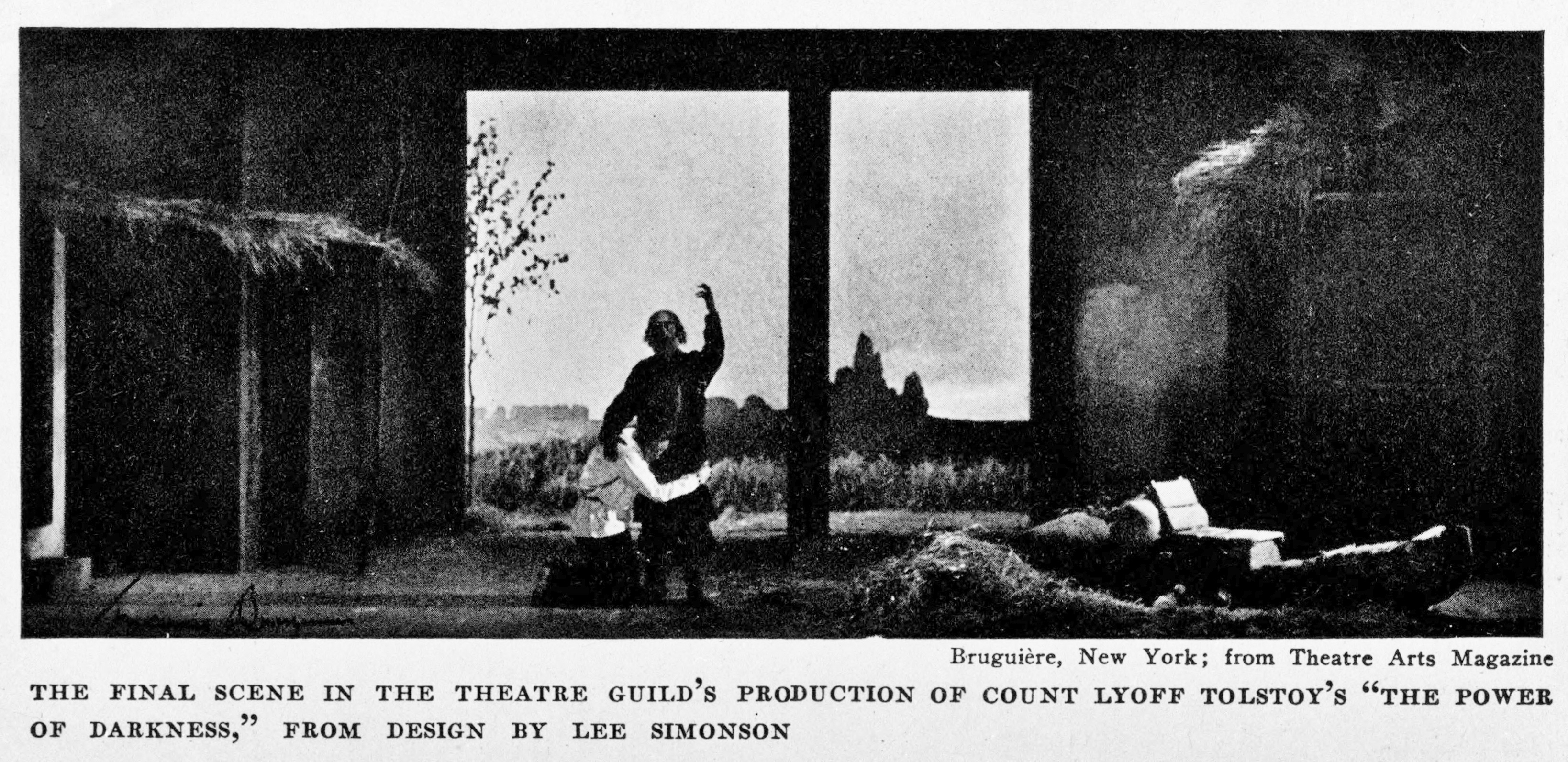
A scene from a staging of The Power of Darkness (Brentano's, New York, 1922) — the only public-domain staging photograph located. The peasant interior reflects the ethnographic-realist staging tradition the play inspired (public domain, via Wikimedia Commons).
---
## Scholarly context
This section maps where the corpus evidence meets, complicates, or extends the received scholarly view; it attributes rather than asserts.
**The naturalism label is contested at the source.** Mainstream reference works file the play flatly as "naturalistic drama," and the German criticism of the 1880s–90s grouped Tolstoy "with Zola and Ibsen." But the equation is less settled than the label suggests: at the 1888 Paris première Zola and de Vogüé defended the play's *stageability* while Dumas fils, Sardou and Augier held it "could only be read"; and Stanislavski — who staged it — drew the line explicitly, holding that "realism becomes naturalism [only] when it is not justified by the artist from within," and judging his own production's external realism unjustified. The most useful modern study, Jefferson Gatrall's "Child Murder, Peasant Sins, and the Infantilizing of Evil" (*Theatre Survey*, 2008), argues that the play's moralism and its naturalist surface are not rivals — the murdered child is at once its "cutting-edge naturalism" and its "moral and artistic climax." The dive follows this: it reports "naturalism" as a reading, and locates the play's centre in confession, not horror — which is also where Pobedonostsev, reaching for "Zola," was most scandalised. (On the contested movement-labels Tolstoy's late work attracts, see [Tolstoyanism](../tolstoyanism/index.html).)
**Folk drama and *What Is Art?*.** Sizova (2023), from archival materials, situates the play inside the nineteenth-century declaration on the *accessibility* of art (народность) of which Tolstoy was "the active creator" — the same current that runs to *What Is Art?* The practice-before-theory link (this dive's marquee `extends`) is a synthesis the corpus supports and the literature does not draw sharply; it is offered with its complication — the peasant-reception failure — attached.
**The temperance reading** (the play as anti-vodka tract, alongside Tolstoy's c. 1887 temperance society) is real but secondary; the in-circle sources frame the work as a chain-of-sin drama, not a message play about drink.
---
## Where the material clusters
**Works (PSS Tom 26).**
| TEI id | Material | Pages |
|---|---|---|
| `v26_123_243_Vlast_tmy` | The play (five acts + the variant fourth act) | 123–243 |
| `v26_533_534_Vlast_tmy_plan_dramy` | The night-written plan of the drama | 533–534 |
| `v26_534_544_Vlast_Tmy_Varianty` | Variants | 534–544 |
| `v26_544_548_..._Avtorskie_ispravlenija` | Author's corrections in the printed text | 544–548 |
| `v26_705_736_Vlast_tmy` (comments) | Gudzy's editorial commentary (genesis, redactions, censorship, staging) | 705–736 |
**Letters (PSS Toms 63–64).**
| Tom | Letter | Date | Addressee | Material |
|---|---|---|---|---|
| 63 | `v63_571` | 14 Nov 1886 | N. N. Strakhov | "I have written a play for the folk theatres." |
| 63 | `v63_609` | Dec 1886 | M. G. Savina | Sends the play; casts her as Marina; flags the red-pencilled Act 4; defers to Potekhin. |
| 64 | `v64_010` | ~Jan 1887 | A. A. Tolstaya | "...for the 'great world,' for whom I wrote it." |
| 64 | `v64_017` | Jan 1887 | A. A. Stakhovich | Thanks for the censorship efforts; "completely indifferent to the results." |
| 64 | `v64_024` | 18 Feb 1887 | A. A. Potekhin | Hands over all theatrical authority. |
| 64 | `v64_032` | 3 Mar 1887 | N. N. Strakhov | "my unhappy drama... I would never have printed it." |
| 64 | `v64_035` | 5 Mar 1887 | P. M. Svobodin | How to play Akim — resistance to rapture. |
**Diaries (PSS Tom 49).** Nearly silent on the play (Tolstoy kept few entries 1881–88); the witness is in the letters and the commentary.
---
## The author's later verdict
Tolstoy's contemporary verdict, recorded as the censorship dragged on, was ambivalence bordering on regret — aimed less at the play than at the spectacle of his own class fascinated by it:
Date: 3 March 1887, to N. N. Strakhov.
> Если бы знал, что столько это у меня отнимет времени, ни за что бы не печатал.
*(working English)* "Had I known how much time it would take from me, I would never have printed it."
He had earlier watched the praise with suspicion — *"as soon as others begin to praise... at once there appears... a stupid self-satisfaction: What a fellow I am!"* The play that was meant for the people had become the talk of "our circle," and that, more than the ban, is what tired him. He did not disown it: he kept it in his collected editions and, in 1894–95, signed permissions for its staging. But the gap between the audience he wrote for and the audience he got was one he named himself, and never quite closed.
---
## Material not covered
- Full manuscript collation of all 23 redactions (the dive samples the variant Act 4 as the keystone, per novel mode).
- The play's later Soviet and world stage history beyond Stanislavski's 1902 production.
- *The First Distiller* (1886) and the folk-tale cycle as the play's sibling "art for the people" — flagged for a cluster cross-link, not dived here.
- Specific European stagings beyond Paris 1888 (Geneva, Berlin, Milan and others are named in the commentary without dates) — see the dossier's `needsReview`.
---
## Visual & manuscript record
A heavy four-channel sweep (Wikimedia Commons; the State Tolstoy Museum / Goskatalog; tolstoy.ru; émigré and Internet-Archive scans) returned 15 public-domain images, recorded with provenance and rights in the dossier `visuals` block and cached locally (the cache is git-ignored; `docs/fetch_visuals.py` repopulates it from the dossier URLs).
- **Tolstoy, 1886–87:** the Sherer & Nabholz photograph (1887) and Repin's oil portrait (1887), both within the composition/publication window; a Library-of-Congress photograph dated 1880–86.
- **The people:** public-domain portraits of N. V. Davydov, K. P. Pobedonostsev, E. M. Feoktistov, V. G. Chertkov (Kramskoy), and M. G. Savina. A Serov portrait labelled "Stakhovich" was found but is **the wrong Stakhovich** (the MAT figure Aleksei A., not the 1830–1913 reader Aleksandr A.) — flagged `usable: false` pending verification.
- **The play on stage and screen:** the only public-domain staging photograph located (Brentano's, NY, 1922); a still from the lost 1909 Khanzhonkov film; André Antoine's portrait; a modern CC-BY exterior of the Maly Theatre (attribution required).
- **First edition:** the 1887 French first-edition title page (Perrin) — the text Antoine staged — plus its half-title and full PDF.
**Not openly available / follow-up:** the Russian first-edition (Posrednik / Sytin, 1887) title page was not found in public-domain scan form; the State Tolstoy Museum (ГМТ) confirms «Власть тьмы» manuscript and staging holdings via its autocomplete API but does not expose isolable object IDs, and its records are rights-reserved by default; Goskatalog was unreachable. These are recorded in the dossier as a visuals work-order.
---
## Method
A `--novel` work-subject dive (drama flex): the full play read act by act (a short text, unlike a 300–500-page novel), with the heaviest effort on genesis, redaction history, and reception. Pre-reform orthography resolved with `extract_tei.py --choice=reg --notes=auto`. Composition-years witness sweep across the 1886 diaries (Tom 49, nearly silent) and the 1886–87 letters (Toms 63–64). Genesis and censorship reconstructed from Gudzy's commentary (Tom 26) and grounded against Biryukov's authorized biography (vol. III, chs 6 & 19) before any mainstream scholarship. Every primary quotation is byte-verified against its extract (`verify_quotes.py`, 34/34 PASS); secondary claims are attributed. A heavy four-channel visuals sweep. The marquee was stated up front and tested as a hypothesis, with its strongest complication (the peasant-reception failure) drawn from the primary record.
**Links.** Sibling dives: [The Death of Ivan Ilyich](../1884-1886-the-death-of-ivan-ilyich/index.html) · [The Kreutzer Sonata](../1887-1889-the-kreutzer-sonata/index.html) · [What Is Art?](../1897-1898-what-is-art/index.html) · [copyright renunciation](../copyright-renunciation/index.html) · [Tolstoyanism](../tolstoyanism/index.html).
---
## References
**Primary.** Л. Н. Толстой, *Власть тьмы*, ПСС Т. 26 (text pp. 123–243; plan 533–534; variants 534–544; author's corrections 544–548; Gudzy's commentary 705–736). Letters, ПСС Тт. 63–64 (1886–87). Diaries, ПСС Т. 49 (1886). П. И. Бирюков, *Биография Л. Н. Толстого*, т. III, гл. 6 и 19 (in-circle account, incl. S. A. Tolstaya's reminiscences).
**Background.** Jefferson J. A. Gatrall, "Child Murder, Peasant Sins, and the Infantilizing of Evil in Tolstoy's *The Power of Darkness*," *Theatre Survey* 49.2 (2008), 253–275. И. И. Сизова, "Малоизвестные подробности из истории создания пьесы Л. Н. Толстого «Власть тьмы»," *Литературный факт* № 28 (2023). Ernest J. Simmons, *Introduction to Tolstoy's Writings* (1968), ch. 11. Aylmer Maude, *The Life of Tolstoy*. Konstantin Stanislavski, *My Life in Art* (the 1902 MAT production). A. N. Wilson, *Tolstoy* (1988); Rosamund Bartlett, *Tolstoy: A Russian Life* (2010); Henri Troyat, *Tolstoy* (1967). On the 1888 Paris première: the Théâtre Libre debate (Zola and de Vogüé vs Dumas fils, Sardou, Augier); André Antoine as Akim.
---
*Draft dev-blog note: [`2026-06-10-the-power-of-darkness.md`](../../../../../../website/src/posts/notes/2026-06-10-the-power-of-darkness.md) (draft).*