---
layer: reference
lastUpdated: 2026-06-08
tags: [research, corpus-dive, novel-dive, fiction, kreutzer-sonata, afterword, sexuality, marriage, censorship]
---
# The Kreutzer Sonata (Крейцерова соната) + the Afterword, 1887–1890 — a novel-dive
A primary-source dive across PSS Tom 27 (the novella, the Afterword, nine redactions, and the editors' «История писания и печатания»), the composition-years diaries (Tom 50–51) and letters (Tom 64–65). It is the second flagship novel-dive, after [*Resurrection*](../1889-1899-resurrection/index.html), and it carries two record-creating `workRecord` proposals — one for the novella, one for the **Afterword**, which the PSS catalogues as a distinct work and which this dive treats as a first-class text, not an appendix.
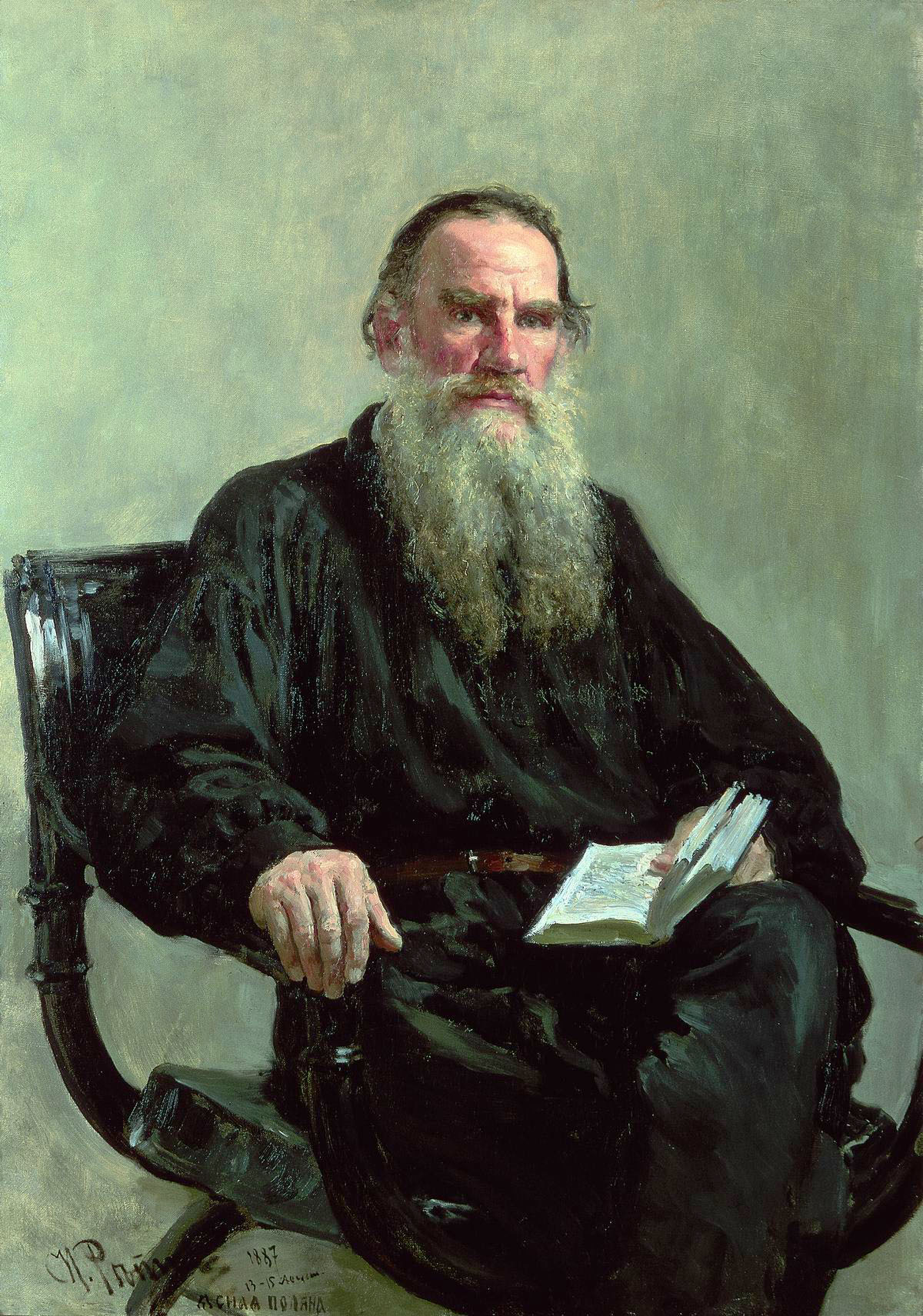
Ilya Repin, Portrait of Leo Tolstoy, 1887 — painted the same year Tolstoy drafted the first sketch of the novella, and the year Repin was present at the Beethoven evening that gave it its title. State Tretyakov Gallery (public domain).
## Key findings
- **The work and its Afterword were written across roughly two years (1887 → late 1890) and nine redactions of the novella plus a parallel chain for the Afterword.** The text that swept Russia underground — in hundreds of lithographed and hectographed copies — was the **eighth** redaction, not the final ninth; the Afterword likewise circulated in a penultimate copy dated 6 April 1890 before the authorized text settled.
- **The marquee question — *how far does Tolstoy endorse Pozdnyshev?* — is answerable from the primary record, and the answer is precise: Tolstoy owns the doctrine, but not its modality.** In the Afterword he speaks in his own voice and calls the conclusions «своим выводам» (my own conclusions); to an English correspondent who asked whether he really meant total abstinence he wrote «Отвечаю: да» (I answer: yes). But the same Afterword reframes chastity as «идеал… а не правило» — an asymptotic ideal, a compass-bearing, not the despairing rule the murderer voices in the novella.
- **The chastity argument predates any biographical "attack on the marriage."** The first sketch is from 1887 and the doctrine is grounded in Tolstoy's post-conversion Gospel reading (Matthew V:28); the Taneyev episode usually cited for the autobiographical frame is mid-1890s. The dive treats the Sofia-centred reading as the mainstream's frame, attributed and read critically.
- **The censorship fight is itself the reception story.** Banned from independent print on Pobedonostsev's and Feoktistov's authority (Dec 1889), the work reached print in Russia only inside Collected Works vol. 13 (June 1891) — and only after Sofia Tolstaya obtained a personal audience with Alexander III on 13 April 1891. The separate-edition ban held until 1900.
- **The novella's theory of music as an involuntary, "hypnotic" power is a direct primary anticipation of [*What Is Art?*](../1897-1898-what-is-art/index.html) (1897–98).**
## Why this matters
*The Kreutzer Sonata* is the most autobiographically-read of Tolstoy's fictions, and the reading most likely to flatten it. The standard frame — a brutal attack on his own marriage, a misogynist's confession — treats the novella as veiled grievance and the Afterword as an embarrassing appendix. The primary record supports a different account: a long, doubting, nine-times-rewritten attempt to put a Gospel argument about sexuality into a murderer's mouth, followed by a separate prose text in which Tolstoy steps out from behind the murderer to say which parts are his. Reading the two together, against the composition diaries, lets the dive test the autobiographical frame rather than assume it, and render the chastity doctrine as Tolstoy actually argued it — neither softened into something more palatable nor hardened into caricature.
## Genesis & composition — the heaviest layer
### The two seeds (1887–1888)
The editors of PSS Tom 27 (V. I. Sreznevsky) trace two distinct origin-events the dive must not conflate.
**The railway confession.** Sofia Tolstaya's diary (28 Dec 1890) records that the actor **V. N. Andreyev-Burlak** gave Tolstoy the subject — «мысль создать «Крейцерову сонату» внушил Толстому актер В. Н. Андреев-Бурлак» (working English: "the idea of creating The Kreutzer Sonata was suggested to Tolstoy by the actor V. N. Andreyev-Burlak") — having told him of a railway passenger who confided his misery at a wife's infidelity. Andreyev-Burlak first visited Yasnaya Polyana on 20 June 1887; he died 10 May 1888. This is Sofia's attribution, reported by the editors, not Tolstoy's own statement.
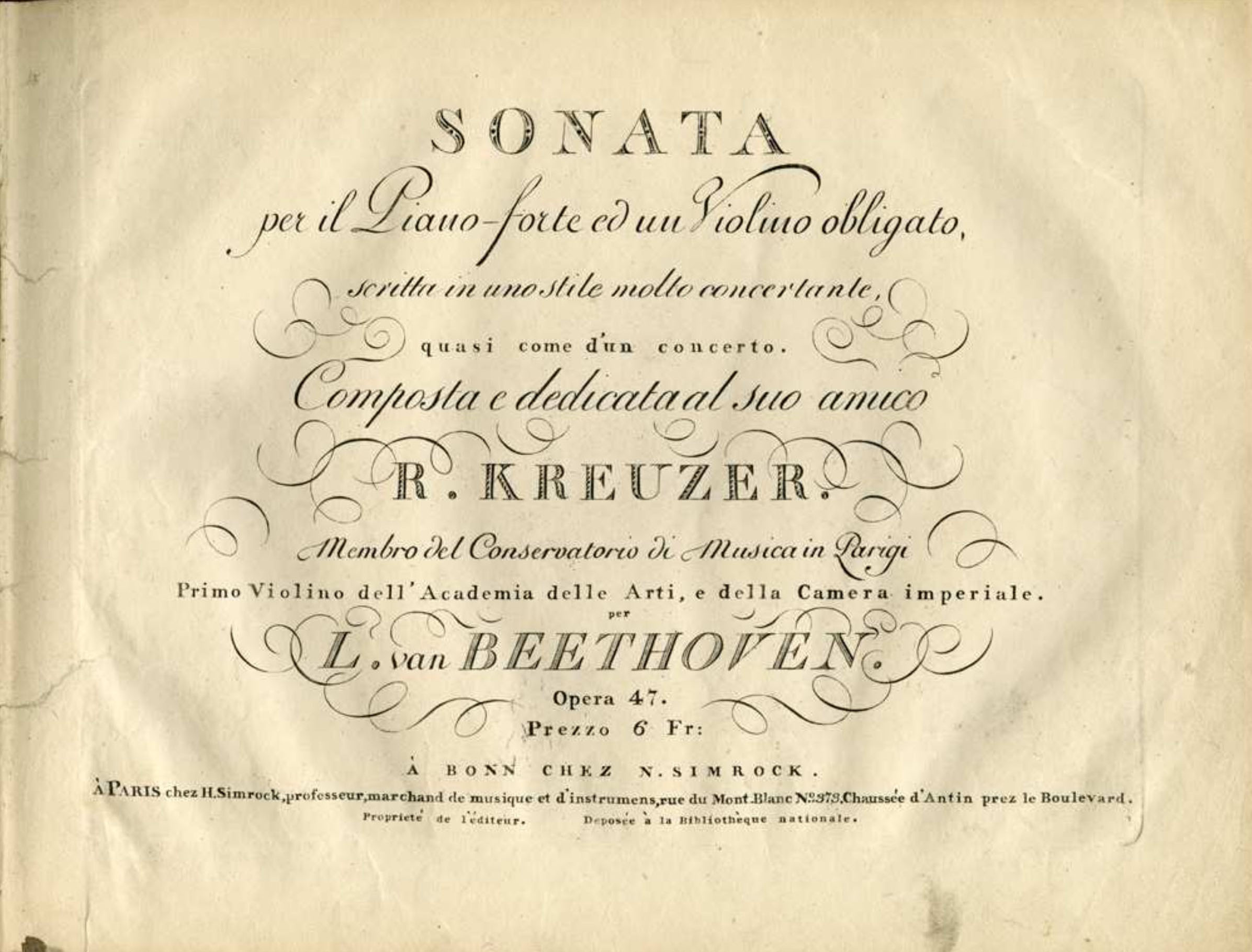
**The Beethoven evening and the triptych.** Tolstoy's biographer **P. I. Biryukov** (Birukoff) reports that one spring in the Tolstoys' Moscow (Khamovniki) house, Beethoven's sonata dedicated to Kreutzer was played by the violinist Lyasotta and Tolstoy's son S. L. Tolstoy at the piano, before listeners who included the painter **Repin** and Andreyev-Burlak. Tolstoy proposed a three-art triptych — «предложил изобразить эту сонату доступными всем трем средствами искусства» (working English: "he proposed to depict this sonata by means accessible to all three arts"): he would write a story, Andreyev-Burlak would read it aloud on a stage, and Repin would paint a canvas to stand behind the reader. Only Tolstoy carried out his part; the canvas was never painted.
### The gestation: nine redactions, 1887 → December 1889
The diaries turn the editors' redaction-numbering into a day-by-day record of strain. The first sketch (1887) was so rough Tolstoy told G. A. Rusanov (March 1889) he was "not even correcting it." Active work resumed at Prince Urusov's Spasskoye in spring 1889; the first explicit diary mention is 5 April 1889 — «Очень много и не дурно писал Крейцерову сонату.» (working English: "Wrote a great deal on the Kreutzer Sonata, and not badly.") To Biryukov on 17 May: «стал писать Крейцерову Сонату. Это пошло легко.» (working English: "began writing the Kreutzer Sonata. It went easily.")
It did not stay easy. The whole dramatic conception came clear only on 4 July 1889, as Sofia copied the draft — «Вся драма повести, всё время не выходившая у меня, теперь ясна в голове.» (working English: "The whole drama of the story, which had never come clear for me, is now clear in my head.") The musician Trukhachevsky and the Kreutzer Sonata itself had entered only in the third redaction (spring 1888); across the fifth and sixth the rival oscillated between painter and musician, and the **Shaker** literature on total chastity, arriving mid-composition, hardened the abstinence ideal. The epigraph — Matthew V:28 — was chosen 23 August 1889. Tolstoy "finished" on 28 August and was dissatisfied by lunchtime; on 21 September he even wrote «Окончательно решил переделать, не надо убийства.» (working English: "Definitively decided to rework it — the murder is not needed") before reversing himself. He completed the ninth and final redaction about 8 December 1889, by which point the work had, in his own word, «надоела» — worn him out.
Two diary notes catch the moral self-suspicion that runs under the whole project. On 7 November 1889: «Получаю известия, что Крейцерова Соната действует, и радуюсь. Это нехорошо.» (working English: "I receive news that the Kreutzer Sonata is acting on people, and I rejoice. This is not good.") He distrusted his own pleasure in the effect.
### The people around the work
Composition was a household and a network. **Sofia Andreyevna Tolstaya** copied both the novella and the Afterword, voiced the reading that helped Tolstoy see "the whole drama" (4 July), and would later drive the work into print (below). His daughters **Tatyana** and **Maria (M. L. Tolstaya)** copied and criticised — Tatyana's two objections (7 Sept: that the wife is "not to be pitied," that she "will not repent") are recorded by Tolstoy as "apt." It is Maria's copy from which "the vast majority" of the underground lists descend. **V. G. Chertkov** was the intended publisher (through *Posrednik*) and the editorial pressure behind the Afterword. The Danish translator **P. G. Hansen (Ganzen)**, copying the Afterword five times in early April 1890, seeded its lithographed version. (Full cast: dossier `entities`.)
## What the work says
The novella is a frame narrative: an unnamed traveller shares a railway carriage with **Pozdnyshev**, a grey-haired man with "extraordinarily glittering eyes," who announces himself as the man who killed his wife and then delivers a night-long confession. Everything Pozdnyshev argues reaches the reader at one remove — the monologue of a self-declared murderer in an agitated state, the listener periodically noting his condition. The dive close-reads three nodes plus the Afterword; the rest is mapped in the dossier `evidence` ledger.
### The doctrine of sex and marriage (chs X–XIV)
Pozdnyshev's core claim is that carnal passion is not a regrettable necessity but an evil, and that the Gospel standard applies inside marriage: «Половая страсть, как бы она ни была обставлена, есть зло, страшное зло, с которым надо бороться, а не поощрять, как у нас.» (working English: "Sexual passion, however it is arranged, is an evil, a terrible evil, which must be fought, not encouraged as it is among us.") Marriage as practised he calls a disguised sale — «Развратнику продают невинную девушку» (working English: "An innocent girl is sold to a debauchee") — and the male view of woman a use: «Она орудие наслаждения. Тело ее есть средство наслаждения.» (working English: "She is an instrument of pleasure. Her body is a means of pleasure.")
*Accuracy in both directions:* Pozdnyshev's target throughout is male sensuality and the order that licenses it — he indicts himself, the doctors, and his class as much as women. Rendering the speech merely as "misogyny" and rendering it merely as "moral idealism" both flatten it.
### The music passage (ch. XXIII)
Beethoven, Op. 47 — the violin sonata dedicated to Rodolphe Kreutzer, first-edition title page (1805). The Presto that Pozdnyshev hears is the novella's pivot. Public domain.
Hearing his wife and Trukhachevsky play the first Presto, Pozdnyshev develops a theory of music as an involuntary power: «Что такое музыка? Что она делает?» — it acts «раздражающим душу образом» (working English: "in an irritating [provoking] way"), making him "feel what I do not really feel," fusing the listener with the composer's state without supplying the act that state demands. He calls it «страшное средство в руках кого попало» (working English: "a frightful power in the hands of anyone at all") and likens it to hypnosis. This is a direct anticipation of the theory of art's involuntary "infectiousness" Tolstoy would argue in [*What Is Art?*](../1897-1898-what-is-art/index.html).
### The murder (ch. XXVII)
The killing is rendered without the haze a defence would want: «изо всех сил ударил ее кинжалом в левый бок, ниже ребер» (working English: "I struck her with all my strength with the dagger in the left side, below the ribs"). Pozdnyshev insists he remembered everything — he felt «погружение ножа в мягкое» (working English: "the plunging of the knife into something soft") — and rejects the court's reading of the act as an honour-defence.
### The Afterword — Tolstoy in his own voice
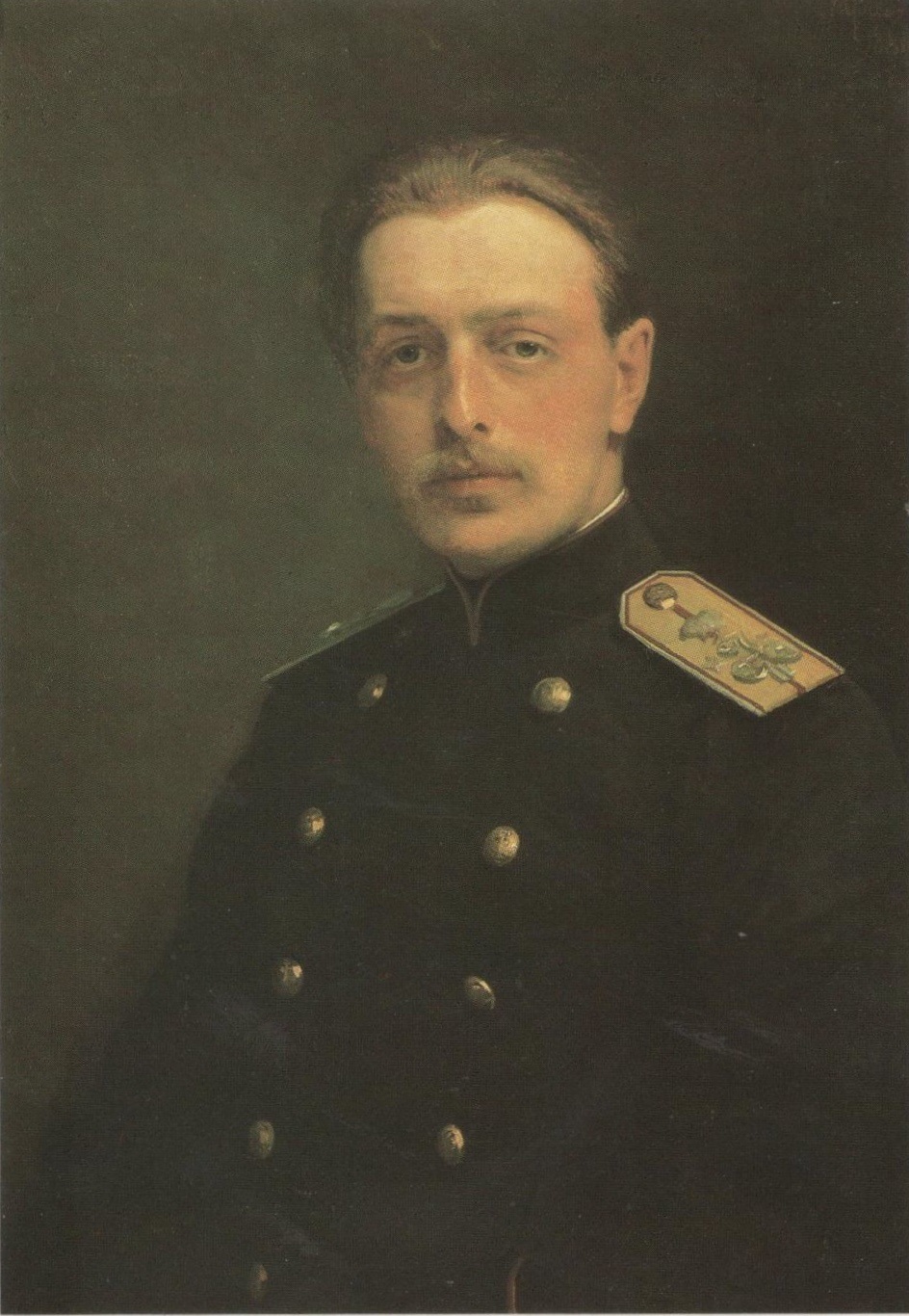
Ivan Kramskoy, Portrait of Vladimir Chertkov, 1881. Chertkov pressed Tolstoy to write the Afterword — and pressed, unsuccessfully, for it to legitimise an "honest marriage" for those who could not reach total chastity. Public domain.
The Afterword answers letters asking what he meant. It lays out five numbered points and then turns on a single distinction. Chastity, he writes, «лучше распущенности» (better than dissoluteness) — that, he says, no one disputes; and abstinence «составляющее необходимое условие человеческого достоинства при безбрачном состоянии, еще более обязательно в браке» (working English: "the necessary condition of human dignity in the unmarried state — is still more obligatory in marriage"). Marriage itself he calls, "from the Christian point of view," «падение, грех» (a fall, a sin), and the ideal for a married couple is to replace «плотской любви чистыми отношениями сестры и брата» (working English: "carnal love with the pure relations of sister and brother"). This is the maximal claim, and the dive renders it as made.
But the doctrinal heart of the Afterword is the reply to the obvious objection — *if everyone were chaste the race would end.* Tolstoy answers that the objection confuses a rule with an ideal: «Целомудрие не есть правило или предписание, а идеал или скорее — одно из условий его.» (working English: "Chastity is not a rule or a prescription, but an ideal — or rather, one of the conditions of it.") An ideal is reachable "only in infinity"; it is a compass-bearing, "the necessary and accessible instrument of guidance," not a law one is condemned for missing. That modal frame — ideal, not rule — is the thing the murderer in the novella lacks.
## Redactions & textual history
The nine novella redactions (PSS Tom 27, with the editors' numbering) are first-class evidence here, because the version that became famous was not the one Tolstoy authorized. The **eighth** redaction — «Эта редакция распространилась в многочисленных списках и литографированных и гектографированных изданиях и стала достоянием широких читательских кругов» (working English: "This redaction spread in numerous copies and in lithographed and hectographed editions and became the property of wide reading circles") — is the one Russia read underground. The PSS variants file shows it was sharper than the printed ninth:
- The printed "один обман!" (one deception) stood, in the lithographed text, as «обман и насилие» (deception **and violence**); free love is called a summons «к свальному греху» (to orgiastic sin) — both ecclesiastically charged phrases softened for print.
- A passage cut entirely from the printed text: «Мужчины нашего мира содержатся и кормятся, как случные жеребцы.» (working English: "The men of our world are kept and fed like stud-horses.") The zoological simile was too stark for print; the underlying argument (that "our loves and marriages are largely conditioned by food") survives without it.
The Afterword has its own chain, and its penultimate ("lithographed") redaction is dated 6 April 1890. The PSS prints the novella from manuscript № 14, not from the 1891 edition, because Sofia Tolstaya's setting-copy introduced «огромное количество искажений (около 200)» (working English: "an enormous quantity of distortions (about 200)") — some her own conscious censorship-prophylactic softenings, most accidental.
## Publication, censorship & translation
The publication plan cycled — *Posrednik*, then Gaideburov's *Неделя*, then the Yuryev memorial anthology — and the censorship moved first. In December 1889 Gaideburov relayed that the work would not pass; the ban was «категорически объявлено» (working English: "categorically declared"), and the named authorities were **E. M. Feoktistov** (head of the Main Directorate for Press Affairs), Ober-Procurator **K. P. Pobedonostsev** (who told Strakhov he had not read it and would not), and Interior Minister **I. N. Durnovo**. The work passed into pure underground circulation: by one *Posrednik* memoirist's account, some 300 lithographed copies were ready within days, changing hands at 10–15 roubles.
It reached legal print in Russia only through **Sofia Tolstaya's audience with Alexander III**. With the help of the Tsar's cousin E. G. Sheremeteva she «добилась с государем свидания, которое произошло 13 апреля в Петербурге» (working English: "obtained an audience with the Sovereign, which took place on 13 April [1891] in Petersburg"); the Tsar permitted the work, but only inside the Collected Works. Tolstoy reported it flatly and without pleasure (to Barsheva and Schmidt, 22 May 1891): «была у государя, и он разрешил напечатать «Крейцерову Сонату».» (working English: "she had an audience with the sovereign, and he permitted the printing of The Kreutzer Sonata.") In June 1891 «вышла, наконец, в свет тринадцатая часть сочинений Толстого с «Крейцеровой сонатой» и «Послесловием» к ней» (working English: "the thirteenth part of Tolstoy's works finally appeared with The Kreutzer Sonata and its Afterword"). The ban on a *separate* edition held through further circulars until 1900.
Abroad, the work outran the Russian print: an uncensored Geneva edition (Elpidin, 1890), Berlin editions from the lithographed line (1890), and French (de Vogüé), English (Dillon), and Danish (Hansen) translations channelled through Chertkov. (Foreign-edition table: dossier `evidence` / `references`.)
## The marquee question — how far does Tolstoy endorse Pozdnyshev? (hypothesis tested)
The standard reading equates Pozdnyshev's positions with Tolstoy's, citing the Afterword as proof; the strongest literary-critical reading (Yacobi 2005; engaged by Gershkovich 2019) argues the novella formally *manages* Pozdnyshev's voice, and that the Afterword is a second, separate rhetorical act that need not govern the fiction. The corpus lets us be more precise than either pole, and the finding is **`extends`**: it supplies the primary grounding both readings argue around.
**Tolstoy owns the proposition.** The Afterword speaks in the first person of «тех убеждениях, которые теперь высказываю» (the convictions I now express) and adds «Я ужасался своим выводам, хотел не верить им, но не верить нельзя было» (working English: "I was horrified at my own conclusions, I wanted not to believe them, but it was impossible not to believe them"). Asked directly by the English-language correspondent Charles Andersen whether he meant that one ought to abstain entirely, he wrote (25 Aug 1890): «Отвечаю: да.» He told Rusanov that a reader's account of the tale's meaning was «вполне верно» (entirely correct), and when L. E. Obolensky sent a hostile reading, Tolstoy defended the work — its argument is his.
**But he withholds the modality and the violence.** What the Afterword refuses Pozdnyshev is the status of the doctrine as a *rule*: it is «идеал… а не правило», realisable only "in infinity," a compass not a verdict. The novella's own apparatus — the "glittering eyes," the strong tea, the half-dark, Pozdnyshev calling himself «в роде сумасшедшего» and «развалина, калека», his retrospective «Это было полное сумасшествие!», the listener's closing pity — frames the speaker as a damaged man, even as it grants his "opened eyes." Tolstoy endorses the direction Pozdnyshev's logic points and the conclusions as truths; he does not endorse the murderer's despair, his absolutism, or his act.
So the flat "Pozdnyshev = Tolstoy" identification is **`complicates`d** (the doctrine is owned, but only as an asymptotic ideal); and the pure ironic-distance reading is **`complicates`d** in the other direction (Tolstoy explicitly calls the conclusions «свои», against his own resistance). The two texts together say something neither says alone: the argument is Tolstoy's; the rule, and the knife, are Pozdnyshev's.
## Characters & prototypes
The novel-dive surfaces fictional characters and a real-world sect. These were originally routed as `concept` stopgaps and flagged in `needsReview`; the schema question was **resolved 2026-06-09** by adding a `character` type (with a structured `prototypes[]` field for the fiction→life edge) and a `group` type (`wiki-schema.md` v1.4). Pozdnyshev, his wife, and Trukhachevsky are now `character`; the Shakers are `group`.
- **Pozdnyshev (Позднышев)** — the narrator-murderer; named from the first redaction, renamed "Stepanov" in the third, restored thereafter. His doctrine is the novella's argument; his derangement is its frame.
- **Pozdnyshev's wife** — unnamed; the diaries (4, 7 July) show Tolstoy working to make her culpability shared, not assigned ("He cultivated her sensuality… he killed her before").
- **Trukhachevsky (Трухачевский)** — the violinist; the musician-rival who replaced the earlier painter-rival when the Beethoven sonata entered the third redaction.
- **Prototypes (documentary genesis-inputs, not characters):** the railway passenger reported by Andreyev-Burlak; a Slav woman's letter on women oppressed by sexual demand and an Englishman's reading of Matthew V, both named by Tolstoy (diary, 9 May 1890); the Zauze family murder reported in *Неделя* (Sept 1889).
## Themes
- **Sexuality as the primary obstacle to the spiritual life** — the post-conversion ethic of [*A Confession*](../1879-1882-a-confession/index.html) and [*What I Believe*](../1882-1884-what-i-believe/index.html) carried to its sexual conclusion.
- **Chastity as ideal, not rule** — the Afterword's load-bearing distinction.
- **Marriage as licensed sensuality** — the institution, not only the individual, indicted.
- **Music and involuntary emotion** — art as a power that bypasses the will; the bridge to [*What Is Art?*](../1897-1898-what-is-art/index.html).
- **Jealousy and the unreliable confessor** — knowledge claimed from catastrophe, framed as possible madness.
## Reception & afterlife
In Russia the ban was the reception: the work was, in Pavel Basinsky's phrase, a forerunner of samizdat, and the prohibition amplified it into "one of the decade's main crazes." Sofia Tolstaya felt the novella as public humiliation and answered it with two counter-fictions — «Чья вина?» ("Whose Fault?", 1891–94) and «Песня без слов» ("Song Without Words", 1898) — unpublished until 2000 and translated in Michael Katz's *The Kreutzer Sonata Variations* (Yale, 2014). Abroad the scandal was global: the US Post Office barred newspapers carrying the translation from the mails in 1890, and Theodore Roosevelt called Tolstoy a "sexual moral pervert." The doctrine's warmest early readers were heterodox ascetics (H. P. Blavatsky reviewed it approvingly), not the mainstream church.
The work also fed the conflict that ended in the 1901 Holy Synod excommunication, though the immediate trigger was [*Resurrection*](../1889-1899-resurrection/index.html); for the `workRecord`, `excommunicationRelated` is set `false`, with the contribution noted.
## Scholarly context
The biographical consensus (Simmons; Bartlett 2010; Maude) places the novella as the culmination of the post-1870s moral crisis and reads it with the treatises, not the earlier fiction — a placement the corpus confirms. On the marquee question the literature divides: the mouthpiece reading (Maude; popular reception) leans on the Afterword; the ironic-distance reading (Yacobi 2005; Gershkovich 2019; Holland) leans on the novella's formal management of the voice. The dive **`extends`** both by locating the precise seam — proposition owned, modality withheld — in the primary texts. Robert Edwards (1993) and Bartlett trace the chastity argument partly to Alice B. Stockham's *Tokology* (a North American proto-feminist medical source Tolstoy promoted), which **`complicates`** the assumption that the doctrine is patriarchal in origin. The Sofia-centred / [*Last Station*](../biryukov-sofia-relationship/index.html) frame the dive treats as the mainstream's lens, read critically: the doctrine predates the Taneyev episode and is theological before it is biographical. (Attribution detail: dossier `scholarship`.)
## Place in the cluster
Sibling fiction dives: [*The Death of Ivan Ilyich*](../1884-1886-the-death-of-ivan-ilyich/index.html) (the immediately preceding novella) and [*Resurrection*](../1889-1899-resurrection/index.html) (the first novel-dive). The doctrinal background is [*A Confession*](../1879-1882-a-confession/index.html) and [*What I Believe*](../1882-1884-what-i-believe/index.html); the aesthetic sequel is [*What Is Art?*](../1897-1898-what-is-art/index.html). The contested movement-label "[Tolstoyan](../tolstoyanism/index.html)" is the mainstream's word, linked here to the dive that interrogates it.
## The author's later verdict
Tolstoy's verdict on the novella, in the diaries and letters of composition itself, was famously low. To Strakhov (17 Nov 1889) he judged it «ниже всякой критики» artistically — "it came about in two goes, and the two goes don't agree." He distrusted his own pride in its effect (7 Nov 1889, above), and resented that its legal printing came as a favour from the Tsar at Sofia's hand ("at which I am not at all glad," 15 April 1891). What he did not retract was the argument; the Afterword exists precisely to keep it.
## Material not covered
- **The 1890 court/legal-document layer and the censorship-circular archive** beyond what the PSS commentary quotes — not swept (`notCovered`).
- **Sofia Tolstaya's counter-fictions in the primary** — known via scholarship (Katz 2014), not read in the corpus (the corpus holds Tolstoy's side).
- **The Nabokov reception** ("Pozdnyshev's Address") and the 20th-century stage/film afterlife — out of period, pointer only.
- **The 15 Jan 1890 diary entry** on readers who treat Pozdnyshev as exceptional (Samarin, Storozhenko, Lopatin) — surfaced by the sweep but the cited file did not yield a byte-verifiable form (likely a diary-year filename mismatch); left out of the evidence ledger pending re-location (`needsReview`).
## Visual & manuscript record
A focused (not exhaustive) sweep; **Pasternak did not illustrate this work** (his Tolstoy cycles are *Resurrection* and *War and Peace*), so there is no illustration set to mirror the Resurrection dive's. Seventeen public-domain items are cached locally (`visuals/`, git-ignored): Repin's 1887 Tolstoy portrait (composition-period anchor), an 1888 photograph, Ge's portraits of Tolstoy and of Sofia (1884, 1886), Serov's 1892 Sofia, Kramskoy's Chertkov (1881), and the Beethoven Op. 47 title pages. Not openly available / to request: a portrait of **Andreyev-Burlak** (none found on Commons — request from the State Tolstoy Museum); the **1890 vol. 13 title page** and Russian first-edition facsimiles (State Tolstoy Museum / RSL, not programmatically accessible); the lithograph/hectograph artefacts themselves. Foreign first editions (1890) are on the Internet Archive. (Full table with provenance, rights, and licence: dossier `visuals`.)
## Method
This dive followed the corpus-dive **novel-dive** spine (Resurrection-proven, re-weighted for fiction): a light textual layer (the full novella + Afterword extracted once via `extract_tei.py --choice=reg --notes=auto`, three scenes close-read); a heavy genesis layer (the «История писания» commentary mine + the Tom 50–51 composition diaries + the Tom 64–65 letters); first-class redactions and reception; the marquee question tested, not asserted; two record-creating `workRecord` proposals (novella + Afterword). Byte-fidelity was gated mechanically with `verify_quotes.py` (exit 0) before a separate-pass opus verifier. Interactive in-session run, 2026-06-08; no vault writes; read-only on `primary-sources/**`.
*Links:* sibling dives cross-linked above; the Afterword's own-workRecord scope call was confirmed with the reader at Phase 0.
## References
Primary (PSS, Государственное издательство «Художественная литература», 1936): Tom 27 — *Крейцерова соната* (pp. 7–78), *Послесловие к «Крейцеровой сонате»* (pp. 79–92), the nine redactions/variants, and the editors' «История писания и печатания» (pp. 563–646); diaries Tom 50–51; letters Tom 64–65. Full citation ledger in `dossier.yaml`.
Background (secondary, attributed): Bartlett, *Tolstoy: A Russian Life* (2010); Maude, *The Life of Tolstoy* (1908–10); Simmons, *Leo Tolstoy* (1945–46); Yacobi, "Authorial Rhetoric… Tolstoy's *Kreutzer Sonata*" (2005); Gershkovich, "Suspicion on Trial" (*PMLA* 2019); Edwards, "Tolstoy and Alice B. Stockham" (*Tolstoy Studies Journal* 1993); Katz (ed.), *The Kreutzer Sonata Variations* (2014); Knapp, "Archetypal Music as a Demonic Force" (1988). Full list with URLs in `dossier.yaml` (`references.background`) and `extracts/_scholarship.md`.
---
*Draft dev-blog note: [`website/src/posts/notes/2026-06-08-the-kreutzer-sonata.md`](../../../../../../website/src/posts/notes/2026-06-08-the-kreutzer-sonata.md) (draft).*