---
title: "Stories for the People (народные рассказы)"
layer: reference
date: 2026-06-11
lastUpdated: 2026-06-11
---
# Stories for the People (народные рассказы)
A theme-dive across Tolstoy's folk tales of 1881–1887 and the Posrednik cheap-editions project that carried them. Primary record first: the tales and their Tom 25 apparatus, the operational letters to Chertkov (PSS 85–86), the 1880s letters and diaries, the programme texts («Речь о народных изданиях», the «Цветник» preface), and Tolstoy's late self-verdicts.
## Key findings
- The tales were a deliberate aesthetic programme, owned as such by Tolstoy himself: in April 1887 he told an aspiring peasant writer that what matters for writing is shown in «мои народные рассказы последнего времени» and the «Цветник» preface — a decade before *What Is Art?* theorised the same criteria (E11).
- The form was born from a negative: the 1883 diary records that a conventional novel of peasant life is structurally impossible — the love-plot has no purchase on peasant life — and the moral parable is what replaced it (E05). The same months draw the boundary against Populist literature (E06).
- The 1884 «Речь о народных изданиях» states the programme's core inversion: there is no separate "people's literature" — the people are the *stricter* audience, and «все, что не совсем хорошо для нас, совсем дурно для народа» (E08). The «Цветник» preface supplies the poetics: truth is what *ought to be* — a miraculous legend is true if «правда царствия Божия» is in it (E09, E10).
- The economics worked, and Tolstoy ran them deliberately: parity pricing with the commercial lubok (1½ kopecks), the standing instruction to Sytin «как можно дешевле продавать» (E20), a two-tier distribution strategy aimed «глубже в народ» (E19), and his own 17-title order list of the catalogue (E25). This is the one branch of the "art for the people" project that demonstrably reached its audience — circulation in the millions by the late 1880s (Brooks 1985).
- Censorship hit asymmetrically: the secular organs arrested the political tales (both «Чем люди живы» and «Иван-дурак» in February 1887; bans repeated into 1893), the spiritual censorship condemned the heterodox legends («Крестник» — «книги безбожнее этой»; the Ge «Тайная вечеря» text), while the purely devotional tales circulated freely — «Где любовь, там и Бог» was never banned (E29–E33).
- Tolstoy's self-judgment ran on two tracks that never reconciled. In-flight he catalogued the first cycle and judged it «не хорошо» (E21); in *What Is Art?* (1898) his famous footnote exempts only two 1872 Azbuka stories from his own «дурное искусство» — silently including the народные рассказы in the condemnation. Yet on 24 October 1910, two weeks before his death, he graded the Posrednik leaflets in four sorts and placed nine of the tales in the top grade (E40). The public theoretical verdict and the private editorial verdict contradict each other; the tension is the finding.
- With the two drama dives this completes an arc: [The Power of Darkness](../1886-the-power-of-darkness/index.html) was written for the people and did not reach them (stage-banned, and the peasants who saw it did not take it as intended); [The Fruits of Enlightenment](../1886-1890-the-fruits-of-enlightenment/index.html) was written for the gentry to laugh at itself; the народные рассказы were written for the people and reached them.
## Why this matters
The народные рассказы are usually read as a charming minor genre between the conversion treatises and the late fiction. The primary record shows something larger: the one sustained, operationally successful execution of Tolstoy's "art for the people" — a genre invented after the conventional peasant novel failed in his hands, carried by an institution he co-designed down to the kopeck price, defended word-by-word against censors and editors, given away legally in the copyright renunciation, and still being graded by its author two weeks before his death. The cycle is the lived practice that [What Is Art?](../1897-1898-what-is-art/index.html) later theorised — and the practice the treatise then refused to exempt from its own verdict.
## The shape of the question
### 1. The sources (1879–1881)
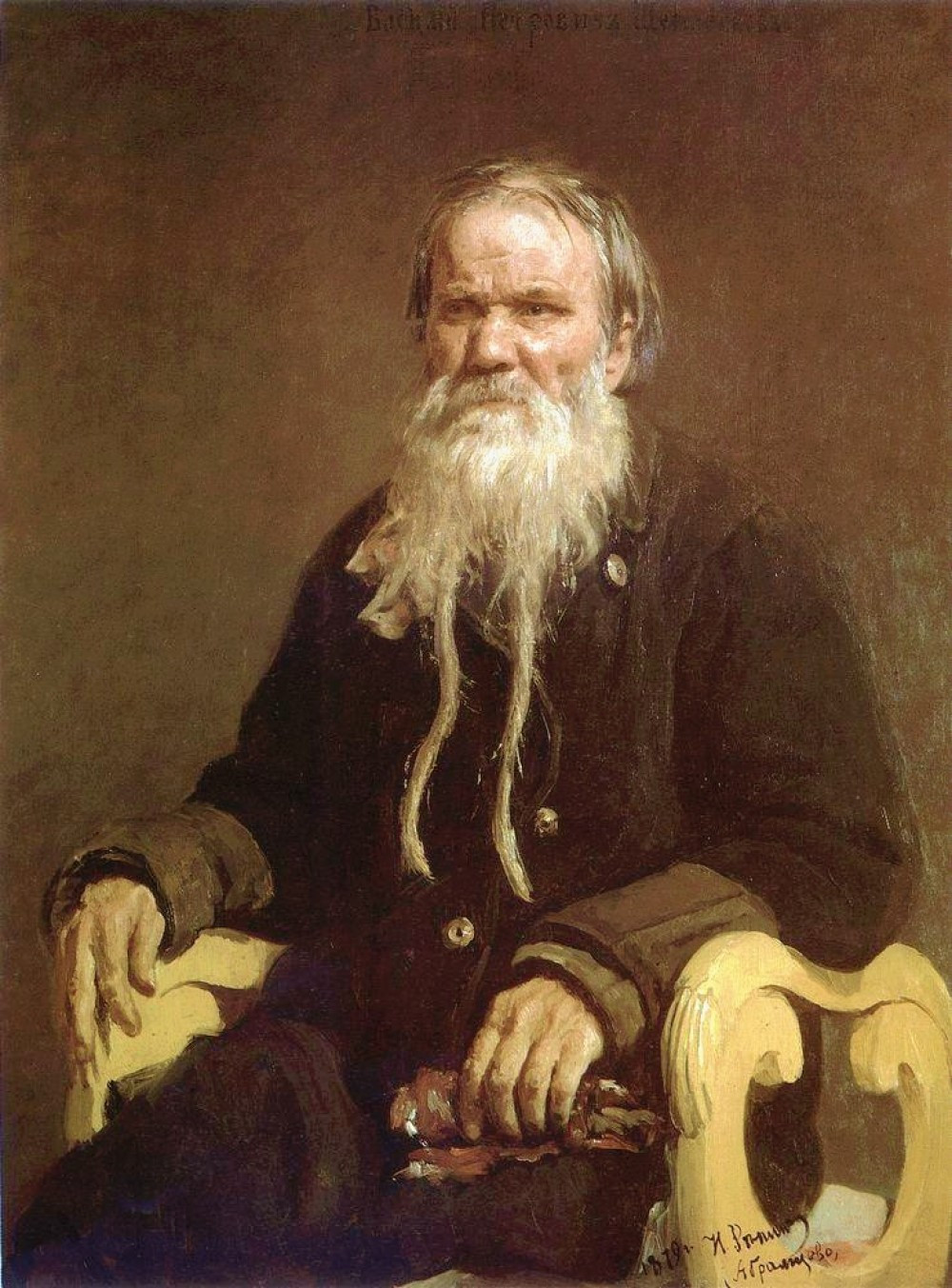
The cycle's taproot is oral. In August 1879 Tolstoy sends the bylina-singer Vasily Shchegolyonok to Stasov with a letter of introduction:
> Олонецкий мужик, певец былин — очень умный и хороший старик
*(working English)* An Olonets peasant, a singer of bylinas — a very intelligent and good old man. — Letter to V. V. Stasov, 2–3 Aug 1879 (PSS 62; E01)
The PSS apparatus traces «Чем люди живы», «Два старика» and «Три старца» to legends recorded from him at Yasnaya Polyana. The first tale is written for P. A. Bers's children's journal in summer 1881 — and it resists:
> Я два последние дня два раза начинал Петину историю
*(working English)* These last two days I have twice begun Petya's story. — To S. A. Tolstaya from the Samara khutor, 25 Jul 1881 (PSS 83; E02)
By December it is in proofs at «Детский отдых», and Tolstoy is defending peasant vocabulary at the level of a single word:
> Синий карандаш на портках не мой, и исключить их потому нельзя, что тогда ангел будет без порток.
*(working English)* The blue pencil on the breeches is not mine, and they cannot be cut, because then the angel would be without breeches. — To V. K. Istomin, 4 Dec 1881 (PSS 90; E04)
### 2. The pivot (1883)
Two years before Posrednik, the diary records why the cycle takes the parable form and not the novel form:
> Думал о своих неудачных попытках романа из народного быта. Что за нелепость?! Задаться мыслью написать сочинение, в котором первое место бы занимала любовь, а действующие лица были бы мужики, т. е. люди, у которых любовь занимает не только не первое место, но у которых и нет той похотливой любви, о которой требуется писать.
*(working English)* Thought about my failed attempts at a novel of peasant life. What an absurdity! To set out to write a work in which love would take first place, with peasants as the characters — that is, people for whom love not only does not take first place, but who do not even have that lustful love one is required to write about. — Diary, 11 Jun 1883 (PSS 49; E05)
The same spring sets the boundary against the reigning alternative, Populist fiction — «Надменность, путаница и плачевность мысли поразительна» on Zlatovratsky's programme (E06). The tales will be neither romantic peasant novel nor народничество.
### 3. The programme (1884–1886)
The «Речь о народных изданиях», drafted for the Moscow planning meetings of winter 1883–84 (the seed of Posrednik), states the mission and its central inversion:
> Дело это, по моему, самое важное в мире, которому только может разумный человек посвятить свои силы. Дело — в духовном общении людей. Дело в распространении света истины. Дело — в единении людей около единой истины.
*(working English)* This work is, in my view, the most important in the world to which a rational man can devote his powers. The work is the spiritual communion of people. The work is the spreading of the light of truth. The work is the uniting of people around a single truth. — «Речь о народных изданиях» (PSS 25:523–529; E07)
> Надо признать то, что народ есть люди такие же, как мы, только их больше нас и они требовательнее и чутче к правде, и что потому все, что не совсем хорошо для нас, совсем дурно для народа.
*(working English)* We must recognise that the people are people just like us, only there are more of them than us and they are more demanding and more sensitive to the truth; and that therefore everything that is not quite good for us is altogether bad for the people. — ibid. (E08)
The «Цветник» preface (1886) supplies the poetics that licenses the whole genre — angels, devils, walking on water:
> Чтобы была правда в том, что описываешь, надо писать не то, что есть, а то, что должно быть, описывать не правду того, что есть, а правду царствия Божия, которое близится к нам, но которого еще нет.
*(working English)* For there to be truth in what you describe, you must write not what is, but what ought to be — describe not the truth of what is, but the truth of the Kingdom of God, which is drawing near to us but is not yet. — Предисловие к сборнику «Цветник» (PSS 26:307–309; E09)
And in 1887 Tolstoy names the cycle as the model — the programme owned in one sentence:
> Я не могу вам вкратце выразить то, что я считаю нужным для писания, иначе, как указав вам на мои народные рассказы последнего времени и на предисловие к «Цветнику»
*(working English)* I cannot briefly express to you what I consider necessary for writing, other than by pointing you to my recent stories for the people and to the preface to Tsvetnik. — To F. A. Zheltov, 21 Apr 1887 (PSS 64; E11)
### 4. The workshop (1884–1885)
The Chertkov letters show the machine being assembled: Tolstoy damping Chertkov's optimism at the inception («Ждите, что ничего из этого не выйдет» — E12), applying the «для народа» filter to candidate texts (E13), reworking the Saillens story into «Где любовь, там и Бог» (E14), writing «Ильяс» for a picture-sheet format (E15), standing in Sytin's office routing manuscripts to the censor (E16). The economics are set in May 1885, when Sofia Andreevna's slow-selling edition of the tales transfers to Sytin:
> Чтоб развязать поскорее грех, я предложил Сытину их взять.
*(working English)* To untie the sin as quickly as possible, I proposed that Sytin take them. — To Chertkov, 10–11 May 1885 (PSS 85; E18) — the letter records the terms: 900 rubles, at 1½ kopecks per copy
> чтобы ими заменять те, которые требуют в книжные лавки и земства, и чтобы Сытинския — наши шли глубже в народ
*(working English)* …so that they replace those ordered by bookshops and zemstvos, and so that the Sytin ones — ours — go deeper into the people. — To Chertkov, 10–11 May 1885 (PSS 85; E19)
> Сытину скажите, что он может печатать мои рассказы, но только как можно дешевле продавать их.
*(working English)* Tell Sytin that he may print my stories, but only sell them as cheaply as possible. — To Chertkov, 29–30 Aug 1885 (PSS 85; E20)
Against editorial smoothing, the «Свечка» ending stands as heard from a peasant teller: «Вся историйка написана в виду этого конца. Вся она груба и по форме и по содержанию» (E22). By 1887 the programme expands beyond the tales — Tolstoy wrests «Поликушка» from his wife's copyright and lists Voltaire, Rousseau, Lessing, Schiller and Cervantes for adaptation (E26), and the volunteers' campaign to rewrite Sytin's commercial lubok novels is running at scale (E24).
### 5. The tales (1881–1886)
The cycle's thesis sentence is the angel's third word in «Чем люди живы»:
> — Узнал я, что жив всякий человек не заботой о себе, а любовью.
*(working English)* — I have learned that every man lives not by care for himself, but by love. — «Чем люди живы» (PSS 25:7–25; E42)
Around that devotional centre the tales distribute a small set of vectors. God-in-the-neighbour: Christ visits the cobbler only as the freezing soldier and the starving mother («— Для Бога, Мартын, жить надо…» — E44). The pilgrimage inverted: «А то пойдешь за морем Христа искать, а в самом себе потеряешь» (E45) — the detour of mercy is the real arrival. Non-acquisitiveness at its starkest: the labourer digs Pakhom a grave «ровно насколько он от ног до головы захватил — три аршина» (E47). Anti-clerical gentleness: the hermits' artless prayer «трое Вас, трое нас, помилуй нас» out-prays the bishop's catechesis (E50). And the ethic scaled to politics in the tale the censors read correctly:
> Только один обычай у него и есть в царстве: у кого мозоли на руках — полезай за стол, а у кого нет — тому объедки.
*(working English)* There is only one custom in his kingdom: whoever has calluses on his hands — sit at the table; whoever has none — gets the scraps. — «Сказка об Иване-дураке» (PSS 25:115–138; E48)
### 6. The censors (1886–1893)
By late 1886, «Всё запрещают» (E29). The pattern is asymmetric. The secular organs hit the political tales — «Чем люди живы» arrested by the Moscow Censorship Committee on 4 February 1887, new editions banned that October and again in 1888, 1891 and 1893 (E30); «Иван-дурак»'s second edition arrested in its month of issue, with an 1892 order banning even street sales (E32). The spiritual censorship condemned the heterodox legends — its verdict on «Крестник»: it knew of no «книги безбожнее этой» (E33). The surviving verdict of the spiritual censor Archimandrite Tikhon reads the Ivan tale precisely:
> Сказка об Иване Дураке,— говорит он, — проводит, можно сказать принципиально мысли о возможности быть царству без войны, без денег, без науки, без купли и продажи, даже без царя
*(working English)* The Tale of Ivan the Fool advances, one may say as a matter of principle, ideas of the possibility of a kingdom existing without war, without money, without science, without buying and selling, even without a tsar. — PSS 25 apparatus (E31)
Meanwhile the purely devotional tales circulated freely; «Где любовь, там и Бог» was never banned. Most of the arrested titles became freely printable only after 1905–06.
### 7. Giving it away (1887–1899)
The cheap-editions logic runs straight into the [copyright renunciation](../copyright-renunciation/index.html). In February 1887 Tolstoy asks Chertkov to announce open printing via Posrednik:
> Прошу всех печатать, где и как хотят, и прав собственности ни я ни мои наследники заявлять не будем.
*(working English)* I ask everyone to print, where and how they wish, and neither I nor my heirs will assert property rights. — To Chertkov, 23 Feb 1887 (PSS 86; E27)
The canonical 1891 waiver list, drafted for Sofia Andreevna to publish, opens with the tales: «Чем люди живы. Упустишь огонь не потушишь. Свечка.» (E36). Authorship inside the workshop was equally non-proprietary — the tales were first published unsigned, which is how an anonymous reworking of Reuben Saillens' "Le père Martin" acquired Tolstoy's name: his 1888 letter to Saillens calls it «un plagiat involontaire» and explains the unsigned-publication convention (E34); the 1899 follow-up confirms the printed source-attribution and the renunciation covering everything after 1881 (E35).
### 8. The verdicts (1885–1910)
Tolstoy's own judgment of the cycle never settled. Cataloguing the first season's tales for Chertkov in October 1885, he ends:
> Все это или почти все не хорошо. Я постараюсь придумать лучше.
*(working English)* All of this, or almost all, is not good. I will try to think up better. — To Chertkov, 15–16 Oct 1885 (PSS 85; E21)
In the *What Is Art?* years the tales are live reference points — he re-reads «Иван-дурак» while finishing the treatise (E37), and the criterion he formulates for art in the same weeks, «радость единения людей» (E38), is the «единение» of the 1884 Речь (E07). Yet the treatise's famous footnote exempts only «Бог правду видит» and «Кавказский пленник» — both 1872 Azbuka stories — from his own «дурное искусство»: the народные рассказы are silently condemned with the rest. The private record says otherwise to the end. The Posrednik project remains «божье дело» (E28), its Slovak offshoot «божеская работа» (E39), and on 24 October 1910, two weeks before his death:
> Получил листовки, высланные вами Саше, и очень заинтересовался ими. Разобрал их на четыре сорта: самые хорошие, хорошие, посредственные и плохие.
*(working English)* I received the leaflets you sent to Sasha and became very interested in them. I sorted them into four grades: the very good, the good, the mediocre and the bad. — To I. I. Gorbunov-Posadov, 24 Oct 1910 (PSS 82; E40)
His top grade includes «Три старца», «Кающийся грешник», «Где любовь, там и бог», «Крестник», «Упустишь огонь не потушишь», «Работник Емельян», «Ильяс», «Зерно с куриное яйцо» and «Вражье лепко»; «Много ли человеку земли нужно» sits in the second grade — and Pushkin's «Станционный смотритель» in the fourth. The list covers only the leaflets Gorbunov-Posadov sent («Чем люди живы» is simply absent), but the gesture is unmistakable: the theoretical self-condemnation of 1898 and the editorial pride of 1910 coexist to the end, unreconciled.
## Where the theme clusters
### The tales (PSS Tom 25)
| Tale | Tom 25 pages | Written | First publication | Censorship |
|---|---|---|---|---|
| Чем люди живы | 7–25 | 1881 | «Детский отдых» № 12, Dec 1881 | arrested 4 Feb 1887; bans to 1893 |
| Ильяс | 31–34 | Mar 1885 (Crimea) | Posrednik 1885–86 | — |
| Где любовь, там и Бог | 35–45 | Mar–Apr 1885 | Posrednik 1885 (approved 24 May) | never banned |
| Упустишь огонь — не потушишь | 46–58 | Apr 1885 | Posrednik 1886 (approved 30 May 1885) | — |
| Вражье лепко, а божье крепко | 59–61 | Apr 1885 | Posrednik листок (approved 12 Feb 1886) | — |
| Девчонки умнее стариков | 62–63 | May 1885 | Posrednik (approved 9 Nov 1885) | — |
| Зерно с куриное яйцо | 64–66 | May–Jun 1885 | sbornik «Три сказки» (approved Apr 1886) | — |
| Много ли человеку земли нужно | 67–78 | May–Jun 1885 | «Русское богатство» 1886 | one phrase cut |
| Кающийся грешник | 79–81 | May 1885 | «Сочинения», ч. XII, 1886 | — |
| Два старика | 82–99 | by Jun 1885 | Posrednik (approved 4 Oct 1885) | — |
| Три старца | 100–105 | Jun 1885 | «Нива» 1886, № 13 | — |
| Свечка | 106–113 | May–Jun 1885 | Posrednik (approved 17 Jan 1886) | two endings in print |
| Сказка об Иване-дураке | 115–138 | Aug–Sep 1885 | Posrednik 1886 | arrested Feb 1887; bans to 1893; free 1906 |
| Как чертенок краюшку выкупал | 144–146 | by Feb 1886 | Posrednik (approved Apr 1886) | — |
| Крестник | 147–161 | Feb 1886 | «Книжки недели», Apr 1886 | Posrednik edition blocked until 1906 |
| Работник Емельян и пустой барабан | 162–169 | May 1886 | Geneva (Elpidine) 1891 | tsar→voevoda substitutions; full text in Russia 1906 |
| Тексты к картинам (Искушение; Страдания) | 26–27; 114 | 1884–85 | Posrednik sheets 1885 | spiritual censorship friction |
| К картине Ге «Тайная вечеря» | 139–143 | Jan 1886 | Free Word (England) 1904 | text+picture banned 24 Feb 1886 |
Dates from the Tom 25 apparatus (1937); censorship approvals are Old Style.
### Letters
| Tom | Letter | Date (OS) | Addressee | Material |
|---|---|---|---|---|
| 62 | 523 | 2–3 Aug 1879 | Stasov | Shchegolyonok introduced — the oral source |
| 83 | 181 | 25 Jul 1881 | S. A. Tolstaya | «Петина история» — first tale under way |
| 90 | 36–37 | Dec 1881 | Istomin | ChLZ proofs; the «портки» defence |
| 85 | 38 | 8 Dec 1884 | Chertkov | founding caution |
| 85 | 41 | 2–3 Jan 1885 | Chertkov | the «для народа» filter |
| 85 | 49–50 | Mar 1885 | Chertkov | Saillens rework; «Ильяс» for a picture-sheet |
| 85 | 54–55 | Apr–May 1885 | Chertkov | at Sytin's; Repin's picture |
| 85 | 59–60 | 10–11 May 1885 | Chertkov | the SA→Sytin transfer; «глубже в народ» |
| 85 | 77 | 29–30 Aug 1885 | Chertkov | «как можно дешевле» |
| 85 | 82 | 15–16 Oct 1885 | Chertkov | self-catalogue; «не хорошо» |
| 85 | 86 | 11 Nov 1885 | Chertkov | the «Свечка» ending defence |
| 63 | 349 | 16 Apr 1885 | Sibiryakov | funding outreach |
| 64 | 1 | Dec 1886 | Faynerman | «Всё запрещают» |
| 64 | 40, 43 | Mar 1887 | circulars | the lubok-reform campaign |
| 64 | 67 | 21 Apr 1887 | Zheltov | the tales named as the model |
| 64 | 114 | Jul–Aug 1887 | Petrov | the 17-title order list |
| 86 | 128 | Jan 1887 | Chertkov | «Поликушка»; world classics for the people |
| 86 | 136 | 23 Feb 1887 | Chertkov | open-printing declaration |
| 86 | 216 | Feb 1889 | Chertkov | «божье дело»; Gorbunov-Posadov arrives |
| 64 | 268 | Oct 1888 | Saillens | «plagiat involontaire» |
| 72 | 72 | 20 Mar 1899 | Saillens | attribution + renunciation confirmed |
| 84 | 453 | 11 Jul 1891 | S. A. Tolstaya | the canonical waiver list |
| 88 | 456, 458 | Jul 1897 | Chertkov | «единение»; Ivan the Fool re-read during What Is Art? |
| 82 | 278 | 24 Oct 1910 | Gorbunov-Posadov | the four-grade ranking |
### Diaries and notebooks
The 1881–87 composition window falls in the great diary gap; the few surviving entries are dense. 13 Jul 1881 (Samara road observations), 21/26 Mar 1883 (народничество boundary; Zlatovratsky and Marakuev), 11 Jun 1883 (the failed peasant novel — E05). The retrospect entries: 12 Mar 1895 («Хозяин и работник» doubts), 2 Dec 1897 (Slavic Posrednik «божеская работа» — E39).
## Scholarly context
The received view is appreciative but thin. Jahn (2002) — the main specialist treatment in English — reads the tales as sophisticated stylisations of folk models, not didactic decline; Christian (1969), McLean (2005/2008) and the biographers (Wilson 1988; Bartlett 2010) place them as the first artistic fruit of the conversion, the hinge between the 1872 Azbuka and the late fiction. Brooks (1985) is the standard account of the Posrednik economics — booklets at roughly a kopeck, twelve million copies in the first four years — and treats the enterprise as one of the era's major cultural interventions. The "didactic decline" frame survives mainly in popular biography; Jahn himself concedes the tales' relative scholarly neglect.
Where the corpus record reaches past the scholarship: the Zheltov letter naming the cycle as the model (E11) is not an anglophone reference point; the censorship asymmetry (secular vs spiritual, political vs heterodox) is not delineated as a pattern; Shchegolyonok is not named as the plot source of specific tales in accessible English work; and no accessible scholarship cites the 24 Oct 1910 grading letter (E40) — or registers that the *What Is Art?* footnote, correctly quoted everywhere, silently condemns the very tales Tolstoy had promoted as the model. Likewise unregistered is the reception asymmetry inside Tolstoy's own popular project: [The Power of Darkness](../1886-the-power-of-darkness/index.html) written for the people and kept from them, the tales written for the people and read by them in millions. Bartlett (2010) describes the Posrednik network without reducing the tales to propaganda; the Populist critics of the 1880s (Mikhailovsky's camp) objected that the tales substituted Christian resignation for social analysis — their specific reviews remain to be pulled from the journal runs (see Material not covered).
## Material not covered
- The late folk tales of 1903–06 (Toms 34–35; «Три вопроса», «Ассирийский царь Ассархадон» — the latter already in the 1910 top grade) — a natural follow-up dive.
- Alchevskaya's «Что читать народу?» peasant-reader field evidence — the strongest open thread on actual popular reception; requires the printed volumes.
- The thick-journal reviews of 1885–87 (Mikhailovsky, Skabichevsky) — journal runs needed.
- Robert C. Otto's 1983 dissertation on Posrednik — the fullest institutional study; paywalled.
- Variant collation (the printed-variant and first-redaction TEIs are extracted but not collated); the Ge album censorship file; the non-Tolstoy Posrednik catalogue (Leskov, Garshin, Korolenko titles); the unrealised «Международный Посредник».
## Visual & manuscript record
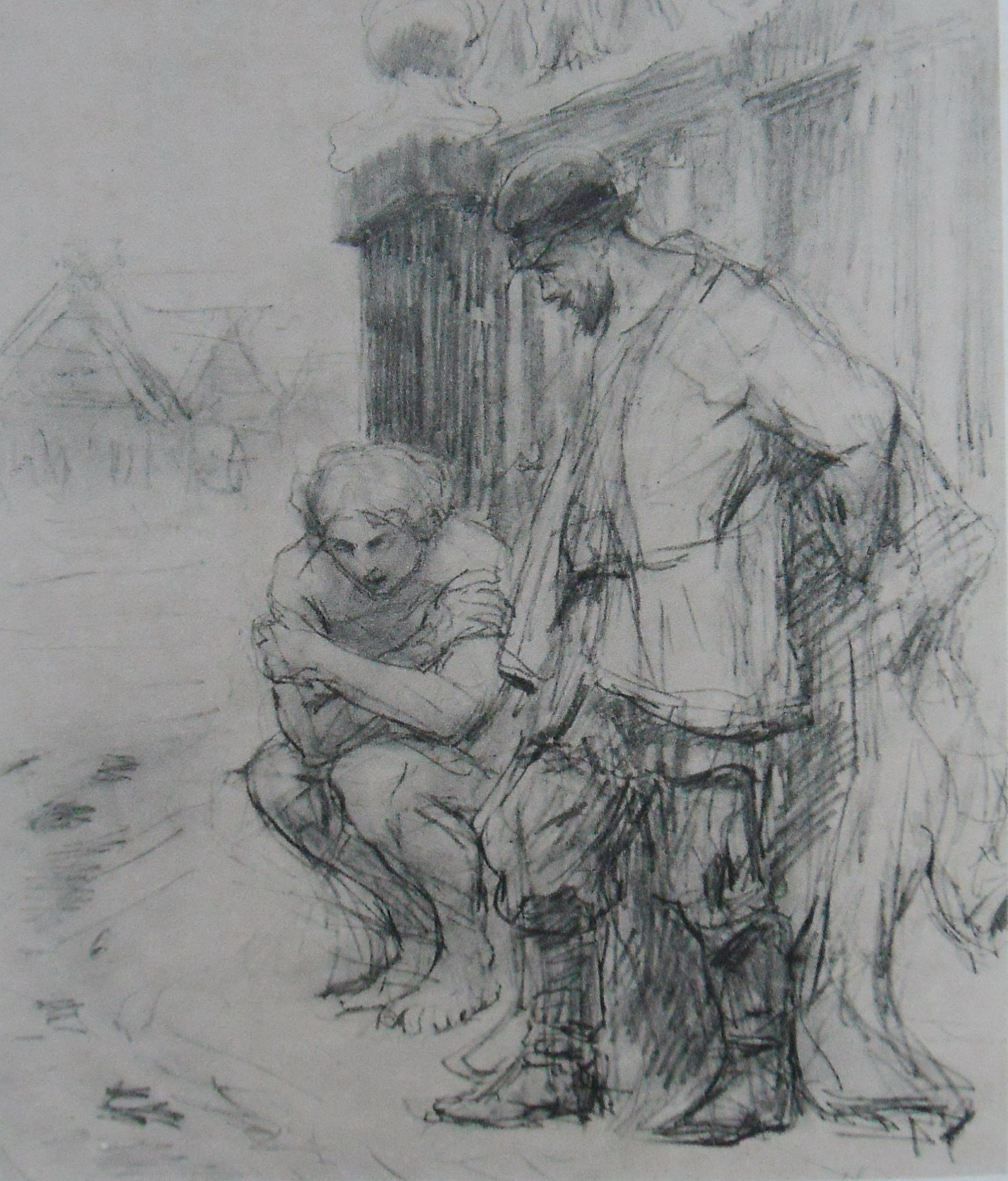
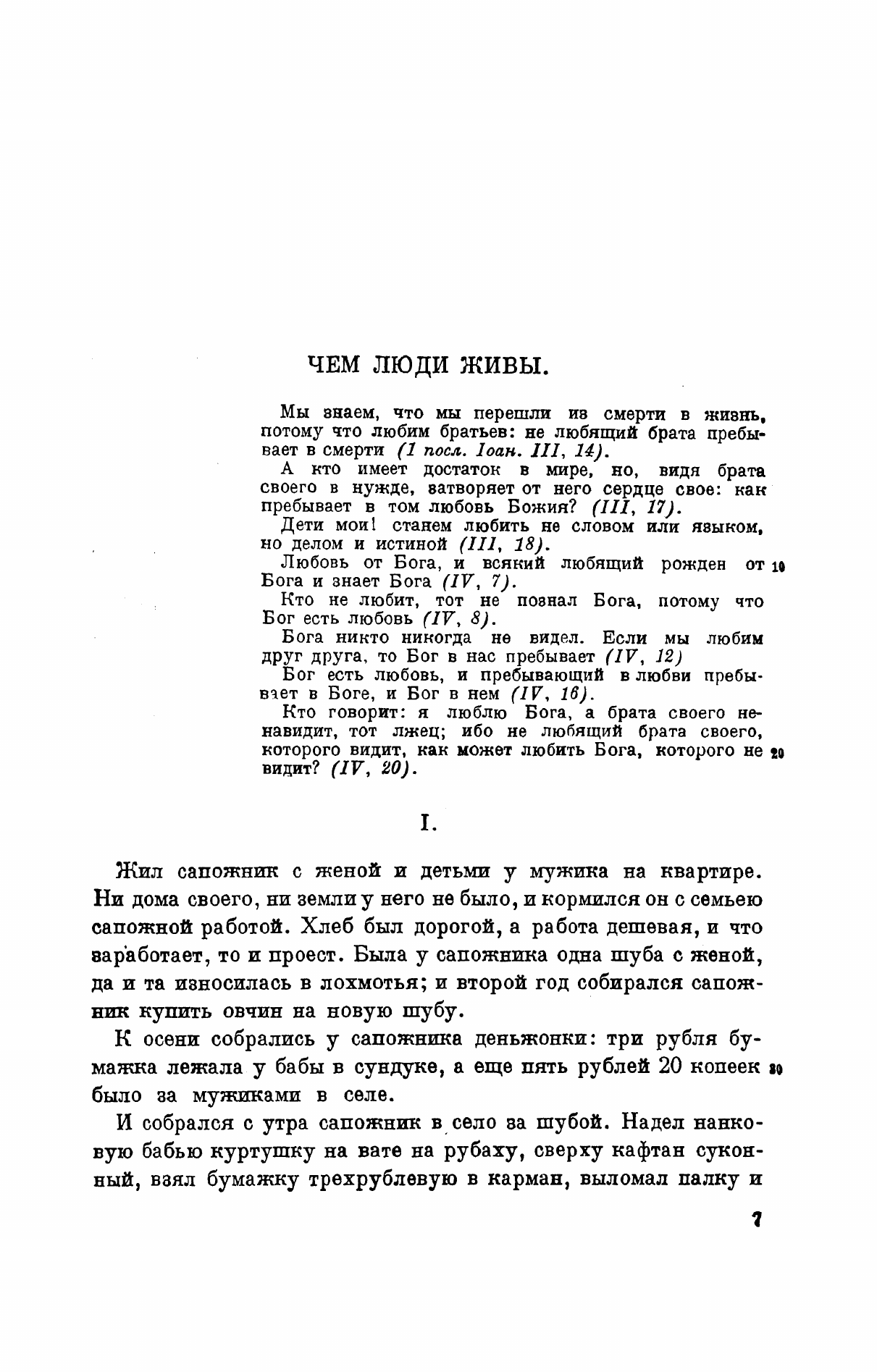
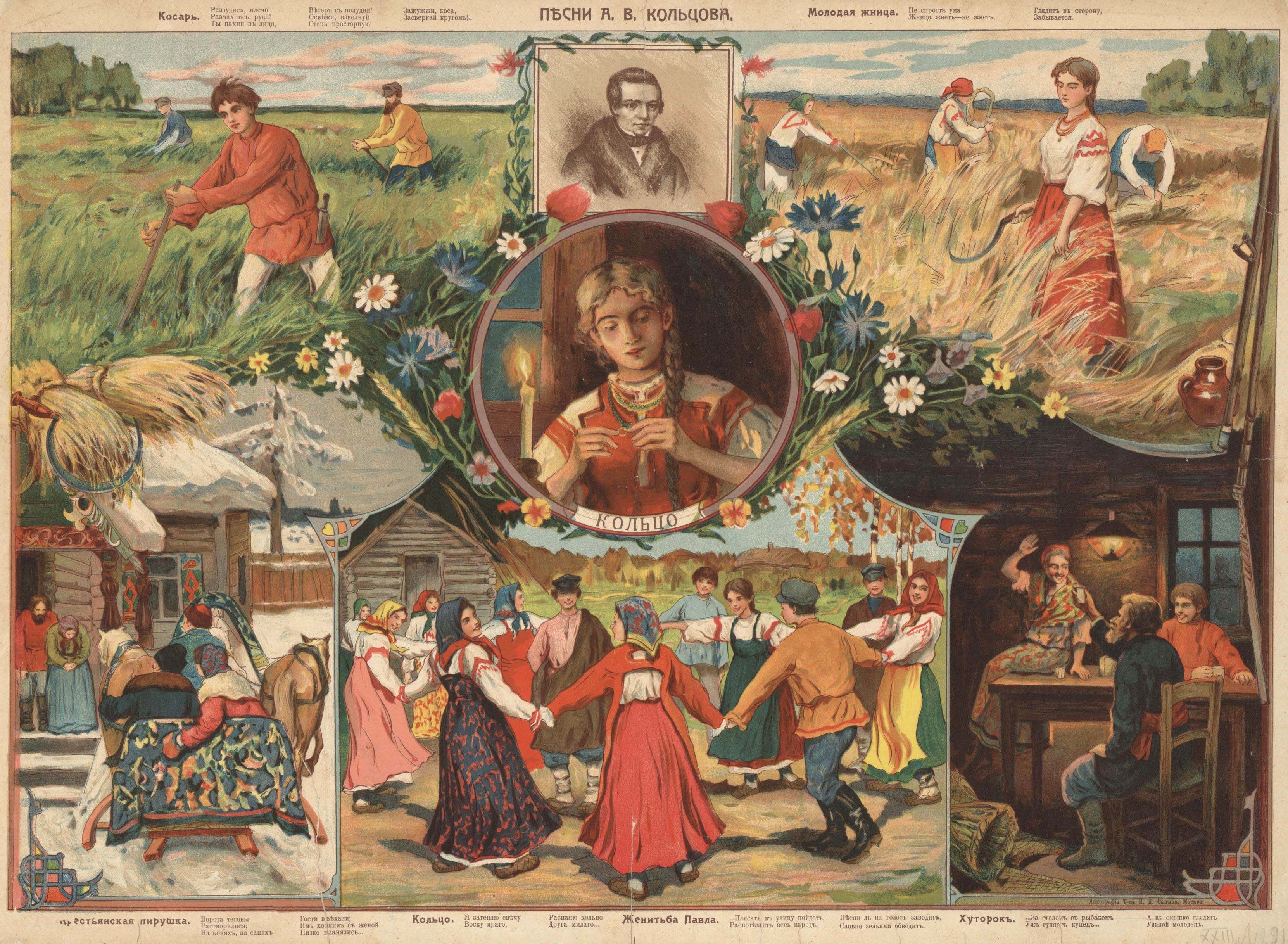
I. E. Repin, «Встреча ангела с сапожником Семёном» (1881) — the keystone image: Repin's drawing for «Чем люди живы», made before Posrednik existed. Wikimedia Commons, PD.PSS Tom 25, p. 7 — the opening of «Чем люди живы» with its 1 John epigraph block. Rendered from the local Jubilee Edition PDF (PD).V. P. Shchegolyonok by I. E. Repin — the tales' oral source, painted by the tales' illustrator. Wikimedia Commons, PD.A Sytin press lubok sheet (1906–14) — the commercial idiom whose price point Posrednik matched and whose content it set out to replace. Wikimedia Commons, PD.
Secured (PD, downloaded to the local cache): the Repin keystone drawing; Ge's «Тайная вечеря» (1863); Chertkov portraits by Kramskoy and Repin; Sytin by Moravov (1908); Shchegolyonok (photo + Repin portrait); Gorbunov-Posadov with Tolstoy; the Sytin lubok sheet. Not openly digitised: the Posrednik first-edition kopeck covers (RGB / State Tolstoy Museum — goskatalog.ru and search.rsl.ru are the next channels) and Ge's 12-drawing album for «Чем люди живы» (Tretyakov / Tolstoy Museum). The dossier `visuals:` block carries provenance, rights and URLs for every item; `python3 docs/fetch_visuals.py stories-for-the-people` repopulates the git-ignored cache on a fresh clone.
## Method
Scope contract (Phase 0): plain theme-dive (no `--novel`, no `--cluster`), in-session; question = the народные рассказы as a project (genesis, machinery, moral core, reach, the *What Is Art?* arc); corpus surface = Tom 25 tale + apparatus TEIs, Tom 26 Цветник preface, letters Toms 62–64/72/82–86/88/90, diaries 49/53; keystones with workRecord proposals = What Men Live By, Where Love Is, Two Old Men, How Much Land, Ivan the Fool, Three Hermits; stop = one session, 1903–06 tales out of scope. What actually happened: the sweep ran as three parallel letter/diary lanes (777 anchor hits triaged) plus a commentary mine of the per-tale «История писания» TEIs; 66 extracts (`extract_tei.py --choice=reg --notes=auto`); one bounded completeness loop added the «Цветник» preface after the Zheltov letter surfaced it; visuals at medium intensity (Commons + local; 9 downloads, 2 undigitised targets logged). All 50 dossier quotes pass `verify_quotes.py` (exit 0). The dossier carries six workRecord proposals — a sanctioned deviation from the single-`workRecord` shape, per the parked plan for this dive.
Links: sibling dives — [The Power of Darkness](../1886-the-power-of-darkness/index.html) · [The Fruits of Enlightenment](../1886-1890-the-fruits-of-enlightenment/index.html) · [What Is Art?](../1897-1898-what-is-art/index.html) · [copyright-renunciation](../copyright-renunciation/index.html) · [What Then Must We Do?](../1882-1886-what-then-must-we-do/index.html).
## References
Primary: PSS Tom 25 (tales, «Речь о народных изданиях», variants; apparatus pp. 665–890; via tolstoydigital TEI and the local Jubilee PDF — note the local dir is `vol85`); PSS Tom 26 (Цветник preface); PSS Toms 49/53 (diaries); PSS Toms 62, 63, 64, 72, 82, 83, 84, 85, 86, 88, 90 (letters).
Background: Jahn, "Tolstoy as a Writer of Popular Literature" (Cambridge Companion to Tolstoy, 2002); Brooks, *When Russia Learned to Read* (1985); Christian, *Tolstoy: A Critical Introduction* (1969); McLean, *In Quest of Tolstoy* (2008); Wilson, *Tolstoy* (1988); Bartlett, *Tolstoy: A Russian Life* (2010); Otto, *Publishing for the People* (diss., 1983); Hapgood, "Count Tolstoi and the Public Censor" (1887); Sorokin, *Tolstoy in Prerevolutionary Russian Criticism* (1979); Eklof, *Russian Peasant Schools* (1986); the GSE "Posrednik" entry; Wikipedia entries as indexed in the dossier.
---
Dev-blog note: [website/src/posts/notes/2026-06-11-stories-for-the-people.md](../../../../website/src/posts/notes/2026-06-11-stories-for-the-people.md) (draft).