---
title: "The break with the Church — Tolstoy, the Holy Synod, and the 1901 excommunication"
layer: reference
date: 2026-06-13
lastUpdated: 2026-06-13
tags: [research, corpus-dive, church, synod, excommunication, 1901]
---
# The break with the Church — Tolstoy, the Holy Synod, and the 1901 excommunication
A theme-dive across seven works around the spine event of 20–22 February 1901, when the Holy Synod of the Russian Orthodox Church declared Tolstoy outside the Church. Four works form the demolition: the direct «Ответ Синоду» (Reply to the Synod's Edict, 1901), «К духовенству» (To the Clergy, 1902), the satirical legend «Разрушение ада и восстановление его» (The Restoration of Hell, 1902 — covered in full in the [1903 folk-tales dive](../1903-folk-tales/index.html) and cross-referenced here), and «О веротерпимости» (On Religious Tolerance, 1901). Three form the reconstruction: «Религия и нравственность» (Religion and Morality, 1893), «Как читать евангелие» (How to Read the Gospels, 1896), and «Учение Христа, изложенное для детей» (The Teaching of Christ for Children, 1907–08). Primary record first: the works' own TEI in PSS Toms 34, 37 and 39; the 1901–02 diary and letters (Tom 54, 73); and the PSS «История писания» apparatus. Mainstream scholarship is read as contrast, not baseline.
The Russian word for the 1901 act is **отлучение** — a separation, a declaration that Tolstoy had placed himself outside the Church — not the liturgical **анафема** (anathema). The established English rendering is "excommunication," used here with that qualification; the distinction is one Tolstoy seized on, and one current scholarship now grants him.
## Key findings
- **The edict did not cause the break; it ratified one already made.** Tolstoy's diary records the excommunication only on 19 March 1901 — almost a month after it was published — and the word he chooses is «странное», strange, paired at once with the «выражения сочувствия» it drew (E10). The argument that the church is a worldly institution «несогласное с христианством и скорее враждебное ему» he had set down in 1893 (E19, E25). The 1901 act formalised, belatedly, a separation worked out years earlier on principle.
- **The break is with the church, not with God.** The Reply accepts the fact of the renunciation and inverts its meaning: «отрекся я от нее не потому, что я восстал на господа, а напротив, только потому, что всеми силами души желал служить ему» (E03), and answers the edict's charge of atheism with a bare credo — «верю в бога, которого понимаю как дух, как любовь, как начало всего» (E04). It closes on the image that governs the whole cluster: a bird cannot re-enter the eggshell it left (E06).
- **The cluster is demolition AND reconstruction.** Tolstoy himself states the double programme in one year-end diary line: «единственное средство… служить человечеству состоит в разрушении извращенного христианства и установлении истинной христианской религии» (E16). The anticlerical works pull down; the gospel works (read the Gospels yourself, E22–E23; here is the teaching for children, E34) build back. The children's gospel ends at the human death of Jesus, with no bodily resurrection (E35) — the de-mythologised faith the Synod condemned, set down plainly for ten-year-olds.
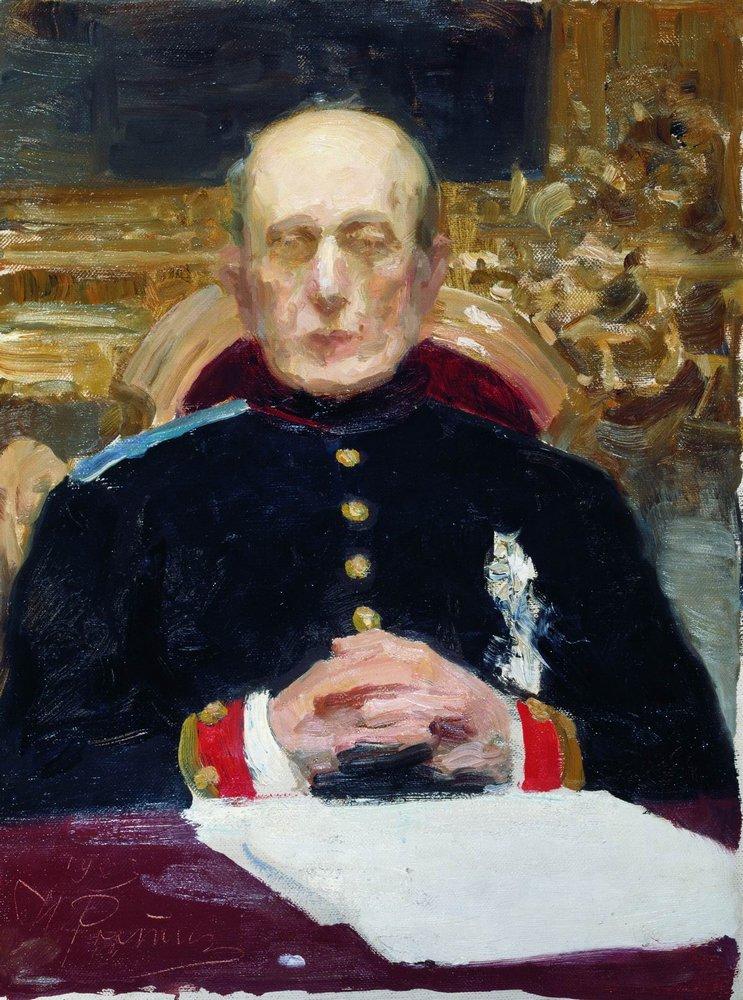
- **The edict was not an anathema, and its authorship is contested.** The PSS apparatus (Soviet, 1952) credits Pobedonostsev with drafting it (E08); the current scholarly benchmark, Kolstø's *Heretical Orthodoxy* (2022), reverses this from the archives: the Synod's own bishops (Metropolitan Antony Vadkovsky chiefly) initiated it, and Pobedonostsev *opposed* it, fearing exactly the prestige it would lend Tolstoy. The dive presents both, attributed.
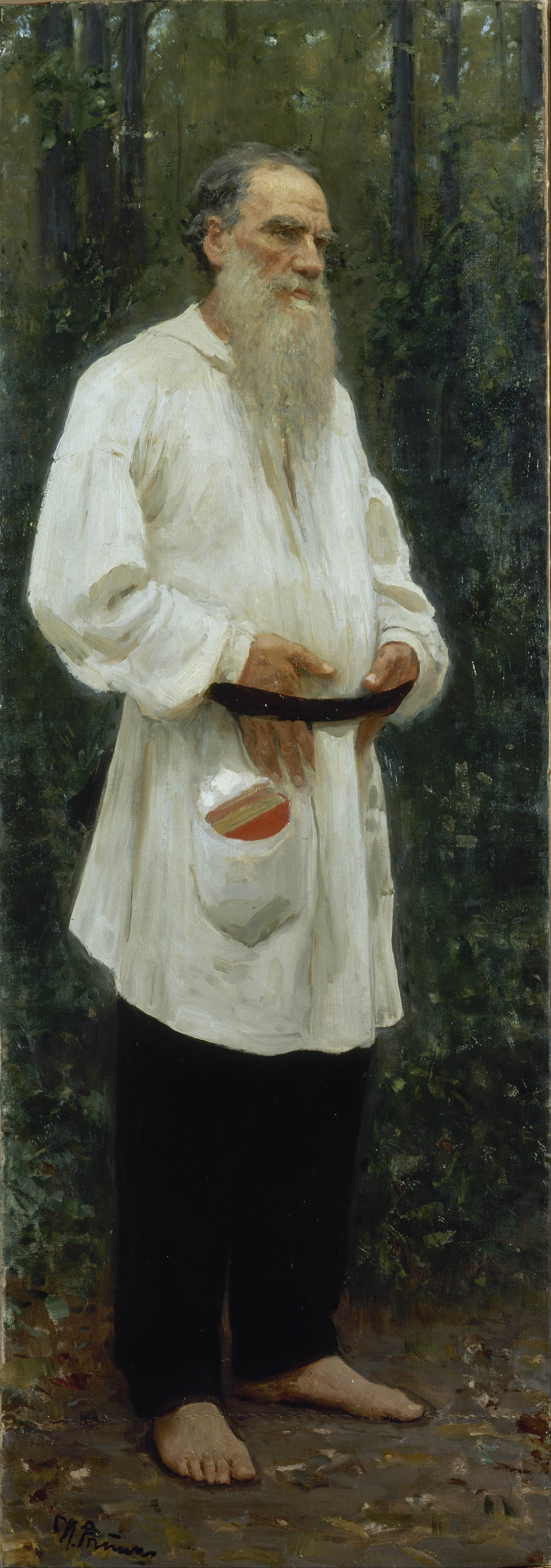
- **The edict backfired.** Crowds acclaimed Tolstoy in Moscow; Repin's new portrait was showered with flowers at the spring-1901 exhibition; some five hundred students marched on the Kazan Cathedral asking to be excommunicated too (see Reception). Tolstoy's own Reply already names the other edge — the «угрозы убийства» the edict stirred among «непросвещенных и нерассуждающих» people (E05).
- **Each work was unprintable in Russia and went abroad first.** The full Reply appeared in Chertkov's «Свободное слово» (England) while a church journal in Russia printed it with ~100 lines cut and the spiritual censorship then banned reprints (E09); Religion and Morality reached Russian print only censored and retitled «Противоречия эмпирической нравственности» (E21). The cluster runs on the same émigré-press machinery as the rest of the late religious writing.
## Why this matters
The popular memory of 1901 is of a heretic cast out — the Church striking Tolstoy down. The primary record reverses the causality, and shows a constructive core the cast-out story leaves out. Tolstoy had left the *church* (not God, not Christ as he understood him) some twenty years earlier, on a worked-out principle: that religion is the individual's relation to the infinite (E18), and that the church-and-state institution, «низведенная на эту степень Августином», wears the name Christian without right to it (E19). The 1901 edict, on his reading and now on the scholarship's, only stated a fact already true — and stated it so ambiguously («незаконно или умышленно двусмысленно», E02) that it satisfied neither the wish to warn the faithful nor the wish to leave a door open. Reading the seven works together shows what biographies, treating them piecemeal, lose: that the anticlerical polemic and the gospel exposition are one project, demolition and reconstruction, and that the man the Synod declared God-denying spent the same years writing out, for peasant children, the teaching he believed the Church had buried.
## The shape of the question — the break preceded the edict
The cluster's argument is staged here from the institutional event to the deeper claim that the event came late.
**Stage 1 — the edict, in its own words.** The Synod's «Определение» is quoted verbatim inside Tolstoy's Reply:
> Известный миру писатель, русский по рождению, православный по крещению и воспитанию, граф Толстой, в прельщении гордого ума своего, дерзко восстал на господа и на Христа его и на святое его достояние, явно перед всеми отрекся от вскормившей и воспитавшей его матери, церкви православной (E01)
> (working English) The world-renowned writer, Russian by birth, Orthodox by baptism and upbringing, Count Tolstoy, in the seduction of his proud mind, has boldly risen up against the Lord and against His Christ and against His holy possession, has openly before all renounced the Orthodox Church that nourished and reared him. — PSS т. 34, с. 245–253
**Stage 2 — the answer: the fact accepted, the meaning inverted.** Tolstoy grants the renunciation and turns it inside out:
> Но отрекся я от нее не потому, что я восстал на господа, а напротив, только потому, что всеми силами души желал служить ему. (E03)
> (working English) But I renounced it not because I had risen up against the Lord, but on the contrary, only because with all the powers of my soul I wished to serve Him. — PSS т. 34, с. 245–253
**Stage 3 — the break is already complete, and irreversible.** The Reply ends on the image that answers every later call to return:
> Вернуться же к тому, от чего я с такими страданиями только что вышел, я уже никак не могу, как не может летающая птица войти в скорлупу того яйца, из которого она вышла. (E06)
> (working English) To return to what I have only just left with such suffering I am quite unable, just as a flying bird cannot re-enter the shell of the egg from which it came. — PSS т. 34, с. 245–253
**Stage 4 — and it rests on a principle set down in 1893.** Eight years before the edict, answering a German ethics society, Tolstoy had already defined religion so as to make the church beside the point:
> религия есть установленное человеком между собой и вечным бесконечным миром или началом и первопричиной его известное отношение. (E18)
> (working English) religion is a certain relation, established by a person between himself and the eternal infinite world, or its origin and first cause. — PSS т. 39, с. 3–26
**Stage 5 — so the church is, by its own definition, not Christian.** The 1901 essay on tolerance draws the conclusion the diary had reached weeks earlier (E14):
> учреждение, называющее себя христианской церковью, не есть христианское учреждение, а мирское учреждение, несогласное с христианством и скорее враждебное ему. (E25)
> (working English) the institution calling itself the Christian church is not a Christian institution but a worldly one, at odds with Christianity and rather hostile to it. — PSS т. 34, с. 291–298
## Genesis & composition — the edict, the answer, and the sickbed at Gaspra
Date: February–April 1901.
Context: The edict was published in «Церковные ведомости» on 24 February 1901 (OS) and reprinted across the press the next day. Tolstoy did not write about it in real time — his diary is silent from 22 February to 19 March. When he finally names it, the tone is detachment, not injury:
> За это время было странное отлучение от церкви и вызванные им выражения сочувствия (E10)
> (working English) During this time there was the strange excommunication from the church, and the expressions of sympathy it called forth. — diary, 19 March 1901 (OS), PSS т. 54
The Reply itself grew out of the mail. The mostly-sympathetic letters that poured in were, by the apparatus's account, the spur to writing; the draft was ready 24 March (OS) and finished 4 April. The diary marks the day with the divided public response in four words:
> Ответ Синоду, кажется, кончил.[…]Продолжаются приветствия и ругательства. (E12)
> (working English) The Reply to the Synod, it seems, is finished. […] The greetings and the abuse continue. — diary, 31 March 1901 (OS), PSS т. 54
Through 1901–02 the diary keeps the diagnosis sharp — Orthodoxy as «колдовство от страха», sorcery born of fear, rooted in «вера в чудесное» (E11) — and records the pressure to reconcile, which he refuses: people «уговаривают молиться, говеть» (E13). His plainest refusal is the flour image, written as the press and clergy renewed their calls to return:
> но ведь я знаю, что ваша мука — с известкой, вредна. (E15)
> (working English) but I know that your flour is mixed with lime, it is harmful. — diary, 21 March 1902 (OS), PSS т. 54
The 1901–02 works were largely written at **Gaspra**, in the Crimea, where Tolstoy had gone for his health and where, through the winter, he nearly died. *On Religious Tolerance* was finished there (28 December 1901, OS); from the same sickbed he wrote the parallel letter to Nicholas II — «пишу Вам как бы с того света, находясь в ожидании близкой смерти» (E17) — carrying the same indictment of persecuted faith to the throne, by the hand of the intermediary Grand Duke Nikolai Mikhailovich and (for the reply) of Chertkov. *To the Clergy* followed in autumn 1902 back at Yasnaya Polyana; *The Restoration of Hell* was begun the day after he finished it, as its companion-illustration.
The three reconstruction works have older, quieter origins, recorded in the apparatus rather than the diary: *Religion and Morality* answered an 1893 letter from the Berlin philosopher Georg von Gizycki for the journal «Für Ethische Kultur»; *How to Read the Gospels* came out of a summer (1896) Tolstoy spent underlining the Gospels in blue and red pencil; *The Teaching of Christ for Children* grew from the little peasant school he ran in 1907–08.
The people around the cluster: **Chertkov**, who published all the banned works abroad through «Свободное слово»; **Sophia Tolstaya**, who wrote protest letters to both Pobedonostsev and Metropolitan Antony; **Grand Duke Nikolai Mikhailovich** and **Nicholas II**; **Mikhail Stakhovich**, whose tolerance speech occasioned *On Religious Tolerance*; **Aylmer Maude**, the English translator and biographer; and, at Gaspra, **Chekhov** and **Gorky**.
## What the works say — demolition and reconstruction
The seven divide cleanly into the works that pull the church down and the works that build the faith back.
**The demolition.**
| Work | PSS т. | What it argues | Keystone |
|---|---|---|---|
| Ответ Синоду (Reply to the Synod) | 34, 245–253 | The edict is unlawful, equivocal, slanderous; the renunciation is real but made to serve God, not defy him | «как не может летающая птица войти в скорлупу того яйца» (E06) |
| О веротерпимости (On Religious Tolerance) | 34, 291–298 | A church claiming the one truth cannot be tolerant; it is a worldly institution; the remedy is separation, not reform | «по самому определению своему, церковь не может быть веротерпима» (E24) |
| К духовенству (To the Clergy) | 34, 299–318 | The church's method is suggestion to those who cannot judge — above all children; its dogma is an inoculation against true Christianity | «прививка ложного христианства… делающая… уже неспособным принять истинное христианство» (E29) |
| Разрушение ада (The Restoration of Hell) | 34, 100–115 | A devil explains how the church was invented to keep Christ's teaching from working — satire (full read in the [1903 folk-tales dive](../1903-folk-tales/index.html)) | «и тогда я выдумал церковь» (E32) |
*On Religious Tolerance* makes the institutional argument bare: every church's proof of its own infallibility reduces to «Ей богу, мы одни составляем истинную церковь» (E26) — and since the churches are many, the claim cancels itself and can be held up only by force. *To the Clergy*, addressed to clergy of every confession (popes, cardinals, pastors — not the Orthodox alone), carries the charge into method: the church's most powerful tool is «внушение церковного учения людям в том состоянии, в котором они не могут обсудить того, что им передается» (E28), and it asks the clergy, hand on heart, whether they believe what they preach (E30) — answering, for them, that they do not.
**The reconstruction.**
| Work | PSS т. | What it builds | Keystone |
|---|---|---|---|
| Религия и нравственность (Religion and Morality) | 39, 3–26 | Religion is the individual's relation to the infinite; morality follows from it; church-state Christianity is the "pagan" level misnamed | «постройка печей производит тепло» (E20) |
| Как читать евангелие (How to Read the Gospels) | 39, 113–116 | There is no "teaching of Tolstoy" — only the Gospels, read directly, with a blue-and-red-pencil method that needs no church | «у меня нет никакого учения» (E22) |
| Учение Христа, изложенное для детей | 37, 97–147 | The gospel retold plainly for children, with comprehension questions — the inverse of the catechism | «дух божий живет в каждом человеке» (E34) |
*Religion and Morality* is the philosophical floor: it sorts all religion into three relations to the world (personal, social-pagan, Christian-divine), files the church-state religion in the second, and argues that morality cannot be founded apart from religion — the stove only holds the sun's heat (E20). *How to Read the Gospels* hands the layman the tool that makes the church's monopoly on interpretation unnecessary (E23). And the children's gospel is the whole demolition's positive answer: where *To the Clergy* indicts the church for teaching children the Nicene Creed and the «священная история», this teaches them that «дух божий живет в каждом человеке» (E34) — and ends, deliberately, at the human death of Jesus, with no bodily resurrection (E35), the very article the edict charged him with denying.
## Redactions & textual history
Two textual points bear on the records. The title of *To the Clergy* is itself contested: Tolstoy's only hand-written title is «К духовенству», but Chertkov published it in 1903 as «Обращение к духовенству», and that fuller form has stuck — the PSS restores Tolstoy's. And *Religion and Morality* carries a famous dating error: P. I. Birukov, printing it in 1913, gave the end-date «28 октября 1898 г.» — the year is wrong (the PSS apparatus flags it twice); the essay was written and signed 28 October **1893**, the later signed manuscript now lost. The composition month of *How to Read the Gospels* is likewise uncertain — Chertkov's edition dated it 22 July 1896, the PSS argues June (the text dateline reads «22 июня»). Manuscript variants across the cluster (the December-1902 inserts to *To the Clergy*, the «о науке» reworking of *The Restoration of Hell*) are not collated here.
## Publication, censorship & translation
Every work in the cluster met the censorship, and the pattern is uniform: foreign edition first, Russian edition later, cut, or never.
| Work | First publication (abroad/venue) | First in Russia | Ban events |
|---|---|---|---|
| Reply to the Synod | «Листки Свободного слова» №22, 1901 (Chertkov, England) — full | 1905, Andreevich's monograph (full); 1901 truncated, ~100 lines cut, in «Миссионерское обозрение» | Spiritual-censorship reprint ban 1901; Moscow Court Chamber excision, 19 Apr 1911 |
| To the Clergy | «Свободное слово» 1903 (as «Обращение…»); Hugo Steinitz, Berlin 1903 | 1906, «Обновление» | None recorded in the apparatus (émigré-first) |
| On Religious Tolerance | «Свободное слово» №72, 1902 | 1906, «Всемирный вестник» | None recorded in the apparatus |
| The Restoration of Hell | «Свободное слово» №81, Christchurch, England 1903 | 1917 | SPb censor «не дозволять» 1906; «Обновление» arrest + Felten prosecution 1910; «Просвещение» arrest 1913 (see [1903 folk-tales](../1903-folk-tales/index.html)) |
| Religion and Morality | German «Für Ethische Kultur» 1893–94; Berlin 1894; English *Contemporary Review* 1894 | 1894, «Северный вестник» — censored, retitled «Противоречия эмпирической нравственности» | Standalone ed. banned, Glavnoe upravlenie circular №5412, 19 Sep 1894 |
| How to Read the Gospels | V. Chertkov, London, 1897 | Not recorded in the apparatus | None recorded |
| Teaching of Christ for Children | «Посредник» №717, Moscow 1908 (a Russian first edition) | 1908, «Посредник» | None recorded |
The English-translation lineage is mostly Aylmer Maude and Vladimir Tchertkoff: the Reply as "A Reply to the Synod's Edict…" / "My Reply to the Synod" (Maude); *To the Clergy* as "An Appeal to the Clergy" (Maude); *On Religious Tolerance* and "My Reply to the Synod" gathered in *What is Religion? and Other New Articles and Letters* (Crowell, 1902, ed. Chertkov); *The Restoration of Hell* as "The Overthrow of Hell and Its Restoration" (Tchertkoff); *Religion and Morality* (Tchertkoff, *Contemporary Review* 1894); "How to Read the Gospels" (Crowell, 1899); and the children's gospel as "The Teaching of Christ Narrated for Children" (no translator credited in the available edition).
## Reception & afterlife — the Russian society and church reaction
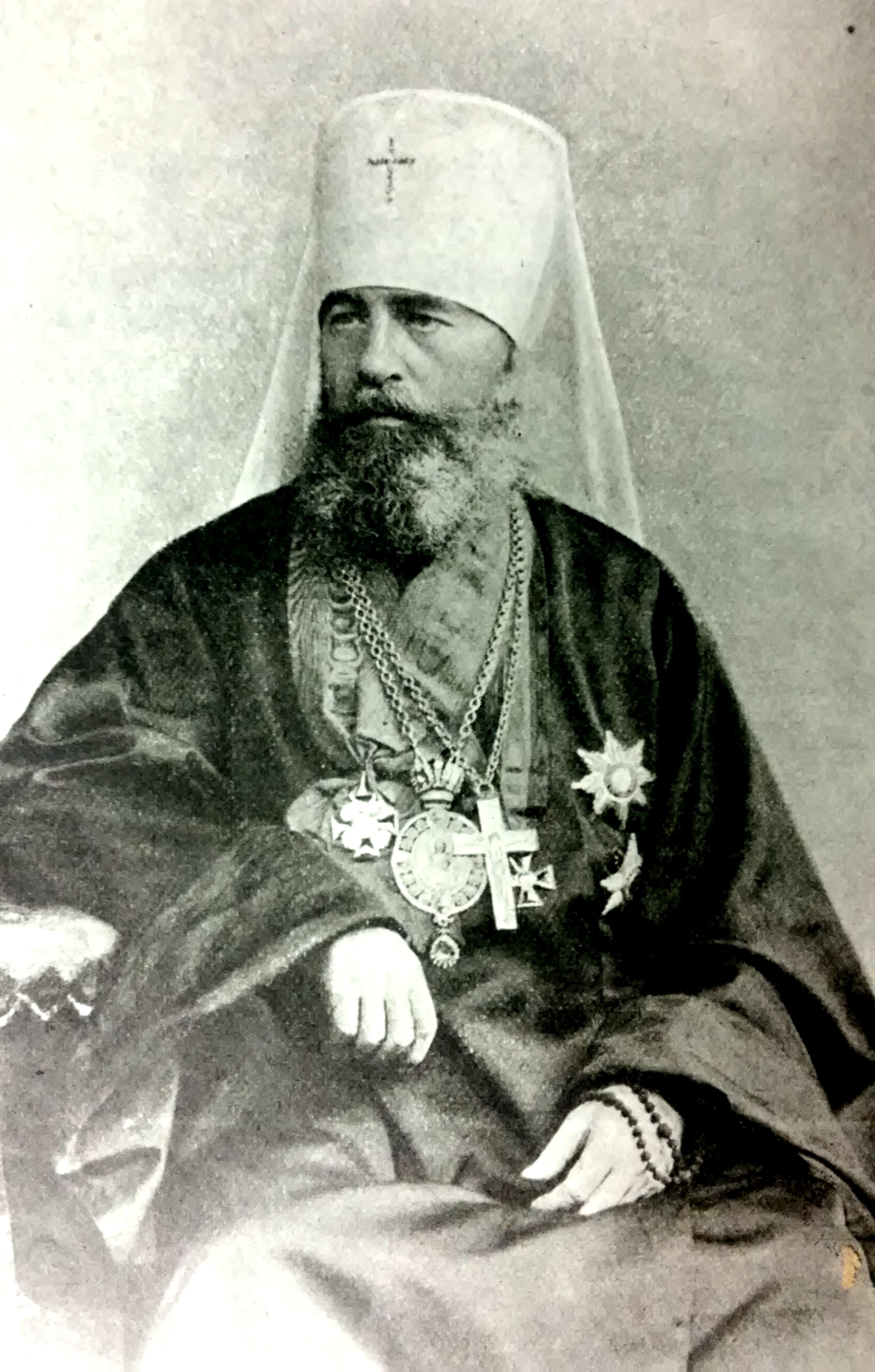
The first thing to settle is what the edict was. It was published as «Определение Святейшего Синода от 20–22 февраля 1901 г. № 557», signed by seven hierarchs with Metropolitan Antony (Vadkovsky) at their head, and — the point most stressed in the scholarship — it was not a formal anathema. Its language declares that the Church «не числит его более своим членом… доколе он не раскается» — that Tolstoy had, by his own statements, separated himself. Tolstoy caught the equivocation at once (E02); Kolstø (2022) calls the document "both an excommunication and not an excommunication"; and the Church's own 2010 statement put it that the Synod «merely stated an accomplished fact».
The public reaction ran against the Church. By Maude's account crowds recognised Tolstoy near the Kremlin and acclaimed him «as if it were his birthday»; flowers and telegrams arrived from across the country; at the spring-1901 Wanderers exhibition Repin's new full-length portrait of Tolstoy was showered with flowers; and, in the most-cited act of solidarity, some five hundred students marched on the Kazan Cathedral asking to be excommunicated too (sources differ on St Petersburg vs Moscow — likely St Petersburg). Tolstoy's own Reply records the other edge: the edict «вызвало… озлобление и ненависть ко мне, доходящие до угроз убийства» (E05). The hardest clerical voice was John of Kronstadt, the most influential parish priest in Russia, who denounced Tolstoy as a heretic «who surpassed all heretics» and (reportedly, in 1908) prayed publicly for his death.
Inside the household, Sophia Tolstaya wrote protest letters to both Pobedonostsev and Metropolitan Antony; Antony replied, but — by Alexandra Tolstaya's later account — his answer did not satisfy Sophia, and Tolstoy did not read it. (Her letters survive at РГИА / the Presidential Library but are not openly digitised; the substance here is secondary.)
The afterlife is a series of refusals. In 2001, on the centenary of the edict, Vladimir Tolstoy (director of Yasnaya Polyana) asked Patriarch Alexei II not for a reversal but for "dialogue on this painful subject"; there was no reply. In 2010 a renewed appeal drew the answer, from Archimandrite Tikhon Shevkunov on Patriarch Kirill's behalf, that "Count Tolstoy excommunicated himself from the church." The separation Tolstoy called a birth the Church still calls a self-exclusion — and, a century on, neither side has moved off the ground each took in 1901.
## Scholarly context
The mainstream and the primary record agree on the headline — that the break with the institution preceded 1901 by about two decades — so the relation is mostly **extends** rather than confirms: the corpus supplies the dated, first-person grounding (1893's definition of religion, E18–E19; the «странное» diary entry, E10) for a point biographers state thematically. **Attribute, don't assert.** Medzhibovskaya (2008) reads Tolstoy's turn not as a "crisis-laden tragedy" but as "a massive philosophical and religious project," which fits the dive's finding that the 1901–02 works are a deliberate, sustained unit; Maude (1910, ch. 16) and Bartlett (2010) supply the reception narrative but treat the works one at a time, where the corpus clusters them.
Two findings push harder. On the edict's *status*, the relation is **complicates**: the popular memory of an anathema is wrong, and here Tolstoy and the scholarship converge against the press — it was an отлучение, and a deliberately ambiguous one. On the edict's *authorship*, the relation is **contradicts**, and the contradiction is internal to the sources. The PSS apparatus (Soviet, 1952) states flatly that the edict was «составленное Победоносцевым» (E08); Kolstø's *Heretical Orthodoxy* (2022), the current benchmark, shows from the archives that the Soviet attribution was fabricated — the initiative lay with the Synod's own priestly members, Metropolitan Antony chiefly, while Pobedonostsev *opposed* the move as a strategic blunder that would only raise Tolstoy's standing. The dive carries both and asserts neither: Pobedonostsev was, for Tolstoy, the face of the church-state machine regardless of who held the pen — the model for Toporov in *Resurrection*, the name in the diary and the Tsar letter — but the question of who drafted the 1901 text is open between the apparatus and the archive.
The press of 1901 called Tolstoy's sympathisers "[Tolstoyans](../tolstoyanism/index.html)" and Tolstoy a heretic; both labels belong to the Synod and the newspapers, not to this dive's voice — Tolstoy had disowned «толстовство» in 1897, and the Reply answers the charge of heresy with a credo, not a recantation.
## Place in the cluster
This dive sits among the project's religion dives and extends them rather than repeating them. The [What Is Religion?](../1901-1902-what-is-religion/index.html) dive (the treatise written at Gaspra in the same months) establishes that the definitional kernel was on paper two weeks *before* the edict; this dive faces the edict itself. The [Kingdom of God Is Within You](../1890-1893-the-kingdom-of-god-is-within-you/index.html) dive holds the non-resistance / church-and-state synthesis the Synod was reacting to; the [Christian Teaching](../1894-1896-the-christian-teaching/index.html) dive is the fullest single statement of the positive faith Tolstoy practised instead of Orthodoxy; the [gospel-translation](../gospel-translation/index.html) dive traces the 1879–84 demolition of dogma «exactly the denial… that the Synod cited two decades later»; and the [Christian anarchism](../christian-anarchism/index.html) dive maps the label network that received the post-excommunication Tolstoy. *The Restoration of Hell* belongs textually to the [1903 folk-tales](../1903-folk-tales/index.html) dive, which owns its full close-read and its workRecord; this dive cross-references it as the cluster's satire and reconciles, rather than duplicates, that proposal.
## Material not covered
- The full text of Sophia Tolstaya's protest letter to Metropolitan Antony and his reply — held at РГИА / the Presidential Library, not openly digitised; the substance here is from secondary accounts.
- Kolstø 2022, *Heretical Orthodoxy*, ch. 12 — the benchmark scholarly treatment — is behind the Cambridge paywall; citations here are from the abstract, the H-Soz-Kult review, and secondary summaries.
- Variant collation across the redactions (the *To the Clergy* December-1902 inserts; the *Restoration of Hell* «о науке» reworking).
- The genesis diaries of the three foundation works (Tom 52 for 1893, Tom 53 for 1896, Tom 56 for 1907–08) were not swept; their genesis here is from the apparatus only.
- «Что такое религия и в чем сущность ее?» (Tom 35) — the subject of its own dive, cross-referenced not re-dived.
- The Russian-language facsimile of the printed edict (Церковные ведомости №8, 1901) and the post-1905 excommunication caricatures — work-orders (РНБ / РГИА / ГИМ).
## Visual & manuscript record
The visuals were a medium-to-heavy sweep of Wikimedia Commons; thirteen public-domain images are cached locally (the cache is git-ignored — `python3 docs/fetch_visuals.py 1901-1902-the-break-with-the-church` repopulates a fresh clone). The keystone is Repin's 1901 portrait, the one the crowds garlanded after the edict:
Ilya Repin, «Л. Н. Толстой босой» (Tolstoy barefoot), oil, 1901 — exhibited at the 29th Peredvizhniki exhibition in St Petersburg weeks after the excommunication, where visitors showered it with flowers. State Russian Museum. Public domain (Repin d. 1930).Ilya Repin, portrait study of K. P. Pobedonostsev, Ober-Procurator of the Holy Synod (1903). The figure the PSS apparatus credits with the edict and Kolstø (2022) shows opposed it. State Russian Museum. Public domain.Metropolitan Antony (Vadkovsky) of St Petersburg, c. 1904 — chair of the Synod, first signatory of the edict, and the hierarch who replied to Sophia Tolstaya's protest. Public domain.
Also cached: two further Pobedonostsev portraits (Makovsky 1899, Serov 1902); Repin's *Ceremonial Sitting of the State Council* (1903); two more Antony Vadkovsky photographs; Tolstoy and Chekhov at the Panina dacha near Gaspra (1901); and the Gaspra house itself. Targets not openly digitised, logged as work-orders: the printed edict facsimile (Церковные ведомости №8, 1901 — request from РНБ / РГИА); the post-1905 excommunication caricatures (ГИМ / РНБ print departments); a photograph of Sophia Tolstaya (manual-fetch, thumb URL in the dossier); and the «Свободное слово» pamphlet covers. No facsimile is committed to `extracts/`: the local English-language PDFs are Wiener's 1904 edition, not the Russian PSS, so no public-domain Russian facsimile was rendered here. Full provenance, rights and URLs are in the dossier `visuals` block and `extracts/_visuals-sweep.md`.
## Method
Scope contract (Phase 0): a multi-work theme-dive (not `--novel`), in-session, on the 1901 break with the Church across seven confirmed works, with the Feb 1901 edict as the spine event and a dedicated reception pass — exactly as the reader framed it; no scope picker was needed. Corpus surface: the seven works' TEI (PSS Toms 34, 37, 39) and their «История писания» apparatus; the 1901–02 diary (Tom 54, all 85 entries); the 1901–02 letters (Tom 73). What actually happened: all seven works read in full; the apparatus mined for dates, publication, and the ban arc (feeds the workRecords); the 1901–02 diary and letters swept for Tolstoy's reaction and the people network; a 26-source scholarship + reception sweep (English-first, grounded in the primary record); a medium-heavy visuals sweep (13 PD downloads, work-orders logged). All extraction used `extract_tei.py --choice=reg --notes=auto`; all 35 dossier quotes pass `verify_quotes.py` (exit 0). The dive proposes seven workRecords (none of these records exist yet) — six creations and one reconciliation: *The Restoration of Hell* is owned by the [1903 folk-tales](../1903-folk-tales/index.html) dive, so this dive folds its church-break additions into that proposal rather than duplicating it. No vault pages were written — that is the separate, human-in-the-loop ingestion step.
Links: sibling dives [What Is Religion?](../1901-1902-what-is-religion/index.html), [The Kingdom of God Is Within You](../1890-1893-the-kingdom-of-god-is-within-you/index.html), [The Christian Teaching](../1894-1896-the-christian-teaching/index.html), [gospel-translation](../gospel-translation/index.html), [Christian anarchism](../christian-anarchism/index.html), [tolstoyanism](../tolstoyanism/index.html), [the 1903 folk tales](../1903-folk-tales/index.html).
## References
Primary — Л. Н. Толстой, ПСС: т. 34 (Ответ на определение Синода с. 245–253; О веротерпимости с. 291–298; К духовенству с. 299–318; Разрушение ада с. 100–115; + История писания с. 546–547, 575–577, 586–589); т. 37 (Учение Христа, изложенное для детей с. 97–147 + История писания с. 433–434); т. 39 (Религия и нравственность с. 3–26; Как читать евангелие с. 113–116 + История писания с. 225–228, 241); т. 54 (Дневник 1901–1902); т. 73 (письма 1901–1902 — Николаю II, вел. кн. Николаю Михайловичу).
Background — Kolstø, P. (2022), *Heretical Orthodoxy: Lev Tolstoi and the Russian Orthodox Church*, Cambridge UP, ch. 12 (via abstract + Zwahlen review, H-Soz-Kult 2024); Maude, A. (1910), *The Life of Tolstoy: Later Years*, ch. 16; Bartlett, R. (2010), *Tolstoy: A Russian Life*; Medzhibovskaya, I. (2008), *Tolstoy and the Religious Culture of His Time*; Long, R. E. C. (1901), *Count Tolstoy in Thought and Action*; Wikisource, "My Reply to the Synod" & "Decree of Excommunication of Leo Tolstoy" (tr. L. & A. Maude); Tolstoy, *What is Religion? and Other New Articles and Letters* (ed. V. Chertkov, Crowell 1902); OrthoChristian.com (2010) / Christianity Today (2001). Full list (26 sources): `extracts/_scholarship.md`.
---
*Companion dev-blog note: [2026-06-13-the-break-with-the-church](../../../../website/src/posts/notes/2026-06-13-the-break-with-the-church.md) (draft).*